
Impact-Site-Verification: 65ebaf0c-2dbc-4200-9d50-11ea7af40e54

Graphic with the text L-Theanine for Focus: Does it really help?
L-Theanine for Focus: Does It Really Help?

By the U Heal Life editorial team. Last updated: October 2026. We have not personally tested the products or supplements discussed here, and we are not doctors. Read how we review supplements.

Affiliate disclosure: This article contains affiliate links. If you buy through our links, we may earn a commission at no extra cost to you. Our content is educational and based on public product information and published research, not personal testing.

Many people love the calm, clear feeling of a cup of tea. L-theanine is one of the compounds believed to play a part. It is now sold as a supplement for focus and stress. Does it really help?

Quick answer: L-theanine may support relaxation and attention in some people, especially when combined with caffeine, but the effects look modest. Research often tests it with caffeine, so it is hard to say what L-theanine does alone. It is usually well tolerated, but ask a professional if you take medicine.
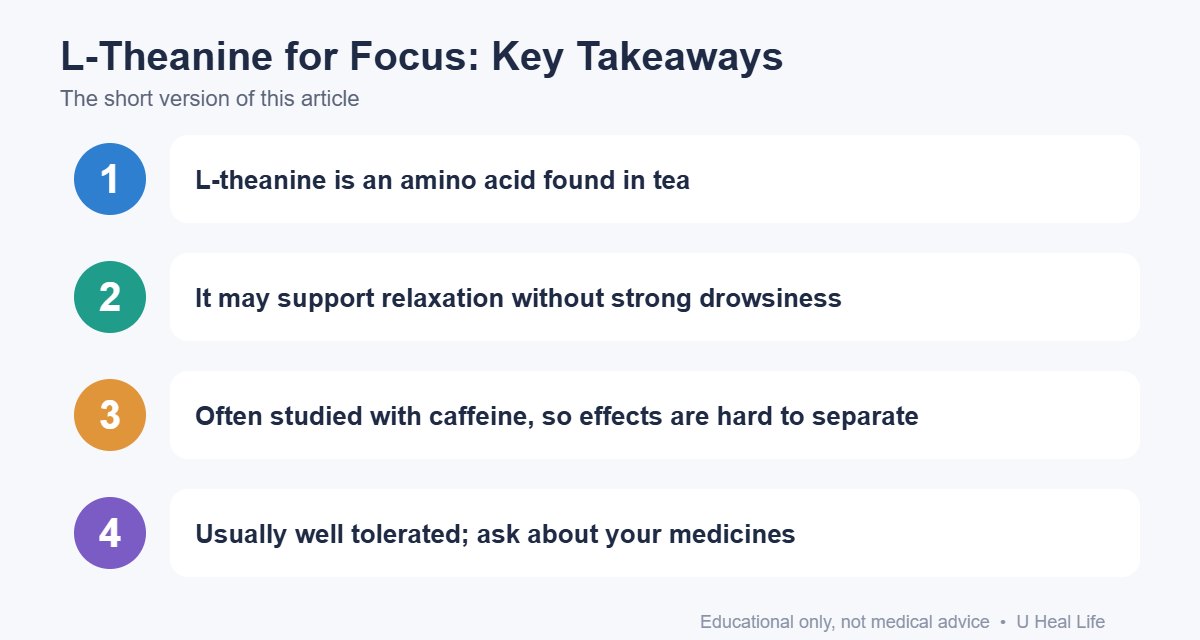
Key takeaways infographic: L-theanine is an amino acid found in tea; It may support relaxation without strong drowsiness; Often studied with caffeine, so effects are hard to separate; Usually well tolerated; ask about your medicines
The key points at a glance.

What Is L-Theanine?

L-theanine is an amino acid found mainly in tea leaves and in small amounts in some mushrooms. A cup of tea contains a small amount. Supplements provide it in capsules or powder, usually in larger amounts than tea.

What Does Research Suggest?

Studies have looked at L-theanine for:

  • Relaxation: Some small studies suggest it may promote a calm state without strong drowsiness.
  • Attention: When combined with caffeine, some studies report better attention and fewer mistakes on tasks.
  • Stress and sleep: A few small trials suggest possible benefits for stress or sleep quality, but results are not consistent.

Doses in studies commonly range from about 100 to 200 mg, although products and studies vary. Most trials are small and short, so we cannot say how well L-theanine works for most healthy adults.

The Caffeine Question

Many studies test L-theanine together with caffeine. This pairing is popular because caffeine can raise alertness, and L-theanine may soften jitters. But if the effects come from the combination, you cannot give credit to L-theanine alone.

Strength of the Evidence

ClaimEvidence
Promotes relaxationSome small studies, modest effects
Improves focus aloneUnclear
Improves attention with caffeineSome positive results, limited studies
Helps with sleep or anxietyEarly and mixed

Possible Side Effects and Cautions

L-theanine is generally well tolerated in studies. Some people may notice headache or an upset stomach. Ask a doctor or pharmacist first if you:

  • Take blood pressure medicine, since it may lower blood pressure slightly
  • Take sedatives or other regular prescription medicine
  • Are pregnant or breastfeeding, because safety data are limited

Natural Ways to Get It

Tea is the simplest source. Enjoy a cup in the morning or early afternoon, and avoid caffeinated tea late in the day so it does not hurt your sleep.

L-Theanine in Multi-Ingredient Products

L-theanine is one of the ingredients listed in BrainPill. We explain how it fits with the others in our guide to BrainPill ingredients and in our full BrainPill review.

See BrainPill’s Official Product Details

Paid affiliate link. We may earn a commission from qualifying purchases.

Frequently Asked Questions

Does L-theanine help with focus?

It may help attention a little, especially with caffeine, but evidence is limited.

Can I take L-theanine every day?

Studies often use daily doses for a few weeks. Ask a professional about long-term use.

Does L-theanine make you sleepy?

It is not usually described as a sedative, but some people feel more relaxed.

Is it better to get L-theanine from tea or supplements?

Tea is a gentle, low-cost option. Supplements give larger doses but are not necessary for most people.

Final Thoughts

L-theanine is a friendly, well-liked ingredient with some modest research behind it. It is not a miracle focus booster, but it may fit into a calm daily routine for some people.

Sources and Further Reading

Related Reading

Disclaimer: This article is for educational purposes only and is not medical advice. Dietary supplements are not intended to diagnose, treat, cure, or prevent any disease. Talk to a qualified healthcare professional before using supplements, especially if you take medicine, are pregnant or breastfeeding, or have a health condition.

Graphic with the text Stay Mentally Sharp at Work: 10 simple tips for busy days
How to Stay Mentally Sharp During a Busy Workday

By the U Heal Life editorial team. Last updated: October 2026. We have not personally tested the products or supplements discussed here, and we are not doctors. Read how we review supplements.

Affiliate disclosure: This article contains affiliate links. If you buy through our links, we may earn a commission at no extra cost to you. Our content is educational and based on public product information and published research, not personal testing.

Meetings, messages, deadlines. By mid-afternoon, many people feel their brain has run out of fuel. The good news is that a few small habits can keep your mind sharper from morning to evening.

Quick answer: To stay mentally sharp at work, do your hardest tasks when your energy is highest, work in focused blocks with short breaks, eat and drink regularly, move often, limit caffeine late in the day, and end the workday with a short shutdown routine.

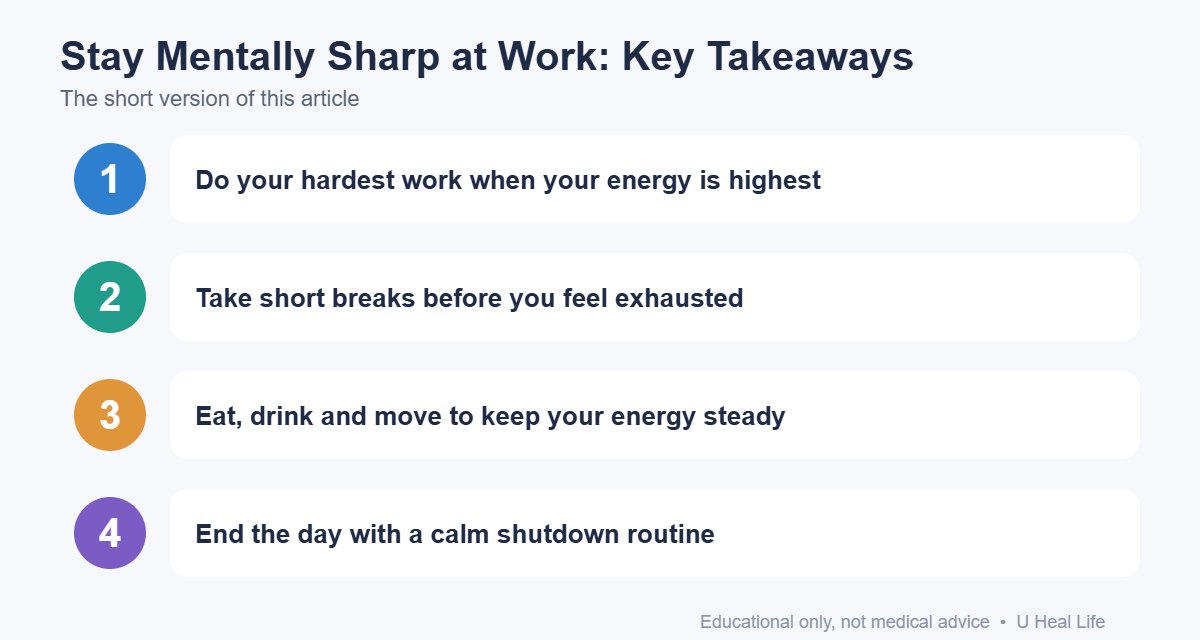
Key takeaways infographic: Do your hardest work when your energy is highest; Take short breaks before you feel exhausted; Eat, drink and move to keep your energy steady; End the day with a calm shutdown routine
The key points at a glance.

10 Tips for a Sharper Workday

1. Start With a Calm Morning

Avoid checking your phone the moment you wake up. Drink water, get some daylight and take 2 minutes to breathe slowly. Our guide to calming your mind in 5 minutes can help.

2. Pick Your Top 3 Tasks

Write down the three most important things for the day. Do the hardest one first, when your energy is highest.

3. Work in Focus Blocks

Work for 25 to 50 minutes on one task, then take a 5 to 10 minute break. This protects your attention from slowly wearing down.

4. Take Real Breaks

Stand up, stretch, look out of a window or walk to refill water. Scrolling your phone does not rest your brain.

5. Keep Your Energy Steady With Food

Do not skip lunch. Choose balanced meals with protein, fiber and healthy fats, and avoid heavy, sugary meals that can lead to a mid-afternoon crash.

6. Drink Water

Even mild dehydration can make you feel tired and foggy. Keep a bottle on your desk.

7. Move Every Hour

A short walk, some stairs or a few stretches improve blood flow and mood. Try walking meetings when you can.

8. Use Caffeine Smartly

A cup of tea or coffee in the morning can help alertness. Try to avoid caffeine in the late afternoon so it does not hurt your sleep.

9. Reduce Switching and Interruptions

Mute non-urgent notifications, batch your emails into set times and tell colleagues when you need a quiet hour.

10. End the Day With a Shutdown Routine

Spend 5 minutes writing tomorrow’s top 3 tasks and closing open loops. This helps your mind switch off and sleep better. Our mindfulness exercises for busy people fit well here.

A Sample Sharp Workday

TimeWhat to do
Start of dayWater, daylight, plan top 3 tasks
MorningHardest task in a 50-minute focus block
Late morningShort walk and a snack if needed
LunchA real meal away from your screen
AfternoonEasier tasks, meetings and email batches
End of day5-minute shutdown and tomorrow’s plan

Signs You Need a Proper Rest

If you feel drained every day, make frequent mistakes, or cannot switch off at night, your body may be asking for rest. Sleep, boundaries and time off matter more than any productivity trick.

Where Do Supplements Fit In?

Supplements are optional extras, not a shortcut. Sleep, food, movement and stress care come first, and a doctor should check any new supplement against your health and medicines. If you are curious about multi-ingredient nootropic supplements, read our independent BrainPill review for a balanced look at the evidence and safety points. If you decide to read more, the manufacturer’s page is below.

See BrainPill’s Official Product Details

Paid affiliate link. We may earn a commission from qualifying purchases.

Frequently Asked Questions

Why does my brain feel tired by the afternoon?

Long mental effort, skipped meals, poor sleep and natural energy dips can all play a part.

How often should I take breaks at work?

A short break every 50 to 90 minutes works for many people.

Does music help focus?

It can for some people, especially calm or instrumental music. Others focus better in silence.

What is the best way to avoid a mid-afternoon slump?

Eat a balanced lunch, take a short walk, drink water, and avoid late caffeine.

Final Thoughts

You do not need to overhaul your life. Try two or three of these habits this week and see how your focus and energy change.

Sources and Further Reading

Related Reading

Disclaimer: This article is for educational purposes only and is not medical advice. Dietary supplements are not intended to diagnose, treat, cure, or prevent any disease. Talk to a qualified healthcare professional before using supplements, especially if you take medicine, are pregnant or breastfeeding, or have a health condition.

Graphic with the text Brain Fog vs Mental Fatigue: What's the difference?
Brain Fog vs Mental Fatigue: What’s the Difference?

By the U Heal Life editorial team. Last updated: October 2026. We have not personally tested the products or supplements discussed here, and we are not doctors. Read how we review supplements.

Affiliate disclosure: This article contains affiliate links. If you buy through our links, we may earn a commission at no extra cost to you. Our content is educational and based on public product information and published research, not personal testing.

“I feel foggy.” “I feel mentally drained.” People often use these words as if they mean the same thing, but they are not identical. Knowing the difference can help you choose the right fix.

Quick answer: Brain fog feels like a haze: slow thinking, forgetfulness and trouble finding words. Mental fatigue feels like a drained battery after long mental effort and usually improves with rest. Both are symptoms, not diagnoses, and both have many possible causes.

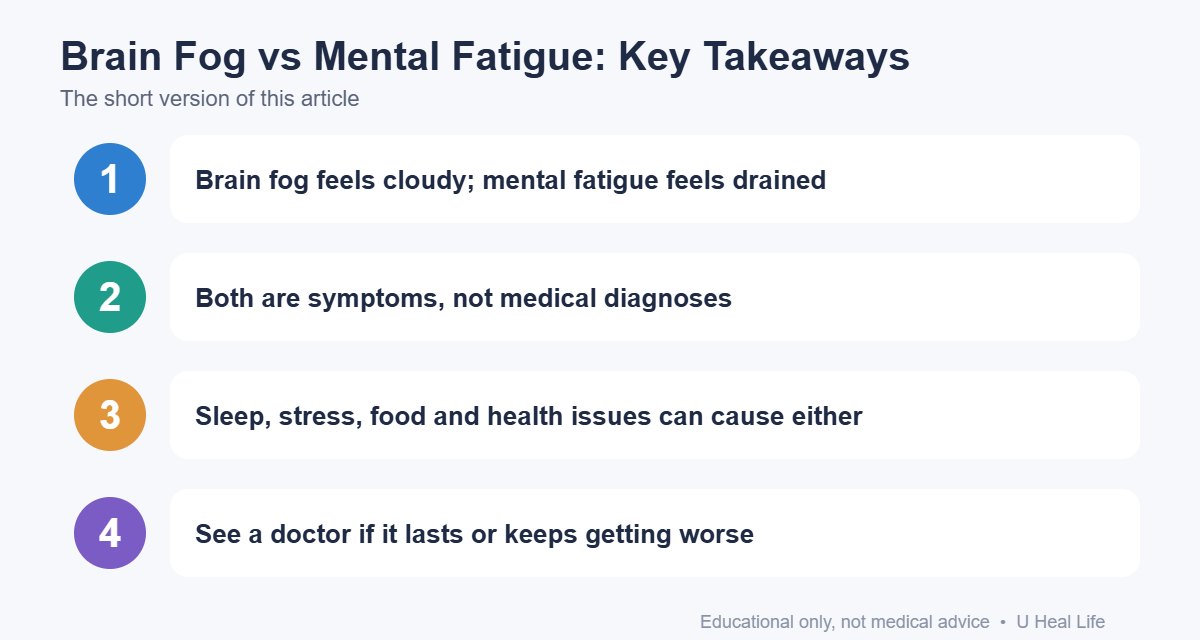
Key takeaways infographic: Brain fog feels cloudy; mental fatigue feels drained; Both are symptoms, not medical diagnoses; Sleep, stress, food and health issues can cause either; See a doctor if it lasts or keeps getting worse
The key points at a glance.

What Is Brain Fog?

Brain fog is not a medical diagnosis. It is a common way to describe cloudy thinking. People with brain fog may notice:

  • Trouble concentrating
  • Forgetting words or names
  • Feeling mentally slow or “spaced out”
  • Difficulty making decisions
  • Feeling confused or disoriented

What Is Mental Fatigue?

Mental fatigue is tiredness that builds up after long periods of thinking, focusing or making decisions. You may notice:

  • Feeling mentally exhausted
  • Low motivation
  • More mistakes and irritability
  • Wanting to avoid more mental tasks
  • Relief after rest, a break or a change of activity

Brain Fog vs Mental Fatigue at a Glance

FeatureBrain fogMental fatigue
Feels likeCloudy, slow, confusedDrained, tired, unmotivated
Common triggersPoor sleep, illness, hormones, medicines, stressLong mentally demanding tasks, decision overload
Effect of restNot always helped quicklyUsually improves with rest
Memory and word-findingOften affectedSometimes affected
How long it lastsDays to monthsHours to a day

Common Causes of Brain Fog

  • Poor or broken sleep
  • Chronic stress or anxiety
  • Low mood
  • Dehydration or irregular meals
  • Hormonal changes, such as around menopause
  • Some medicines
  • Medical issues such as thyroid problems, anemia or low vitamin B12
  • Recovery after an infection or illness

Common Causes of Mental Fatigue

  • Long periods of focused work without breaks
  • Too many decisions in a day
  • Multitasking and constant interruptions
  • Emotional strain
  • Not enough sleep or downtime

What Helps Brain Fog

  1. Fix sleep first, with a regular schedule.
  2. Eat regular meals and drink enough water.
  3. Move your body every day.
  4. Manage stress with breathing, walks or talking to someone.
  5. Review your medicines with a doctor.
  6. Ask for a check-up if it continues.

What Helps Mental Fatigue

  1. Take short breaks every 60 to 90 minutes.
  2. Switch tasks or do something physical.
  3. Do your hardest work first, when your energy is highest.
  4. Reduce small decisions with routines.
  5. Protect weekends and evenings for real rest.

For more, read our guide to staying mentally sharp during a busy workday.

When to See a Doctor

Please get medical advice if brain fog:

  • Lasts for weeks or keeps getting worse
  • Comes with severe headaches, vision changes or weakness
  • Includes confusion or serious memory loss
  • Started after a head injury or illness
  • Comes with low mood, anxiety or constant exhaustion

Where Do Supplements Fit In?

Supplements are optional extras, not a shortcut. Sleep, food, movement and stress care come first, and a doctor should check any new supplement against your health and medicines. If you are curious about multi-ingredient nootropic supplements, read our independent BrainPill review for a balanced look at the evidence and safety points. If you decide to read more, the manufacturer’s page is below.

See BrainPill’s Official Product Details

Paid affiliate link. We may earn a commission from qualifying purchases.

Frequently Asked Questions

Is brain fog a medical condition?

No. It is a description of symptoms. A doctor can look for underlying causes.

Can stress cause brain fog?

Yes. Ongoing stress can affect sleep, mood and attention, which can feel like fog.

How long does mental fatigue last?

Often a few hours to a day, improving after rest. If it lasts much longer, look at sleep, stress and health.

Can diet affect brain fog?

Skipping meals, dehydration or nutrient deficiencies can contribute. A balanced diet and a doctor’s advice help.

Final Thoughts

Understanding the difference helps you respond better: rest and breaks for mental fatigue, and a closer look at sleep, health and stress for brain fog.

Sources and Further Reading

Related Reading

Disclaimer: This article is for educational purposes only and is not medical advice. Dietary supplements are not intended to diagnose, treat, cure, or prevent any disease. Talk to a qualified healthcare professional before using supplements, especially if you take medicine, are pregnant or breastfeeding, or have a health condition.
Graphic with the text Why Can't I Focus?: Common causes and practical tips
Why Can’t I Focus? Common Causes and Practical Tips

By the U Heal Life editorial team. Last updated: October 2026. We have not personally tested the products or supplements discussed here, and we are not doctors. Read how we review supplements.

Affiliate disclosure: This article contains affiliate links. If you buy through our links, we may earn a commission at no extra cost to you. Our content is educational and based on public product information and published research, not personal testing.

You sit down to work, and your mind wanders. You read the same paragraph three times. If you keep asking “why can’t I focus?”, you are not alone, and there is usually a reason.

Quick answer: The most common reasons for poor focus are lack of sleep, stress and anxiety, constant digital distraction, and skipped meals. Medical issues, medicines, mood problems and conditions such as ADHD can also play a part. If the change is sudden, severe or lasting, see a doctor.

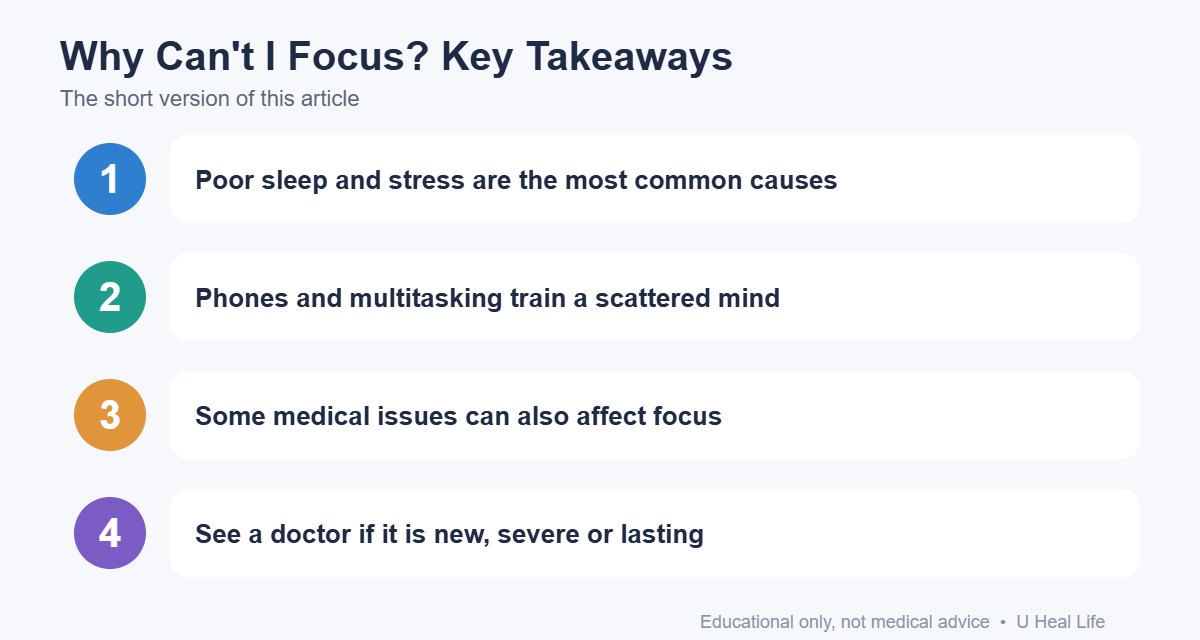
Key takeaways infographic: Poor sleep and stress are the most common causes; Phones and multitasking train a scattered mind; Some medical issues can also affect focus; See a doctor if it is new, severe or lasting
The key points at a glance.

10 Common Causes of Poor Focus

1. Not Enough Sleep

Tired brains struggle with attention and memory. Even one short night can hurt concentration the next day.

2. Stress and Anxiety

Worry uses up mental energy. If your mind is busy with “what if” thoughts, there is less room for the task in front of you. Read our guide on feeling anxious for no reason.

3. Low Mood or Depression

Trouble concentrating is a common symptom of low mood. If you also feel sad, hopeless or have lost interest in things, please talk to a professional.

4. Digital Overload

Constant notifications and quick switching between apps train the brain to expect new input. Deep focus then feels uncomfortable.

5. Skipped Meals and Dehydration

Low energy and not enough water can make you feel foggy and irritable.

6. Too Much Caffeine or Alcohol

Too much caffeine can cause restlessness, and alcohol harms sleep quality, which affects next-day focus.

7. Medical Conditions

Issues such as thyroid problems, anemia, low vitamin B12, sleep apnea and long-term illness can affect concentration. A simple check-up can rule these out.

8. Medicines

Some medicines can cause drowsiness or mental slowness. Never stop a prescribed medicine on your own, but do ask your doctor about side effects.

9. Hormonal Changes

Changes around periods, pregnancy or menopause can affect sleep and focus for some people.

10. ADHD

Adult ADHD can show up as constant distraction, forgetfulness and trouble finishing tasks. It cannot be diagnosed by an online quiz. A qualified professional can assess it.

Clues and First Steps

CluePossible causeFirst step
Tired all dayPoor sleepSet a fixed bedtime for one week
Racing thoughtsStress or anxietyTry slow breathing and a brain dump
Focus drops after lunchMeals and energyEat balanced meals and walk after eating
Always checking your phoneDigital habitsKeep your phone in another room
Long-term fatigue or other symptomsMedical issueBook a check-up

Practical Tips You Can Start Today

  • Go to bed and wake up at the same time
  • Work in 25-minute blocks with short breaks
  • Write down your top 3 tasks each morning
  • Take a 10-minute walk when your mind feels stuck
  • Limit caffeine after midday

For more ideas, see our guide to improving focus and concentration naturally.

When to See a Doctor

Seek medical advice if poor focus:

  • Starts suddenly or gets quickly worse
  • Comes with memory loss, confusion or trouble speaking
  • Follows a head injury
  • Comes with severe headaches, low mood or constant fatigue
  • Affects your work, studies or relationships for weeks

Where Do Supplements Fit In?

Supplements are optional extras, not a shortcut. Sleep, food, movement and stress care come first, and a doctor should check any new supplement against your health and medicines. If you are curious about multi-ingredient nootropic supplements, read our independent BrainPill review for a balanced look at the evidence and safety points. If you decide to read more, the manufacturer’s page is below.

See BrainPill’s Official Product Details

Paid affiliate link. We may earn a commission from qualifying purchases.

Frequently Asked Questions: Why Can’T I Focus

Why can’t I concentrate even when I’m not tired?

Stress, anxiety, digital distraction, low mood or a health issue can reduce focus even when you feel rested.

Can anxiety cause trouble concentrating?

Yes. Worry takes up mental space, so it is common to feel scattered during anxious periods.

Is trouble focusing always ADHD?

No. Many things cause poor focus, and only a trained professional can diagnose ADHD.

Can vitamin deficiency affect concentration?

Low levels of some nutrients, such as vitamin B12, may. A doctor can check this with a simple test.

Final Thoughts

Poor focus is a signal, not a personal failing. Look for the cause, fix the basics, and ask for help if it does not improve.

Sources and Further Reading

Related Reading

Disclaimer: This article is for educational purposes only and is not medical advice. Dietary supplements are not intended to diagnose, treat, cure, or prevent any disease. Talk to a qualified healthcare professional before using supplements, especially if you take medicine, are pregnant or breastfeeding, or have a health condition.

Graphic with the text Improve Focus Naturally: 10 practical ways that help
Best Ways to Improve Focus and Concentration Naturally

By the U Heal Life editorial team. Last updated: October 2026. We have not personally tested the products or supplements discussed here, and we are not doctors. Read how we review supplements.

Affiliate disclosure: This article contains affiliate links. If you buy through our links, we may earn a commission at no extra cost to you. Our content is educational and based on public product information and published research, not personal testing.

Do you start tasks and then drift away after a few minutes? Focus is a skill, and it is also affected by sleep, stress and your environment. These 10 natural ways can help you concentrate better without any special products.

Quick answer: To improve focus naturally, sleep enough, move your body, remove distractions, work in short focused blocks with breaks, eat and drink regularly, and time your caffeine sensibly. Small daily habits work better than a one-time push.

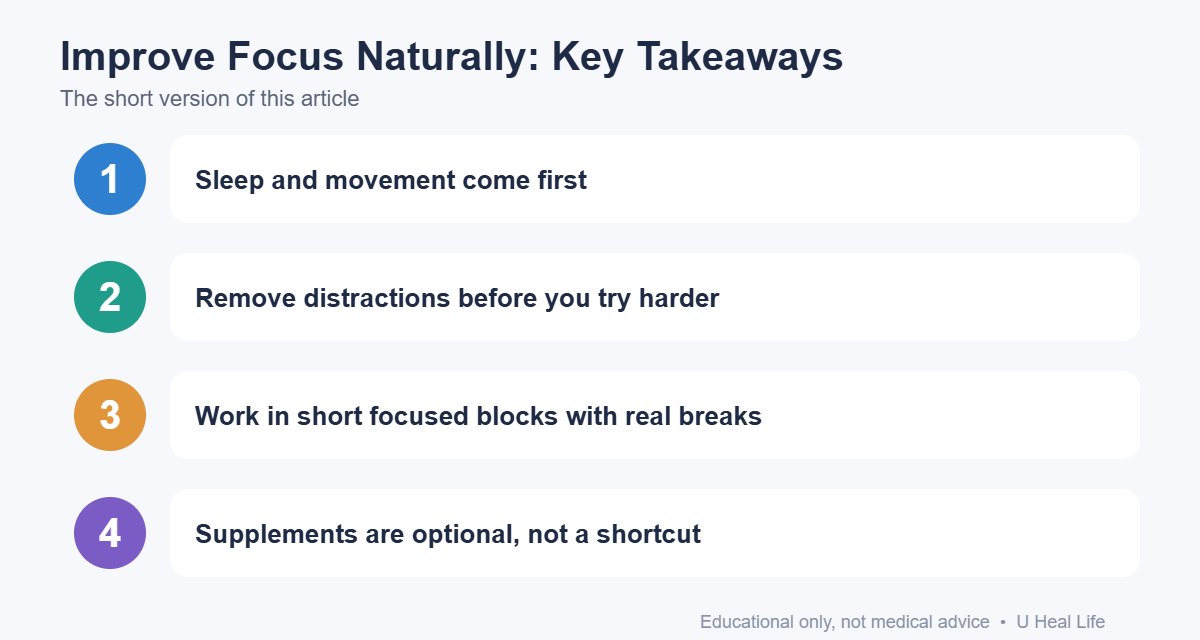
Key takeaways infographic: Sleep and movement come first; Remove distractions before you try harder; Work in short focused blocks with real breaks; Supplements are optional, not a shortcut
The key points at a glance.

1. Protect Your Sleep

Poor sleep is one of the biggest focus killers. Most adults need at least 7 hours a night, according to the US Centers for Disease Control and Prevention. Keep a steady bedtime, dim the lights in the evening, and avoid screens in the last hour.

2. Move Your Body Daily

Exercise helps your brain as well as your heart. Aim for about 150 minutes of moderate activity a week, such as brisk walking, plus short movement breaks during the day. Even a 10-minute walk can refresh your mind.

3. Do One Thing at a Time

Multitasking feels productive, but it usually makes you slower and more error-prone. Pick one task, set a timer for 25 minutes, work only on that, and then take a 5-minute break. This is often called the Pomodoro method.

4. Silence Distractions

  • Turn off non-urgent notifications
  • Put your phone in another room during deep work
  • Close extra browser tabs
  • Tell people when you need quiet time

5. Get Morning Daylight

Natural light in the morning helps set your body clock, which supports alertness by day and sleep at night.

6. Eat and Drink Regularly

Skipping meals or getting dehydrated can make you feel foggy. Eat balanced meals with protein, fiber and healthy fats, and keep water nearby.

7. Use Caffeine Wisely

Caffeine can help alertness, but too much can cause jitters and poor sleep. The FDA says up to about 400 mg a day is not generally linked with negative effects for most healthy adults. Try to stop caffeine at least 6 to 8 hours before bed.

8. Try a Short Mindfulness Practice

Five minutes of slow breathing or a simple body scan can train your attention. See our guide to simple mindfulness exercises for busy people.

9. Plan Your Top 3 Tasks

Each morning, write down the three most important things to finish. This gives your mind a clear target and reduces decision fatigue.

10. Take Real Breaks

Stand up, stretch, look at something far away, or step outside. Scrolling social media is not a real break for your brain.

A Simple Daily Focus Plan

Time of dayWhat to do
MorningDaylight, water, plan your top 3 tasks
Mid-morningOne 25-minute focus block with phone away
LunchA real meal and a short walk
AfternoonAnother focus block, then a stretch break
EveningScreens off early, calm routine, regular bedtime

Where Do Supplements Fit In?

Supplements are optional extras, not a shortcut. Sleep, food, movement and stress care come first, and a doctor should check any new supplement against your health and medicines. If you are curious about multi-ingredient nootropic supplements, read our independent BrainPill review for a balanced look at the evidence and safety points. If you decide to read more, the manufacturer’s page is below.

See BrainPill’s Official Product Details

Paid affiliate link. We may earn a commission from qualifying purchases.

Frequently Asked Questions: Best Ways To Improve Focus And Concentration Naturally

How long does it take to improve concentration?

Many people notice better focus within one to two weeks of steadier sleep and fewer distractions, but it varies.

Is it normal to lose focus easily?

Yes, everyone does at times, especially when tired or stressed. If it is severe or new, see our guide on why you can’t focus.

What foods help focus?

No single food works magic. A balanced diet with regular meals, enough water and omega-3-rich foods such as fish supports normal brain function.

When should I see a doctor?

If poor concentration is sudden, severe, or comes with memory loss, confusion, or low mood, speak to a healthcare professional.

Final Thoughts

Start with one or two habits from this list, such as a regular bedtime and a phone-free focus block. Build slowly, and be patient with yourself.

Sources and Further Reading

Related Reading

Disclaimer: This article is for educational purposes only and is not medical advice. Dietary supplements are not intended to diagnose, treat, cure, or prevent any disease. Talk to a qualified healthcare professional before using supplements, especially if you take medicine, are pregnant or breastfeeding, or have a health condition.
Mind's Potential: Methods to Boost Mental Clarity and Focus
Mind’s Potential: Methods to Boost Mental Clarity and Focus

In today’s fast-paced world, where distractions abound and information overload is a constant challenge, enhancing mental clarity and focus has become crucial for success. The ability to harness the full potential of your mind can significantly improve productivity, creativity, and overall well-being. This article explores effective strategies that can help you cultivate mental clarity and sharpen your focus, enabling you to navigate through life’s demands with ease and accomplish your goals with greater efficiency.

  1. Clearing the Mental Clutter

One of the initial steps towards enhancing mental clarity is to declutter your mind. Mental clutter can manifest as a barrage of thoughts, worries, and distractions that hinder focus. Practicing mindfulness and meditation techniques can help you cultivate a calm and focused state of mind. Regularly setting aside dedicated time for quiet reflection and self-awareness can reduce mental noise and create space for clarity to emerge. Additionally, prioritizing tasks, maintaining a to-do list, and organizing your physical environment can minimize mental clutter and create a conducive atmosphere for increased mental focus.

  • Cultivating a Healthy Lifestyle

Your mental clarity and focus are deeply intertwined with your physical well-being. Adopting a healthy lifestyle can provide a strong foundation for optimal mental functioning. Adequate sleep, a balanced diet, and regular exercise play a vital role in enhancing cognitive abilities. Getting the recommended seven to eight hours of quality sleep each night helps recharge the brain, improve concentration, and enhance problem-solving skills. A nutrient-rich diet consisting of fruits, vegetables, whole grains, and omega-3 fatty acids supports brain health and cognitive function. Regular physical exercise increases blood flow to the brain, promoting the growth of new neurons and enhancing mental clarity.

  • Embracing Mindful Technology Use

While technology can be a valuable tool, excessive and mindless use of digital devices can hinder mental clarity and focus. Setting boundaries and practicing mindful technology use is essential. Consider scheduling specific times for checking emails, browsing social media, or engaging with digital entertainment. Implementing “digital detox” periods where you disconnect from screens and engage in offline activities can rejuvenate your mind and improve focus. Utilize productivity apps and tools to help you manage time effectively, eliminate digital distractions, and stay focused on tasks.

  • Engaging in Cognitive Exercises

Just as physical exercise strengthens the body, engaging in cognitive exercises can boost mental clarity and focus. Activities like puzzles, brain teasers, reading, and learning new skills stimulate the brain, improve memory, and enhance cognitive abilities. Mindfulness-based practices, such as deep breathing exercises or visualizations, can train the mind to stay present and reduce mental wandering. Additionally, practicing focused attention exercises, such as meditation or concentration-building techniques, can sharpen your ability to sustain attention on specific tasks or goals.

  • Creating a Productive Work Environment

Your physical surroundings significantly impact your mental clarity and focus. Designing a productive work environment involves optimizing lighting, reducing noise distractions, and maintaining an organized workspace. Adequate natural light and ergonomic furniture can enhance focus and prevent eye strain. Minimizing background noise or utilizing noise-canceling headphones can help create a quieter space for concentration. Keeping your workspace clutter-free and organizing materials can reduce distractions and improve efficiency.

Conclusion

Harnessing the full potential of your mind requires conscious effort and practice. By implementing these strategies, such as decluttering your mind, adopting a healthy lifestyle, embracing mindful technology use, engaging in cognitive exercises, and creating a productive work environment, you can enhance your mental clarity and focus. Remember, sharpening