

Impact-Site-Verification: 65ebaf0c-2dbc-4200-9d50-11ea7af40e54

Graphic with the text Stay Mentally Sharp at Work: 10 simple tips for busy days
How to Stay Mentally Sharp During a Busy Workday

Affiliate disclosure: This article contains affiliate links. If you buy through our links, we may earn a commission at no extra cost to you. Our content is educational and based on public product information and published research, not personal testing.

Meetings, messages, deadlines. By mid-afternoon, many people feel their brain has run out of fuel. The good news is that a few small habits can keep your mind sharper from morning to evening.

Quick answer: To stay mentally sharp at work, do your hardest tasks when your energy is highest, work in focused blocks with short breaks, eat and drink regularly, move often, limit caffeine late in the day, and end the workday with a short shutdown routine.
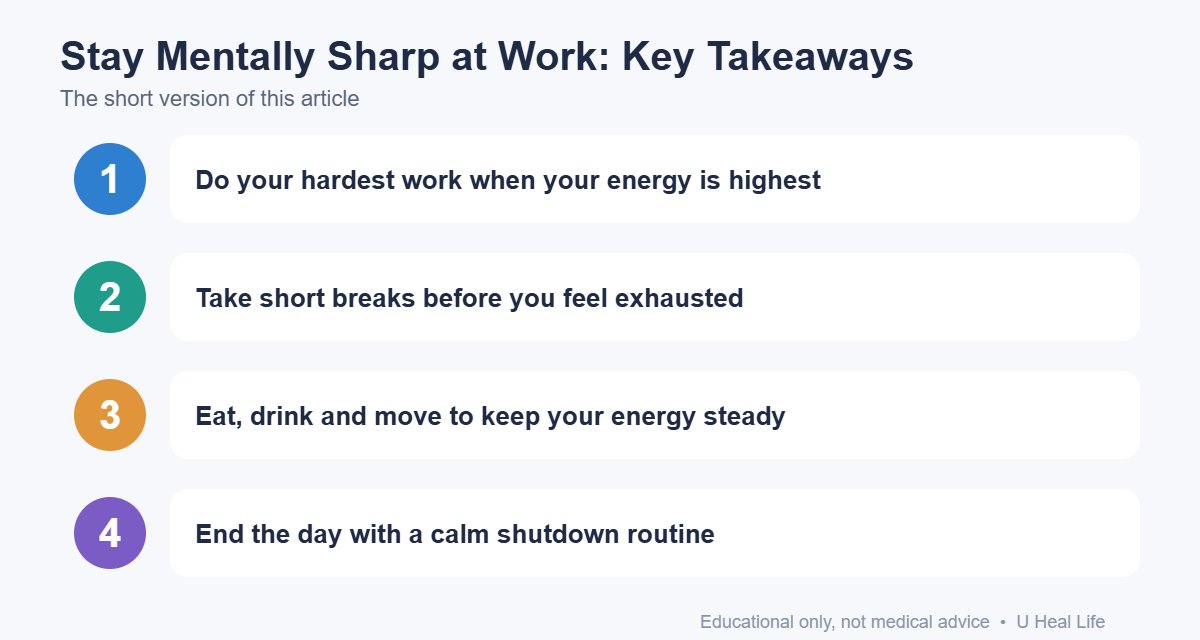
Key takeaways infographic: Do your hardest work when your energy is highest; Take short breaks before you feel exhausted; Eat, drink and move to keep your energy steady; End the day with a calm shutdown routine
The key points at a glance.

10 Tips for a Sharper Workday

1. Start With a Calm Morning

Avoid checking your phone the moment you wake up. Drink water, get some daylight and take 2 minutes to breathe slowly. Our guide to calming your mind in 5 minutes can help.

2. Pick Your Top 3 Tasks

Write down the three most important things for the day. Do the hardest one first, when your energy is highest.

3. Work in Focus Blocks

Work for 25 to 50 minutes on one task, then take a 5 to 10 minute break. This protects your attention from slowly wearing down.

4. Take Real Breaks

Stand up, stretch, look out of a window or walk to refill water. Scrolling your phone does not rest your brain.

5. Keep Your Energy Steady With Food

Do not skip lunch. Choose balanced meals with protein, fiber and healthy fats, and avoid heavy, sugary meals that can lead to a mid-afternoon crash.

6. Drink Water

Even mild dehydration can make you feel tired and foggy. Keep a bottle on your desk.

7. Move Every Hour

A short walk, some stairs or a few stretches improve blood flow and mood. Try walking meetings when you can.

8. Use Caffeine Smartly

A cup of tea or coffee in the morning can help alertness. Try to avoid caffeine in the late afternoon so it does not hurt your sleep.

9. Reduce Switching and Interruptions

Mute non-urgent notifications, batch your emails into set times and tell colleagues when you need a quiet hour.

10. End the Day With a Shutdown Routine

Spend 5 minutes writing tomorrow’s top 3 tasks and closing open loops. This helps your mind switch off and sleep better. Our mindfulness exercises for busy people fit well here.

A Sample Sharp Workday

TimeWhat to do
Start of dayWater, daylight, plan top 3 tasks
MorningHardest task in a 50-minute focus block
Late morningShort walk and a snack if needed
LunchA real meal away from your screen
AfternoonEasier tasks, meetings and email batches
End of day5-minute shutdown and tomorrow’s plan

Signs You Need a Proper Rest

If you feel drained every day, make frequent mistakes, or cannot switch off at night, your body may be asking for rest. Sleep, boundaries and time off matter more than any productivity trick.

Where Do Supplements Fit In?

Supplements are optional extras, not a shortcut. Sleep, food, movement and stress care come first, and a doctor should check any new supplement against your health and medicines. If you are curious about multi-ingredient nootropic supplements, read our independent BrainPill review for a balanced look at the evidence and safety points. If you decide to read more, the manufacturer’s page is below.

See BrainPill’s Official Product Details

Paid affiliate link. We may earn a commission from qualifying purchases.

Frequently Asked Questions

Why does my brain feel tired by the afternoon?

Long mental effort, skipped meals, poor sleep and natural energy dips can all play a part.

How often should I take breaks at work?

A short break every 50 to 90 minutes works for many people.

Does music help focus?

It can for some people, especially calm or instrumental music. Others focus better in silence.

What is the best way to avoid a mid-afternoon slump?

Eat a balanced lunch, take a short walk, drink water, and avoid late caffeine.

Final Thoughts

You do not need to overhaul your life. Try two or three of these habits this week and see how your focus and energy change.

Related Reading

Disclaimer: This article is for educational purposes only and is not medical advice. Dietary supplements are not intended to diagnose, treat, cure, or prevent any disease. Talk to a qualified healthcare professional before using supplements, especially if you take medicine, are pregnant or breastfeeding, or have a health condition.

Graphic with the text Improve Focus Naturally: 10 practical ways that help
Best Ways to Improve Focus and Concentration Naturally

Affiliate disclosure: This article contains affiliate links. If you buy through our links, we may earn a commission at no extra cost to you. Our content is educational and based on public product information and published research, not personal testing.

Do you start tasks and then drift away after a few minutes? Focus is a skill, and it is also affected by sleep, stress and your environment. These 10 natural ways can help you concentrate better without any special products.

Quick answer: To improve focus naturally, sleep enough, move your body, remove distractions, work in short focused blocks with breaks, eat and drink regularly, and time your caffeine sensibly. Small daily habits work better than a one-time push.

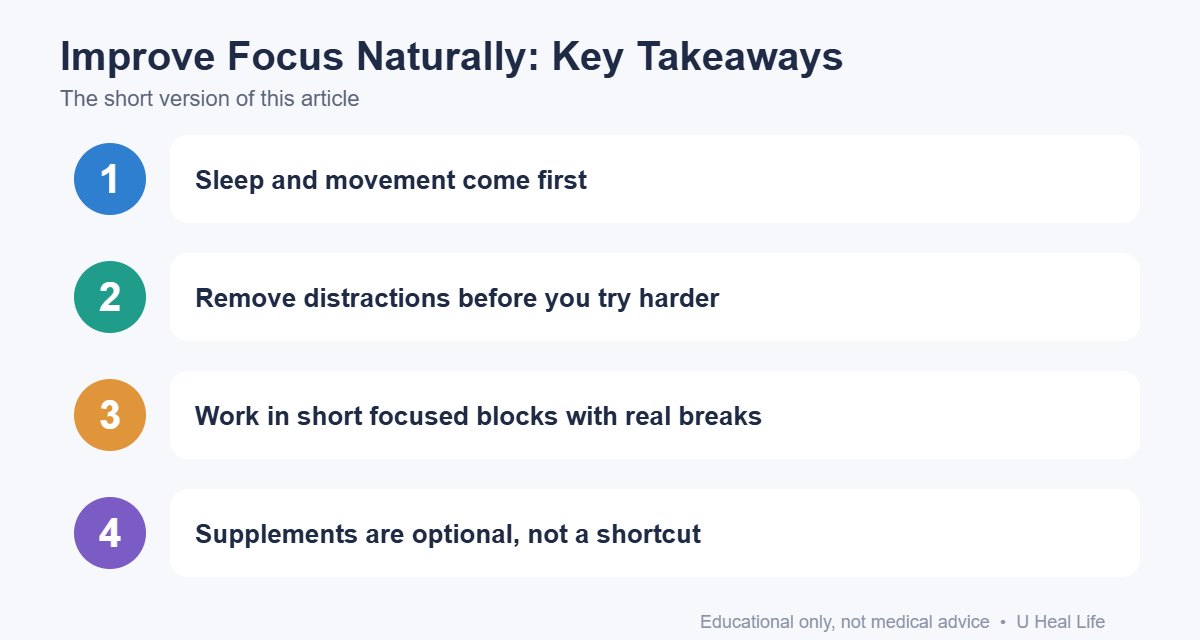
Key takeaways infographic: Sleep and movement come first; Remove distractions before you try harder; Work in short focused blocks with real breaks; Supplements are optional, not a shortcut
The key points at a glance.

1. Protect Your Sleep

Poor sleep is one of the biggest focus killers. Most adults need at least 7 hours a night, according to the US Centers for Disease Control and Prevention. Keep a steady bedtime, dim the lights in the evening, and avoid screens in the last hour.

2. Move Your Body Daily

Exercise helps your brain as well as your heart. Aim for about 150 minutes of moderate activity a week, such as brisk walking, plus short movement breaks during the day. Even a 10-minute walk can refresh your mind.

3. Do One Thing at a Time

Multitasking feels productive, but it usually makes you slower and more error-prone. Pick one task, set a timer for 25 minutes, work only on that, and then take a 5-minute break. This is often called the Pomodoro method.

4. Silence Distractions

  • Turn off non-urgent notifications
  • Put your phone in another room during deep work
  • Close extra browser tabs
  • Tell people when you need quiet time

5. Get Morning Daylight

Natural light in the morning helps set your body clock, which supports alertness by day and sleep at night.

6. Eat and Drink Regularly

Skipping meals or getting dehydrated can make you feel foggy. Eat balanced meals with protein, fiber and healthy fats, and keep water nearby.

7. Use Caffeine Wisely

Caffeine can help alertness, but too much can cause jitters and poor sleep. The FDA says up to about 400 mg a day is not generally linked with negative effects for most healthy adults. Try to stop caffeine at least 6 to 8 hours before bed.

8. Try a Short Mindfulness Practice

Five minutes of slow breathing or a simple body scan can train your attention. See our guide to simple mindfulness exercises for busy people.

9. Plan Your Top 3 Tasks

Each morning, write down the three most important things to finish. This gives your mind a clear target and reduces decision fatigue.

10. Take Real Breaks

Stand up, stretch, look at something far away, or step outside. Scrolling social media is not a real break for your brain.

A Simple Daily Focus Plan

Time of dayWhat to do
MorningDaylight, water, plan your top 3 tasks
Mid-morningOne 25-minute focus block with phone away
LunchA real meal and a short walk
AfternoonAnother focus block, then a stretch break
EveningScreens off early, calm routine, regular bedtime

Where Do Supplements Fit In?

Supplements are optional extras, not a shortcut. Sleep, food, movement and stress care come first, and a doctor should check any new supplement against your health and medicines. If you are curious about multi-ingredient nootropic supplements, read our independent BrainPill review for a balanced look at the evidence and safety points. If you decide to read more, the manufacturer’s page is below.

See BrainPill’s Official Product Details

Paid affiliate link. We may earn a commission from qualifying purchases.

Frequently Asked Questions

How long does it take to improve concentration?

Many people notice better focus within one to two weeks of steadier sleep and fewer distractions, but it varies.

Is it normal to lose focus easily?

Yes, everyone does at times, especially when tired or stressed. If it is severe or new, see our guide on why you can’t focus.

What foods help focus?

No single food works magic. A balanced diet with regular meals, enough water and omega-3-rich foods such as fish supports normal brain function.

When should I see a doctor?

If poor concentration is sudden, severe, or comes with memory loss, confusion, or low mood, speak to a healthcare professional.

Final Thoughts

Start with one or two habits from this list, such as a regular bedtime and a phone-free focus block. Build slowly, and be patient with yourself.

Related Reading

Disclaimer: This article is for educational purposes only and is not medical advice. Dietary supplements are not intended to diagnose, treat, cure, or prevent any disease. Talk to a qualified healthcare professional before using supplements, especially if you take medicine, are pregnant or breastfeeding, or have a health condition.