
Simple Mindfulness Exercises for Busy People: 10 Easy Ways to Calm Your Mind
Your phone is buzzing. Your to-do list is long. Your mind is jumping from one thing to the next.
Does this sound like your day? If yes, you are not alone. Many people think mindfulness is only for those who have a lot of free time. But the truth is, you can practice mindfulness in just a few minutes, even on the busiest day.
In this guide, you will learn what mindfulness is and 10 simple exercises you can do anywhere.
Quick answer: Mindfulness means paying attention to the present moment, on purpose and without judging. You don’t need a special place or a long time. Even 1 to 5 minutes of slow breathing, mindful walking, or mindful eating can help you feel calmer and more focused.
What Is Mindfulness?
Mindfulness is a simple idea. It means noticing what is happening right now: your breath, your body, your thoughts, and the world around you.
Most of the time, our mind is somewhere else. We replay the past or worry about the future. Mindfulness gently brings your attention back to the present.
You don’t have to stop your thoughts. You just notice them, and then return to the moment.
Why Should Busy People Try Mindfulness?
Mindfulness is not magic, but many people find it helpful. Regular practice may help you:
- Feel less stressed and overwhelmed
- Focus better on your work
- Sleep more peacefully
- Manage strong emotions with more calm
- Feel more present with family and friends
The key is to practice often, even for a short time. Small habits done daily work better than one long session once in a while.
10 Simple Mindfulness Exercises for Busy People
1. The One-Minute Breathing Break
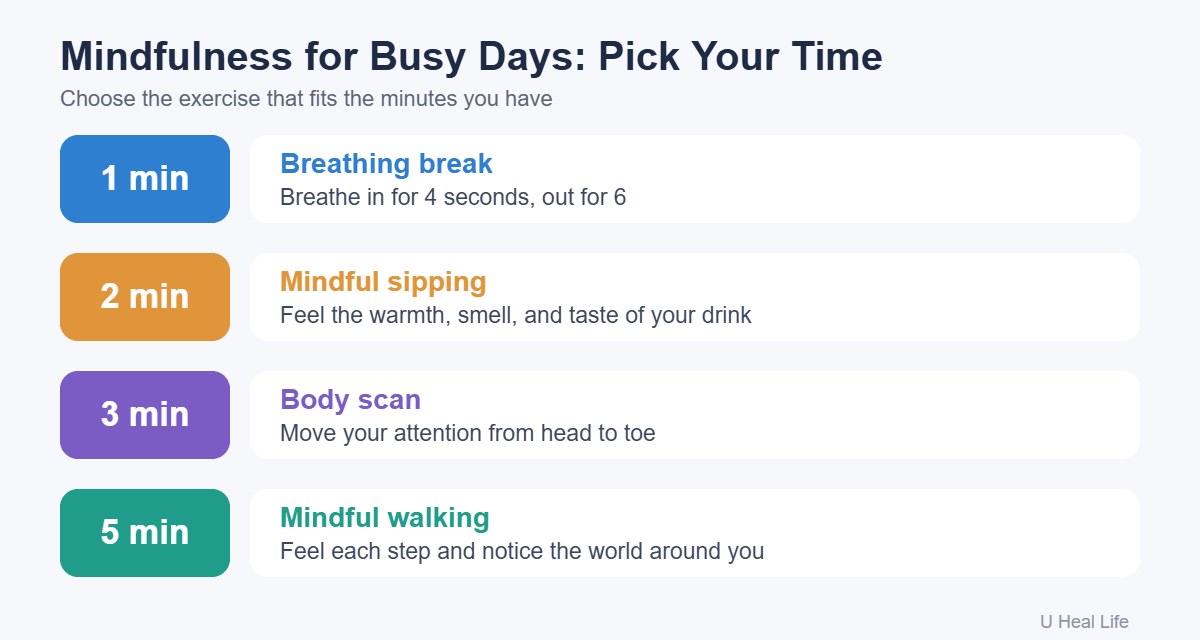
This is the easiest exercise, and you can do it anywhere.
- Sit comfortably and relax your shoulders.
- Breathe in slowly through your nose for 4 seconds.
- Breathe out slowly through your mouth for 6 seconds.
- Focus only on the feeling of your breath.
- If your mind wanders, gently bring it back.
Do this for 1 minute. That’s it.
2. The 5-4-3-2-1 Check-In
This exercise brings you back to the present moment quickly. Look around and notice:
- 5 things you can see
- 4 things you can touch
- 3 things you can hear
- 2 things you can smell
- 1 thing you can taste
It is very useful when you feel stressed or anxious.
3. Mindful Morning Start
Before you pick up your phone in the morning, take 2 minutes. Sit on your bed, take 3 slow breaths, and ask yourself: “How do I feel today?”
Then set one simple goal for the day, like “I will stay calm” or “I will take breaks.” This gives your day a calmer start.
4. Mindful Sipping
Turn your tea or coffee break into a mini mindfulness break.
- Hold the cup and feel its warmth.
- Notice the smell.
- Take a slow sip and notice the taste.
- Put your phone away for these few minutes.
You are already taking this break, so you just add attention.
5. Mindful Walking
You can do this while walking to the bus, to your office, or around your home.
- Feel your feet touching the ground.
- Notice the speed of your steps.
- Look at the trees, sky, or people around you.
- Listen to the sounds without judging them.
Even a 3 to 5 minute walk like this can clear your mind.
6. The Body Scan (3 Minutes)
Sit or lie down. Slowly move your attention from your head to your toes. Notice any tightness, warmth, or tingling. You don’t have to fix anything. Just notice.
When you find a tense area, such as your shoulders or jaw, take a slow breath and let it relax.
7. Mindful Listening
The next time someone speaks to you, try giving them your full attention.
- Put your phone down.
- Look at the person.
- Listen without planning what you will say next.
This helps you connect better with others, and it keeps your mind in the moment.
8. Mindful Eating (One Bite at a Time)
Many of us eat while working or watching screens. Try to take just the first 3 bites of your meal with full attention.
Notice the color, smell, texture, and taste. Chew slowly. This can help you enjoy your food more and notice when you feel full.
9. Mindful Pause Before Responding
When you feel angry or stressed, stop for one breath before you reply or react. Take one slow breath in and out.
This tiny pause can help you respond calmly instead of reacting quickly.
10. The Three Good Things Check
Before you sleep, think of 3 small things that went well today. It could be a warm meal, a kind message, or a quiet moment.
This helps your mind end the day with gratitude instead of worry.
How to Make Mindfulness a Daily Habit
It is easy to forget new habits when life is busy. Here are some tips:
- Link it to something you already do. For example, take 3 slow breaths every time you wash your hands or wait for the kettle to boil.
- Set a gentle reminder. Use a phone alarm or a sticky note on your desk.
- Start very small. One minute a day is enough to begin.
- Be kind to yourself. If you forget, just start again. There is no “failing” at mindfulness.
- Track your progress. Tick off the days you practice in a notebook.
Mindfulness Exercises You Can Do at Work
| Situation | Quick Exercise |
|---|---|
| Before a meeting | 3 slow breaths with your feet on the floor |
| Feeling overloaded | 5-4-3-2-1 check-in |
| Lunch break | Mindful eating for the first 3 bites |
| After a hard email | Pause for one breath before replying |
| End of work day | Stretch and take 1 minute of slow breathing |
Common Mistakes to Avoid
- Trying to stop your thoughts. Thoughts will come. Just notice them and return to your breath.
- Expecting instant results. Mindfulness works slowly, like exercise.
- Judging yourself. A wandering mind is normal. Bringing it back is the practice.
- Doing too much too soon. Start with 1 or 2 minutes.
When Mindfulness Is Not Enough
Mindfulness can be a helpful tool, but it is not a cure for everything. Please speak with a doctor or mental health professional if:
- You feel very anxious, sad, or hopeless for many days
- You can’t sleep or eat properly
- Your stress is affecting your work or relationships
- You have thoughts of harming yourself
Getting support is a strong and wise step.
Frequently Asked Questions
How long should I practice mindfulness each day?
Even 1 to 5 minutes a day can help when you do it regularly. You can slowly increase the time if you want to.
Can I practice mindfulness without meditating?
Yes. Mindful walking, eating, and listening are all ways to practice mindfulness without sitting in meditation.
What is the easiest mindfulness exercise for beginners?
The one-minute breathing break is a great start. Breathe in for 4 seconds, breathe out for 6 seconds, and focus on your breath.
Does mindfulness really reduce stress?
Many people find that it helps them feel calmer, and research suggests that regular practice may help with stress. Results are different for each person, and it works best as part of healthy habits like sleep and exercise.
What if my mind keeps wandering?
That is completely normal. Every time you notice and bring your attention back, you are practicing mindfulness.
What is the best time to practice mindfulness?
Any time works. Many people like mornings, work breaks, or before bed. Choose a time that fits your day.
Can children or teens practice these exercises?
Yes. Simple exercises like breathing and the 5-4-3-2-1 check-in are easy for most people to learn. It is best to guide younger children gently.
Final Thoughts
You don’t need a quiet room, a cushion, or an hour of free time to practice mindfulness. You only need a few minutes and a little attention.
Start with one exercise from this list today. Try it for a week. Small moments of calm can add up to a more peaceful life.
Disclaimer: This article is for general information only and is not medical advice. If you are struggling with your mental health, please speak with a qualified healthcare professional.