
Why Do I Feel Anxious for No Reason? 9 Common Causes and What to Do
Have you ever felt your heart beating fast, your chest feeling tight, or your mind filled with worry, and you could not say why? Nothing bad happened. Everything seems fine. But you still feel anxious.
This can be confusing and scary. But it is more common than you think.
In this guide, we explain in simple words why this happens, what may be causing it, and what you can do about it.
Quick answer: Anxiety “for no reason” usually does have a reason. It may come from stress that builds up slowly, poor sleep, too much caffeine, health issues, or past worries your mind is still holding on to. Slow breathing, good sleep, and talking to someone can help. If it keeps happening, speak with a doctor or therapist.
What Does Anxiety Feel Like?
Anxiety feels different for each person. Common signs include:
In your mind:
- Constant worry or a feeling that “something bad will happen”
- Trouble focusing
- Feeling restless or on edge
- Overthinking
In your body:
- Fast heartbeat
- Tight chest or shortness of breath
- Sweaty hands
- Stomach problems or nausea
- Shaky or tense muscles
- Feeling tired or having trouble sleeping
These feelings can show up even when you are sitting at home doing nothing.
Why Do I Feel Anxious for No Reason? 9 Common Causes
Anxiety without a clear cause is often called “free-floating anxiety.” Here are some reasons it may happen.
1. Stress That Slowly Builds Up
Small stresses like work, money, family, and daily pressure can pile up. You may not notice them, but your body does. One day, you feel anxious and can’t point to why. It is often the “sum” of many small things.
2. Not Enough Sleep
When you don’t sleep well, your brain becomes more sensitive to stress. Even small problems can feel big. Poor sleep and anxiety also feed each other, making both worse.
3. Too Much Caffeine
Coffee, tea, cola, and energy drinks can make your heart beat faster and make you feel jittery. For some people, this feels just like anxiety. If you are sensitive to caffeine, even a small amount can trigger it.
4. Skipping Meals or Low Blood Sugar
When you go too long without eating, your blood sugar can drop. This may cause shaking, dizziness, and a nervous feeling. Eating regular meals can help your body feel steady.
5. Overthinking and Mental Overload
Too much news, social media, work messages, and constant “what if” thoughts keep your brain on alert. It never gets time to rest, so anxiety can build.
6. Past Experiences and Old Worries
Sometimes the mind holds on to old stress, sad memories, or fears, even if you are not thinking about them on purpose. Your body may react before your mind understands why.
7. Hormone and Body Changes
Changes in hormones, such as during periods, pregnancy, or menopause, can affect mood and anxiety in some people.
8. Health Conditions and Medicines
Some medical issues, such as thyroid problems, can cause anxiety-like symptoms. Some medicines can also do this. If your anxiety is new or strong, it is a good idea to get a check-up and rule these out.
9. An Anxiety Disorder
Sometimes anxiety is more than normal stress. Conditions like generalized anxiety disorder or panic disorder can cause strong worry or sudden fear, even when there is no clear danger. These are common and treatable.
What Is a Panic Attack?
A panic attack is a sudden wave of strong fear. It may cause:
- Racing heart
- Trouble breathing
- Chest pain or pressure
- Sweating or shaking
- Feeling dizzy
- Feeling like you are losing control
It can feel very scary, but it usually passes in several minutes. If you have chest pain or trouble breathing and you are unsure of the cause, get medical help right away. It is always better to be safe.
8 Simple Ways to Calm Anxiety
1. Name It
Say to yourself: “I am feeling anxious. This is anxiety. It will pass.” Naming a feeling can make it less scary.
2. Slow Your Breathing
Breathe in through your nose for 4 seconds. Breathe out slowly for 6 seconds. Repeat for a few minutes.
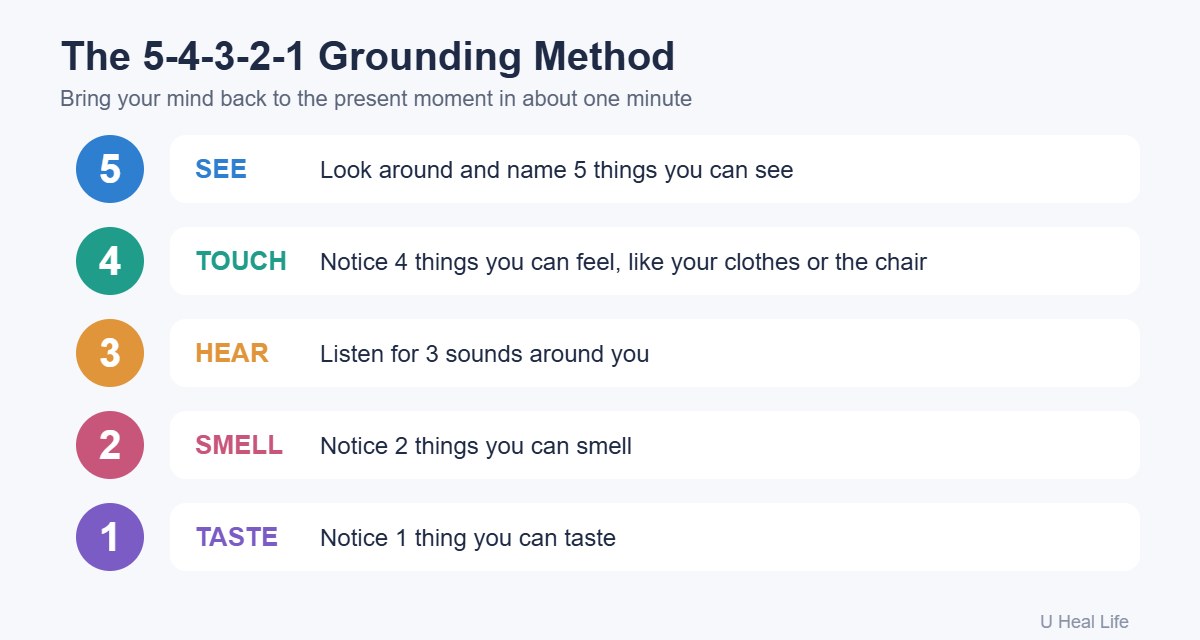
3. Try the 5-4-3-2-1 Method
This brings your mind back to the present moment. Look around and notice:
- 5 things you can see
- 4 things you can touch
- 3 things you can hear
- 2 things you can smell
- 1 thing you can taste
4. Move Your Body
A short walk, stretching, or light exercise helps burn off stress energy.
5. Cut Down on Caffeine
Try reducing coffee, tea, and energy drinks for a week or two and see if you feel better.
6. Sleep and Eat Regularly
Go to bed and wake up at about the same time. Try not to skip meals.
7. Write It Out
Write down what you are feeling and thinking. Sometimes the reason becomes clearer once it is on paper.
8. Talk to Someone
Speak to a friend or family member you trust. You don’t have to carry everything alone.
When Should You See a Doctor or Therapist?
Please reach out for professional help if:
- Anxiety happens often or lasts for weeks
- It is hard to control your worry
- It affects your sleep, work, studies, or relationships
- You have panic attacks
- You avoid places or activities because of fear
- You feel hopeless or have thoughts of harming yourself
If you are in crisis or in danger, contact your local emergency number or a crisis helpline right away.
Therapy (like cognitive behavioral therapy), lifestyle changes, and sometimes medicine can help a lot. Many people feel much better with the right support.
Frequently Asked Questions
Is it normal to feel anxious for no reason?
Yes, it is common. Many people feel anxious without a clear trigger. Often there is a hidden cause, like stress, poor sleep, or too much caffeine.
Why do I feel anxious all of a sudden?
Sudden anxiety may be caused by stress, caffeine, low sleep, or a panic attack. If it happens often, talk to a doctor.
Can anxiety come from nothing?
Anxiety may seem to come from nothing, but your body and mind may be reacting to stress or other causes you haven’t noticed yet.
How long does anxiety last?
A wave of anxiety often passes in minutes to hours. But anxiety that lasts for weeks or keeps coming back should be checked by a professional.
How do I stop anxiety right now?
Try slow breathing, the 5-4-3-2-1 method, and a short walk. Drink some water and try to relax your shoulders.
Can lack of sleep cause anxiety?
Yes. Poor sleep can make your brain more sensitive to stress and make anxiety stronger.
Can anxiety cause physical symptoms?
Yes. Anxiety can cause a fast heartbeat, stomach issues, headaches, and muscle tension. If you are worried about a symptom, it is a good idea to see a doctor.
Final Thoughts
Feeling anxious for no reason can be upsetting, but it does not mean something is wrong with you. Your body and mind may be trying to tell you that you need rest, support, or change.
Be kind to yourself. Take small steps, and don’t be afraid to ask for help. Anxiety is common, and it can get better.
Disclaimer: This article is for general information only and is not a medical diagnosis or treatment. If you are struggling with anxiety, please talk with a qualified healthcare professional.