Impact-Site-Verification: 65ebaf0c-2dbc-4200-9d50-11ea7af40e54

How to calm your mind in 5 minutes
How to Calm Your Mind in 5 Minutes: 12 Science-Backed Techniques

Racing thoughts, a tight chest, and a mind that won’t switch off are something almost everyone experiences at some point. The good news is that you don’t need an hour of meditation or a weekend retreat to feel calmer. Many simple techniques can help settle your nervous system in about five minutes or less.

Below are 12 practical, research-informed ways to calm your mind. Try a few and keep the ones that work best for you.

1. Box Breathing

Breathe in for four seconds, hold for four, breathe out for four, and hold for four. Repeat for two to three minutes. The steady rhythm gives your mind something simple to focus on and can slow your heart rate.

2. Extend Your Exhale

Breathe in through your nose for a count of four, then out slowly for a count of six to eight. Longer exhales are commonly used to help activate the body’s relaxation response.

3. The Physiological Sigh

Take a deep breath in through your nose, add a second short inhale on top of it, then let out a long, slow breath through your mouth. A 2023 Stanford-led study found that a few minutes a day of this kind of “cyclic sighing” improved mood and reduced breathing rate over time.

4. The 5-4-3-2-1 Grounding Exercise

Look around and name five things you can see, four you can touch, three you can hear, two you can smell, and one you can taste. This pulls your attention out of anxious thoughts and back into the present moment.

5. Splash Cold Water on Your Face

Cold water on your face or wrists can briefly slow your heart rate and interrupt a spiral of stress. It’s quick, free, and works almost anywhere.

6. Progressive Muscle Relaxation

Starting with your feet and moving upward, tense each muscle group for five seconds, then release. Noticing the contrast between tension and relaxation helps your body let go of stress it may be holding without you realizing it.

7. Do a Quick Brain Dump

Grab a pen and write down everything that’s on your mind for three to five minutes without editing. Getting worries out of your head and onto paper can make them feel more manageable and less overwhelming.

8. Take a Short Walk

Even five minutes of walking, especially outdoors, can lift your mood and clear mental clutter. If you can, leave your phone behind or keep it in your pocket.

9. Try a One-Minute Mindfulness Check-In

Close your eyes and focus on the sounds around you, or on the feeling of your feet on the floor. When your mind wanders, gently bring it back. You don’t have to empty your mind; you just practice noticing where it is.

10. Listen to Slow, Calming Music

Slow-tempo music without lyrics can help lower tension and make it easier to breathe more slowly. Keep a short calming playlist ready for stressful moments.

11. Name the Emotion

Silently say, “I’m feeling anxious” or “I’m feeling overwhelmed.” Putting a label on what you feel, sometimes called affect labeling, has been linked in research to reduced emotional intensity.

12. Reach Out to Someone

A quick call or message to a friend or family member can remind you that you’re not alone. You don’t have to talk about the problem; sometimes just hearing a familiar voice is enough to settle you.

Make Calm a Daily Habit

These techniques work best when you practice them regularly, not only when you’re overwhelmed. Try pairing a breathing exercise with something you already do each day, such as brushing your teeth or making your morning coffee. Small, consistent habits can make it easier to stay calm when stress spikes. If constant scrolling is adding to your stress, our guide to social media anxiety offers more ideas.

When It’s More Than Everyday Stress

If racing thoughts, panic attacks, or constant worry are interfering with your sleep, work, or relationships, it’s worth talking with a doctor or a licensed mental health professional. Our guides to mental health insurance coverage and online therapy costs can help you figure out your options. If you ever have thoughts of harming yourself, call or text 988 (the Suicide & Crisis Lifeline in the US) or contact local emergency services right away.

This article is for general educational purposes and is not a substitute for professional medical or mental health advice.

The Let Them theory explained
The “Let Them” Theory: What It Means and How It Can Improve Your Relationships

If you’ve scrolled through social media or listened to a podcast lately, chances are you’ve heard someone say, “Let them.” The idea, popularized by author and podcast host Mel Robbins in her 2024 book The Let Them Theory, has struck a chord with millions of people who are tired of exhausting themselves trying to manage what other people think, say, and do.

But what does the “Let Them” theory actually mean, does it have any basis in psychology, and when does it fall short? Let’s break it down.

What Is the “Let Them” Theory?

At its core, the theory is simple: when someone does something you can’t control, like canceling plans, forgetting your birthday, judging your choices, or not texting back, you stop trying to change or manage their behavior and instead say to yourself, “Let them.”

The second half of the idea is just as important. Once you’ve let go of what you can’t control, you turn your attention to what you can control, your own response. Some people call this the “Let me” step: Let me decide how I want to spend my time, what I want to say, and what I want to do next.

Why It Resonates With So Many People

Trying to control other people’s reactions is draining. We replay conversations, overthink messages, and rearrange our lives to avoid conflict or disapproval. The “Let Them” mindset gives people permission to stop carrying that weight.

It also echoes ideas that have been around for a long time. Stoic philosophy distinguishes between what is and isn’t within our control, and acceptance-based approaches in modern therapy encourage people to stop fighting reality and focus on values-based action. The theory isn’t brand new, but it packages those ideas in a simple, memorable phrase.

Everyday Examples of the “Let Them” Theory

  • A friend keeps canceling plans. Let them. Then decide how much effort you want to put into the friendship going forward.
  • A family member disapproves of your choices. Let them. You can still make the decision that’s right for you.
  • Someone you like isn’t replying as quickly as you’d hoped. Let them. Their pace tells you something about their priorities, and you can decide what to do with that information.
  • A coworker has a different working style. Let them. Focus on doing your own work well and communicating clearly.

How to Practice It in 4 Steps

  1. Notice the urge to control. Pay attention to the moment you start rehearsing arguments, over-explaining, or trying to change someone’s mind.
  2. Say “Let them.” Name what is outside your control, whether that’s their opinion, mood, or choice.
  3. Ask “What’s in my control?” Your response, your boundaries, and where you put your time and energy are all yours.
  4. Choose an action. That might be a calm conversation, a boundary, a decision to invest less, or simply moving on with your day.

When the “Let Them” Theory Falls Short

Like any simple mantra, it has limits, and it works best when it’s not used as an excuse to avoid hard conversations.

  • It isn’t a substitute for boundaries. “Let them” doesn’t mean tolerating disrespect, manipulation, or harm. Letting someone be who they are can also mean deciding you no longer want them close to you.
  • It doesn’t replace communication. In healthy relationships, you still need to share your needs and listen to theirs.
  • It doesn’t apply to unsafe situations. If you’re experiencing abuse or feel unsafe, it’s not about letting go. Reach out to a trusted person or a professional for support.
  • It can become avoidance. If “let them” becomes a way to dodge every uncomfortable conversation, it may be hurting your relationships rather than helping them.

Can It Help With Anxiety and Overthinking?

Many people who struggle with people-pleasing, social anxiety, or overthinking find the idea helpful because it shifts focus from other people’s reactions to their own actions. It’s not a treatment for anxiety, though. If worry about what others think is affecting your daily life, it may be worth exploring with a licensed therapist. Our articles on social media anxiety and mental health insurance coverage can help you understand your options.

The Bottom Line

The “Let Them” theory isn’t magic, but it’s a practical reminder that you can’t control other people, and you don’t have to. Used thoughtfully, alongside clear boundaries and honest communication, it can free up a surprising amount of mental energy and make your relationships feel lighter.

This article is for general educational purposes and is not a substitute for professional mental health advice.

8 signs you need a mental health day
8 Signs You Need a Mental Health Day (and How to Take One)

Most of us don’t think twice about calling in sick when we have a fever or a migraine. But when what’s worn down is your mind rather than your body, it’s much easier to push through, tell yourself it’s “not that bad,” and keep going until something gives.

A mental health day is a planned break from work, school, or daily obligations so you can rest, reset, and look after your emotional well-being. It isn’t a cure for anxiety, depression, or chronic burnout, but it can interrupt a downward spiral before it gets worse. Here are eight signs it may be time to take one.

1. You’re Exhausted Even After Sleeping

Fatigue that doesn’t improve with a full night’s rest is one of the most common signals of mental overload. When stress stays high for weeks, your body stays in a state of alert, and sleep stops feeling restorative.

2. Small Things Set You Off

If a slow driver, a noisy coworker, or an unanswered text suddenly feels unbearable, your stress tolerance may be running on empty. Irritability is often the first thing others notice before we notice it ourselves.

3. You Can’t Concentrate

Reading the same email three times, forgetting simple tasks, or staring at a screen without taking anything in are signs your brain is overloaded. Chronic stress can interfere with attention and memory, which is why “brain fog” and burnout often go hand in hand.

4. You Dread Work or Everyday Responsibilities

Everyone has bad Mondays. But if dread about work, school, or home life shows up most days, or starts creeping in on the weekend, it’s worth paying attention to.

5. Your Body Is Sending Signals

Stress doesn’t stay in the mind. Frequent headaches, stomach trouble, tight shoulders, a clenched jaw, changes in appetite, and getting sick more often can all be physical signs that you’re running on too little rest and too much pressure.

6. Things You Usually Enjoy Feel Flat

When hobbies, favorite shows, or time with friends stop feeling enjoyable, your mind may be asking for a break. Losing interest in things you normally like is also a symptom commonly linked with depression, so keep an eye on how long it lasts.

7. You’re Pulling Away From People

Canceling plans, ignoring messages, or avoiding conversations because you simply have no energy left is a classic sign of emotional overload. A day to rest can help you show up for the people you care about with more to give.

8. You’re Leaning on Coping Crutches

More caffeine to get going, more alcohol to wind down, endless scrolling to avoid thinking, or comfort eating to get through the day can all be signs you’re coping rather than recovering. If you notice the pattern, it’s a good moment to pause.

What a Good Mental Health Day Looks Like

A mental health day works best when it’s genuinely restful, not just a day off spent catching up on chores or doom-scrolling. A few ideas:

  • Disconnect on purpose. Mute work email and chat notifications for the day.
  • Let yourself rest. Sleep in if you can, or take a nap without guilt.
  • Move gently. A walk outside, light stretching, or yoga can lower tension without draining you.
  • Do something restorative. Cook a meal you enjoy, read, draw, listen to music, or spend time in nature.
  • Connect with someone safe. A short call with a friend or family member can lift your mood more than staying isolated.
  • Name what’s weighing on you. Write down what’s been draining you, then pick one small thing you can change this week.

How to Ask for a Mental Health Day

Policies vary by employer and by state, so check your company handbook or HR guidelines. Many workplaces allow sick leave to be used for mental health reasons, and in most cases you don’t have to share details. A simple message such as “I’m not feeling well and need to take a sick day” is usually enough.

When One Day Off Isn’t Enough

A mental health day is a short-term reset, not a long-term solution. If you’ve felt this way most days for two weeks or longer, or if your sleep, appetite, work, or relationships are being affected, it’s a good idea to talk with your doctor or a licensed mental health professional. If you’re not sure how to afford care, our guide to mental health insurance coverage and our breakdown of online therapy costs can help you plan next steps. You may also find our article on social media anxiety useful if constant scrolling is adding to your stress.

If you ever have thoughts of harming yourself, call or text 988 (the Suicide & Crisis Lifeline in the US) or contact your local emergency services right away.

This article is for general educational purposes and is not a substitute for professional medical or mental health advice.

Social media anxiety - 9 signs and 7 science-backed ways to feel better
Social Media Anxiety: 9 Signs and 7 Science-Backed Ways to Feel Better in 2026

This article is for general information only and is not medical or mental health advice. If you are struggling, please speak with a qualified professional.

You open an app “just for a minute,” and 40 minutes later you feel tense, behind in life and strangely drained. If that sounds familiar, you are not alone. Social media anxiety is the stress, worry or unease many people feel before, during or after using social platforms. It is not an official diagnosis on its own, but it is a very real experience, and there are practical things you can do about it.

What Is Social Media Anxiety?

Social media anxiety describes feelings of nervousness, pressure or dread connected to social platforms. For some people it is about how they appear to others: worrying about likes, comments or what to post. For others it is about what they see: constant comparison, bad news, or the fear of missing out (FOMO). It can also show up as an urge to keep checking, even when checking makes you feel worse.

9 Signs You May Have Social Media Anxiety

  1. You feel uneasy when you cannot check your phone. Leaving it at home or running out of battery creates a spike of worry.
  2. You compare yourself constantly. Other people’s highlights make your own life feel small.
  3. You overthink every post. You rewrite captions, delete posts or worry for hours about reactions.
  4. You feel worse after scrolling. You close the app more tired, irritable or low than when you opened it.
  5. You struggle with FOMO. Seeing events you were not part of leaves you anxious or left out.
  6. Notifications raise your stress. Every buzz creates a small jolt of tension.
  7. You doomscroll. You keep reading distressing news even though it increases your worry.
  8. Your sleep suffers. Late-night scrolling delays bedtime and leaves your mind racing.
  9. You avoid real-life activities. You spend less time with friends, hobbies or work because of time spent online, or because of worry about what you will see.

Having one or two of these now and then is common. If several apply to you most days, it is worth taking the steps below.

Why Does Social Media Make Some People Anxious?

  • Social comparison. We tend to compare our everyday life with other people’s best moments.
  • Variable rewards. Likes and new notifications arrive unpredictably, which keeps us checking.
  • Endless feeds. There is no natural stopping point, so scrolling can run on much longer than planned.
  • Negative content. Algorithms often surface emotional or alarming posts because they get attention.
  • Less sleep and movement. Time online can crowd out rest, exercise and face-to-face contact, all of which protect mental health.

7 Practical Ways to Reduce Social Media Anxiety

1. Do a notification audit

Turn off all non-essential notifications, such as likes, suggestions and “someone posted” alerts. Keep only messages from people you actually need to hear from. You decide when to check, rather than the app deciding for you.

2. Set time limits that you can actually keep

Use the built-in screen time tools on iPhone or Android to set a daily limit for each app. Start generous, for example 45 to 60 minutes, then reduce gradually. Small, steady changes work better than a dramatic cold turkey attempt.

3. Curate your feed

Mute or unfollow accounts that leave you feeling anxious, inadequate or angry. Follow more accounts that teach you something, make you laugh or genuinely support your goals. Your feed is something you can design.

4. Create phone-free zones and times

Try keeping your phone out of the bedroom, and avoid screens for the last 30 to 60 minutes before bed. Charge it across the room and use a basic alarm clock. Better sleep alone often reduces anxiety noticeably.

5. Take a short digital detox

Try a weekend, or even one social-media-free evening a week. Notice how you feel without the constant input. Many people find that a short break makes it clear which parts of social media they value and which they do not.

6. Replace scrolling with something else

Often the habit is about filling a gap: boredom, stress or waiting. Keep a simple replacement ready, such as a short walk, a few minutes of deep breathing, a book, music or messaging a friend directly.

7. Practice mindful checking

Before opening an app, pause and ask: “Why am I opening this? How do I feel right now?” After closing it, check in again. This small habit builds awareness of which apps and moments help you and which do not.

When to Seek Professional Help

Consider talking to a doctor, licensed therapist or counselor if:

  • Anxiety is affecting your work, school, relationships or sleep for more than a few weeks
  • You are unable to cut back even though you want to
  • You have panic attacks, constant worry or feelings of hopelessness

Therapies such as cognitive behavioral therapy (CBT) are commonly used for anxiety. If you are in the United States and are in crisis or having thoughts of harming yourself, call or text 988 to reach the 988 Suicide & Crisis Lifeline, available 24/7. If you are elsewhere, please contact your local emergency number or crisis service.

Frequently Asked Questions

Is social media anxiety a real condition?

It is not a separate formal diagnosis, but anxiety linked to social media use is widely discussed by researchers and clinicians, and the feelings are very real. A mental health professional can help you work out what is going on for you.

How long does it take to feel better after reducing social media?

It varies. Some people notice a difference within days, such as better sleep and calmer evenings, while others need a few weeks of consistent changes.

Do I have to quit social media completely?

No. For most people the goal is a healthier relationship with it: fewer triggers, set limits and more intention, rather than quitting entirely.

Can teens experience social media anxiety?

Yes. Teens may feel strong pressure around appearance, popularity and responses from peers. Open, judgment-free conversations with a trusted adult can help, and a pediatrician or school counselor is a good starting point.

Final Thoughts

Social media itself is not “good” or “bad.” What matters is how it makes you feel and how much space it takes in your life. Start with just one or two changes this week, such as switching off notifications and keeping your phone out of the bedroom, and notice what shifts. Small, consistent steps add up to calmer, more intentional days.

Women's mental health and trauma recovery residential treatment
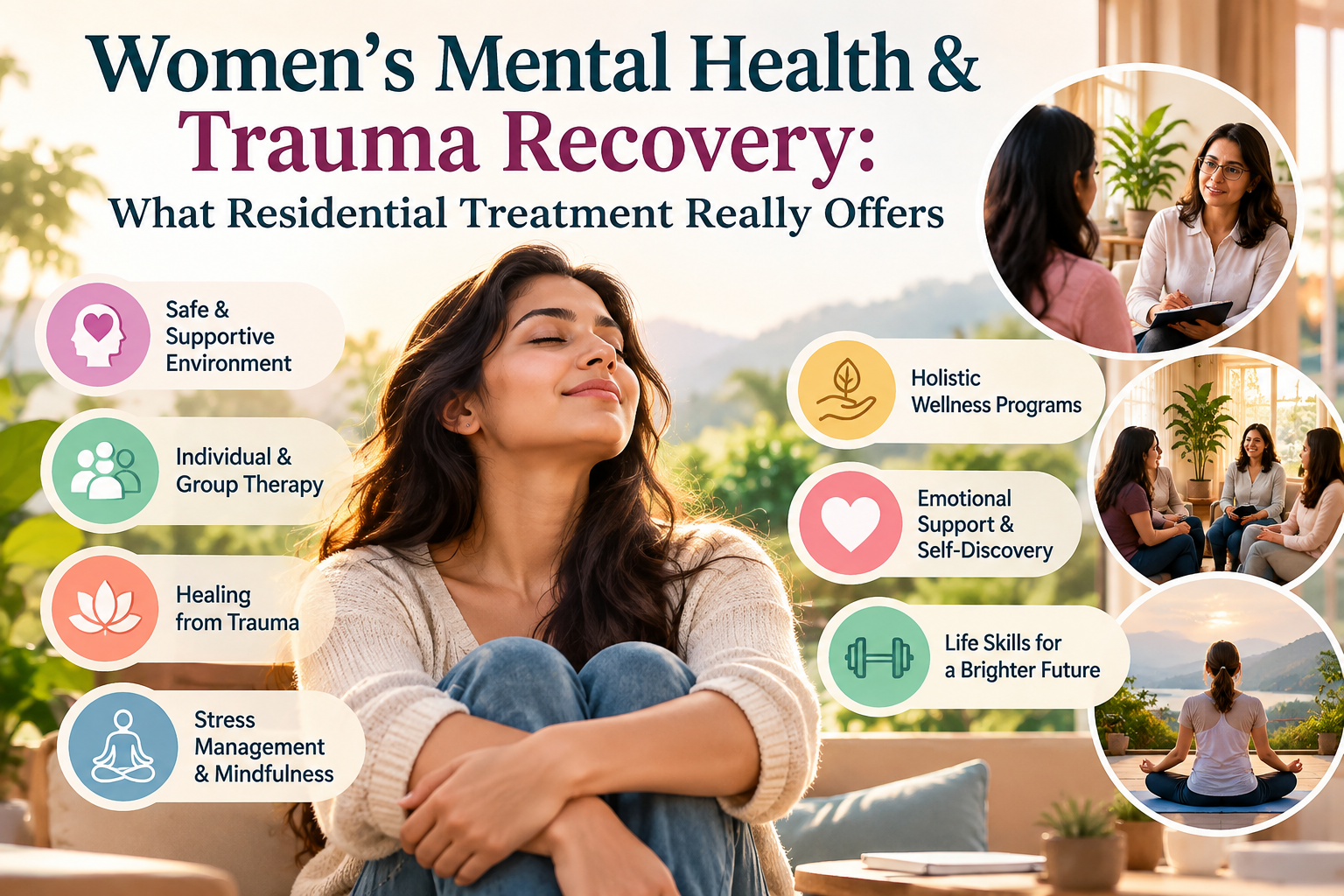
Women’s Mental Health & Trauma Recovery: What Residential Treatment Really Offers

For many women, the breaking point doesn’t arrive all at once. It builds quietly — through years of unprocessed trauma, chronic anxiety, burnout, or a slow slide into substance use as a way to cope. By the time someone starts searching for help, they’re often looking for more than a weekly therapy appointment. They’re looking for a place that can hold the whole picture: the mind, the body, and the life that needs rebuilding.

This is where women’s residential mental health and trauma treatment centers come in — programs like Villa Kali Ma in California, and others like it across the country, that offer immersive, live-in care specifically designed around how women experience trauma, addiction, and recovery differently than men do.

If you’re researching these programs for yourself or someone you love, here’s what to actually know before you choose one.

Why Women-Only Treatment Programs Exist

Trauma doesn’t show up the same way for everyone. Research consistently shows that women are more likely to have experienced interpersonal trauma — abuse, assault, or complex relational wounds — and are more likely to develop co-occurring anxiety, depression, or eating patterns alongside substance use. Mixed-gender treatment settings can sometimes recreate the very dynamics — power imbalances, unsafe attention, difficulty being vulnerable — that contributed to the trauma in the first place.

Women-only residential programs are built to remove that barrier. The goal isn’t exclusion; it’s creating a setting where someone can actually let their guard down enough to do the deeper work.

What These Programs Typically Include

Most reputable women’s residential mental health and trauma centers combine several layers of care rather than relying on one method alone:

Clinical mental health treatment Licensed psychiatrists and therapists assess and treat co-occurring conditions — PTSD, anxiety, depression, and substance use disorders together, not in isolation. This is often called a “dual diagnosis” or “co-occurring disorders” approach, and it matters because treating addiction without treating the underlying trauma rarely holds long-term.

Somatic and body-based therapy Talk therapy alone often isn’t enough when trauma is stored in the nervous system, not just in memory. Many programs use somatic release work, nervous system regulation techniques, and body-based practices to help process trauma that words can’t fully reach.

Holistic and experiential practices Yoga, breathwork, art or movement therapy, and time in nature are common additions — not as a replacement for clinical care, but as a way to help the body reconnect with a sense of safety.

Structured community Living alongside other women going through similar struggles, in a home-like rather than clinical setting, is often cited by former residents as one of the most meaningful parts of recovery — the sense of not being the only one.

Aftercare and stepped-down support Good programs don’t end at discharge. They typically offer outpatient step-down options (like an Intensive Outpatient Program, or IOP) and connect residents to ongoing support groups so recovery doesn’t stop the moment treatment does.

Questions to Ask Before Choosing a Program

If you’re comparing options — whether it’s a well-known name like Villa Kali Ma or a smaller local program — these are the questions worth asking directly:

  • Is the facility licensed by the state’s Department of Health Care Services (or equivalent)? Ask for the license number.
  • Who is overseeing medical and psychiatric care — is there a licensed physician or psychiatrist on staff, not just counselors?
  • Does the program treat co-occurring conditions (trauma + addiction, or trauma + anxiety/depression) together, or only one at a time?
  • What does a typical day actually look like — how much is clinical therapy versus holistic/experiential work?
  • What insurance plans are accepted, and what happens if coverage runs out before treatment is complete?
  • What does aftercare look like once residential treatment ends?
  • Can you speak to the intake team before committing, and can family be involved in the process if appropriate?

A program that’s confident in its care will answer these clearly and without pressure tactics.

A Note on Cost and Insurance

Residential mental health and trauma treatment is a significant financial and time commitment — often 30 days or more, and not always fully covered by insurance. Many centers, including larger names in this space, work with major insurers (such as Health Net-affiliated plans) as in-network or out-of-network providers. Before enrolling anywhere, get a clear, written breakdown of what’s covered, what isn’t, and what the total out-of-pocket cost could look like.

You Don’t Have to Have a “Big Enough” Reason

One of the most common things women say after starting treatment is that they waited too long because they didn’t think their pain was “bad enough” to deserve help. Trauma isn’t a competition, and burnout, chronic anxiety, and quiet substance dependence are just as valid reasons to seek residential-level care as a single dramatic crisis point.

If you’re not sure whether your situation calls for residential treatment versus outpatient therapy, that’s a conversation worth having with a licensed mental health professional rather than deciding alone.


This article is for general educational purposes and isn’t a substitute for professional medical or psychiatric advice. If you or someone you know is in immediate crisis, please contact a local emergency service or a crisis line such as the 988 Suicide & Crisis Lifeline (call or text 988 in the US).

https://www.uheallife.com/ SEO BLOG

Created by you

Add PDFs, documents, or other text to reference in this project.

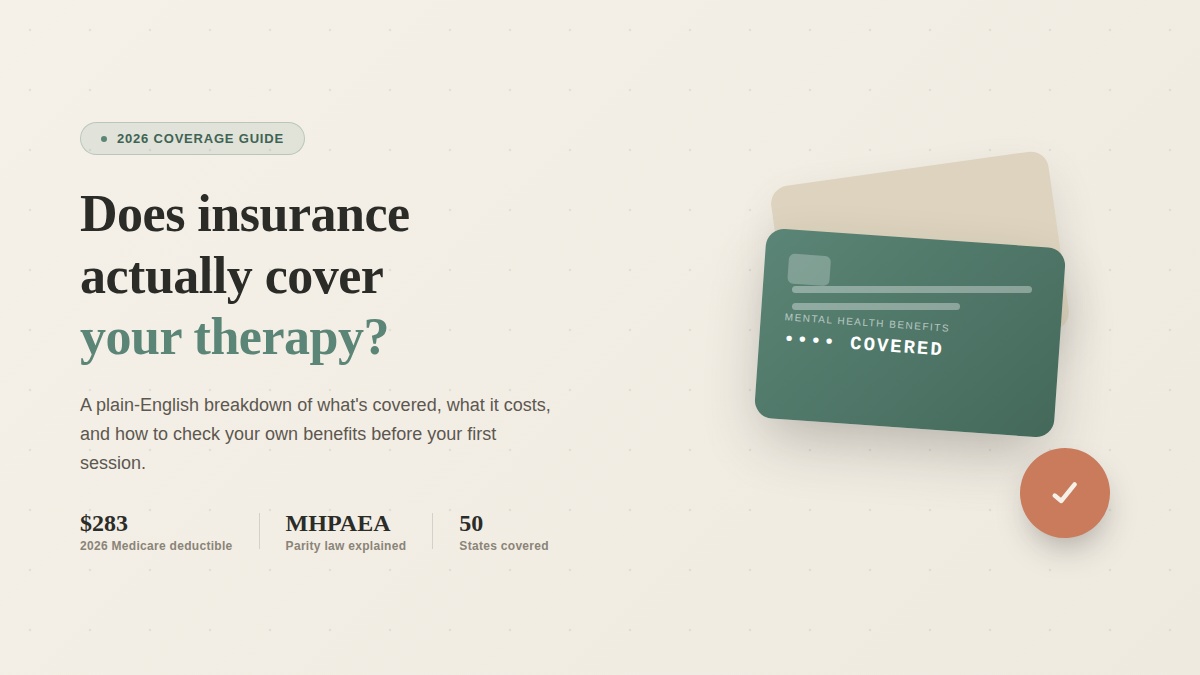
Does Health Insurance Cover Therapy? A Complete Guide to Mental Health Coverage in the USA (2026)

If cost is the only thing standing between you and starting therapy, you’re far from alone. Nearly 1 in 5 U.S. adults live with a mental illness, and cost remains the most commonly cited barrier to getting treatment. The good news: most health insurance plans are legally required to cover therapy. The confusing part is figuring out exactly what that means for your specific plan, your specific therapist, and your specific bill.

This guide walks through what’s actually covered, what it costs in 2026, and how to check your own benefits before you book a first session.

The Short Answer

Yes — most health insurance plans in the U.S. cover therapy. This isn’t just common practice; it’s federal law. Under the Mental Health Parity and Addiction Equity Act (MHPAEA) of 2008, insurers that offer mental health benefits must cover them on equal terms with physical health care — meaning your plan can’t quietly impose a lower session cap, a higher copay, or a stricter approval process for therapy than it does for, say, a visit to your primary care doctor.

The Affordable Care Act (ACA) went a step further in 2010, classifying mental health and substance use treatment as one of ten “essential health benefits” that all ACA-marketplace and most employer plans must include — and ACA-compliant plans cannot place annual or lifetime dollar limits on mental health coverage.

That’s the legal floor. What you actually pay still depends heavily on your specific plan, so let’s break that down by coverage type.

What Counts as “Therapy” for Insurance Purposes

Most plans group therapy under “mental health services” or “behavioral health benefits,” and typically include:

  • Individual psychotherapy (talk therapy)
  • Group therapy
  • Family therapy
  • Psychiatric visits, including medication management
  • Substance use disorder counseling

Coverage is generally tied to the provider’s license rather than the specific therapy technique — so whether your therapist uses CBT, DBT, EMDR, or another evidence-based approach usually doesn’t change whether it’s covered, as long as the provider type (licensed psychologist, licensed clinical social worker, licensed counselor, psychiatrist, etc.) is one your plan recognizes.

One detail that trips people up: most insurers require a documented mental health diagnosis before they’ll pay. Your therapist typically handles this as part of standard intake, but it’s worth knowing it’s happening.

Coverage by Plan Type

Employer-Sponsored Insurance

If you get insurance through a job, and your employer has 50 or more employees, your plan is required to follow MHPAEA parity rules whenever it offers mental health benefits at all. Self-funded employer plans (common at larger companies) also have to comply with MHPAEA, though they’re not subject to the same state-level insurance regulations as fully-insured plans.

ACA Marketplace Plans

If you bought your plan through healthcare.gov or a state exchange, mental health and substance use coverage is legally mandatory — it’s one of the ACA’s essential health benefits, and your plan can’t carve it out or cap it the way some older plans could.

Medicare

Medicare Part B covers outpatient psychotherapy when a provider documents medical necessity. In 2026, you’re responsible for 20% co-insurance after meeting the $283 annual Part B deductible — and there’s no hard cap on the number of sessions as long as ongoing treatment is documented as medically necessary. One change worth knowing: as of late January 2026, Medicare telehealth therapy generally requires an in-person visit within the prior six months, under a new CMS rule.

Medicaid

Medicaid covers mental health services in all 50 states and Washington, D.C., though the specific services and cost-sharing vary state by state. Medicaid expansion — which covers low-income adults earning up to 138% of the federal poverty level — is active in 40 states and D.C. as of 2026. For kids, coverage is even broader: under the EPSDT benefit, children on Medicaid are entitled to all medically necessary mental health services regardless of how a particular state structures its plan.

Short-Term and Catastrophic Plans

This is the gap worth knowing about. Short-term health plans are generally exempt from the ACA’s mental health mandate, meaning therapy coverage can be limited or excluded entirely. Catastrophic plans (carrying a $10,600 deductible in 2026, available mainly to people under 30 or those with a hardship exemption) technically include mental health as an essential benefit, but the high deductible means you may be paying full price out of pocket until you hit it.

What You’ll Actually Pay

Coverage existing on paper and coverage being affordable in practice are two different things — here’s where the real cost sits:

  • Average therapy session cost without insurance: roughly $100–$200, varying by location, therapist experience, and session type
  • Typical marketplace plan copay (in-network): around $15–$30 per session
  • Some plans now offer $0 behavioral health copays for in-network outpatient visits, and certain insurers offer no-cost telehealth therapy as part of virtual care programs
  • Out-of-network costs: significantly higher, and one of the biggest sources of surprise bills — therapy patients are reportedly far more likely than other specialists’ patients to end up seeing an out-of-network provider, often without realizing it ahead of time

The single most cost-determining factor isn’t your diagnosis or your plan tier — it’s whether your therapist is in-network. In-network providers have pre-negotiated rates with your insurer, which is what actually drives your copay or coinsurance down. Out-of-network providers either get paid less by your plan or, in some HMO-style plans, not at all outside of emergencies.

How to Check Your Own Coverage (Before Your First Session)

  1. Pull up your Summary of Benefits and Coverage (SBC) — every plan is required to provide this in plain language, and it will spell out your mental health cost-sharing structure directly.
  2. Call the member services number on your insurance card. Have your card and your prospective therapist’s name ready. Ask specifically:
    • What is my mental health deductible, and have I met it?
    • What is my copay or coinsurance for outpatient therapy?
    • How many sessions are covered per year, and is reauthorization required after a certain point?
    • Do I need a referral from a primary care doctor first?
    • Is telehealth therapy covered the same as in-person?
  3. Verify network status directly through your insurer’s portal — not just the therapist’s own website, since provider directories are notoriously prone to listing therapists as in-network when they no longer are.
  4. Keep a record of the call — the representative’s name, the date, and any reference number. If a claim gets denied later, this becomes useful for an appeal.

If Your Plan Doesn’t Cover Enough

Even with solid coverage on paper, real barriers show up often enough that it’s worth knowing the workarounds:

  • Employee Assistance Programs (EAPs) — many employers offer a set number of free counseling sessions through an EAP, completely separate from your regular health plan
  • Sliding-scale therapists — many independent therapists adjust their fee based on income, particularly useful if you’re paying out-of-network or uninsured
  • Community mental health centers — often provide low-cost or free care based on financial need, regardless of insurance status
  • HSA/FSA funds — therapy is an eligible expense under most Health Savings and Flexible Spending Accounts, which means you can pay with pre-tax dollars you’ve already set aside
  • Online therapy platforms — services like BetterHelp and Talkspace sometimes offer more flexible payment structures, and some now accept insurance directly

If a claim is denied because your insurer doesn’t consider the treatment “medically necessary,” you have the right to appeal — first through your insurer’s internal appeals process, and if that fails, to your state insurance regulator or, for ERISA-governed employer plans, the U.S. Department of Labor.

Frequently Asked Questions

Does health insurance cover therapy in 2026? Yes. Most employer-sponsored plans, ACA marketplace plans, Medicare, and Medicaid all cover therapy, though your specific copay, deductible, and session limits depend on your individual plan.

Is therapy covered at 100% by insurance? Rarely. Most plans require you to meet your deductible first, then pay a copay or coinsurance per session. Some higher-tier marketplace plans cover 100% of approved costs after the deductible is met, but this isn’t the norm.

Do I need a diagnosis for insurance to cover therapy? In most cases, yes. Insurers typically require a documented mental health diagnosis to establish “medical necessity” before they’ll pay for sessions. Your therapist usually handles this during intake.

Is online therapy covered by insurance the same as in-person therapy? Often, yes — telehealth therapy coverage expanded significantly and has remained widespread, with virtual sessions now accounting for a large share of all therapy claims. Coverage specifics still vary by plan, so it’s worth confirming directly.

What if my insurance doesn’t cover enough sessions? Most plans allow additional sessions beyond an initial cap if your provider documents continued medical necessity. If you’re approaching a session limit, ask your therapist about submitting this documentation before you’re cut off.

Can my insurance deny mental health coverage that it provides for physical health? No — this is exactly what the Mental Health Parity and Addiction Equity Act prohibits. If you believe your plan is applying stricter limits to mental health benefits than to comparable medical care, you can file an appeal.


This article is for general informational purposes and isn’t a substitute for advice from your insurance provider or a licensed financial or healthcare professional. Coverage details vary by plan, state, and insurer, and benefit rules can change — always confirm specifics directly with your insurance company before assuming a service is covered.

If you’re currently struggling with your mental health and cost is a barrier to getting help, the 988 Suicide & Crisis Lifeline (call or text 988) is free, confidential, and available 24/7 regardless of insurance status.

Why don’t schools teach us how to make money? You’ll be surprised when you find out the real reason behind it.

क्या आपने कभी सोचा है कि हम स्कूल में इतिहास, भूगोल और विज्ञान तो पढ़ते हैं, लेकिन “पैसा कैसे काम करता है” यह कभी नहीं पढ़ाया जाता?

यह कोई गलती नहीं है। इसके पीछे एक बहुत बड़ा और आसान सा कारण है: “अगर लोग सच में पैसे को समझ जाएँ, तो उन्हें इस सिस्टम की ज़रूरत ही न पड़े।”

यह बात सुनने में थोड़ी कड़वी लग सकती है, लेकिन यही सच्चाई है। आज हम उस सच से पर्दा उठाएंगे जो आपको आर्थिक रूप से आजाद (Financially Free) होने से रोक रहा है।

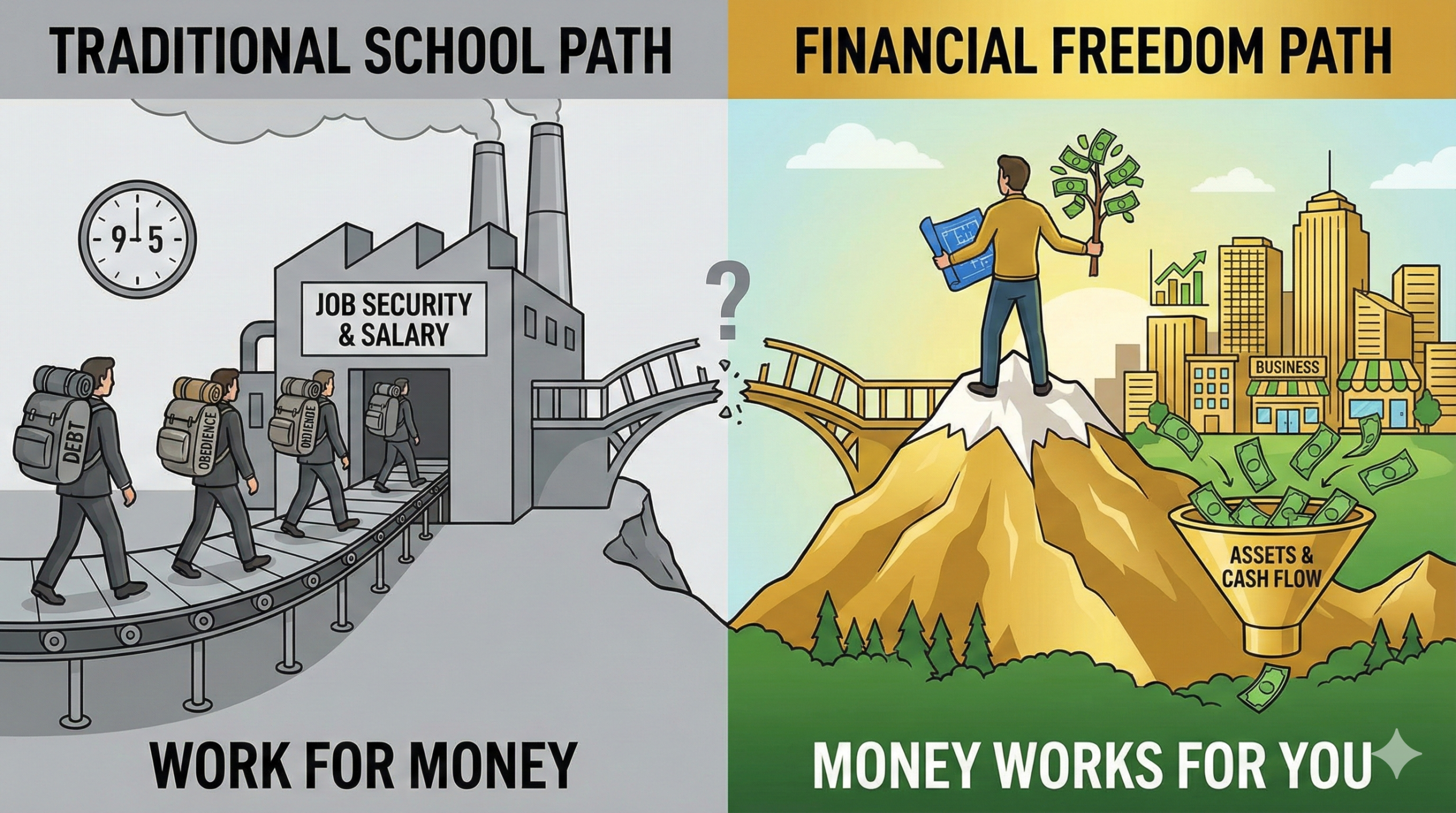
1. स्कूल का असली मकसद: कर्मचारी बनाना, मालिक नहीं

आधुनिक शिक्षा व्यवस्था का डिज़ाइन आपको अमीर बनाने के लिए नहीं किया गया था। कार्ल मार्क्स और पुरानी औद्योगिक सोच का प्रभाव आज भी हमारे स्कूलों पर दिखता है।

इस सिस्टम का मकसद सिर्फ ऐसे लोग तैयार करना है जो:

  • समय पर ऑफिस आएँ।
  • चुपचाप निर्देशों का पालन करें।
  • प्रमोशन और सैलरी बढ़ने का इंतज़ार करें।
  • और पूरी जिंदगी पेंशन या सरकार के भरोसे रहें।

स्कूल आपको “आज्ञाकारी” होने का इनाम देते हैं, न कि कुछ नया सोचने का। वे आपको “रटना” सिखाते हैं, “सोचना” नहीं। इसीलिए स्कूल से ‘कर्मचारी’ निकलते हैं, ‘उद्यमी’ (Entrepreneurs) नहीं।

2. मेरे दो पिता: एक ने दी सुरक्षा, दूसरे ने दी आज़ादी

मेरी ज़िंदगी में दो तरह की सोच का प्रभाव रहा।

  • मेरे गरीब पिता: वे बहुत पढ़े-लिखे थे, पीएचडी होल्डर थे और सरकारी नौकरी करते थे। वे कहते थे— “कड़ी मेहनत करो, पैसे बचाओ और एक सुरक्षित नौकरी लो।” वे मानते थे कि सरकार उनका ख्याल रखेगी।
  • मेरे अमीर पिता: वे कम पढ़े-लिखे हो सकते थे, लेकिन वे आर्थिक आज़ादी (Financial Freedom) में विश्वास रखते थे। उन्होंने मुझे सिखाया— “पैसे के लिए काम मत करो, बल्कि पैसे को अपने लिए काम पर लगाओ।”

यही एक लाइन सब कुछ बदल देती है। एक सोच आपको ज़िंदगी भर नौकरी में फंसाए रखती है, और दूसरी सोच आपको मालिक बनाती है।

3. अगर स्कूल ‘पैसे’ के बारे में सिखाते तो क्या होता?

ज़रा सोचिए, अगर हमारे सिलेबस में वित्तीय साक्षरता (Financial Literacy) होती, तो समाज कैसा होता?

  • लोग रिटायरमेंट फंड या नौकरी को ही “सुरक्षा” नहीं मानते।
  • लोग यह पूछते कि “मेरे पैसों को असल में कंट्रोल कौन कर रहा है?”
  • कर्ज़ (Loan) डरावना नहीं लगता, क्योंकि लोग जानते कि “अच्छा कर्ज़” (Good Debt) और “बुरा कर्ज़” (Bad Debt) क्या होता है।
  • लोग सिर्फ मार्केट बढ़ने की उम्मीद नहीं करते, बल्कि अपना खुद का कैश फ्लो (Cash Flow) बनाते।

4. सिस्टम आपको ‘आज़ाद’ क्यों नहीं होने देना चाहता?

सच यह है कि आज़ाद लोगों को कंट्रोल करना मुश्किल होता है।

जिस दिन आप पैसे की ताकत को समझ जाते हैं:

  • आप बाज़ार गिरने पर घबराते नहीं हैं।
  • आप सरकार से मदद की भीख नहीं मांगते।
  • आप नौकरी जाने के डर से सहमे नहीं रहते।

सिस्टम को ऐसे लोग चाहिए जो डरे हुए हों और सैलरी पर निर्भर हों। इसीलिए वित्तीय शिक्षा को जानबूझकर ‘वैकल्पिक’ (Optional) रखा गया है। इसकी कोई परीक्षा नहीं होती।

5. अब आपको क्या करना चाहिए?

यह सब समझने के बाद आपके पास दो रास्ते हैं। या तो आप पुराने रास्ते पर चलें और सैलरी बढ़ने का इंतज़ार करें, या फिर अमीर लोगों वाले सवाल पूछना शुरू करें:

  1. “पैसा असल में काम कैसे करता है?”
  2. “मैं अपनी ज़िंदगी का मालिक कैसे बनूँ, किराएदार नहीं?”
  3. “मैं सैलरी के पीछे भागने की बजाय एसेट्स (Assets) कैसे बनाऊँ?”

याद रखें, स्कूल आपको नौकरी दे सकता है, लेकिन आर्थिक आज़ादी आपको खुद सीखनी होगी। आज ही से सीखना शुरू करें, क्योंकि यही वह शिक्षा है जो सच में मायने रखती है।


अगर यह पोस्ट आपकी सोच को बदलने में सफल रही, तो इसे अपने दोस्तों के साथ शेयर जरूर करें। उन्हें भी इस “सिस्टम” की सच्चाई जानने का हक़ है!

7 Best Brain Power Wellness Retreats to Reclaim Your Mental Clarity (2025-26 Edition)

In a world of relentless notifications, 60-hour workweeks, and information overload, our brains are tired. We aren’t just physically exhausted; we are cognitively drained. This modern epidemic has a name: Brain Fog.

For high-performing professionals, executives, and creatives, a standard beach vacation is no longer enough. Sipping a margarita by the pool might relax your body, but it doesn’t necessarily turn off the racing thoughts or restore your sharp focus.

To truly reset, you need something different. You need a brain power wellness retreat.

These aren’t your typical spas. They are scientifically designed sanctuaries that combine neuroscience, mindfulness, nutrition, and digital detoxing to heal your nervous system and optimize cognitive function.

If you are ready to trade burnout for brilliance, here is our curated list of the 7 best brain power wellness retreats in the USA and beyond for 2025-26.


What is a Brain Power Wellness Retreat?

Before we dive into the list, it is essential to understand what separates these mental clarity getaways from a regular holiday.

A brain power wellness retreat focuses specifically on cognitive health. While a regular resort focuses on leisure, these retreats focus on neuroplasticity—the brain’s ability to reorganize itself by forming new neural connections.

Key features often include:

  • Neuro-nutrition: Meals designed to lower inflammation and fuel brain cells.
  • Mindfulness & Meditation: Techniques to thicken the prefrontal cortex (the area responsible for focus).
  • Digital Detox: Strict “no-phone” policies to break the dopamine addiction loop.
  • Biohacking: Use of cryotherapy, infrared saunas, or neurofeedback to optimize brain function.

1. Canyon Ranch (Tucson, Arizona)

The Gold Standard for Integrative Wellness

For decades, Canyon Ranch has been the heavyweight champion of wellness in the USA. However, their “Life Enhancement” pathways take cognitive health retreats to a new level. Located in the stunning Sonoran Desert, this destination offers a comprehensive medical and holistic approach to brain health.

Why it’s great for Brain Power: Canyon Ranch employs board-certified physicians, nutritionists, and therapists. They don’t just guess what your brain needs; they test. Their “Executive Health” packages often include cognitive assessments, sleep studies, and stress management workshops tailored to rewire a stressed mind.

  • Best For: Executives and data-driven individuals seeking medical validation.
  • The Experience: Expect a mix of desert hiking (to boost BDNF – a protein that promotes brain cell growth) and lectures on sleep hygiene and stress resilience.

2. Eupepsia Wellness Resort (Virginia)

The Ayurvedic Approach to Cognitive Health

Nestled in the heart of the Blue Ridge Mountains, Eupepsia is a hidden gem that has repeatedly won “Best Wellness Resort” titles. Unlike the clinical feel of some resorts, Eupepsia focuses on Ayurveda—the ancient science of life—to restore mental balance.

Why it’s great for Brain Power: According to Ayurveda, mental fog is often a result of poor digestion and an imbalance in the body’s energies (doshas). Their program focuses on “Gut-Brain Axis” health. By fixing your digestion with farm-to-table vegetarian meals and herbal tonics, they aim to clear the mind.

  • Best For: Those looking for a holistic, spiritual, and nature-immersive reset.
  • The Experience: Hydrotherapy, halo-therapy (salt therapy), and forest bathing to calm the sympathetic nervous system.

3. The Ranch Malibu (California)

The Hard Reset for High Achievers

If your idea of relaxing is pushing your limits to break through mental barriers, The Ranch Malibu is for you. This is a rigorous, results-oriented program often favored by Hollywood celebrities and CEOs.

Why it’s great for Brain Power: The philosophy here is simple: Clarity through discipline. There is no Wi-Fi. There is no caffeine. There is no alcohol. There is no meat. By removing all toxins and distractions and engaging in 4-hour daily hikes, your brain is forced into a state of deep detoxification.

  • Best For: Type-A personalities who need a strict “boot camp” structure to disconnect.
  • The Experience: You will hike the Santa Monica mountains every morning. The intense physical activity releases a flood of endorphins and dopamine, effectively “washing” the brain of stress hormones.

4. Civana Wellness Resort & Spa (Carefree, Arizona)

The Customizable Mental Clarity Getaway

Not everyone wants a boot camp or a medical exam. Sometimes, brain power returns simply by having the freedom to choose. Civana offers a more flexible approach to cognitive health retreats in the USA.

Why it’s great for Brain Power: Civana specializes in “inner work.” Their schedule is packed with over 70 weekly classes, many focusing on mental conditioning. From sound bath meditations to “aerial yoga” (which improves blood flow to the brain), you can curate a schedule that feels restorative to you.

  • Best For: Solo travelers and beginners to the wellness retreat world.
  • The Experience: Don’t miss their “Aqua Therapy” sessions. Floating weightlessly in warm water is proven to lower cortisol levels and induce a theta-brainwave state (similar to deep meditation).

5. The Art of Living Retreat Center (Boone, North Carolina)

Mastering the Breath for Mental Focus

Located high in the Heavenly Mountain range, this center is rooted in yogic wisdom. It is one of the few places in the US that focuses intensely on Breathwork and Silence.

Why it’s great for Brain Power: They offer a “Silent Retreat” (Stepping into Silence). Research shows that silence can stimulate the growth of new cells in the hippocampus, the brain region linked to memory. By stopping the constant output of speech and social interaction, your brain gets the rare chance to process and file away information properly.

  • Best For: Spiritual seekers and those suffering from deep emotional exhaustion.
  • The Experience: You will learn the Sudarshan Kriya, a breathing technique scientifically proven to reduce stress and anxiety significantly.

6. Four Seasons Westlake Village (California)

Luxury Meets Neuroscience

If you want luxury accommodation combined with cutting-edge science, the Center for Health & Wellbeing at the Four Seasons Westlake Village is the pinnacle. This isn’t just a hotel; it’s a wellness institute.

Why it’s great for Brain Power: They offer specific “Mind & Body” retreats. You can access life coaches, hypnotherapists, and guided meditation experts. Their approach is highly personalized—you might start your day with a luxury breakfast and end it with a biofeedback session to learn how to control your heart rate variability (HRV).

  • Best For: Luxury travelers who want 5-star comfort while working on their mental health.
  • The Experience: Their “Somadome” meditation pod is a futuristic experience that uses color and sound therapy to guide your brain into a state of deep relaxation.

7. Hillock Nature Retreat (The Exotic “Digital Detox” Option)

The Hidden Gem for Total Disconnection

While the USA has incredible options, sometimes the best way to reclaim your brain power is to leave the country entirely. For the adventurous soul, Hillock Nature Retreat (an emerging eco-luxury destination) offers something American resorts can’t: Raw, Untouched Nature.

Why it’s great for Brain Power: Located away from the hum of cities, this retreat offers a “Green Detox.” The Japanese concept of Shinrin-yoku (Forest Bathing) is the core here. Being surrounded by diverse flora and natural sounds reduces cognitive fatigue faster than any machine can.

  • Best For: Travelers wanting a complete culture shift and a true escape from the Western rat race.
  • The Experience: Farm-to-table organic eating, sunrise yoga on natural terrain, and a complete break from the digital world.

Why You Need a Cognitive Health Retreat Now

You might be thinking, “Can’t I just take a nap?”

Sleep is crucial, but it is not the same as a cognitive reset. Chronic stress shrinks the brain’s neural networks. A weekend of binge-watching TV doesn’t fix that; it just pauses the stress.

A dedicated brain power wellness retreat provides:

  1. Environment Design: You cannot heal in the same environment where you got sick. Changing your physical location is the first step to changing your mindset.
  2. Community: Being around other people who are prioritizing their mental health removes the stigma of “taking a break.”
  3. Tools for Life: The best retreats don’t just relax you for a week; they teach you breathing techniques, nutritional habits, and mental frameworks to protect your brain power when you return to the office.

Final Thoughts: Invest in Your Mind

Your brain is your most valuable asset. Whether you are a CEO negotiating million-dollar deals or a parent managing a chaotic household, your ability to think clearly, focus deeply, and remain calm is your superpower.

In 2025, don’t just book a vacation. Book a transformation.

Whether you choose the discipline of The Ranch Malibu, the medical expertise of Canyon Ranch, or the serene silence of the Art of Living Center, prioritizing a mental clarity getaway is the smartest investment you will make this year.

Ready to reclaim your focus? Start planning your itinerary today.
Escape to Hillock Nature Retreat: The Ultimate Exotic Wellness Getaway

Let’s face it: The hustle of daily life in the US can be exhausting. Between the 9-to-5 grind, the constant ping of emails, and the noise of the city, true relaxation feels like a distant dream.

Sometimes, a weekend trip to the nearest national park just isn’t enough. You need a complete reset. You need to go where the Wi-Fi is weak, but the connection to nature is strong.

Enter Hillock Nature Retreat.

Tucked away in the lush, untouched landscapes of India, this hidden gem is quickly becoming a bucket-list destination for international travelers seeking peace, luxury, and a genuine connection with the earth.

If you are planning your next big international trip, here is why Hillock Nature Retreat needs to be at the top of your list.


1. A Sanctuary for the Soul (Far from the Tourist Traps)

Unlike commercialized hotels where you are just a room number, Hillock Nature Retreat is designed as a sanctuary.

For US travelers, the first thing that strikes you is the silence. Located amidst rolling hills and dense greenery, the resort offers a level of privacy that is hard to find. It is not just a hotel; it is an immersive experience. Whether you are a solo traveler looking for clarity or a couple seeking a romantic escape, the isolation here is a luxury in itself.

  • The Vibe: Think “Bali meets Traditional Indian Hospitality.”
  • The Crowd: Exclusive, quiet, and nature-focused.

2. Luxury Meets Sustainability

One of the biggest concerns for Americans traveling abroad is the standard of accommodation. Will it be comfortable? Is it clean?

Hillock Nature Retreat bridges the gap between rustic charm and modern luxury. You get the experience of living in nature—waking up to the sound of birds and the smell of wet earth—without sacrificing comfort.

  • Private Villas/Cottages: exquisitely designed with local materials but equipped with premium bedding and modern amenities.
  • Eco-Conscious: The retreat practices sustainable tourism, using solar power, rainwater harvesting, and plastic-free zones, appealing to the eco-conscious US traveler.

3. Farm-to-Table Dining (A Foodie’s Dream)

Forget processed food. At Hillock, the culinary experience is a highlight. Embracing the “Farm-to-Table” philosophy, most ingredients are sourced locally or grown right on the property.

For a US palate used to frozen meals or fast food, the freshness here is shocking. You will enjoy authentic local cuisine cooked with traditional spices that are flavorful, not just “spicy.”

  • Must-Try: Ask for their signature local thali for a taste of everything.
  • Dietary Needs: Vegan and Gluten-Free options are readily available (a huge plus for international guests).

4. Wellness: Yoga, Detox, and Rejuvenation

You can’t talk about a retreat in India without talking about wellness. Hillock Nature Retreat isn’t just a place to sleep; it’s a place to heal.

  • Morning Yoga: Imagine starting your day with a guided yoga session on an open-air deck, overlooking the misty hills.
  • Nature Walks: Guided treks through the surrounding flora are perfect for bird watchers and photographers.
  • Digital Detox: While connectivity is available, the environment encourages you to put the phone down and pick up a book—or a conversation.

Practical Tips for US Travelers

If you are flying from New York, LA, or Chicago, here is what you need to know to make your trip to Hillock Nature Retreat seamless:

  • Best Time to Visit: October to March offers the most pleasant weather (cool and dry), perfect for escaping the freezing US winter.
  • Currency: The resort is affordable by US standards, offering incredible value for luxury.
  • What to Pack: Bring comfortable walking shoes, bug spray (it is a nature retreat, after all!), and light cotton clothing.

Final Verdict: Is It Worth the Flight?

If you are looking for a standard hotel with a casino and a mall next door, this isn’t for you.

But, if you are craving an authentic, soul-stirring experience that will leave you feeling lighter, healthier, and more grounded, then Hillock Nature Retreat is absolutely worth the journey.

It is more than a vacation; it is the reset button you have been waiting to press.

Ready to unplug? Check out their official page to view the stunning villas and book your exotic escape today.

how to detox body for weight loss
The Truth About “Detoxing”: How to Naturally Reset Your Body for Weight Loss


The Truth About “Detoxing”: How to Naturally Reset Your Body for Weight Loss

In the wellness industry, “detox” is perhaps the most misunderstood word. It often conjures images of expensive juice cleanses, restrictive starvation diets, and “miracle” teas.

However, the truth about detoxing for weight loss is far simpler and much more effective. You do not need to buy a product to detox; you simply need to support the sophisticated system your body already possesses.

This guide explores the myths behind commercial cleanses and explains how to naturally reset your body to shed stubborn weight, boost energy, and improve long-term health.


Does Your Body Really Need a “Reset”?

The short answer is: Yes and No.

Your body does not need a “reset” in the sense that it is broken. You have a built-in detoxification team—primarily your liver, kidneys, digestive system, and skin—that works 24/7 to filter out waste and toxins.

However, modern lifestyles often overload these systems. A diet high in processed sugars, sedentary behavior, environmental pollutants, and chronic stress can make your natural detoxification pathways sluggish. When your body is overwhelmed, it may store toxins in fat cells to protect your organs, which can make losing weight difficult.

A “natural reset” isn’t about emptying your wallet; it’s about removing the obstacles blocking your body’s natural ability to burn fat and heal.


5 Proven Ways to Naturally Detox for Weight Loss

Forget the 3-day starvation plans. Here is how to create a sustainable lifestyle that supports your organs and promotes natural weight loss.

1. Hydration: The Ultimate Flush

Water is the medium through which your body expels waste. If you are dehydrated, your kidneys cannot filter blood efficiently, and the liver has to take on the extra workload.

  • The Strategy: Aim for at least 3 liters of water daily.
  • Pro Tip: Add a squeeze of lemon or cucumber slices. While not a “magic fat burner,” lemon adds electrolytes and encourages you to drink more water.

2. Prioritize Fiber (The Natural Scrub)

Fiber is crucial for a natural detox because it binds to bile (which contains toxins) and carries it out of the body through digestion. Without enough fiber, toxins can be reabsorbed into the bloodstream.

  • What to Eat: Focus on cruciferous vegetables (broccoli, cauliflower), berries, chia seeds, and legumes.
  • The Goal: Aim for 25–30 grams of fiber per day to keep your digestion regular and reduce bloating.

3. Support Your Liver with Whole Foods

Your liver is the engine of fat metabolism. If it is busy processing alcohol, excess sugar, or trans fats, it cannot effectively burn stored body fat.

  • Foods to Add: Garlic, turmeric, beets, and leafy greens. These foods contain compounds that support liver enzyme production.
  • Foods to Limit: Alcohol and high-fructose corn syrup, which are major stressors for the liver.

4. Sweat It Out

Your skin is your largest organ, and sweating is a primary pathway for elimination.

  • Exercise: High-Intensity Interval Training (HIIT) or steady cardio increases blood flow and lymph circulation.
  • Heat Therapy: Saunas and steam rooms can help induce sweating, aiding in the removal of heavy metals and salts.

5. Prioritize Sleep (The Brain Detox)

One of the most overlooked aspects of detoxing is sleep. During deep sleep, the glymphatic system activates, washing away metabolic waste products that accumulate in the brain during the day.

  • The Weight Loss Link: Poor sleep disrupts hunger hormones (ghrelin and leptin), leading to increased cravings for sugary foods the next day.

Common Detox Myths Debunked

To succeed in your weight loss journey, you must avoid these common traps:

  • Myth 1: “Detox teas burn fat.”
    • Truth: Most detox teas are laxatives (diuretics). They cause you to lose water weight, not fat. This is temporary and can be dangerous if overused.
  • Myth 2: “You have to starve yourself.”
    • Truth: Starvation slows your metabolic rate. To detox effectively, your body needs energy and nutrients to run the elimination phases in the liver. You should eat more nutrient-dense food, not less.

Frequently Asked Questions (FAQ)

Q: How long does it take to naturally detox the body for weight loss?

A: There is no single timeline, as your body is always detoxing. However, most people report feeling less bloated and more energetic after 7 to 10 days of consistent healthy eating, hydration, and sleep. For significant weight loss, consistency over months is key.

Q: Can I lose weight just by drinking water?

A: Water alone won’t melt fat, but it is essential for the process. Drinking water before meals can reduce appetite, and replacing high-calorie sugary drinks with water creates a calorie deficit, which is necessary for weight loss.

Q: Are juice cleanses effective for long-term weight loss?

A: Generally, no. While you may lose weight quickly on a juice cleanse, it is mostly muscle mass and water. Once you return to solid food, the weight usually returns. A balanced diet with fiber is far superior for sustainable results.

Q: What is the best morning drink to detox?

A: Warm water with lemon or apple cider vinegar is popular. It helps rehydrate the body after sleep and may stimulate digestion. However, green tea is also an excellent choice due to its high antioxidant (EGCG) content.


Conclusion

The truth about detoxing is that your body is already an expert at it. You don’t need a miracle cure; you need to stop blocking the process with processed foods and sedentary habits. By focusing on hydration, whole foods, and sleep, you can naturally reset your body, shed weight, and feel your best—no starvation required.