
Why Can’t I Focus? Common Causes and Practical Tips
Affiliate disclosure: This article contains affiliate links. If you buy through our links, we may earn a commission at no extra cost to you. Our content is educational and based on public product information and published research, not personal testing.
You sit down to work, and your mind wanders. You read the same paragraph three times. If you keep asking “why can’t I focus?”, you are not alone, and there is usually a reason.
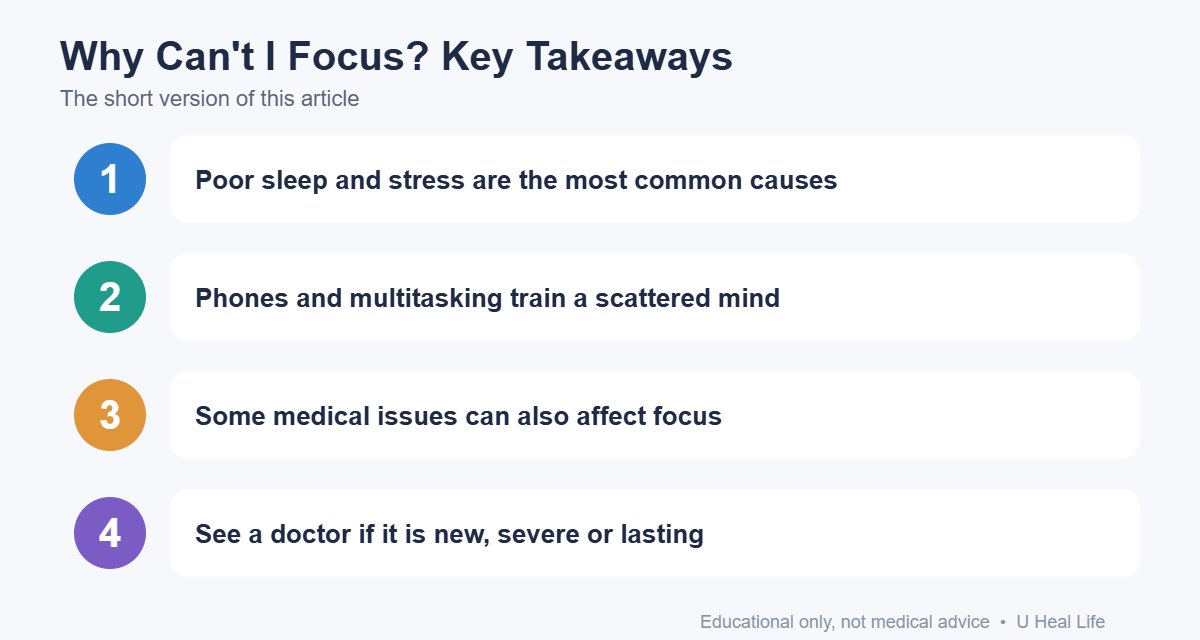
Quick answer: The most common reasons for poor focus are lack of sleep, stress and anxiety, constant digital distraction, and skipped meals. Medical issues, medicines, mood problems and conditions such as ADHD can also play a part. If the change is sudden, severe or lasting, see a doctor.
10 Common Causes of Poor Focus
1. Not Enough Sleep
Tired brains struggle with attention and memory. Even one short night can hurt concentration the next day.
2. Stress and Anxiety
Worry uses up mental energy. If your mind is busy with “what if” thoughts, there is less room for the task in front of you. Read our guide on feeling anxious for no reason.
3. Low Mood or Depression
Trouble concentrating is a common symptom of low mood. If you also feel sad, hopeless or have lost interest in things, please talk to a professional.
4. Digital Overload
Constant notifications and quick switching between apps train the brain to expect new input. Deep focus then feels uncomfortable.
5. Skipped Meals and Dehydration
Low energy and not enough water can make you feel foggy and irritable.
6. Too Much Caffeine or Alcohol
Too much caffeine can cause restlessness, and alcohol harms sleep quality, which affects next-day focus.
7. Medical Conditions
Issues such as thyroid problems, anemia, low vitamin B12, sleep apnea and long-term illness can affect concentration. A simple check-up can rule these out.
8. Medicines
Some medicines can cause drowsiness or mental slowness. Never stop a prescribed medicine on your own, but do ask your doctor about side effects.
9. Hormonal Changes
Changes around periods, pregnancy or menopause can affect sleep and focus for some people.
10. ADHD
Adult ADHD can show up as constant distraction, forgetfulness and trouble finishing tasks. It cannot be diagnosed by an online quiz. A qualified professional can assess it.
Clues and First Steps
| Clue | Possible cause | First step |
|---|---|---|
| Tired all day | Poor sleep | Set a fixed bedtime for one week |
| Racing thoughts | Stress or anxiety | Try slow breathing and a brain dump |
| Focus drops after lunch | Meals and energy | Eat balanced meals and walk after eating |
| Always checking your phone | Digital habits | Keep your phone in another room |
| Long-term fatigue or other symptoms | Medical issue | Book a check-up |
Practical Tips You Can Start Today
- Go to bed and wake up at the same time
- Work in 25-minute blocks with short breaks
- Write down your top 3 tasks each morning
- Take a 10-minute walk when your mind feels stuck
- Limit caffeine after midday
For more ideas, see our guide to improving focus and concentration naturally.
When to See a Doctor
Seek medical advice if poor focus:
- Starts suddenly or gets quickly worse
- Comes with memory loss, confusion or trouble speaking
- Follows a head injury
- Comes with severe headaches, low mood or constant fatigue
- Affects your work, studies or relationships for weeks
Where Do Supplements Fit In?
Supplements are optional extras, not a shortcut. Sleep, food, movement and stress care come first, and a doctor should check any new supplement against your health and medicines. If you are curious about multi-ingredient nootropic supplements, read our independent BrainPill review for a balanced look at the evidence and safety points. If you decide to read more, the manufacturer’s page is below.
See BrainPill’s Official Product Details
Paid affiliate link. We may earn a commission from qualifying purchases.
Frequently Asked Questions
Why can’t I concentrate even when I’m not tired?
Stress, anxiety, digital distraction, low mood or a health issue can reduce focus even when you feel rested.
Can anxiety cause trouble concentrating?
Yes. Worry takes up mental space, so it is common to feel scattered during anxious periods.
Is trouble focusing always ADHD?
No. Many things cause poor focus, and only a trained professional can diagnose ADHD.
Can vitamin deficiency affect concentration?
Low levels of some nutrients, such as vitamin B12, may. A doctor can check this with a simple test.
Final Thoughts
Poor focus is a signal, not a personal failing. Look for the cause, fix the basics, and ask for help if it does not improve.
Related Reading
- Brain Fog vs Mental Fatigue: What’s the Difference?
- Best Ways to Improve Focus and Concentration Naturally
- Why Do I Feel Anxious for No Reason?
- BrainPill Review 2026: Ingredients, Benefits, Side Effects & Does It Really Work?
Disclaimer: This article is for educational purposes only and is not medical advice. Dietary supplements are not intended to diagnose, treat, cure, or prevent any disease. Talk to a qualified healthcare professional before using supplements, especially if you take medicine, are pregnant or breastfeeding, or have a health condition.