

Brain Fog vs Mental Fatigue: What’s the Difference?
Affiliate disclosure: This article contains affiliate links. If you buy through our links, we may earn a commission at no extra cost to you. Our content is educational and based on public product information and published research, not personal testing.
“I feel foggy.” “I feel mentally drained.” People often use these words as if they mean the same thing, but they are not identical. Knowing the difference can help you choose the right fix.
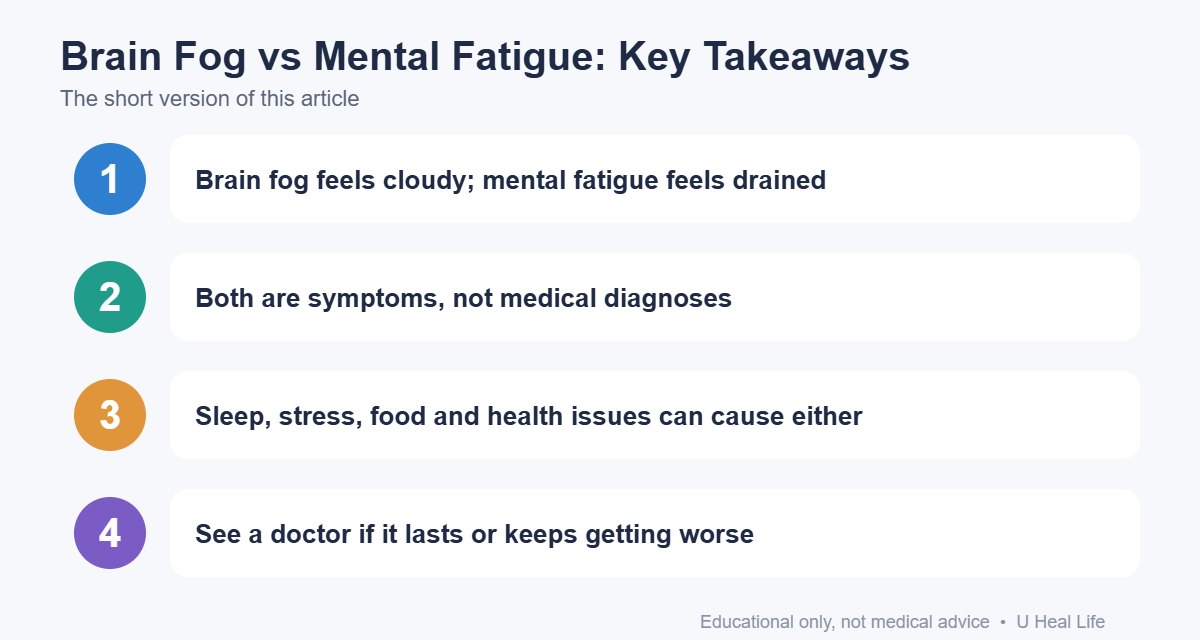
Quick answer: Brain fog feels like a haze: slow thinking, forgetfulness and trouble finding words. Mental fatigue feels like a drained battery after long mental effort and usually improves with rest. Both are symptoms, not diagnoses, and both have many possible causes.
What Is Brain Fog?
Brain fog is not a medical diagnosis. It is a common way to describe cloudy thinking. People with brain fog may notice:
- Trouble concentrating
- Forgetting words or names
- Feeling mentally slow or “spaced out”
- Difficulty making decisions
- Feeling confused or disoriented
What Is Mental Fatigue?
Mental fatigue is tiredness that builds up after long periods of thinking, focusing or making decisions. You may notice:
- Feeling mentally exhausted
- Low motivation
- More mistakes and irritability
- Wanting to avoid more mental tasks
- Relief after rest, a break or a change of activity
Brain Fog vs Mental Fatigue at a Glance
| Feature | Brain fog | Mental fatigue |
|---|---|---|
| Feels like | Cloudy, slow, confused | Drained, tired, unmotivated |
| Common triggers | Poor sleep, illness, hormones, medicines, stress | Long mentally demanding tasks, decision overload |
| Effect of rest | Not always helped quickly | Usually improves with rest |
| Memory and word-finding | Often affected | Sometimes affected |
| How long it lasts | Days to months | Hours to a day |
Common Causes of Brain Fog
- Poor or broken sleep
- Chronic stress or anxiety
- Low mood
- Dehydration or irregular meals
- Hormonal changes, such as around menopause
- Some medicines
- Medical issues such as thyroid problems, anemia or low vitamin B12
- Recovery after an infection or illness
Common Causes of Mental Fatigue
- Long periods of focused work without breaks
- Too many decisions in a day
- Multitasking and constant interruptions
- Emotional strain
- Not enough sleep or downtime
What Helps Brain Fog
- Fix sleep first, with a regular schedule.
- Eat regular meals and drink enough water.
- Move your body every day.
- Manage stress with breathing, walks or talking to someone.
- Review your medicines with a doctor.
- Ask for a check-up if it continues.
What Helps Mental Fatigue
- Take short breaks every 60 to 90 minutes.
- Switch tasks or do something physical.
- Do your hardest work first, when your energy is highest.
- Reduce small decisions with routines.
- Protect weekends and evenings for real rest.
For more, read our guide to staying mentally sharp during a busy workday.
When to See a Doctor
Please get medical advice if brain fog:
- Lasts for weeks or keeps getting worse
- Comes with severe headaches, vision changes or weakness
- Includes confusion or serious memory loss
- Started after a head injury or illness
- Comes with low mood, anxiety or constant exhaustion
Where Do Supplements Fit In?
Supplements are optional extras, not a shortcut. Sleep, food, movement and stress care come first, and a doctor should check any new supplement against your health and medicines. If you are curious about multi-ingredient nootropic supplements, read our independent BrainPill review for a balanced look at the evidence and safety points. If you decide to read more, the manufacturer’s page is below.
See BrainPill’s Official Product Details
Paid affiliate link. We may earn a commission from qualifying purchases.
Frequently Asked Questions
Is brain fog a medical condition?
No. It is a description of symptoms. A doctor can look for underlying causes.
Can stress cause brain fog?
Yes. Ongoing stress can affect sleep, mood and attention, which can feel like fog.
How long does mental fatigue last?
Often a few hours to a day, improving after rest. If it lasts much longer, look at sleep, stress and health.
Can diet affect brain fog?
Skipping meals, dehydration or nutrient deficiencies can contribute. A balanced diet and a doctor’s advice help.
Final Thoughts
Understanding the difference helps you respond better: rest and breaks for mental fatigue, and a closer look at sleep, health and stress for brain fog.
Related Reading
- Why Can’t I Focus? Common Causes and Practical Tips
- How to Stay Mentally Sharp During a Busy Workday
- Best Ways to Improve Focus and Concentration Naturally
- BrainPill Review 2026: Ingredients, Benefits, Side Effects & Does It Really Work?
Disclaimer: This article is for educational purposes only and is not medical advice. Dietary supplements are not intended to diagnose, treat, cure, or prevent any disease. Talk to a qualified healthcare professional before using supplements, especially if you take medicine, are pregnant or breastfeeding, or have a health condition.