Affiliate disclosure: This article contains affiliate links. If you buy through our links, we may earn a commission at no extra cost to you. Our content is educational and based on public product information and published research, not personal testing.
“I feel foggy.” “I feel mentally drained.” People often use these words as if they mean the same thing, but they are not identical. Knowing the difference can help you choose the right fix.
Quick answer: Brain fog feels like a haze: slow thinking, forgetfulness and trouble finding words. Mental fatigue feels like a drained battery after long mental effort and usually improves with rest. Both are symptoms, not diagnoses, and both have many possible causes.
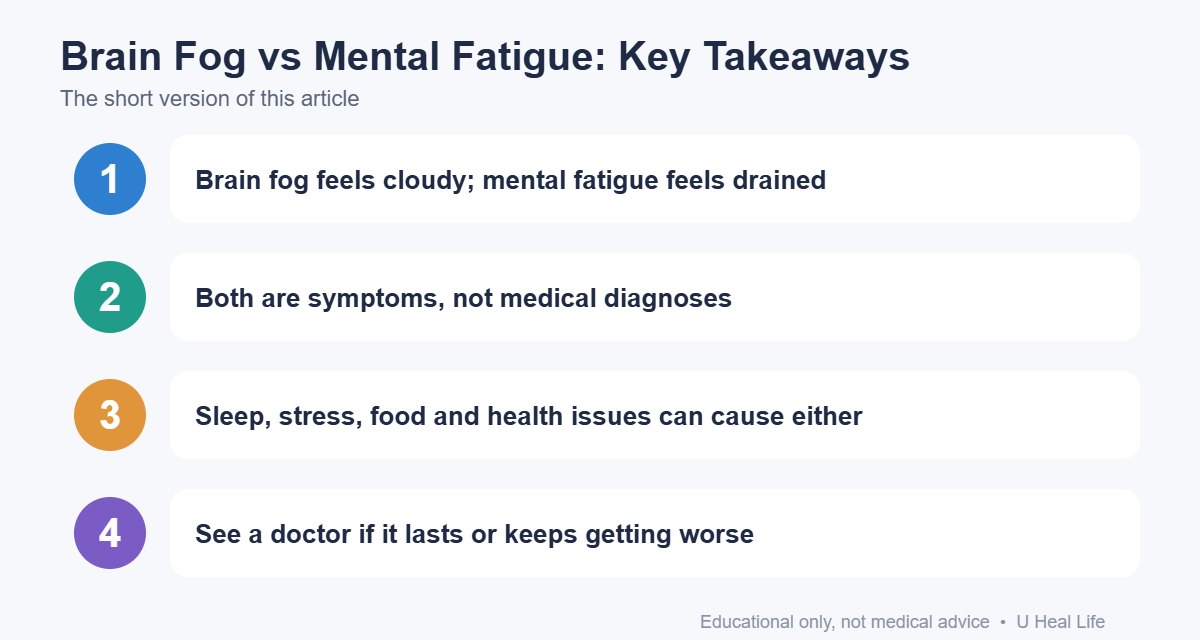
The key points at a glance.
What Is Brain Fog?
Brain fog is not a medical diagnosis. It is a common way to describe cloudy thinking. People with brain fog may notice:
Trouble concentrating
Forgetting words or names
Feeling mentally slow or “spaced out”
Difficulty making decisions
Feeling confused or disoriented
What Is Mental Fatigue?
Mental fatigue is tiredness that builds up after long periods of thinking, focusing or making decisions. You may notice:
Feeling mentally exhausted
Low motivation
More mistakes and irritability
Wanting to avoid more mental tasks
Relief after rest, a break or a change of activity
Brain Fog vs Mental Fatigue at a Glance
Feature
Brain fog
Mental fatigue
Feels like
Cloudy, slow, confused
Drained, tired, unmotivated
Common triggers
Poor sleep, illness, hormones, medicines, stress
Long mentally demanding tasks, decision overload
Effect of rest
Not always helped quickly
Usually improves with rest
Memory and word-finding
Often affected
Sometimes affected
How long it lasts
Days to months
Hours to a day
Common Causes of Brain Fog
Poor or broken sleep
Chronic stress or anxiety
Low mood
Dehydration or irregular meals
Hormonal changes, such as around menopause
Some medicines
Medical issues such as thyroid problems, anemia or low vitamin B12
Recovery after an infection or illness
Common Causes of Mental Fatigue
Long periods of focused work without breaks
Too many decisions in a day
Multitasking and constant interruptions
Emotional strain
Not enough sleep or downtime
What Helps Brain Fog
Fix sleep first, with a regular schedule.
Eat regular meals and drink enough water.
Move your body every day.
Manage stress with breathing, walks or talking to someone.
Review your medicines with a doctor.
Ask for a check-up if it continues.
What Helps Mental Fatigue
Take short breaks every 60 to 90 minutes.
Switch tasks or do something physical.
Do your hardest work first, when your energy is highest.
Comes with severe headaches, vision changes or weakness
Includes confusion or serious memory loss
Started after a head injury or illness
Comes with low mood, anxiety or constant exhaustion
Where Do Supplements Fit In?
Supplements are optional extras, not a shortcut. Sleep, food, movement and stress care come first, and a doctor should check any new supplement against your health and medicines. If you are curious about multi-ingredient nootropic supplements, read our independent BrainPill review for a balanced look at the evidence and safety points. If you decide to read more, the manufacturer’s page is below.
Paid affiliate link. We may earn a commission from qualifying purchases.
Frequently Asked Questions
Is brain fog a medical condition?
No. It is a description of symptoms. A doctor can look for underlying causes.
Can stress cause brain fog?
Yes. Ongoing stress can affect sleep, mood and attention, which can feel like fog.
How long does mental fatigue last?
Often a few hours to a day, improving after rest. If it lasts much longer, look at sleep, stress and health.
Can diet affect brain fog?
Skipping meals, dehydration or nutrient deficiencies can contribute. A balanced diet and a doctor’s advice help.
Final Thoughts
Understanding the difference helps you respond better: rest and breaks for mental fatigue, and a closer look at sleep, health and stress for brain fog.
Disclaimer: This article is for educational purposes only and is not medical advice. Dietary supplements are not intended to diagnose, treat, cure, or prevent any disease. Talk to a qualified healthcare professional before using supplements, especially if you take medicine, are pregnant or breastfeeding, or have a health condition.
Affiliate disclosure: This article contains affiliate links. If you buy through our links, we may earn a commission at no extra cost to you. Our content is educational and based on public product information and published research, not personal testing.
You sit down to work, and your mind wanders. You read the same paragraph three times. If you keep asking “why can’t I focus?”, you are not alone, and there is usually a reason.
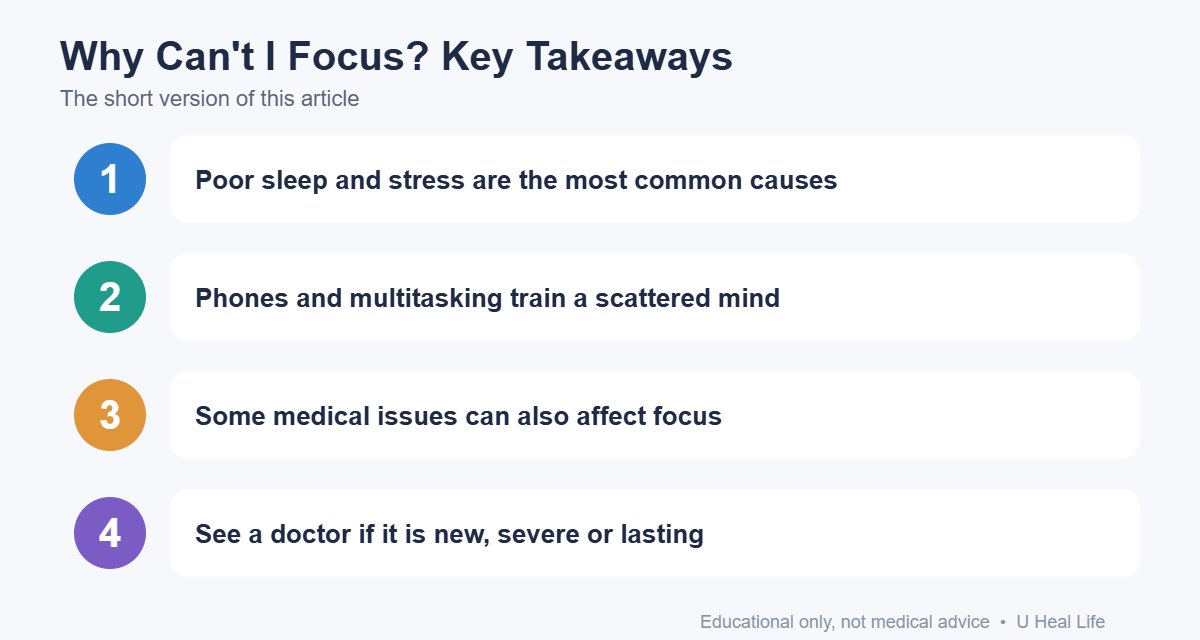
Quick answer: The most common reasons for poor focus are lack of sleep, stress and anxiety, constant digital distraction, and skipped meals. Medical issues, medicines, mood problems and conditions such as ADHD can also play a part. If the change is sudden, severe or lasting, see a doctor.
The key points at a glance.
10 Common Causes of Poor Focus
1. Not Enough Sleep
Tired brains struggle with attention and memory. Even one short night can hurt concentration the next day.
2. Stress and Anxiety
Worry uses up mental energy. If your mind is busy with “what if” thoughts, there is less room for the task in front of you. Read our guide on feeling anxious for no reason.
3. Low Mood or Depression
Trouble concentrating is a common symptom of low mood. If you also feel sad, hopeless or have lost interest in things, please talk to a professional.
4. Digital Overload
Constant notifications and quick switching between apps train the brain to expect new input. Deep focus then feels uncomfortable.
5. Skipped Meals and Dehydration
Low energy and not enough water can make you feel foggy and irritable.
6. Too Much Caffeine or Alcohol
Too much caffeine can cause restlessness, and alcohol harms sleep quality, which affects next-day focus.
7. Medical Conditions
Issues such as thyroid problems, anemia, low vitamin B12, sleep apnea and long-term illness can affect concentration. A simple check-up can rule these out.
8. Medicines
Some medicines can cause drowsiness or mental slowness. Never stop a prescribed medicine on your own, but do ask your doctor about side effects.
9. Hormonal Changes
Changes around periods, pregnancy or menopause can affect sleep and focus for some people.
10. ADHD
Adult ADHD can show up as constant distraction, forgetfulness and trouble finishing tasks. It cannot be diagnosed by an online quiz. A qualified professional can assess it.
Comes with memory loss, confusion or trouble speaking
Follows a head injury
Comes with severe headaches, low mood or constant fatigue
Affects your work, studies or relationships for weeks
Where Do Supplements Fit In?
Supplements are optional extras, not a shortcut. Sleep, food, movement and stress care come first, and a doctor should check any new supplement against your health and medicines. If you are curious about multi-ingredient nootropic supplements, read our independent BrainPill review for a balanced look at the evidence and safety points. If you decide to read more, the manufacturer’s page is below.
Disclaimer: This article is for educational purposes only and is not medical advice. Dietary supplements are not intended to diagnose, treat, cure, or prevent any disease. Talk to a qualified healthcare professional before using supplements, especially if you take medicine, are pregnant or breastfeeding, or have a health condition.
In a world of relentless notifications, 60-hour workweeks, and information overload, our brains are tired. We aren’t just physically exhausted; we are cognitively drained. This modern epidemic has a name: Brain Fog.
For high-performing professionals, executives, and creatives, a standard beach vacation is no longer enough. Sipping a margarita by the pool might relax your body, but it doesn’t necessarily turn off the racing thoughts or restore your sharp focus.
To truly reset, you need something different. You need a brain power wellness retreat.
These aren’t your typical spas. They are wellness programs that combine mindfulness, nutrition, movement, and digital detoxing to help you relax, reset, and support clear thinking.
If you are ready to trade burnout for brilliance, here is our curated list of the 7 best brain power wellness retreats in the USA and beyond for 2026.
Quick answer: The best brain power wellness retreats combine mindfulness, healthy food, movement and a digital detox to help you rest your mind and refocus. Our 2026 list includes Canyon Ranch (Arizona), The Ranch Malibu (California), The Art of Living Retreat Center (North Carolina) and Four Seasons Westlake Village (California). Choose based on your goal: medical support, a strict reset, silence, luxury or a digital detox.
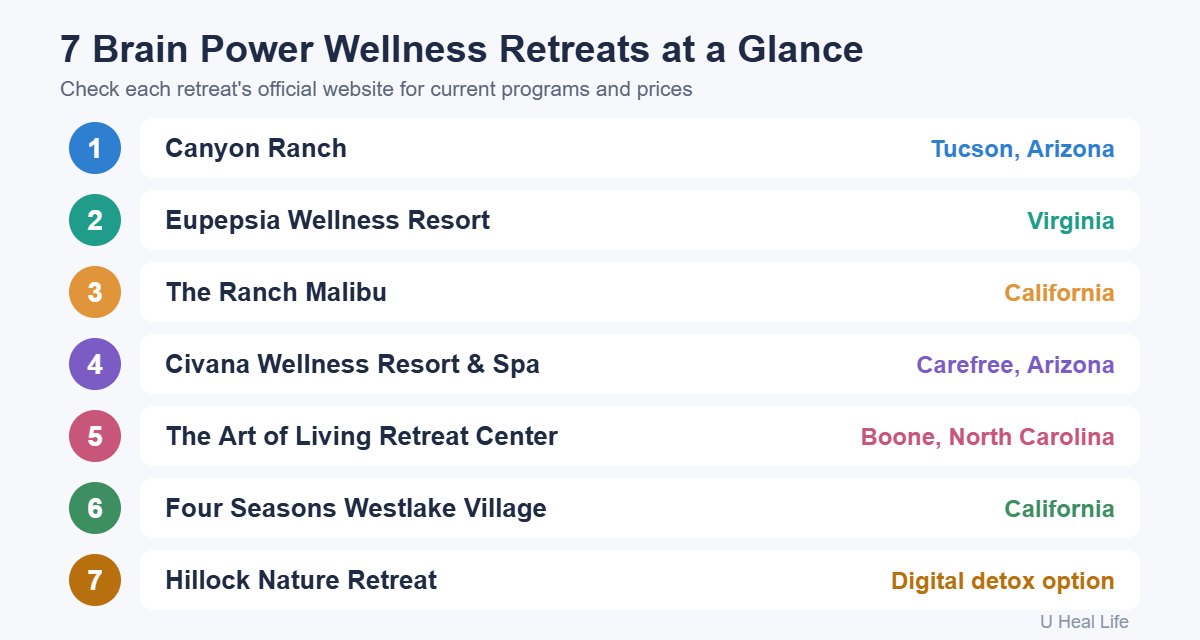
The 7 Retreats at a Glance
Our 7 picks for a brain power wellness retreat.
Retreat
Location
Best for
Canyon Ranch
Tucson, Arizona
Executives and data-driven people who want medical support
Eupepsia Wellness Resort
Virginia
A holistic, spiritual, nature-immersive reset
The Ranch Malibu
California
Those who want a strict “boot camp” structure
Civana Wellness Resort & Spa
Carefree, Arizona
Solo travelers and beginners
The Art of Living Retreat Center
Boone, North Carolina
Spiritual seekers and deep emotional exhaustion
Four Seasons Westlake Village
California
Luxury travelers working on their mental health
Hillock Nature Retreat
Digital detox option
A complete culture shift and escape
What is a Brain Power Wellness Retreat?
Before we dive into the list, it is essential to understand what separates these mental clarity getaways from a regular holiday.
A brain power wellness retreat focuses specifically on cognitive health. While a regular resort focuses on leisure, these retreats focus on neuroplasticity—the brain’s ability to reorganize itself by forming new neural connections.
Key features often include:
Neuro-nutrition: Meals designed to lower inflammation and fuel brain cells.
Mindfulness & Meditation: Techniques that may help you train attention and focus.
Digital Detox: Strict “no-phone” policies to help you step away from constant notifications.
Biohacking: Use of cryotherapy, infrared saunas, or neurofeedback to optimize brain function.
For decades, Canyon Ranch has been the heavyweight champion of wellness in the USA. However, their “Life Enhancement” pathways take cognitive health retreats to a new level. Located in the stunning Sonoran Desert, this destination offers a comprehensive medical and holistic approach to brain health.
Why it’s great for Brain Power: Canyon Ranch employs board-certified physicians, nutritionists, and therapists. They don’t just guess what your brain needs; they test. Their “Executive Health” packages often include cognitive assessments, sleep studies, and stress management workshops tailored to rewire a stressed mind.
Best For: Executives and data-driven individuals seeking medical validation.
The Experience: Expect a mix of desert hiking (to boost BDNF – a protein that promotes brain cell growth) and lectures on sleep hygiene and stress resilience.
2. Eupepsia Wellness Resort (Virginia)
The Ayurvedic Approach to Cognitive Health
Nestled in the heart of the Blue Ridge Mountains, Eupepsia is a hidden gem that has repeatedly won “Best Wellness Resort” titles. Unlike the clinical feel of some resorts, Eupepsia focuses on Ayurveda—the ancient science of life—to restore mental balance.
Why it’s great for Brain Power: According to Ayurveda, mental fog is often a result of poor digestion and an imbalance in the body’s energies (doshas). Their program focuses on “Gut-Brain Axis” health. By fixing your digestion with farm-to-table vegetarian meals and herbal tonics, they aim to clear the mind.
Best For: Those looking for a holistic, spiritual, and nature-immersive reset.
The Experience: Hydrotherapy, halo-therapy (salt therapy), and forest bathing to calm the sympathetic nervous system.
3. The Ranch Malibu (California)
The Hard Reset for High Achievers
If your idea of relaxing is pushing your limits to break through mental barriers, The Ranch Malibu is for you. This is a rigorous, results-oriented program often favored by Hollywood celebrities and CEOs.
Why it’s great for Brain Power: The philosophy here is simple: Clarity through discipline. There is no Wi-Fi. There is no caffeine. There is no alcohol. There is no meat. By removing all toxins and distractions and engaging in 4-hour daily hikes, your brain is forced into a state of deep detoxification.
Best For: Type-A personalities who need a strict “boot camp” structure to disconnect.
The Experience: You will hike the Santa Monica mountains every morning. Intense physical activity can boost your mood and help ease stress.
Not everyone wants a boot camp or a medical exam. Sometimes, brain power returns simply by having the freedom to choose. Civana offers a more flexible approach to cognitive health retreats in the USA.
Why it’s great for Brain Power: Civana specializes in “inner work.” Their schedule is packed with over 70 weekly classes, many focusing on mental conditioning. From sound bath meditations to “aerial yoga” (which improves blood flow to the brain), you can curate a schedule that feels restorative to you.
Best For: Solo travelers and beginners to the wellness retreat world.
The Experience: Don’t miss their “Aqua Therapy” sessions. Floating weightlessly in warm water is often described as deeply relaxing, although research on its effects is still limited.
5. The Art of Living Retreat Center (Boone, North Carolina)
Mastering the Breath for Mental Focus
Located high in the Heavenly Mountain range, this center is rooted in yogic wisdom. It is one of the few places in the US that focuses intensely on Breathwork and Silence.
Why it’s great for Brain Power: They offer a “Silent Retreat” (Stepping into Silence). Some early research, mostly in animals, suggests that silence may affect brain cells linked to memory, but more human research is needed. Stepping away from constant talking and social interaction can also give your mind a rare chance to rest.
Best For: Spiritual seekers and those suffering from deep emotional exhaustion.
The Experience: You will learn the Sudarshan Kriya, a breathing technique that some studies suggest can help reduce stress and anxiety.
6. Four Seasons Westlake Village (California)
Luxury Meets Neuroscience
If you want luxury accommodation combined with cutting-edge science, the Center for Health & Wellbeing at the Four Seasons Westlake Village is the pinnacle. This isn’t just a hotel; it’s a wellness institute.
Why it’s great for Brain Power: They offer specific “Mind & Body” retreats. You can access life coaches, hypnotherapists, and guided meditation experts. Their approach is highly personalized—you might start your day with a luxury breakfast and end it with a biofeedback session to learn how to control your heart rate variability (HRV).
Best For: Luxury travelers who want 5-star comfort while working on their mental health.
The Experience: Their “Somadome” meditation pod is a futuristic experience that uses color and sound therapy to guide your brain into a state of deep relaxation.
7. Hillock Nature Retreat (The Exotic “Digital Detox” Option)
The Hidden Gem for Total Disconnection
While the USA has incredible options, sometimes the best way to reclaim your brain power is to leave the country entirely. For the adventurous soul, Hillock Nature Retreat (an emerging eco-luxury destination) offers something American resorts can’t: Raw, Untouched Nature.
Why it’s great for Brain Power: Located away from the hum of cities, this retreat offers a “Green Detox.” The Japanese concept of Shinrin-yoku (Forest Bathing) is the core here. Being surrounded by diverse flora and natural sounds may help ease mental fatigue.
Best For: Travelers wanting a complete culture shift and a true escape from the Western rat race.
The Experience: Farm-to-table organic eating, sunrise yoga on natural terrain, and a complete break from the digital world.
Sleep is crucial, but it is not the same as a cognitive reset. Long-term stress can affect how we think, sleep and feel. A weekend of binge-watching TV doesn’t fix that; it just pauses the stress.
A dedicated brain power wellness retreat provides:
Environment Design: A change of scenery can make it easier to build new habits. Changing your physical location is the first step to changing your mindset.
Community: Being around other people who are prioritizing their mental health removes the stigma of “taking a break.”
Tools for Life: The best retreats don’t just relax you for a week; they teach you breathing techniques, nutritional habits, and mental frameworks to protect your brain power when you return to the office.
Frequently Asked Questions
What is a brain power wellness retreat?
It is a wellness getaway that focuses on mental clarity, stress relief and focus, using mindfulness, healthy food, movement, rest and often a digital detox.
Do brain power wellness retreats really work?
Retreats can help you rest, build healthy routines and step away from daily stress, which many people find helpful for focus and mood. Scientific evidence for specific brain benefits is still limited, so think of a retreat as a reset, not a cure.
How long should a retreat be?
Programs range from a long weekend to a week or more. Longer stays give you more time to settle in, but even a few days can help you reset.
How much does a brain power wellness retreat cost?
Prices vary widely by resort, room type and program, and they change often. Check each retreat’s official website for current rates.
Anyone with a health condition, who takes medicine, is pregnant, or plans activities such as cold plunges, fasting or intense exercise should speak to a doctor before booking.
Final Thoughts: Invest in Your Mind
Your brain is your most valuable asset. Whether you are a CEO negotiating million-dollar deals or a parent managing a chaotic household, your ability to think clearly, focus deeply, and remain calm is your superpower.
In 2026, don’t just book a vacation. Book a reset for your mind.
Whether you choose the discipline of The Ranch Malibu, the medical expertise of Canyon Ranch, or the serene silence of the Art of Living Center, prioritizing a mental clarity getaway is the smartest investment you will make this year.
Ready to reclaim your focus? Start planning your itinerary today.
Disclaimer: This article is for general information only and is not medical advice. Retreat programs, prices and availability change, so please check each retreat’s official website before booking. Talk to a healthcare professional before starting any new wellness program, especially if you have a health condition or take medicine.