Impact-Site-Verification: 65ebaf0c-2dbc-4200-9d50-11ea7af40e54

What is a wellness retreat: a calm place for rest and healthy habits
What Is a Wellness Retreat? What to Expect, Cost and Who It’s For

Hearing the words “wellness retreat” can feel confusing. Is it a spa trip, a yoga camp or a type of therapy? In simple words, it is a planned break where you step away from daily life to rest, reset and focus on your health. This guide explains what a wellness retreat is, what it includes, how long it lasts, what it costs and who it is for.

Quick answer: A wellness retreat is a planned stay, usually a few days to about a week, at a calm place where you focus on your health with activities like yoga, meditation, healthy meals and nature time. It is not medical treatment. Lodging, meals and sessions are usually included, but prices vary a lot.
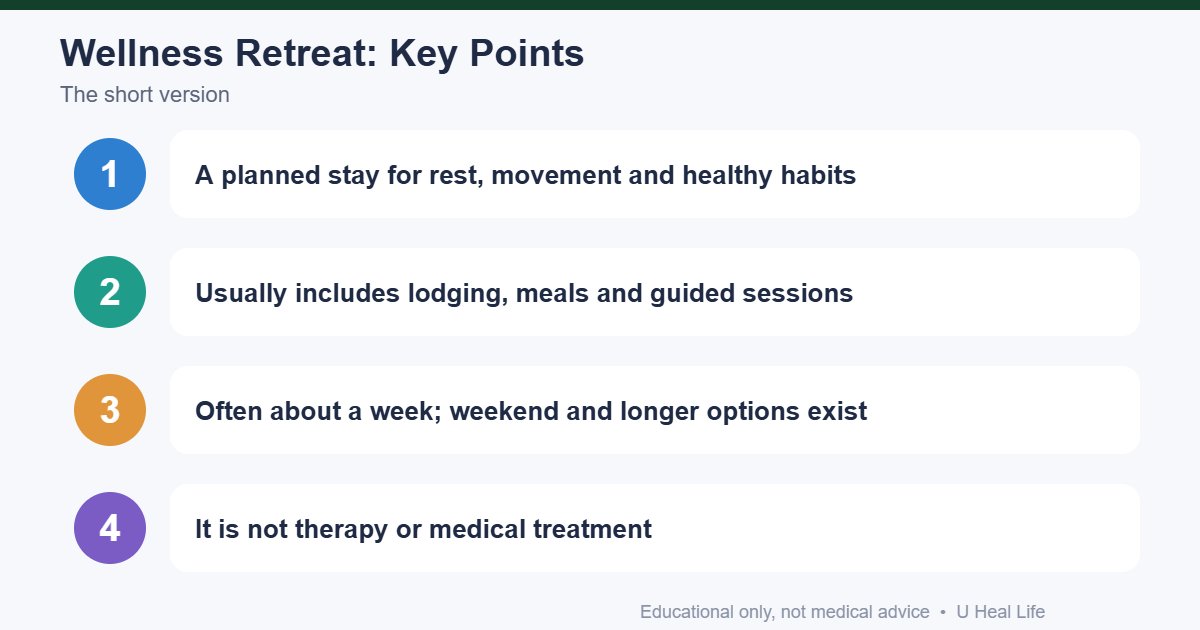
What is a wellness retreat key points: planned stay, usual inclusions, cost varies, not medical treatment
Key points at a glance.

What Is a Wellness Retreat?

A wellness retreat is a short stay built around rest, healthy habits and personal reflection. You live at the retreat, follow a simple daily schedule and take part in guided sessions. Many people go to slow down, recover from stress or try new routines in a supportive setting.

Retreats can be quiet and simple, or comfortable and luxurious. What they share is the goal of helping you reconnect with yourself, away from work, screens and noise.

What Does a Wellness Retreat Include?

Every retreat is different, so always read the program. Most include some mix of:

  • Lodging: a shared or private room
  • Meals: often healthy, plant-forward food
  • Movement: yoga, walking, stretching or light fitness
  • Mindfulness: meditation, breathing exercises or journaling
  • Talks and workshops: topics like sleep, stress or nutrition
  • Nature time: hikes, beaches or garden walks
  • Optional extras: massage or spa treatments, which may cost more

How Long Does a Wellness Retreat Last?

Travel experts often say a typical retreat lasts about a week. Shorter weekend retreats of 2 to 3 days are common too, and some programs run for 2 to 4 weeks. If you are new to retreats, a short one is a good way to try the idea.

Types of Wellness Retreats

TypeMain focusGood for
Yoga and meditationMovement and calmBeginners, stress relief
Silent retreatQuiet and inner focusPeople who want deep rest
Fitness retreatExercise and healthy habitsActive people
Spa and relaxationRest and treatmentsBurnout-style tiredness
Nutrition or detoxFood and routinesPeople learning healthy eating
Medical-wellnessWellness plus licensed health staffPeople who want health checks

Who Is a Wellness Retreat For?

A wellness retreat may suit you if you feel stretched thin, want a reset or want to learn healthy routines. Many guests travel alone, so you do not need a partner or friends to go.

A retreat is not a replacement for therapy or medical care. If you have a mental health condition, talk to your doctor or therapist first. Our guide to how to choose a mental health retreat explains the difference.

How Much Does a Wellness Retreat Cost?

Prices vary a great deal. Simple retreats can cost a few hundred dollars for a short stay, while luxury resorts cost much more. For example, Canyon Ranch lists all-inclusive stays from about $950 per person per night on its website. Health insurance generally does not pay for wellness retreats. See our full guide on how much a wellness retreat costs.

Possible Benefits and Limits

Many guests say they feel calmer, more rested and clearer about their next steps. Time away, regular sleep, movement and healthy meals can all support wellbeing. But a retreat is a short experience. Habits you keep after you return matter more than the days you spend there, and results differ from person to person.

How to Choose a Wellness Retreat

  1. Know your goal. Rest, learning or a reset?
  2. Read what is included in writing: lodging, meals, sessions and transfers.
  3. Check the leaders. Ask about training and experience.
  4. Look at group size and daily schedule.
  5. Read recent reviews and cancellation terms.

Frequently Asked Questions About What Is a Wellness Retreat

Is a wellness retreat worth it?

It can be worth it if you pick one that fits your goal and budget, and if you keep a few habits afterward.

Can I go to a wellness retreat alone?

Yes. Many guests are solo travelers, and retreats are often friendly and well suited to it.

How is a retreat different from a vacation?

A vacation is mostly for fun and rest. A retreat has a planned program focused on wellbeing.

Does insurance cover a wellness retreat?

Usually not. Ask your insurer, and check whether an HSA applies.

How do I prepare?

Read the schedule, pack comfortable clothes and tell the organizer about any health needs.

Helpful resource: For general information on relaxation techniques such as breathing exercises, see the NIH’s NCCIH guide to relaxation techniques.

Disclaimer: This article is for general information only and is not medical or mental health advice. Prices, programs and availability change, so please check current details with each provider. If you are in crisis or thinking about harming yourself, call or text 988 (the Suicide & Crisis Lifeline in the US) or your local emergency number right away.
Graphic for 8 signs you need a mental health day and how to take one
8 Signs You Need a Mental Health Day (and How to Take One)

Most of us don’t think twice about calling in sick when we have a fever or a migraine. But when what’s worn down is your mind rather than your body, it’s much easier to push through, tell yourself it’s “not that bad,” and keep going until something gives.

A mental health day is a planned break from work, school, or daily obligations so you can rest, reset, and look after your emotional well-being. It isn’t a cure for anxiety, depression, or chronic burnout, but it can interrupt a downward spiral before it gets worse. Here are eight signs it may be time to take one.

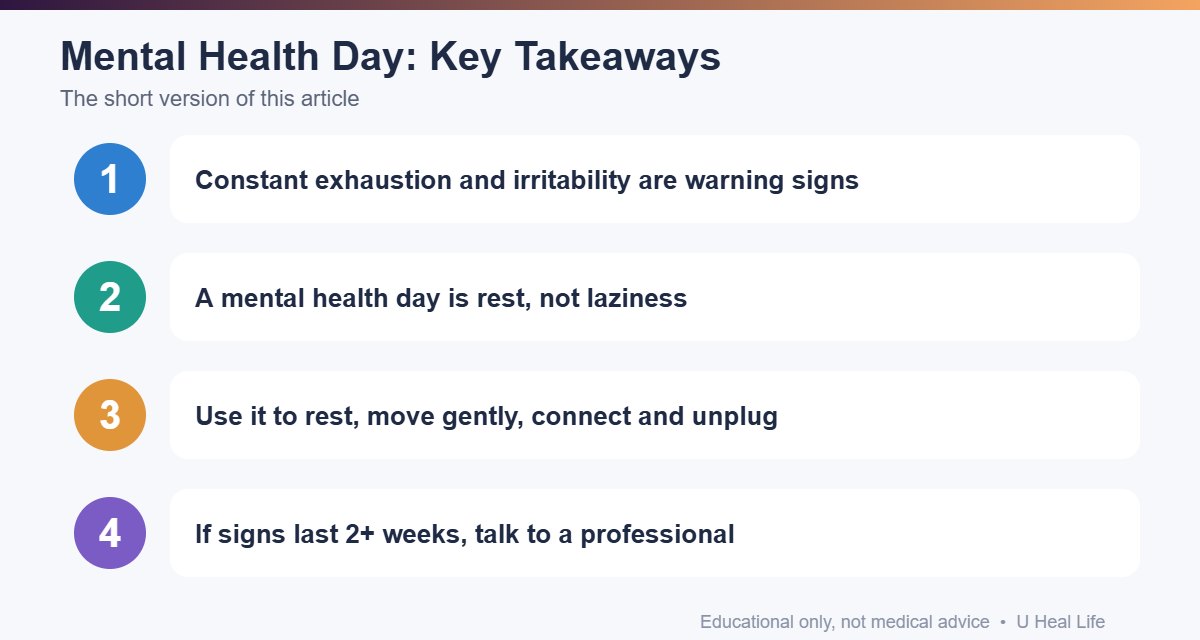
Quick answer: You may need a mental health day if you feel exhausted even after sleep, get irritated easily, cannot focus, dread everyday responsibilities, feel physically tense, or no longer enjoy things. A day to rest can help you reset, but if these signs last for weeks, please talk to a professional.

Key takeaways infographic: Constant exhaustion and irritability are warning signs; A mental health day is rest, not laziness; Use it to rest, move gently, connect and unplug; If signs last 2+ weeks, talk to a professional
The key points at a glance.

1. You’re Exhausted Even After Sleeping

Fatigue that doesn’t improve with a full night’s rest is one of the most common signals of mental overload. When stress stays high for weeks, your body stays in a state of alert, and sleep stops feeling restorative.

2. Small Things Set You Off

If a slow driver, a noisy coworker, or an unanswered text suddenly feels unbearable, your stress tolerance may be running on empty. Irritability is often the first thing others notice before we notice it ourselves.

3. You Can’t Concentrate

Reading the same email three times, forgetting simple tasks, or staring at a screen without taking anything in are signs your brain is overloaded. Chronic stress can interfere with attention and memory, which is why “brain fog” and burnout often go hand in hand.

4. You Dread Work or Everyday Responsibilities

Everyone has bad Mondays. But if dread about work, school, or home life shows up most days, or starts creeping in on the weekend, it’s worth paying attention to.

5. Your Body Is Sending Signals

Stress doesn’t stay in the mind. Frequent headaches, stomach trouble, tight shoulders, a clenched jaw, changes in appetite, and getting sick more often can all be physical signs that you’re running on too little rest and too much pressure.

6. Things You Usually Enjoy Feel Flat

When hobbies, favorite shows, or time with friends stop feeling enjoyable, your mind may be asking for a break. Losing interest in things you normally like is also a symptom commonly linked with depression, so keep an eye on how long it lasts.

7. You’re Pulling Away From People

Canceling plans, ignoring messages, or avoiding conversations because you simply have no energy left is a classic sign of emotional overload. A day to rest can help you show up for the people you care about with more to give.

8. You’re Leaning on Coping Crutches

More caffeine to get going, more alcohol to wind down, endless scrolling to avoid thinking, or comfort eating to get through the day can all be signs you’re coping rather than recovering. If you notice the pattern, it’s a good moment to pause.

What a Good Mental Health Day Looks Like

A mental health day works best when it’s genuinely restful, not just a day off spent catching up on chores or doom-scrolling. A few ideas:

Want a gentle way to unwind in the evening too? Try our 10-minute evening routine to reduce stress or these 12 ways to calm down after a stressful day.

  • Disconnect on purpose. Mute work email and chat notifications for the day.
  • Let yourself rest. Sleep in if you can, or take a nap without guilt.
  • Move gently. A walk outside, light stretching, or yoga can lower tension without draining you.
  • Do something restorative. Cook a meal you enjoy, read, draw, listen to music, or spend time in nature.
  • Connect with someone safe. A short call with a friend or family member can lift your mood more than staying isolated.
  • Name what’s weighing on you. Write down what’s been draining you, then pick one small thing you can change this week.

How to Ask for a Mental Health Day

Policies vary by employer and by state, so check your company handbook or HR guidelines. Many workplaces allow sick leave to be used for mental health reasons, and in most cases you don’t have to share details. A simple message such as “I’m not feeling well and need to take a sick day” is usually enough.

When One Day Off Isn’t Enough

A mental health day is a short-term reset, not a long-term solution. If you’ve felt this way most days for two weeks or longer, or if your sleep, appetite, work, or relationships are being affected, it’s a good idea to talk with your doctor or a licensed mental health professional. If you’re not sure how to afford care, our guide to mental health insurance coverage and our breakdown of online therapy costs can help you plan next steps. You may also find our article on social media anxiety useful if constant scrolling is adding to your stress.

If you often feel anxious without a clear reason, read why you might feel anxious for no reason, and build small habits with our simple mindfulness exercises.

If you ever have thoughts of harming yourself, call or text 988 (the Suicide & Crisis Lifeline in the US) or contact your local emergency services right away.

Illustration of a video call with a therapist on a laptop
Sponsored

Thinking about talking to someone?

If you often feel drained or overwhelmed, talking to someone can be a good next step. Online-Therapy.com offers CBT-based online therapy programs for individuals and couples.

Learn moreThis link will redirect you to a third-party website. We may earn a commission from links you follow.

Frequently Asked Questions

What is a mental health day?

It is a day you take off to rest and recover from stress, burnout or emotional overload, in the same way you would take a sick day for physical illness.

How do I know if I need one?

Common signs include constant tiredness, irritability, trouble focusing, dread about work, physical tension and losing interest in things you enjoy.

What should I do on a mental health day?

Rest, spend time outside, move gently, eat well, limit screens and do something that calms you. Avoid filling the day with chores or work.

How often can I take a mental health day?

There is no fixed number. If you need them very often, that is a sign to look at your workload, sleep and stress, and to talk with a professional.

Is a mental health day the same as a sick day?

Many workplaces treat them the same, but policies differ. Check your company policy before you ask.

When should I get professional help?

If you have felt this way most days for two weeks or longer, or if sleep, appetite, work or relationships are affected, speak with a doctor or licensed mental health professional.

Related Reading

This article is for general educational purposes and is not a substitute for professional medical or mental health advice.