8 Signs You Need a Mental Health Day (and How to Take One)
Most of us don’t think twice about calling in sick when we have a fever or a migraine. But when what’s worn down is your mind rather than your body, it’s much easier to push through, tell yourself it’s “not that bad,” and keep going until something gives.
A mental health day is a planned break from work, school, or daily obligations so you can rest, reset, and look after your emotional well-being. It isn’t a cure for anxiety, depression, or chronic burnout, but it can interrupt a downward spiral before it gets worse. Here are eight signs it may be time to take one.
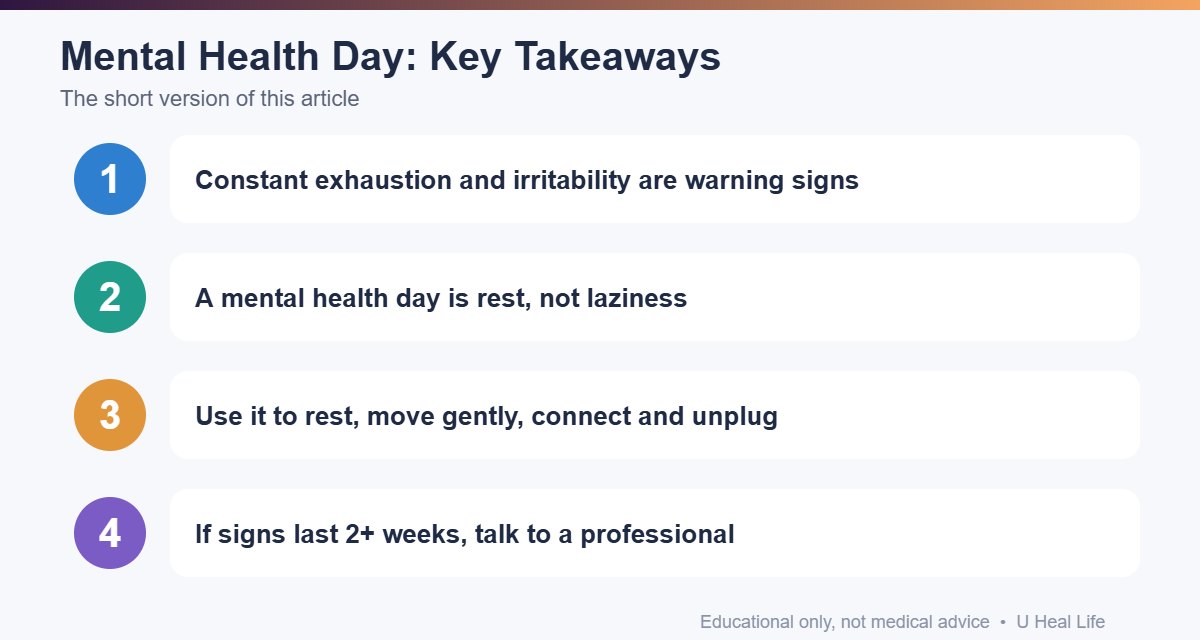
Quick answer: You may need a mental health day if you feel exhausted even after sleep, get irritated easily, cannot focus, dread everyday responsibilities, feel physically tense, or no longer enjoy things. A day to rest can help you reset, but if these signs last for weeks, please talk to a professional.
1. You’re Exhausted Even After Sleeping
Fatigue that doesn’t improve with a full night’s rest is one of the most common signals of mental overload. When stress stays high for weeks, your body stays in a state of alert, and sleep stops feeling restorative.
2. Small Things Set You Off
If a slow driver, a noisy coworker, or an unanswered text suddenly feels unbearable, your stress tolerance may be running on empty. Irritability is often the first thing others notice before we notice it ourselves.
3. You Can’t Concentrate
Reading the same email three times, forgetting simple tasks, or staring at a screen without taking anything in are signs your brain is overloaded. Chronic stress can interfere with attention and memory, which is why “brain fog” and burnout often go hand in hand.
4. You Dread Work or Everyday Responsibilities
Everyone has bad Mondays. But if dread about work, school, or home life shows up most days, or starts creeping in on the weekend, it’s worth paying attention to.
5. Your Body Is Sending Signals
Stress doesn’t stay in the mind. Frequent headaches, stomach trouble, tight shoulders, a clenched jaw, changes in appetite, and getting sick more often can all be physical signs that you’re running on too little rest and too much pressure.
6. Things You Usually Enjoy Feel Flat
When hobbies, favorite shows, or time with friends stop feeling enjoyable, your mind may be asking for a break. Losing interest in things you normally like is also a symptom commonly linked with depression, so keep an eye on how long it lasts.
7. You’re Pulling Away From People
Canceling plans, ignoring messages, or avoiding conversations because you simply have no energy left is a classic sign of emotional overload. A day to rest can help you show up for the people you care about with more to give.
8. You’re Leaning on Coping Crutches
More caffeine to get going, more alcohol to wind down, endless scrolling to avoid thinking, or comfort eating to get through the day can all be signs you’re coping rather than recovering. If you notice the pattern, it’s a good moment to pause.
What a Good Mental Health Day Looks Like
A mental health day works best when it’s genuinely restful, not just a day off spent catching up on chores or doom-scrolling. A few ideas:
Want a gentle way to unwind in the evening too? Try our 10-minute evening routine to reduce stress or these 12 ways to calm down after a stressful day.
- Disconnect on purpose. Mute work email and chat notifications for the day.
- Let yourself rest. Sleep in if you can, or take a nap without guilt.
- Move gently. A walk outside, light stretching, or yoga can lower tension without draining you.
- Do something restorative. Cook a meal you enjoy, read, draw, listen to music, or spend time in nature.
- Connect with someone safe. A short call with a friend or family member can lift your mood more than staying isolated.
- Name what’s weighing on you. Write down what’s been draining you, then pick one small thing you can change this week.
How to Ask for a Mental Health Day
Policies vary by employer and by state, so check your company handbook or HR guidelines. Many workplaces allow sick leave to be used for mental health reasons, and in most cases you don’t have to share details. A simple message such as “I’m not feeling well and need to take a sick day” is usually enough.
When One Day Off Isn’t Enough
A mental health day is a short-term reset, not a long-term solution. If you’ve felt this way most days for two weeks or longer, or if your sleep, appetite, work, or relationships are being affected, it’s a good idea to talk with your doctor or a licensed mental health professional. If you’re not sure how to afford care, our guide to mental health insurance coverage and our breakdown of online therapy costs can help you plan next steps. You may also find our article on social media anxiety useful if constant scrolling is adding to your stress.
If you often feel anxious without a clear reason, read why you might feel anxious for no reason, and build small habits with our simple mindfulness exercises.
If you ever have thoughts of harming yourself, call or text 988 (the Suicide & Crisis Lifeline in the US) or contact your local emergency services right away.
Frequently Asked Questions
What is a mental health day?
It is a day you take off to rest and recover from stress, burnout or emotional overload, in the same way you would take a sick day for physical illness.
How do I know if I need one?
Common signs include constant tiredness, irritability, trouble focusing, dread about work, physical tension and losing interest in things you enjoy.
What should I do on a mental health day?
Rest, spend time outside, move gently, eat well, limit screens and do something that calms you. Avoid filling the day with chores or work.
How often can I take a mental health day?
There is no fixed number. If you need them very often, that is a sign to look at your workload, sleep and stress, and to talk with a professional.
Is a mental health day the same as a sick day?
Many workplaces treat them the same, but policies differ. Check your company policy before you ask.
When should I get professional help?
If you have felt this way most days for two weeks or longer, or if sleep, appetite, work or relationships are affected, speak with a doctor or licensed mental health professional.
Related Reading
- 10-Minute Evening Routine to Reduce Stress
- How to Calm Down After a Stressful Day: 12 Easy Ways to Relax
- How to Stop Overthinking at Night: 10 Simple Ways That Actually Help
- Social Media Anxiety: 9 Signs and 7 Science-Backed Ways to Feel Better
- Why Do I Feel Anxious for No Reason? 9 Common Causes and What to Do
This article is for general educational purposes and is not a substitute for professional medical or mental health advice.