
How to Stop Overthinking at Night: 10 Simple Ways That Actually Help
You turn off the light. You close your eyes. And then your mind starts running.
“Did I say the wrong thing today?” “What if I fail tomorrow?” “Why did I do that five years ago?”
If this sounds like you, you are not alone. Overthinking at night is very common, and it can make it hard to sleep. The good news is that there are simple things you can do to calm your mind.
In this guide, you will learn why it happens and 10 easy ways to stop it.
Quick answer: To stop overthinking at night, write your thoughts down before bed, slow your breathing, keep screens away, and give your mind a calm routine. If you can’t sleep after 20 minutes, get up and do something quiet until you feel sleepy.
Why Do We Overthink at Night?
Overthinking means thinking about the same worries again and again. It feels hard to stop, and it usually does not solve the problem.
There are a few simple reasons why it gets worse at night:
- No distractions. During the day you are busy with work, phone, and people. At night it is quiet, so your thoughts get louder.
- You are tired. When you are tired, your brain finds it harder to stay calm and think clearly. Small worries can feel very big.
- Unfinished stress. If you did not deal with your stress during the day, it often shows up when you finally stop.
- Dark and quiet feels lonely. Many people feel more sensitive and emotional at night.
Remember this: a thought at 2 AM is not always the truth. Problems often feel much bigger at night than they do in the morning.
10 Easy Ways to Stop Overthinking at Night
1. Write It Down Before Bed
Keep a small notebook near your bed. Spend 5 to 10 minutes writing down:
- What is worrying you
- What you need to do tomorrow
This is sometimes called a “brain dump.” Once your thoughts are on paper, your brain does not feel like it has to hold on to them all night.
2. Set a “Worry Time” During the Day
Pick a time, such as 6 PM, and give yourself 15 minutes to think about your worries. Do it earlier in the evening, not right before bed.
Then, when a worry comes at night, tell yourself: “I will think about this tomorrow at worry time.” It sounds simple, but it helps many people.
3. Slow Down Your Breathing
Slow breathing tells your body that it is safe to relax. Try this:
- Breathe in through your nose for 4 seconds.
- Breathe out slowly through your mouth for 6 seconds.
- Repeat for 2 to 5 minutes.
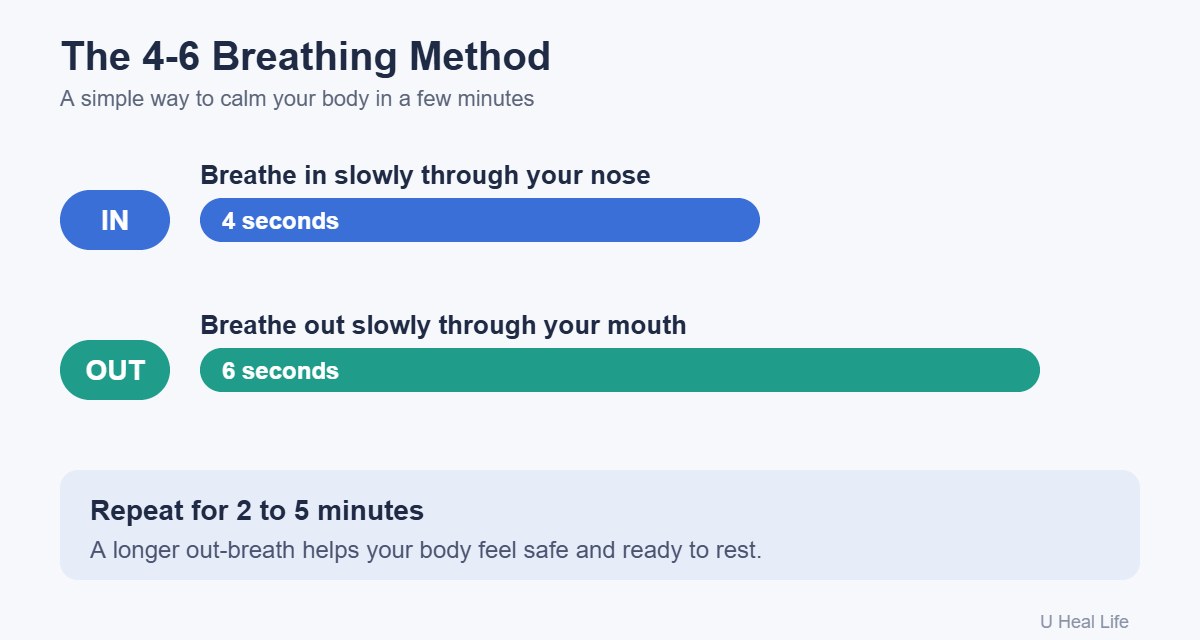
Making your out-breath longer than your in-breath helps your body calm down.
4. Try the “Body Scan”
Lie down and slowly move your attention from your toes to your head. Notice each part of your body and let it relax.
This gives your mind something gentle to focus on instead of your worries.
5. Keep Your Phone Away
Scrolling at night keeps your brain busy. News, social media, and messages can also make you feel stressed or compare yourself with others.
Try to stop using screens at least 30 to 60 minutes before bed. If you use your phone as an alarm, keep it across the room.
6. Create a Calm Bedtime Routine
Your brain loves routine. Do the same calm things each night, such as:
- Take a warm shower
- Read a few pages of a light book
- Listen to soft music
- Do some gentle stretching
After a few days, your body will begin to understand: “This is the time to sleep.”
7. Challenge Your Thoughts
When a scary thought comes, ask yourself:
- Is this a fact, or is it a fear?
- What would I tell a friend who had this thought?
- Will this matter in one week? In one year?
You don’t have to push your thoughts away. Just look at them with more calm.
8. Get Up If You Can’t Sleep
If you are lying in bed for more than 20 minutes and still awake, don’t stay there and fight with your mind. Get up. Go to another room, keep the lights low, and do something quiet like reading or stretching. Go back to bed when you feel sleepy.
This helps your brain connect your bed with sleep, not with worry.
9. Watch What You Eat and Drink
Some things can make it harder to relax at night:
- Caffeine (tea, coffee, cola, energy drinks) late in the day
- Heavy meals right before bed
- Too much alcohol, which may help you fall asleep but often disturbs sleep later
Try to have your last caffeine at least 6 to 8 hours before bedtime.
10. Move Your Body During the Day
Walking, yoga, or any light exercise helps your body release stress. Even a 20 to 30 minute walk can make a difference over time. Try to finish hard workouts a few hours before bed.
What NOT to Do When You’re Overthinking at Night
- Don’t keep checking the clock. It increases stress about sleep.
- Don’t try to force sleep. Trying too hard often makes it worse.
- Don’t scroll on your phone to “distract” yourself.
- Don’t be hard on yourself. Overthinking does not mean something is wrong with you.
When to Get Help
Occasional overthinking is normal. But please talk to a doctor or mental health professional if:
- You are having trouble sleeping most nights for several weeks
- Your worries feel too big to control
- You feel anxious, sad, or hopeless a lot of the time
- Your daily life, work, or relationships are being affected
Asking for help is a sign of strength, not weakness.
Frequently Asked Questions
Why do I overthink more at night?
At night, it is quiet and you have fewer distractions. You are also tired, so your mind finds it harder to stay calm. This makes worries feel bigger.
How can I stop my mind from racing at night?
Try writing your thoughts down, slowing your breathing, and following a calm bedtime routine. Keeping your phone away before bed also helps.
Is overthinking at night a sign of anxiety?
It can be linked to stress or anxiety, but not always. If it happens often and affects your sleep and daily life, it is a good idea to speak with a professional.
What is the 4-6 breathing technique?
You breathe in for 4 seconds and breathe out for 6 seconds. The longer out-breath helps your body relax.
Can overthinking cause insomnia?
Yes. Racing thoughts can make it hard to fall asleep or stay asleep. Over time, this can lead to poor sleep. Good sleep habits and stress management can help.
Should I take sleeping pills for overthinking?
Please don’t start any sleep medicine on your own. Speak to a doctor first.
Final Thoughts
Overthinking at night is something many people go through. You don’t need to fix all your problems before sleeping. You only need to give your mind a safe, calm place to rest.
Start small. Pick two or three tips from this list and try them for a week. Be patient with yourself. A calmer mind and better sleep are possible.
Disclaimer: This article is for general information only and is not medical advice. If you are struggling with your mental health or sleep, please speak with a qualified healthcare professional.