
How to Improve Memory and Concentration in Adults
Affiliate disclosure: This article contains affiliate links. If you buy through our links, we may earn a commission at no extra cost to you. Our content is educational and based on public product information and published research, not personal testing.
Forgetting names, losing your keys, or losing track mid-task is common. The good news is that you can train your memory and attention with simple habits at any age.
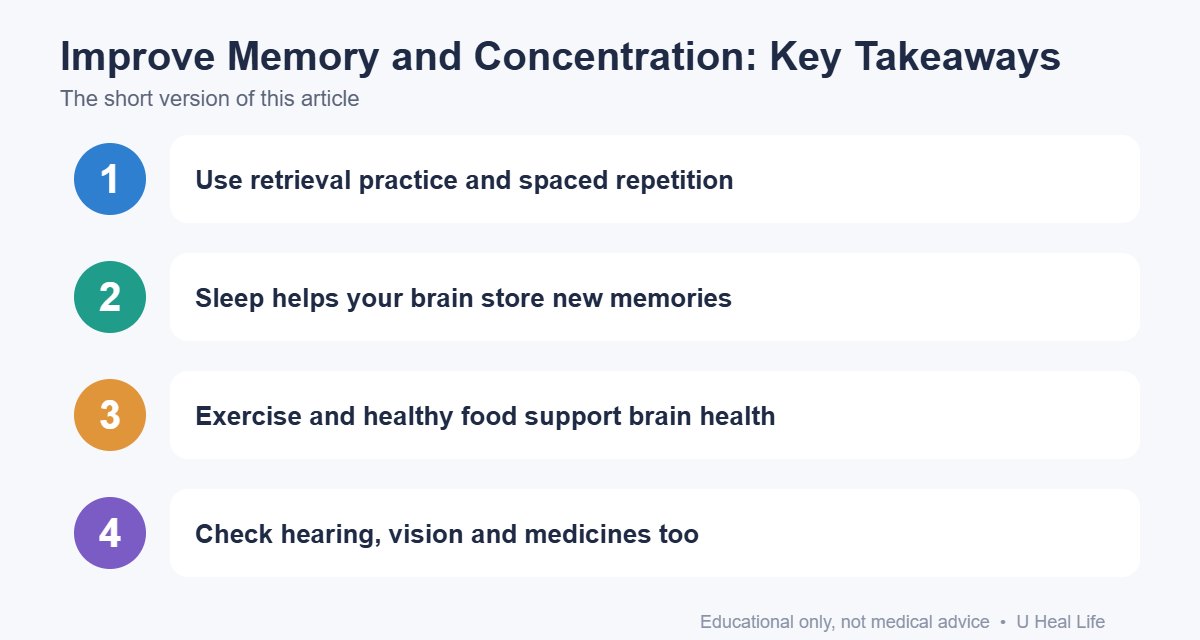
Quick answer: To improve memory and concentration, use active learning methods such as retrieval practice and spaced repetition, sleep 7 or more hours, exercise regularly, eat a balanced diet, stay socially and mentally active, and check for health issues like poor hearing, low mood or medicine side effects.
How Memory Works in Simple Words
Memory has three steps: you take in information (attention), your brain stores it (often during sleep), and you bring it back later (recall). Problems at any step can feel like “bad memory.” Often the real problem is that we were not paying full attention in the first place.
8 Techniques to Remember More
1. Practice Recalling, Not Just Re-reading
Close the book and try to say or write what you remember. This “retrieval practice” strengthens memory more than re-reading.
2. Space Out Your Learning
Review new information after a day, a few days, and a week. Short repeated reviews beat one long session.
3. Chunk Information
Break long lists into small groups. A phone number is easier to remember as 3 or 4 short groups.
4. Connect It to Something You Know
Link new facts to a picture, a story or a person you already know. Funny or vivid links stick best.
5. Write Things Down
Use a notebook or notes app. This frees your mind for thinking instead of holding tasks in your head.
6. Teach It to Someone Else
Explaining an idea out loud shows you what you really understand.
7. Give Things a Home
Keep keys, wallet and phone in the same spot every day. Routines save mental energy.
8. Do One Thing at a Time
You cannot store what you never noticed. Put your phone down when someone gives you important information.
Lifestyle Habits That Support Memory and Concentration
- Sleep: Aim for at least 7 hours. Sleep helps lock in new memories.
- Exercise: Regular activity supports blood flow and overall brain health.
- Food: A balanced pattern with vegetables, fruit, whole grains, fish and nuts supports general health.
- Social time: Talking with friends and family keeps the mind active.
- Learning: Try a new skill, language or hobby.
- Health checks: Blood pressure, blood sugar, hearing and vision can all affect thinking.
- Alcohol and smoking: Limiting alcohol and not smoking support brain health.
The National Institute on Aging has helpful articles on keeping your brain healthy as you age.
Quick Memory-Friendly Routine
| When | Habit |
|---|---|
| Morning | Review your top 3 tasks and appointments |
| During the day | One focus block at a time, phone away |
| Evening | Spend 5 minutes recalling what you learned today |
| Bedtime | Screens off and a regular sleep time |
When to See a Doctor
Everyone forgets things sometimes. But please get medical advice if you notice:
- Memory loss that affects daily life
- Getting lost in familiar places
- Repeating questions often
- Trouble with words or following conversations
- Changes in mood or personality
Where Do Supplements Fit In?
Supplements are optional extras, not a shortcut. Sleep, food, movement and stress care come first, and a doctor should check any new supplement against your health and medicines. If you are curious about multi-ingredient nootropic supplements, read our independent BrainPill review for a balanced look at the evidence and safety points. If you decide to read more, the manufacturer’s page is below.
See BrainPill’s Official Product Details
Paid affiliate link. We may earn a commission from qualifying purchases.
Frequently Asked Questions
Can adults really improve their memory?
Yes. Learning methods and healthy habits can improve how well you remember and focus at any age.
What is the best way to remember what I study?
Test yourself, space your reviews, and sleep well after learning.
Do brain games work?
They can improve the specific game you practice, but real-life benefits are less certain. Learning new, challenging things is a better bet.
Is forgetfulness a sign of dementia?
Occasional forgetfulness is common and usually not dementia. Persistent or worsening memory problems need a medical check.
Final Thoughts
Memory and concentration respond to daily habits. Start with sleep, active recall and fewer distractions, and give yourself a few weeks to see the change.
Related Reading
- Daily Habits That Support Long-Term Brain Health
- Best Ways to Improve Focus and Concentration Naturally
- Brain Fog vs Mental Fatigue: What’s the Difference?
- BrainPill Review 2026: Ingredients, Benefits, Side Effects & Does It Really Work?
Disclaimer: This article is for educational purposes only and is not medical advice. Dietary supplements are not intended to diagnose, treat, cure, or prevent any disease. Talk to a qualified healthcare professional before using supplements, especially if you take medicine, are pregnant or breastfeeding, or have a health condition.