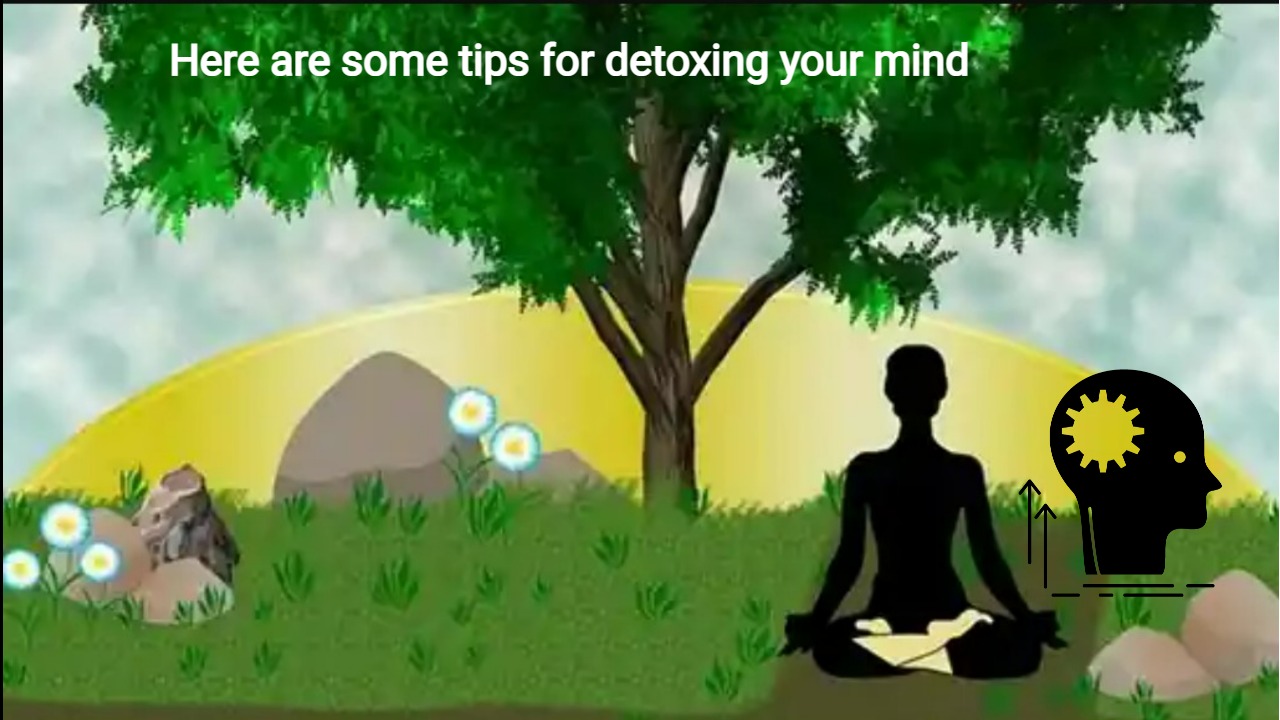
Here are some tips for detoxing your mind

From my perspective, the mind is one of the most important organisms of the body. Therefore having a clear mindset and vision is fundamental for achieving anything in life. Following are 5 ways in which a person can detox the mind and make room for better things.

Unfollow anyone who does not add positive value to your life

Be mindful of the things you are following on social media. Make sure those accounts are adding value to your life. Many of the things we see on social media are products of technology. In other words, computers can create and edit the perfect online life, but real life is a different thing. Constantly track the accounts you follow and unfollow those who are not adding value to your path. Clear out your social media space as you clean out your room, closet, or house.

Became selectively social

Who you share your time with is a product of who you are. So be aware of the people around you. Those associations have a meaningful impact in your life, it has the power to change your perspective of life. Be mindful of who you give your energy to and from who you are receiving energy.

Meditate

Meditation is a powerful tool to organize your mind. Do not confuse meditation with shooting your mind off; meditation is the power to organize your thoughts. When you are meditating, focus on one thing at a time, this is how meditation works. You are supposed to pay attention to one aspect of your life at the time, and that will create a habit of concentration. Preventing you from focusing your time on unnecessary stuff, there you will have a clear and organized mind all the time.

Ask yourself important questions.

Everyone has questions about life and how it works. Ask yourself, what is working on my life and what is not working? What aspects of my life can I improve to become a better person? Do I currently have any relationship that is not adding value or joy to my life? What is one habit that prevents me from becoming a better person, and how can I break it? You can ask yourself multiple questions daily to find out how you are doing in life and where you want to go. Ask those questions all the time.

Say “NO” whenever you are not ready.

If you have a habit of being a people pleaser or you find yourself overbook all the time, it is time for you to learn how to say NO. Is essential to prioritize your time and spend it on things that will fulfill your path and purpose in life. You should help other people with their path if you can, but do not forget that you are your masterpiece; therefore, you need most of your time.

Discover the power of the pause. Close your eyes and breath throughout your body. Slowly breathe through your nose and out throughout your mouth. Please your body needs, please your organisms by practicing simple steps. Detox your mind, and you will detox your life.

detox mind
How to DETOX your mind.

Though We have miles to go in terms of learning what it means to take care of our bodies, we are even further behind on how
to take care of our minds. Our brains construct our experiences and there are so many factors that alter and shift our perspectives that are completely in our control but totally out of our awareness. Here, a few things you can do to detox your mind, deprogram and wipe the slate clean now and again. Following are 18 ways in which a person can detox the mind and make room for better things.

1.Trvel to assimilate culture. Alter your base-point concept of “normal.” What it will show you is how many behaviors/values/beliefs you have unconsciously adopted from your surroundings ( and ways you can change them).

2. Create physical solutions for emotional problems. People default on the idea that one emotion will cancel out or fix another. If you are upset, seek a high to eliminate it. But negative emotions are just called to action that being ignored through a little mental gymnastics and a lot of justification, Detoxing your mind is letting go of emotion high in place of creating actual solutions.

3. know that emotional toxicity is born of mental resistance. listed if trying to create a certain emotional experience.

4. Identify your tethers. The Problems that are in from of you are actually behind you: they are cracks in your foundation that are holding you back. stop trying to dismantle symptoms; go back and identify the causes.

5. Go for a long drive and let yourself get lost. Drive through neighborhoods you never would have known existed.
See how other people live. See them come home from work and what their living rooms look like from the outside. It will comfort you in that you will realize how small you are in a more practical way than just staring at the ocean. You don’t know what you don’t know.

6. Rearrange your furniture. Your brain constructs your experiences through props and signals that those props fire off. you are continual. subconsciously triggering negative or stagnant associations because of how your brain processes your surroundings- change how you think, change what you feel.

7. Do a Mental purge. Just write down whatever weird thoughts continually, cross your mind of the little incoherent bits that are clogging your head. Just getting them out will give you relief.

8. Restructure your digital life. It’s not realistic(or desirable to lot of people) to be forever disconnected, but it’s also not realistic to keep things that don’t serve you positively in you social feeds and expect it not to affect you.

9. Notice your unconscious movements. Notice your feet walking and how you are not deciding yo ligy each one up and forward and yet because your mind said, “Okay, self lets get to this point today,” you began to go. Consider your morning intentions similarly.

10. Cleanse your space emotionally. Consider the emotional attachment you have to the things you keep around you. Did you buy those clothes to someone you’re not?
Do you have decor around your apartment that you got during a particularly crappy time in your life? Let those
things go, but decide what to let go by thinking about what they make you feel.

11. Place yourself. Make a chart with three columns and on the left write everything you feel you’ve
accomplished in your life and the middle writes down what your daily life entails and then on the right put what those consistent habits will lead to what you hope to do in the future. It helps you focus on the big picture; getting lost
in minutiae usually causes people anxiety.

12. Shift your physical position every time you start falling back into toxic thought cycles. This basically creates a new experience for your body and refocuses you in the moment( and it’s simple enough to do at your desk at work)

13. Stretch your brain. Pick up a book on something that interests you and learn more about it. Look at research on something you have a theory about.

14. Reevaluate the extent of your connected disconnectedness. if the bulk of your relationships happen digitally (that are not long distance) and you have not had a conversation in person without being interrupted by a phone in a long enough time , evaluate how much you are prioritizing people in your life, and realize that screens>people is basically the best way to create an extremely anxious lifestyle for yourself.

15. Identify what your addictions are keeping you distracted from. Most things people struggle with are addictions in some form: a thing you keep doing though you don’t really want to. Understand that addiction is a disconnection from yourself, and a disconnection from yourself is born of something present that you (think) you can’t face.

16. Learn to let “good enough” not be the opposite of perfect. If there is one thing that will give you the most mental-emotional relief it is in letting food enough be good enough.

17. Dismantle the parts of your life that are solely performative. The thing is that most of what clogs our minds is all the
the unnecessary effort we put into constructing a life that seems a little more palatable, a little more noble, a little better than someone else’s (so therefore good enough) But it accomplishes the opposite of what we intend: We place ourselves further from a genuinely happy experience (which is in accepting that life is small and simple and more than enough)
through grandiose ideas and attachments that end up making us into characters, not people.

18. Write down what you hate about other people. This is what you need to change about yourself/ your life( but are resisting too much to actually do something about). Know that it’s often not a surface-level issue: You don’t hate your annoying neighbor because she always bothers other people for lunch, you hate her because she acts as though she’s
desperate for love and you feel that way too but avoid it because you think it’s embarrassing. This is a cheat sheet to see what’s actually wrong in your life. It’s important because completely understanding the problem is the same thing as knowing the solution. If you don’t know what to do, you don’t know what’s wrong. If you don’t know what’s wrong, its because some part of you is resisting seeing it.

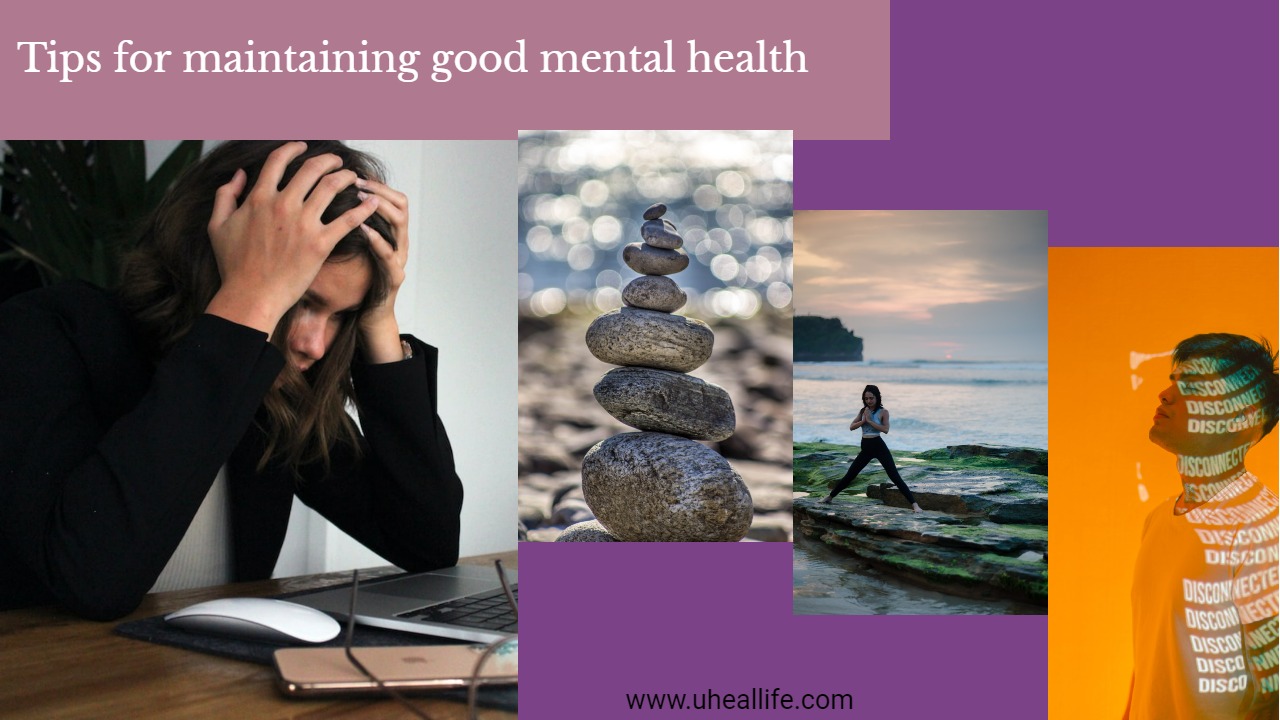
Tips for maintaining good mental health

A famous psychiatrist, Abraham Low, says that when people are depressed it’s therapeutic for them to go about their daily activities as close to normal as possible. This is liable to be slower than usual, but that’s all right.

Low also recommended simple motivation methods for helping people overcome their sense of helplessness. These methods have been shown to work for generations.

Therapist/researcher Stephen Ilardi says that activity – esp. physical activity, including light exercise – is therapeutic for depression.

Emma Seppala of Yale suggests conserving our energy by going back and forth between challenging tasks and easy ones.

I can tell you some self-help things but I’m not saying necessarily that these are all you need. Treating a serious case of depression with nothing but self-help is risky.

Being active is therapeutic in more ways than one. It gives you confidence. It stimulates your nervous system and makes your brain work.

Taking things in baby steps – very important. This is the key to motivation and motivation is the key to recovery.

Just 20 min of brisk walking a day can help, and you can add to that gradually so long as you don’t make yourself sick of exercise with too much.

If a task seems like it’s too big, think of it as a series of tasks that you can take on one at a time, and start with something really, really easy. Cleaning – start by cleaning for 3 or 4 min and take a 5 min break. Reading – start by previewing a chapter you’re going to read by looking at headings, sub-headings, etc.

You can even use the baby steps principle for having fun. If you’re not getting any enjoyment out of things, here’s something that people here have said is helpful with that problem. Look all over and do a complete inventory. You should be able to find at least one or two things you like, such as your favorite music or movie. If there’s just one movie you like, watch it once or twice. Then, find movies that are like it in some way – with similar story or the same actor. Keep adding to your entertainment supply to give it variety.

How to Train Your Brain Manifest Your Dream Life.

Did you know that you are currently creating your own life’s experiences and circumstances with your conscious and unconscious thoughts?

As human beings, we ALL possess the ability to create the life we desire, using the power of our minds. And the truth is, you are constantly manifesting your external reality (whether you realize it or not).

You see, every thought, intention and emotion that you have (both positive AND negative), releases a specific vibration of energy into the universe, which essentially shapes the details of your life.

The power is already within you to create the life of your dreams; all you need to do is to understand how to harness this energy to bring you what you most desire.

Now, I know there are A LOT of techniques for manifestation and sometimes it can be a little bit overwhelming to find the most effective one. That’s why I’d like to help you by sharing my personal practices for successful manifestation right now. Just follow these 4 essential steps to start attracting your greatest desires into your life, by as soon as this time next week!

Step 1: Trust The Universe

Trusting in the unknown is not always easy, but it is an essential step when preparing to receive abundance from the universe. To open yourself up to receive, you must first believe that the universe will naturally work FOR you instead of AGAINST you.

To help you build trust in the process of life and in the universe, try this quick meditative practice each morning.

Before you get out of bed, practice taking a few very deep breaths. Visualize yourself breathing trust INTO your mind and slowly exhaling fear OUT of your mind.

Clearing yourself from negative energy and actively inviting positive energy into your mind at the start of each day will help you attract more positivity into your life. Then throughout the day, be open to receiving guidance from the universe and trust that every experience (even if it’s challenging) is happening to push you closer to your divine purpose.

Step 2: Know What You Want

It’s much easier to manifest with accuracy if you’re clear on what you truly want. Whether it’s to have better relationships, attain your perfect body, to land your dream job or to achieve financial freedom… you need to have a clear picture in your mind of what you want to create.

Make a list of all the things that bring you happiness now, as well as the things that will bring you happiness in the future. Describe them with as much detail as possible. This list will help you visualize the people, opportunities, and experiences that you want with more intention and emotion, which will massively boost the power of your visualizations.

Step 3: Say Thank You For What’s To Come

Now that you’ve opened yourself up to receiving and you’re crystal clear on what you want, take some time to feel gratitude for what’s to come.

Imagine yourself already living the life you desire and feel truly appreciative for all of the abundance that’s coming your way.

Gratitude opens the door to even MORE success, happiness and love… so practice this simple habit as much as you possibly can!

Step 4: Take Action

As you may know, manifesting is not about just sitting around and waiting for your dream life, it also requires commitment and action! Start by implementing these 4 steps into your life today and if you’re still looking to get faster results, then have a quick look at this really COOL FREE training program created by my friend and dream-building expert Mary Morrissey.

Mary knows how frustrating manifesting your ideal life can be and that’s why she has put together a 75-minute FREE online training called ‘Dream Builder’, which will help you clear your emotional blocks, get clear on your life purpose and cultivate more confidence in yourself and your dreams. She’s helped thousands of people attract more joy and happiness into their life and now she wants to help you!

So take action right now by reserving your spot on this amazing training and discover how to bring your biggest dreams to life. You’ll be glad you did. 🙂

reason people think meditation is difficult
The main reason people think meditation is difficult

The common idea is that meditation is difficult. This is not true. Meditation, itself, is extremely simple. It is a unidimensional practice, requiring nothing more than alert observation. Sure, the mind wanders, thoughts and emotions enter the picture, and on and on.

But these are not part of the meditation. They occur ‘peripherally’ in the mind. As you become comfortable and confident with the process of meditation, some aids (physical as well as attitudinal approaches that I term ‘meditation toolkit’) will help you with the ancillary problems mentioned. A guide who is willing to instruct you one-on-one can be a great help in dealing with these ‘ancillary’ problems.

Regardless of the method selected (and most folks who have meditated for a while settle on one), the practice involves observing a particular ‘anchor’ (e.g. breath, chant, mantra, chakras, music, thought, etc.) while keeping a portion of the mind (the portion that is not ‘holding on’ to the anchor) open, permitting thoughts and emotions to intrude. This is facilitated by being completely aware of anything that arises in the mind (e.g. thought, emotion, idea, belief, bodily sensations, external sensations [e.g. a dog barking], and movements that are motivated by the mind [as opposed to those that occur without being impelled or continued by the mind]). This is ‘total awareness.’

Mere observation of any intrusion without ‘engaging’ (any intellectual or emotional interaction including scrutiny, reason, argument, pacification, justification, complimenting, criticism, suppression, or blockage) causes it to weaken.

Depending on the intensity of the thought or emotion, it may recur. No problem; repeat the observation without engagement. The thought will gradually weaken to the point of either disappearing or remain in the mind without being a bother or distraction. The disappearance is not important. Allowing the thought to exist without bothering the practitioner is more important.

Some people recommend that the thought be entertained with positive internal comments and that, after observation, to ‘shift’ attention to breath, chant, etc. Actually, since the thought weakens on its own, the question of shifting does not arise. Total awareness prevails.

Some methods of meditation ‘bind’ the mind. Such binding is not as beneficial as permitting thoughts to enter and observing them; the intrusion of thoughts and emotions and the method of dealing with them helps not only during meditation but also during difficult times the rest of the day. As binding the mind does not permit thoughts to enter, the individual does not develop the skill and confidence to reconcile with the thought or emotion. By the way, thoughts accompanied by emotion are more distracting and bothersome than thoughts by themselves.

So, if meditation is simple in itself, why so many queries, problems, and posts about the difficulty of meditation?

The answer is very simple: EXPECTATION.

The expectation that the mind will be free of thought/emotion and that peace will reign is the culprit. Lack of fulfillment of such expectation causes disappointment, frustration, self-criticism, self-flagellation, and, if not addressed, the possibility of dropping out of the practice of meditation.

So, instead of trying to ‘remedy’ meditation, peripheral issues such as distraction, expectation, and emotional upheavals accompanying life need to be understood and addressed as needed.

Expectations thus predispose you to disappointment. When you meditate without expectations, your progress in meditation is facilitated.

In addition, practitioners need access and the ability to incorporate measures to deal and cope with difficult times. The more such measures are put into practice, the more they are available and effective in times of need.

5 Things You Don’t Need for Meditation

Meditation should lend itself to various times and places—what I term battleground meditation.

What is the point refining a fire drill to perfection but not being able to implement it when a real fire occurs and the power is out, people are yelling and panicky, and the floor is slippery? If the fire drill cannot be put into practice, it is a waste of effort.

Similarly, the ability to employ meditation under various conditions and settings, particularly stressful ones, is a great help and serves the purpose of the practice in the first place.

Here are five things you don’t need for meditation. Knowing this will help you meditate in different conditions and settings.

  1. Freedom from thought:

This misconception is not only an improper understanding of meditation but is also destructive in that it drives away many potential students of the discipline. To make matters worse, people are told that meditation can bestow freedom from thought. Where does that leave the prospective student? Can’t meditate unless free of thought and require meditation to be free of thought.

The above misunderstanding arises from the common statement, ‘….in meditation, one is free of thought…’ That is misconstrued to mean that meditation requires freedom from thought. In fact, in meditation, thoughts may be present or absent and, even when present, they do not bother the aspirant.

2. Specific posture:

No posture is an absolute for meditation. The posture utilized should be one that is comfortable and does not interfere with the practice. Remember, meditation occurs at the level of the mind, not any body part. One of my students has a health problem that makes him move constantly. He was getting frustrated. After a discussion, he agreed to try meditating while walking up and down in a room or on his terrace. He has obtained satisfactory results. In fact, he is also comfortable now meditating for brief periods with eyes open.

  1. No movement:

Some folks believe that, once you sit for meditation, no movement should be undertaken. I disagree. If you have an itch on the forehead or a discomfort in the position of the knee, for example, go ahead and scratch the darned forehead or move the darned knee. Sure, it is a brief interruption of meditation. But it beats spending the time in meditation focusing on the forehead or knee. In addition, meditation should be pleasant and enjoyable, not a punishment. So, relax and enjoy it!

Practicing meditation while still is certainly useful to develop skill and, more importantly, confidence to adhere to the practice and to progress. With time, practice and confidence, you can gain the ability to meditate under difficult conditions. Get comfortable with this and you are on your way to becoming a ‘master!’


4. Focus eyes:

Focusing eyes at the tip of the nose or the middle of the forehead is sometimes recommended. I have had many students say that they tried this and were uncomfortable. My experience with this practice has consistently resulted in headache and discomfort.

5. Chant/breath control:

Chanting and breath control are not harmful. I do not dissuade folks from these. Generally, chanting and breath control are difficult to implement in settings other than in a quiet, dark room unless they are silent and in a manner that others cannot detect.

How can mindfulness be used to break bad habits?

Mindfulness shows us what’s going on at a given moment, so we can assess our actions and let go of old habits and form new ones. Mindfulness involves being curious about what’s going on, which can be a rewarding experience for the brain. Curiosity might make you realize that you’re feeling restless or stressed.
I got carried away indulging things. We want to break bad habits, but those habits bring us enjoyment of some shape or kind. The fact is, we become involved in things. You have to ask yourself: what is bad about your habits? How might you change them? Do something different?

If you pay close attention, awareness doesn’t change the contents of the experience — rather, it frees us, here and now, to choose what to do with the contents of the experience, and how to view it.

Awareness puts things into their context. In other words, being mindful is not a thing that you are doing, instead, we might say, being mindful is ceasing to become involved in things. We see the bigger picture, the long game.

That is how mindfulness helps “break bad habits.” It doesn’t break them. You must choose freely to do something else. We cease to become involved in things that no longer serve us. Whatever we are attached to, we let go.

Example: “I’m quitting smoking.” Or binging, or drinking, or whatever. When we are mindful, we don’t need to think about smoking etc., because even if or when we find ourselves reaching for a smoke — or we’re deep into a binge — wherever we are, whenever, the moment we awake and become aware of our situation, we are “presented” with a choice: (1) continue our behavior or (2) do anything else. Here’s where breathing is useful. If you choose option 2: breathe. Recognize the moment of transition. How might one live differently?

Having a plan is important, a method. Each time I think about smoking I get to choose whether to indulge a painful/pleasure-seeking/dangerous/seductive vice or do anything else, have an entirely different trip.

Experiment. Try different things. Practice mindfulness wherever/whenever you can. May you find what you seek.

How To Grow From Introvert To Extrovert (Mindset)

I know a lot of you don’t have to read this since you’re an entrepreneur there is a high chance that you have gotten used to talking to others however this is for the people who are still a bit shy or are terrified that their first day of being an entrepreneur means standing on stages with thousands of people

Or maybe there is a man or woman that you are in love with and you desperately want to tell them your true feelings another one could be asking your scary boss for a pay raise

Before we dive in I want to let you know that if you want to be in business you are going to be holding yourself back if you can’t present yourself the reason why is that you’re eventually going to have to talk to someone

This fear could have been implemented into you from when you were a child your parents would say “Don’t talk to strangers” or maybe you tried getting yourself out of your comfort zone but you were embarrassed and mocked so now you have developed fear

But in the big world if you don’t talk to strangers you must be broke Some people even say that the amount of money you make is connected to how many strangers you talk to daily think about the world of business it’s all about…

Getting attention then turning strangers into friends then turning a customer into a raving fan

So if you’re not talking to strangers you cannot be making more money especially if you’ve just started your business since marketing and trying to get your name out there requires a tonne of meeting random people

This is why this barrier needs to be broken if you want to have any success in business but what is the step to getting there?

Go to Speaking training events

This is a great idea since it helps you get out of your comfort zone and helps you gain little by little how to master the art of communication I know it can be scary to do but this is when you have to force yourself to take action and overcome your limitation

Besides, your going to be interacting with people who are just as shy as you so there is no need to worry about people making fun of you also consider that you aren’t going to be the next Tony Robbins overnight however with time and persistence you will get better

IN SHORT

Being in the world of entrepreneurship is all about getting attention and making a fan base of great buyers however how can you get to that point if you are too scared to get your name out there?

People buy from people they know and trust and if you’re nobody then a lot of people are going to feel cold doing business with you but don’t worry about with the right training and persistence you can start to get better

Just remember being an introvert isn’t born into you it can be changed but it’s going to take time, dedication and a few embarrassing moments but it will all be worth it when everyone knows your company, you get the love of your life, you take credit for the work you do, you articulate your work and can be a super confident extrovert

Stay well everyone 😊

What are the benefits of meditating every day for one year?

Off the top of my head from personal experience: I feel like I have more energy throughout the day. it’s easier to concentrate. my mind feels sharper as in thoughts come easier. I don’t often have that “it’s on the tip of my tongue but I can’t completely recall it” sensation. I feel more emotionally consistent (if that makes sense?). My mood basically stays stable throughout the day a lot and I don’t fluctuate based on my feelings as much. I just feel more centered. I just feel cognitively sharper.

I also don’t consider myself having a particularly robust meditation practice. I meditate for about 15-25 minutes daily depending on time / my schedule.

I’d say that the biggest benefit is that you’d be well on your way to having established a lifelong habit of mindfulness practice which is probably the most effective thing you could do to have a happier life long term.

tips for dealing with existential thoughts
Here are some tips for dealing with existential thoughts

Existential thought is full of shit

You don’t know this world, all you have is your current experience in the moment

Any information you ‘think’ you know is just a perspective and a temporary one at that

So sure are you that you know everything and the way the universe is and yourself and how it will all go and end?

Please Go out into your experience of reality and just enjoy the process of whatever happens

Stop believing your own bullshit

Come back to the I that is aware of these thoughts and know that your default setting is peace and joy. You only experience these thoughts when you are not being the real you, awareness. Once you return to yourself, thoughts and fears disappear naturally because they cannot survive the light of awareness that you are. So explore your “I”. Rupert Spira and Michael A Singer can help!