
10-Minute Evening Routine to Reduce Stress
Short on time but full of stress? You do not need an hour of self-care. A simple 10-minute evening routine can help your body and mind slow down after a busy day.
You get home, but your mind is still at work. Your shoulders are tight, your thoughts are racing, and you are not sure how to relax. Sound familiar?
The good news is that small, repeatable habits work better than big, rare ones. This 10-minute routine is easy to follow, needs no equipment, and can be done on any night.
Quick answer: A 10-minute evening routine to reduce stress can include putting your phone away, slow breathing, gentle stretching, a short brain dump, and a few moments of gratitude. Do it at the same time each night so your body learns that it is time to wind down.
Why Evenings Matter for Stress
During the day, your body stays alert to deal with tasks and problems. If you carry that tension into the night, it can be harder to relax and fall asleep. A short wind-down routine tells your body: “The day is done. You are safe now.”
It also helps you avoid the late-night spiral of worry. If you often lie awake thinking, read our guide on how to stop overthinking at night.
The 10-Minute Evening Routine, Step by Step
Minutes 0 to 1: Reset Your Space
Put your phone on silent and move it away from you. Dim the lights, close your laptop and take one deep breath. This small signal helps your brain switch from “work mode” to “rest mode.”
Minutes 1 to 3: Slow Breathing
Sit or lie down comfortably.
- Breathe in through your nose for 4 seconds.
- Breathe out slowly through your mouth for 6 seconds.
- Repeat for about 2 minutes.
A longer out-breath helps your body relax. For more quick calming tools, see how to calm your mind in 5 minutes.
Minutes 3 to 5: Gentle Stretching
Stress often sits in the neck, shoulders and back. Try:
- Slow neck rolls from side to side
- Shoulder rolls, forward and backward
- Reaching your arms up, then folding forward
- Child’s pose or a simple seated twist
Move slowly and stop if anything hurts.
Minutes 5 to 8: Brain Dump and Tomorrow’s Top 3
Take a notebook and spend a few minutes writing:
- Anything that is worrying you
- The three most important things you want to do tomorrow
Getting thoughts out of your head and onto paper helps your mind stop trying to hold on to them all night.
Minutes 8 to 10: Three Good Things
Write or think of three small things that went well today. They can be tiny: a warm meal, a kind message, a quiet moment. Then switch off the main lights. This ends your day with a calmer, kinder feeling.
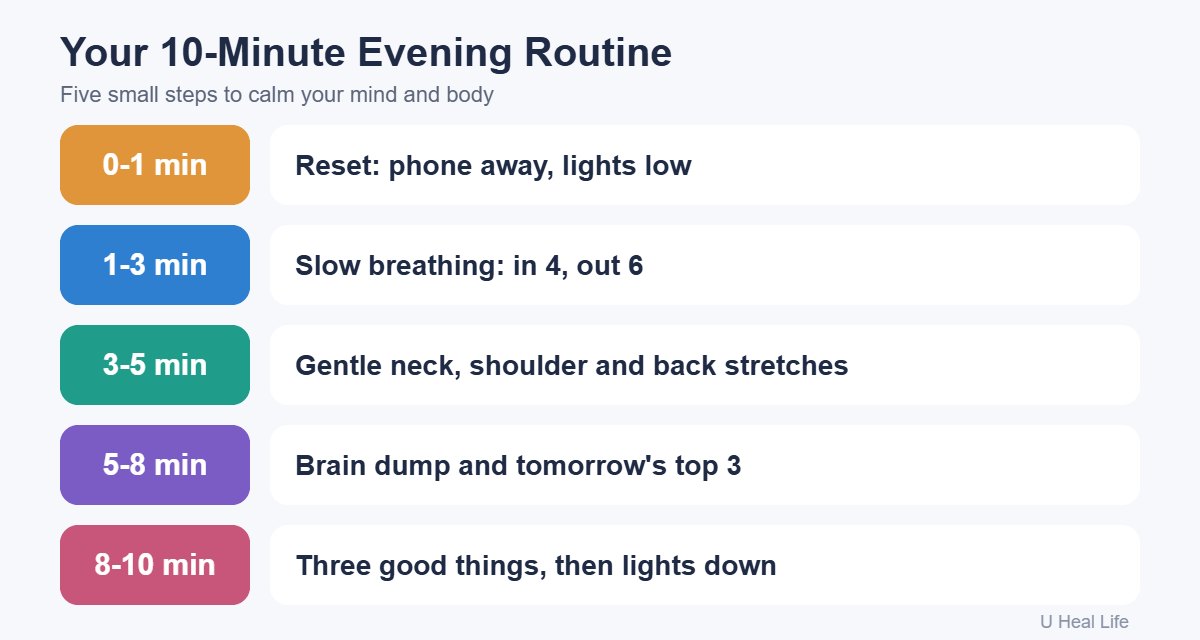
The Routine at a Glance
| Time | What to do | Why it helps |
|---|---|---|
| 0-1 min | Phone away, lights low | Signals that the day is over |
| 1-3 min | Slow breathing | Calms your body |
| 3-5 min | Gentle stretching | Releases muscle tension |
| 5-8 min | Brain dump and top 3 | Clears racing thoughts |
| 8-10 min | Three good things | Ends the day on a positive note |
Tips to Make It a Habit
- Do it at the same time each night, such as right after dinner or 30 minutes before bed.
- Link it to something you already do, like brushing your teeth.
- Keep a notebook and pen where you will see them.
- Start with just 5 minutes if 10 feels like too much.
- Be kind to yourself. If you miss a night, just start again tomorrow.
No Time? Try the 5-Minute Version
Do 2 minutes of slow breathing, 2 minutes of brain dump, and 1 minute of gratitude. Even this short version can make a difference.
Want More Than 10 Minutes?
If you have extra time, add a warm shower, calming music, a few pages of a light book, or a cup of caffeine-free herbal tea. Our guide to calming down after a stressful day has 12 more ideas, and our simple mindfulness exercises for busy people are easy to add.
What to Avoid in the Evening
- Scrolling through news or social media right before bed
- Heavy meals and caffeine late in the day
- Working on your laptop in bed
- Replaying the day’s problems in your head
When to Get Extra Help
A routine can reduce everyday stress, but it is not a cure for every problem. Please talk to a doctor or mental health professional if you:
- Feel stressed or anxious most days
- Cannot sleep for many nights in a row
- Feel hopeless or very low
- Notice that stress is affecting your health, work or relationships
If you are unsure why you feel anxious, read why you might feel anxious for no reason. Looking after your brain every day also matters, so see daily habits that support long-term brain health.
Frequently Asked Questions
Can 10 minutes really reduce stress?
Many people feel calmer after even a few minutes of slow breathing and stretching. Doing it regularly helps the effect build over time.
What is the best time to do an evening routine?
Right after dinner or about 30 to 60 minutes before bed works for most people. Choose a time you can keep.
Do I need to do every step?
No. Pick the steps you enjoy and build from there.
What if I am too tired to do a routine?
Try the 5-minute version, or just do the breathing step lying down in bed.
Will this help me sleep better?
A calm routine may make it easier to fall asleep, but it is not a treatment for sleep disorders. See a doctor if sleep problems continue.
Final Thoughts
You do not need a perfect routine. Ten quiet minutes each evening can help your mind let go of the day. Start tonight with just one step and build from there.
Disclaimer: This article is for general information only and is not medical advice. If you are struggling with stress or your mental health, please speak with a qualified healthcare professional.