
How to Calm Your Mind in 5 Minutes: 12 Science-Backed Techniques
Racing thoughts, a tight chest, and a mind that won’t switch off are something almost everyone experiences at some point. The good news is that you don’t need an hour of meditation or a weekend retreat to feel calmer. Many simple techniques can help settle your nervous system in about five minutes or less.
Below are 12 practical, research-informed ways to calm your mind. Try a few and keep the ones that work best for you.
Quick answer: To calm your mind in 5 minutes, slow your breathing (try box breathing or a longer exhale), ground yourself with the 5-4-3-2-1 exercise, take a short walk, or write your thoughts down. Pick one or two techniques and practice them for 2 to 5 minutes.
1. Box Breathing
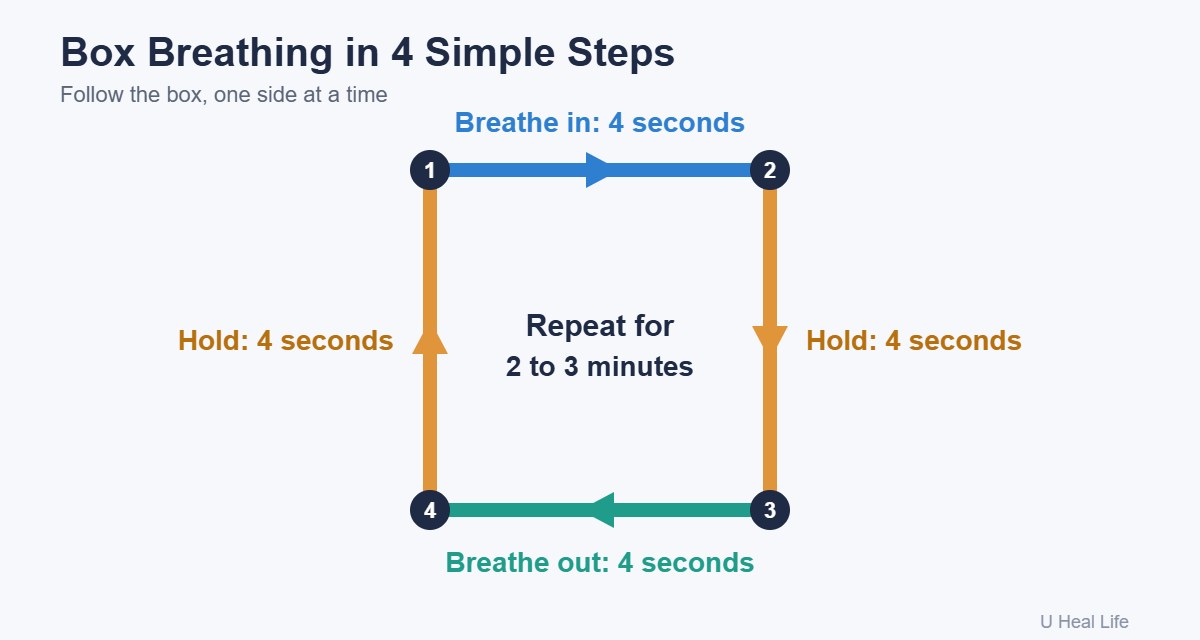
Breathe in for four seconds, hold for four, breathe out for four, and hold for four. Repeat for two to three minutes. The steady rhythm gives your mind something simple to focus on and can slow your heart rate.
2. Extend Your Exhale
Breathe in through your nose for a count of four, then out slowly for a count of six to eight. Longer exhales are commonly used to help activate the body’s relaxation response.
3. The Physiological Sigh
Take a deep breath in through your nose, add a second short inhale on top of it, then let out a long, slow breath through your mouth. A 2023 Stanford-led study found that a few minutes a day of this kind of “cyclic sighing” improved mood and reduced breathing rate over time.
4. The 5-4-3-2-1 Grounding Exercise
Look around and name five things you can see, four you can touch, three you can hear, two you can smell, and one you can taste. This pulls your attention out of anxious thoughts and back into the present moment.
5. Splash Cold Water on Your Face
Cold water on your face or wrists can briefly slow your heart rate and interrupt a spiral of stress. It’s quick, free, and works almost anywhere.
6. Progressive Muscle Relaxation
Starting with your feet and moving upward, tense each muscle group for five seconds, then release. Noticing the contrast between tension and relaxation helps your body let go of stress it may be holding without you realizing it.
7. Do a Quick Brain Dump
Grab a pen and write down everything that’s on your mind for three to five minutes without editing. Getting worries out of your head and onto paper can make them feel more manageable and less overwhelming.
8. Take a Short Walk
Even five minutes of walking, especially outdoors, can lift your mood and clear mental clutter. If you can, leave your phone behind or keep it in your pocket.
9. Try a One-Minute Mindfulness Check-In
Close your eyes and focus on the sounds around you, or on the feeling of your feet on the floor. When your mind wanders, gently bring it back. You don’t have to empty your mind; you just practice noticing where it is.
10. Listen to Slow, Calming Music
Slow-tempo music without lyrics can help lower tension and make it easier to breathe more slowly. Keep a short calming playlist ready for stressful moments.
11. Name the Emotion
Silently say, “I’m feeling anxious” or “I’m feeling overwhelmed.” Putting a label on what you feel, sometimes called affect labeling, has been linked in research to reduced emotional intensity.
12. Reach Out to Someone
A quick call or message to a friend or family member can remind you that you’re not alone. You don’t have to talk about the problem; sometimes just hearing a familiar voice is enough to settle you.
Make Calm a Daily Habit
These techniques work best when you practice them regularly, not only when you’re overwhelmed. Try pairing a breathing exercise with something you already do each day, such as brushing your teeth or making your morning coffee. Small, consistent habits can make it easier to stay calm when stress spikes. If constant scrolling is adding to your stress, our guide to social media anxiety offers more ideas.
When It’s More Than Everyday Stress
If racing thoughts, panic attacks, or constant worry are interfering with your sleep, work, or relationships, it’s worth talking with a doctor or a licensed mental health professional. Our guides to mental health insurance coverage and online therapy costs can help you figure out your options. If you ever have thoughts of harming yourself, call or text 988 (the Suicide & Crisis Lifeline in the US) or contact local emergency services right away.
Frequently Asked Questions
How can I calm my mind in 5 minutes?
Choose one simple technique and practice it for 2 to 5 minutes. Slow breathing (such as box breathing or a longer exhale), the 5-4-3-2-1 grounding exercise, or a short walk are easy places to start.
What is the fastest way to calm a racing mind?
Many people find that slowing their breathing is one of the quickest ways to settle. Try breathing in for 4 seconds and out for 6 to 8 seconds. If your thoughts are still racing, writing them down in a quick brain dump can help.
Does box breathing really work?
Many people find box breathing helpful for feeling calmer because it gives the mind a simple rhythm to follow. It is a helpful tool for everyday stress, but it is not a treatment for anxiety disorders or other medical conditions.
What is the 5-4-3-2-1 technique?
It is a grounding exercise that brings your attention to the present moment. You notice 5 things you can see, 4 you can touch, 3 you can hear, 2 you can smell, and 1 you can taste.
How do I stop overthinking?
Try writing your thoughts down, slowing your breathing, and giving your mind a calm routine. Our guide on how to stop overthinking at night has more simple steps.
When should I talk to a professional?
If worry, panic, or racing thoughts happen often or interfere with your sleep, work, or relationships, it is a good idea to speak with a doctor or licensed mental health professional.
Related Reading
- Simple Mindfulness Exercises for Busy People
- Why Do I Feel Anxious for No Reason?
- How to Calm Down After a Stressful Day
- How to Stop Overthinking at Night
This article is for general educational purposes and is not a substitute for professional medical or mental health advice.