Impact-Site-Verification: 65ebaf0c-2dbc-4200-9d50-11ea7af40e54

Priority Health mental health coverage: a person checking therapy benefits on a laptop
Does Priority Health Cover Therapy and Mental Health Care? How to Check

Does Priority Health cover therapy? If you have a Priority Health plan, you may be wondering whether it covers therapy and other mental health care, and what to do first. Coverage depends on your exact plan, so this guide cannot tell you what you will pay. It does explain what Priority Health says on its own website, how to find an in-network provider and the questions to ask. We are an independent blog and are not affiliated with Priority Health.

By the U Heal Life editorial team. Last updated: November 2026. This is general information, not medical, legal or insurance advice. We are not licensed clinicians.

Quick answer: Priority Health says many plans cover mental health services, but coverage varies by plan, so you should check your plan documents. Members can call the plan’s Behavioral Health Department (the number is listed on Priority Health’s website and member materials) or use the Find a Doctor tool to look for in-network providers. Many plans cover virtual therapy the same way as in-person visits. Couples therapy for general relationship issues is typically not covered. Out-of-network costs may be higher.

Priority Health therapy coverage key points: coverage varies by plan, use the Find a Provider tool, ask about virtual visits, call the behavioral health team, check out-of-network costs
Key points at a glance.

About Priority Health

According to its website, Priority Health is a not-for-profit health plan based in Michigan and part of Corewell Health. It offers individual and family, Medicare, Medicaid and employer plans, and it serves members in Michigan and some nearby states. Because each plan type has its own rules, the answer to “is therapy covered” can be different for a Medicare Advantage member, a Medicaid member and someone with an employer plan.

What Priority Health Says About Mental Health Coverage

Based on Priority Health’s member pages (check them for the latest):

  • Coverage varies. Many health plans cover mental health services, but the details depend on your plan
  • Behavioral health team. Members can call the Behavioral Health Department to verify coverage, talk about treatment options and find in-network specialists
  • Find a Doctor tool. You can search online for in-network behavioral health providers, and filter for virtual visits
  • Virtual visits. Many plans cover virtual therapy and psychiatry the same way as in-person visits, though this depends on your plan
  • Couples therapy. Coverage varies, but it typically does not extend to couples therapy for general relationship or communication issues
  • Out-of-network. If your plan has an out-of-network benefit, you may be able to see a provider outside the network, but your costs may be higher
  • Medicaid members. Higher levels of care may be arranged through your local Community Mental Health Center
  • Outside Michigan. Some employer-based commercial members living outside Michigan may use a different outpatient network, so check with the plan

How to Check Your Coverage

  1. Look at your plan documents (certificate of coverage or summary of benefits)
  2. Log in to your member account and use the cost and coverage tools
  3. Call the number on your member ID card and ask for behavioral health
  4. Ask for your costs: copay or coinsurance, deductible, any visit limits and whether prior authorization is needed
  5. Search for providers with the Find a Doctor tool and then call the office to confirm that they are in network and taking new clients

Questions to Ask the Plan and the Therapist

  • Is this provider in network for my exact plan?
  • What will I pay per session, and does my deductible apply?
  • Are virtual sessions covered the same way?
  • Is there a limit on visits, or do I need approval first?
  • What happens if I go out of network?

If Coverage Is Limited

If you are in crisis, do not wait for an appointment. Call or text 988 in the US.

Frequently Asked Questions: Priority Health Mental Health Coverage

Does Priority Health cover therapy?

Many plans do, but it depends on your plan. Check your documents or call the plan.

How do I find a therapist who takes Priority Health?

Use the plan’s Find a Doctor tool, then call the provider to confirm they are in network.

Does Priority Health cover online therapy?

Many plans cover virtual visits the same way as in-person visits, depending on the plan.

Does Priority Health cover couples counseling?

Typically not for general relationship issues. Ask your plan about your case.

What if my therapist is out of network?

You may still have an out-of-network benefit, but costs may be higher. Ask first.

Helpful resource: Priority Health mental health services

Disclaimer: This article is for general information only and is not medical, mental health, legal or insurance advice. Rules, services and availability change, so please confirm details with your plan, the official source or a licensed provider. If you are in crisis or thinking about harming yourself, call or text 988 (the Suicide and Crisis Lifeline in the US) or your local emergency number right away.

Home health care services: a nurse visiting a patient at home
Home Health Care Services: What They Include, Who Qualifies and What They Cost

When someone is recovering from surgery, living with a long-term condition or getting older, care at home can be a good choice. But the terms are confusing. “Home health care” and “home care” sound alike, yet they mean different things and are paid for in different ways. This guide explains home health care services, who qualifies for Medicare coverage, what they may cost and how to find a good agency.

By the U Heal Life editorial team. Last updated: November 2026. This is general information, not medical, legal or insurance advice. We are not licensed clinicians.

Quick answer: Home health care is medical care given at home that a doctor orders, such as skilled nursing, physical, occupational or speech therapy, medical social services and, when tied to those, a home health aide. Original Medicare (Parts A and B) covers it if you are under a doctor’s care, a doctor certifies that you are homebound and need skilled care, and you use a Medicare-certified agency. If you qualify, you generally pay $0 for covered services (20% for durable medical equipment). Non-medical home care is different and is often paid for privately, at a national median of about $33 an hour in one 2024 survey.

Home health care key points: doctor-ordered care at home, Medicare may cover if homebound and certified, home care is different and usually private pay, check agency is Medicare-certified
Key points at a glance.

What Are Home Health Care Services?

Home health care is care for an illness or injury that is provided where you live. It is usually short term, ordered by a doctor and given by licensed professionals. It is often used after a hospital or nursing facility stay, or to manage a new or changing health condition.

Common services include:

  • Skilled nursing care: wound care, injections, medication teaching and monitoring of health conditions
  • Physical, occupational and speech therapy
  • Medical social services
  • Home health aide help with bathing, dressing or walking, but under Medicare only when you also receive skilled care
  • Medical supplies and equipment, such as dressings or a walker

Home Health Care vs Home Care

Home health careHome care (non-medical)
What it isSkilled medical care ordered by a doctorHelp with daily living, companionship and household tasks
Who provides itNurses, therapists and aides from a home health agencyCaregivers, aides or companions
Usually paid byMedicare, Medicare Advantage, Medicaid or other insurance when you qualifyMostly private payment, long-term care insurance or some Medicaid programs
Typical lengthShort, planned visits for a set periodHours or days as needed, can be long term

Who Qualifies for Medicare Home Health Coverage?

Medicare says you generally need all of these:

  1. You are under the care of a doctor or allowed provider, and you get services under a care plan they review regularly
  2. A doctor or allowed provider certifies that you need intermittent skilled nursing care, physical therapy, speech-language pathology or continued occupational therapy
  3. They certify that you are homebound. This does not mean bedridden. Leaving home takes a lot of effort, but you can still leave for medical care, religious services or adult day care
  4. The agency is Medicare-certified

“Intermittent” means skilled care needed fewer than 7 days a week, or less than 8 hours a day for a limited time. Medicare asks for a new certification about every 60 days if care continues.

What Medicare Does Not Cover

  • 24-hour-a-day care at home
  • Homemaker services such as cooking or cleaning when that is the only care you need
  • Personal care, such as bathing, if it is the only care you need

What Does Home Health Care Cost?

  • With Medicare, when you qualify: you generally pay nothing for covered home health services, and 20% for durable medical equipment
  • Private pay: one 2024 survey found a national median of about $33 an hour for home health care or an in-home aide, with big differences by state. A skilled nursing visit often costs more
  • Other help: Medicare Advantage plans, Medicaid programs, long-term care insurance and the VA may help in some cases

If you are caring for a family member, you may also qualify for leave from work. See FMLA for mental health and family care for how job-protected leave works.

How to Find a Home Health Agency

  1. Ask your doctor or the hospital discharge planner for names
  2. Use Medicare’s Care Compare tool to find Medicare-certified agencies and see quality ratings
  3. Confirm that the agency is licensed in your state and Medicare-certified
  4. Ask which services they offer, how soon they can start and how they handle after-hours calls
  5. Ask who will pay and what you may owe, in writing if possible

Getting Started

Frequently Asked Questions About Home Health Care

What is the difference between home health care and home care?

Home health care is skilled medical care a doctor orders. Home care is non-medical help with daily tasks.

Does Medicare pay for home health care?

Yes, if you meet the rules, including being homebound and needing skilled care from a Medicare-certified agency.

Does Medicare cover a home aide?

Only when you are also getting skilled nursing or therapy. Aide care alone is not covered.

How long can I get home health care?

As long as you qualify and your doctor certifies the need. Medicare asks for recertification about every 60 days.

How much does it cost without insurance?

Private pay is often around $30 to $35 an hour nationally, but prices vary by place and service.

Helpful resource: Medicare.gov home health services

Disclaimer: This article is for general information only and is not medical, mental health, legal or insurance advice. Rules, services and availability change, so please confirm details with your plan, the official source or a licensed provider. If you are in crisis or thinking about harming yourself, call or text 988 (the Suicide and Crisis Lifeline in the US) or your local emergency number right away.

What is behavioral health: a person talking with a counselor about mental health and daily habits
What Is Behavioral Health? Meaning, Services and How to Get Help

You may have seen the term “behavioral health” on an insurance card, a clinic website or a doctor’s referral. It sounds like mental health, but it is not always the same thing. This guide explains what behavioral health means in plain words, how it differs from mental health, what services it covers, how the levels of care work and how to get help.

By the U Heal Life editorial team. Last updated: November 2026. This is general information, not medical, legal or insurance advice. We are not licensed clinicians.

Quick answer: Behavioral health is a broad term for how our thoughts, feelings, habits and actions affect our wellbeing. It includes mental health, substance use and the support, prevention and treatment that go with them. The U.S. Substance Abuse and Mental Health Services Administration (SAMHSA) uses it to cover both mental health conditions and substance use disorders. Care ranges from weekly therapy to hospital care, and most US health plans must treat these benefits comparably to medical care.

Behavioral health key points: a broad term for mental health and substance use, includes prevention and treatment, care comes in levels, parity law covers insurance
Key points at a glance.

What Does Behavioral Health Mean?

Behavioral health looks at the link between what we do (our behaviors and habits) and how we feel and function. It includes mental health, which SAMHSA describes as emotional, psychological and social wellbeing. It also includes substance use and other behavior-related concerns. Experts do not agree on exact edges, and different groups define the term a little differently, so you may see it used in different ways.

Behavioral health care is not only for crises. It also includes prevention, early support and ongoing care.

Behavioral Health vs Mental Health

Mental healthBehavioral health
FocusEmotional, psychological and social wellbeingMental health plus behaviors, habits and substance use
Usually includesConditions such as anxiety or depression, stress and copingMental health care, substance use treatment and support for harmful habits
Common useEveryday talk about wellbeingClinics, hospitals and insurance plans

Many clinics use the two terms almost the same way. If a program says “behavioral health,” ask what exactly it covers.

What Behavioral Health Services Include

  • Therapy and counseling for individuals, couples, families and groups
  • Psychiatric care and medication management
  • Substance use treatment and recovery support
  • Screenings and assessments, often in a primary care office
  • Crisis services, including phone, text and mobile teams
  • Peer support, case management and community programs

Who Provides It?

Common providers include psychologists, licensed clinical social workers, licensed professional counselors, marriage and family therapists, psychiatrists and primary care teams. Titles and rules differ by state. Read how to find a therapist for tips on checking licenses and fit.

Levels of Care

Behavioral health care is organized in levels, from lighter to more intensive. A professional usually decides the right level after an assessment. Programs and insurers may define them a little differently.

LevelHow it works
OutpatientRegular visits, often weekly, while you live at home
Intensive outpatient (IOP)Structured treatment several days a week for a few hours, while you live at home
Partial hospitalization (PHP)Intensive day treatment, often most of the day for several days a week, then you go home at night
ResidentialA 24-hour supervised treatment setting
Inpatient hospital careShort-term hospital care, often for crisis and safety, then a step down to a lower level

Many people move between levels over time.

How Insurance Treats Behavioral Health

Under the federal Mental Health Parity and Addiction Equity Act, most group health plans and individual plans that cover mental health or substance use benefits must apply comparable rules to them as to medical and surgical care. That includes copays, deductibles and visit limits. Under the Affordable Care Act, individual and small group plans must include these benefits. Plans can still use medical necessity rules, and some plans are exempt.

If you are denied, you can ask your plan for the standards it uses and for an explanation. Our guides can help: does health insurance cover therapy, does Medicare cover therapy and does Medicaid cover therapy.

How to Get Started

  1. Check your coverage. Call your insurer or look at your plan documents
  2. Look at free benefits. See what an Employee Assistance Program is
  3. Search for providers through your plan, directories or the SAMHSA treatment locator
  4. Ask about cost. See how much therapy costs without insurance and free and low-cost options
  5. Book a first visit and ask what level of care fits you

When to Get Help Right Away

If you are in crisis or thinking about harming yourself, call or text 988 in the US, or call your local emergency number. SAMHSA’s National Helpline at 1-800-662-4357 offers free, confidential referrals 24 hours a day.

Frequently Asked Questions About Behavioral Health

What does behavioral health mean?

It is a broad term for how our habits, behaviors and mental state affect our wellbeing, including mental health and substance use care.

Is behavioral health the same as mental health?

They overlap, and some clinics use them almost the same way. Behavioral health is usually wider and includes substance use and behaviors.

What does a behavioral health professional do?

It is a general term for licensed providers who assess concerns and provide therapy, counseling, treatment planning or medication management, depending on their training.

Does insurance cover behavioral health?

Often yes, and most plans must treat these benefits comparably to medical care, but coverage details vary by plan.

How do I find behavioral health services near me?

Start with your insurer, your employer’s benefits and the SAMHSA treatment locator, then call providers to confirm fees and availability.

Helpful resource: SAMHSA shares information on mental health and substance use services.

Disclaimer: This article is for general information only and is not medical, mental health, legal or insurance advice. Rules, services and availability change, so please confirm details with your plan, the official source or a licensed provider. If you are in crisis or thinking about harming yourself, call or text 988 (the Suicide and Crisis Lifeline in the US) or your local emergency number right away.

How much does online therapy cost: a person on a video call with a therapist at home
How Much Does Online Therapy Cost? Platform Prices and Insurance (2026)

Online therapy can be easier to fit into your day, but how much does it actually cost? Prices depend on the platform, the plan and whether your insurance is accepted. This guide explains typical online therapy prices in the US, how they compare with in-person therapy and what to check before you sign up.

By the U Heal Life editorial team. Last updated: November 2026. This is general information, not medical, legal, tax or insurance advice. We are not licensed clinicians. We have not tested the services mentioned.

Quick answer: Reported out-of-pocket prices for online therapy platforms range from about $40 to $110 per week, depending on the service and plan. For example, reviewers list BetterHelp at roughly $65 to $100 per week, Talkspace at roughly $69 to $109 per week without insurance, and Online-Therapy.com from about $40 to $50 or more per week. With insurance, a copay of roughly $10 to $30 per session is commonly reported for services that accept it. Prices change, so check each site and the billing terms.

Online therapy cost key points: platforms often charge weekly subscriptions, insurance copays can be lower, in-person costs more per session, check billing terms
Key points at a glance.

Typical Online Therapy Prices

These numbers are from public reviews and company pages, and they change often. Treat them as rough ranges.

OptionReported price (without insurance)Insurance
BetterHelpAbout $65 to $100 per week, billed in 4-week cyclesSome in-network options in select states, per the company
TalkspaceAbout $69 to $109 per week, depending on the planAccepts many plans, with copays often reported at about $10 to $30
Online-Therapy.comFrom about $40 to $50 or more per weekDoes not accept insurance
Private practice online sessionOften similar to in-person, about $100 to $200Depends on the therapist

Some platforms offer financial aid or first-month promotions, so check the current terms.

Online vs In-Person Cost

A private in-person therapist often charges about $100 to $200 per session without insurance. A platform subscription may look cheaper per week, but sessions may be shorter or limited, and plans may include messaging. Compare what you actually get, not only the price. Read online therapy vs in-person therapy and how much therapy costs without insurance.

What Changes the Price?

  • Subscription vs per session: weekly plans may include messaging, while per-session fees pay for live visits only
  • Live video or messaging: plans with live sessions often cost more
  • Insurance: accepted plans can lower the cost to a copay
  • Couples or psychiatry: these often cost more
  • Promotions and aid: some offer discounts

Does Insurance Cover Online Therapy?

Sometimes. Some services accept insurance, and many private practice therapists offer telehealth that insurance may cover. Medicare Part B may cover telehealth therapy with an enrolled provider (see Does Medicare cover therapy). Check your plan and read our insurance coverage guide.

Things to Check Before You Sign Up

  1. Is the therapist licensed in your state?
  2. How is billing done, and how do you cancel?
  3. What is included: live sessions, messaging, tools?
  4. Is there a trial period or refund policy?
  5. How is your data protected?

Online therapy is not designed for emergencies. In the US, call or text 988 if you are in crisis.

One Option Described by Its Own Site

Online-Therapy.com describes CBT-based programs for individuals and couples, with plans from about $40 or more per week. This is an affiliate link: we may earn a commission at no cost to you. We have not tested it and we cannot promise results, so please check the details and decide what fits you. See Online-Therapy.com

Frequently Asked Questions: How Much Does Online Therapy Cost

How much is online therapy per month?

Roughly $160 to $440 per month on many platforms without insurance, depending on the plan.

Is online therapy cheaper than in-person?

Often, but not always. Compare session length and what is included.

Can I use an HSA or FSA for online therapy?

Often yes, when it is medical care. See can you use an HSA or FSA for therapy.

Is there free online therapy?

Some community programs and helplines offer free support. See free and low-cost therapy options.

Does online therapy work?

Research suggests it can work about as well as in-person for many people. See our comparison above.

Helpful resource: The American Psychological Association shares information about psychotherapy and telehealth.

Disclaimer: This article is for general information only and is not medical, mental health, tax or insurance advice. Prices, rules and availability change, so please confirm details with each provider or plan. If you are in crisis or thinking about harming yourself, call or text 988 (the Suicide and Crisis Lifeline in the US) or your local emergency number right away.

How much does couples therapy cost: a couple talking with a counselor in an office
How Much Does Couples Therapy Cost? Price Ranges and Insurance (2026)

Couples therapy can feel like a big investment, so it helps to know the price before you start. Costs depend on where you live, the therapist and the format. This guide explains typical US prices for couples therapy, whether insurance helps, what online options cost and ways to pay less.

By the U Heal Life editorial team. Last updated: November 2026. This is general information, not medical, legal, tax or insurance advice. We are not licensed clinicians. We have not tested the services mentioned.

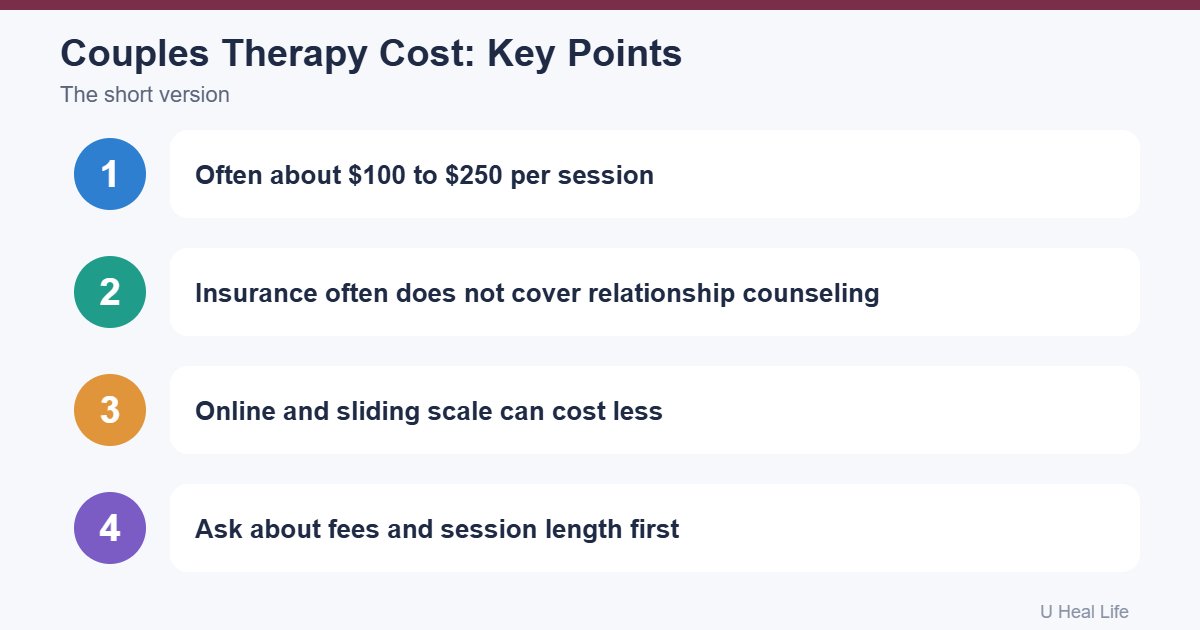
Quick answer: Without insurance, couples therapy in the US commonly costs about $100 to $250 per session, with some sources reporting a typical range of $75 to $250 and others $150 to $300. Insurance often does not cover relationship counseling unless it is tied to a diagnosed condition and your plan allows it. Online options, sliding scale therapists and nonprofit networks can cost less. Ask about fees, session length and cancellation rules before you book.

Couples therapy cost key points: often 100 to 250 dollars a session, insurance often does not cover relationship counseling, online and sliding scale cost less, ask before you start
Key points at a glance.

Typical Price Ranges

Figures below come from public cost guides and vary widely.

OptionTypical cost
In-person couples therapist (self-pay)About $100 to $250 per session, some report up to $300
Online couples therapyReported from about $65 to $275 per session, depending on the platform
Sliding scale therapistOften lower, based on income
Open Path Collective (couples and family)At the time of writing, about $40 to $80 per session plus a one-time membership fee

Sessions usually last 50 to 60 minutes. Some therapists charge more for longer sessions.

How Many Sessions Will You Need?

It varies a lot. Some couples come for a short block of sessions, while others stay longer. A therapist can give you a rough plan after the first few visits. Ask what to expect so you can budget.

Does Insurance Cover Couples Therapy?

Often not. Many plans do not cover relationship counseling on its own. Coverage may be possible when therapy is part of treatment for a diagnosed condition and your plan allows it, so ask your insurer. Some Employee Assistance Programs offer a few free sessions. See what an EAP is. Our insurance coverage guide explains how to check.

Can You Use an HSA or FSA?

Marriage or relationship counseling often does not count as a medical expense unless it is medical treatment. Check with your plan administrator. Read can you use an HSA or FSA for therapy.

Ways to Pay Less

  1. Ask about a sliding scale
  2. Try Open Path Collective
  3. Look at community clinics and training clinics. See free and low-cost therapy options
  4. Compare online options. See how much online therapy costs
  5. Ask about package or payment plans
  6. Check your EAP for free sessions

How to Choose a Couples Therapist

Look for a licensed professional with training in couples or family therapy, such as a marriage and family therapist. The AAMFT therapist locator can help. Ask about their approach, experience with your situation and fees. Read how to find a therapist.

If you or your partner feel unsafe, contact local emergency services or a local support line right away.

Frequently Asked Questions: How Much Does Couples Therapy Cost

How much is couples therapy per session?

Often about $100 to $250 in the US without insurance, though prices differ by area and therapist.

Is online couples therapy cheaper?

Sometimes. Prices vary by platform and plan, so compare what is included.

Does insurance pay for marriage counseling?

Usually not on its own. Ask your insurer about your specific plan.

Is there free couples counseling?

Some community programs, faith-based groups and EAPs offer free or low-cost options.

What about a couples retreat?

A retreat is not therapy. See wellness retreats for couples.

Helpful resource: Open Path Collective lists lower-fee therapists, including for couples.

Disclaimer: This article is for general information only and is not medical, mental health, tax or insurance advice. Prices, rules and availability change, so please confirm details with each provider or plan. If you are in crisis or thinking about harming yourself, call or text 988 (the Suicide and Crisis Lifeline in the US) or your local emergency number right away.

What is an employee assistance program: an employee making a confidential call for free counseling
What Is an Employee Assistance Program (EAP)? How to Use Free Counseling at Work

Many workers have a free counseling benefit and do not know it. An Employee Assistance Program, or EAP, is offered by many employers and can connect you to short-term counseling and other help at no cost to you. This guide explains what an EAP is, what it covers, how privacy works and how to use yours.

By the U Heal Life editorial team. Last updated: November 2026. This is general information, not medical, legal, tax or insurance advice. We are not licensed clinicians. We have not tested the services mentioned.

Quick answer: An Employee Assistance Program (EAP) is a voluntary, confidential benefit that many employers offer. It usually gives you and your household access to a number of free, short-term counseling sessions, plus referrals and sometimes financial or legal help. Reports say programs often offer around 3 to 8 sessions per issue, but the exact number depends on your employer. Check your benefits portal or ask HR how to access yours.

Employee assistance program key points: free and confidential short-term counseling, session numbers vary, family may be included, ask HR or your benefits portal
Key points at a glance.

What Is an EAP?

An EAP is paid for by your employer, so it is free to you. It is meant for short-term support and for connecting you with the right resources. You do not usually need a diagnosis or a major crisis to use it. Many people use it for everyday stress, work conflict, grief, family strain or money worries.

What Does an EAP Usually Include?

  • Short-term, solution-focused counseling by phone, video, text or in person
  • Referrals to longer-term therapists and community resources
  • Help with work-life needs, such as childcare or elder care
  • Financial coaching or legal consultations, in many programs
  • Support for family members in the household, in most programs

How Many Sessions Do You Get?

It varies. Public examples show anywhere from a handful to about 10 sessions per issue per year, and many sources say 3 to 8 is common. Your employer’s contract sets the number. Some programs count sessions per issue, so a new concern may start a new set.

Is It Confidential?

EAPs are generally described as confidential. Employers usually only see overall usage data, such as how many people used the program, and not who you are or what you discussed. Providers still have legal limits, such as safety concerns. Check your EAP’s privacy notice to be sure.

How to Use Your EAP

  1. Find it. Look in your benefits portal, onboarding papers or the intranet, or ask HR
  2. Call or sign in. Many programs have a 24/7 phone line and an app or website
  3. Say what you need. An intake counselor will help match you to a provider or service
  4. Ask how many sessions you have and whether family can use it
  5. Plan the next step. If you need more care, ask for a referral to a longer-term therapist

Limits to Know

  • Sessions are short-term, so they may not be enough for ongoing needs
  • Provider choice may be limited
  • Not all EAPs cover couples counseling

If you need more, see how to find a therapist and how much therapy costs without insurance. If you are thinking about time off, read FMLA for mental health.

Frequently Asked Questions: Employee Assistance Program

Is an EAP really free?

For you, yes. Your employer pays for it.

Will my boss know I used it?

EAPs are generally confidential, and employers usually only see overall usage numbers.

Can my family use my EAP?

Often yes. Many programs cover household members.

What if I need more sessions?

Ask your EAP for a referral. You may use health insurance or other options.

Do I need a diagnosis?

Usually not. Many people use an EAP for everyday stress and life problems.

Helpful resource: The NIMH explains how to find help for mental illnesses.

Disclaimer: This article is for general information only and is not medical, mental health, tax or insurance advice. Prices, rules and availability change, so please confirm details with each provider or plan. If you are in crisis or thinking about harming yourself, call or text 988 (the Suicide and Crisis Lifeline in the US) or your local emergency number right away.

Weekend Top

mental health
1

рдорд╛рдирд╕рд┐рдХ рдмреАрдорд╛рд░рд┐рдпреЛрдВ рдХреЗ рдмрдврд╝рдиреЗ рдХрд╛ рдХреНрдпрд╛ рдХрд╛рд░рдг рд╣реИ?

рдорд╛рдирд╕рд┐рдХ рд░реВрдк рд╕реЗ рдмреАрдорд╛рд░ рд╣реЛрдирд╛ рдХреЛрдИ рдордЬрд╛рдХ рдХреА рдмрд╛рдд рдирд╣реАрдВ рд╣реИред рдпреЗ рдмрд╣реБрдд рджрд░реНрджрдирд╛рдХ рдЪреАрдЬрд╝ рд╣реИред рдЖрдк рдХреЛ рдЕрдЧрд░ рдХреЛрдИ рд╢рд╛рд░реАрд░рд┐рдХ рд░реЛрдЧ рд╣реИ рддреЛ рд╕рднреА рдЖрдк рдХреЗ рд▓рд┐рдпреЗ рдХрд░реБрдгрд╛рд╡рд╛рди рд╣реЛрдВрдЧреЗ, рдкрд░ рдЬрдм рдЖрдк рдХреЛ рдХреЛрдИ рдорд╛рдирд╕рд┐рдХ рд░реЛрдЧ рд╣реИ рддреЛ, рджреБрд░реНрднрд╛рдЧреНрдпрд╡рд╢, рдЖрдк рд╣рдБрд╕реА рдХреЗ рдкрд╛рддреНрд░ рдмрди рдЬрд╛рдпреЗрдВрдЧреЗред рдРрд╕рд╛ рдЗрд╕рд▓рд┐рдпреЗ рд╣реИ рдХреНрдпреЛрдВрдХрд┐ рдпреЗ рдорд╛рд▓реВрдо рдХрд░рдирд╛ рдмрд╣реБрдд рдХрдард┐рди рд╣реИ рдХрд┐ рдХреЛрдИ рдХрдм рдмреАрдорд╛рд░ рд╣реИ рдФрд░ рдХрдм рдмреЗрд╡рдХреВрдлреА рдХрд░ рд░рд╣рд╛ рд╣реИ? рдпрджрд┐ рдХрд┐рд╕реА рдХреЗ рдкрд░рд┐рд╡рд╛рд░ рдореЗрдВ рдХреЛрдИ рдорд╛рдирд╕рд┐рдХ рд░реВрдк рд╕реЗ рдкрд░реЗрд╢рд╛рди, рдЕрд╢рд╛рдВрдд рд╣реИ, рддреЛ рдпреЗ рдЙрдирдХреЗ рд▓рд┐рдпреЗ рд╕рдмрд╕реЗ рдмрдбрд╝реА рд╕рдорд╕реНрдпрд╛ рд╣реИред рдЖрдк рдХреЛ рдкрддрд╛ рд╣реА рдирд╣реАрдВ рдЪрд▓рддрд╛ рдХрд┐ рд╡реЗ рдХрдм рд╡рд╛рд╕реНрддрд╡ рдореЗрдВ рдкреАрдбрд╝рд╛ рднреЛрдЧ рд░рд╣реЗ рд╣реИрдВ рдФрд░ рдХрдм рдРрд╕реЗ рд╣реА рдмрдирд╛рд╡рдЯ рдХрд░ рд░рд╣реЗ рд╣реИрдВ ? рдЖрдк рд╕рдордЭ рдирд╣реАрдВ рдкрд╛рддреЗ рдХрд┐ рдХрдм рдЖрдк рдЙрдирдХреЗ рд╕рд╛рде рдХрд░реБрдгрд╛рд╡рд╛рди рд╣реЛрдВ рдФрд░ рдХрдм рдХрдареЛрд░?

рдордиреБрд╖реНрдп рдХрд╛ рдорд╛рдирд╕рд┐рдХ рд╕реНрд╡рд╛рд╕реНрдереНрдп рдПрдХ рдирд╛рдЬреБрдХ рдЪреАрдЬрд╝ рд╣реИред рд╕реНрд╡рд╕реНрдердЪрд┐рддреНрддрддрд╛ рдФрд░ рдкрд╛рдЧрд▓рдкрди рдХреЗ рдмреАрдЪ рдПрдХ рдмрд╣реБрдд рдЫреЛрдЯрд╛ рдЕрдВрддрд░ рд╣реЛрддрд╛ рд╣реИред рдпрджрд┐ рдЖрдк рдЕрдВрддрд░ рдХреА рдЗрд╕ рд╕реАрдорд╛рд░реЗрдЦрд╛ рдХреЛ рд░реЛрдЬрд╝ рдзрдХреНрдХрд╛ рдорд╛рд░рддреЗ рд╣реИрдВ, рддреЛ рдЖрдк рдЙрд╕реЗ рдХрднреА рдкрд╛рд░ рднреА рдХрд░ рд▓реЗрдВрдЧреЗред рдЖрдк рдЬрдм рдХреНрд░реЛрдз рдореЗрдВ рд╣реЛрддреЗ рд╣реИрдВ, рддреЛ рд╣рдо рдХрд╣рддреЗ рд╣реИрдВ, “рд╡реЛ рдЧреБрд╕реНрд╕реЗ рд╕реЗ рдкрд╛рдЧрд▓ рд╣реЛ рд░рд╣рд╛ рд╣реИ” рдпрд╛, “рд╡реЛ рдЕрднреА рдкрд╛рдЧрд▓ рд╣реЛ рдЧрдпрд╛ рд╣реИ”ред рдЖрдк рдЙрд╕ рдереЛрдбрд╝реЗ рд╕реЗ рдкрд╛рдЧрд▓рдкрди рдХрд╛ рдордЬрд╛ рднреА рд▓реЗ рд╕рдХрддреЗ рд╣реИрдВред рдЖрдк рдереЛрдбрд╝реА рджреЗрд░ рдХреЗ рд▓рд┐рдпреЗ рд╕реАрдорд╛ рдкрд╛рд░ рдХрд░рддреЗ рд╣реИрдВ рдФрд░ рдПрдХ рддрд░рд╣ рдХреА рд╕реНрд╡рддрдВрддреНрд░рддрд╛ рдФрд░ рд╢рдХреНрддрд┐ рдХрд╛ рдЕрдиреБрднрд╡ рдХрд░рддреЗ рд╣реИрдВред рдкрд░ рдХрд┐рд╕реА рджрд┐рди, рдЕрдЧрд░ рдЖрдк рдЗрд╕реЗ рдкрд╛рд░ рдХрд░ рдХреЗ рд╡рд╛рдкрд╕ рд▓реМрдЯ рди рдкрд╛рдпреЗрдВ, рддреЛ рдкреАрдбрд╝рд╛ рд╢реБрд░реВ рд╣реЛ рдЬрд╛рддреА рд╣реИред рдпреЗ рд╢рд╛рд░реАрд░рд┐рдХ рджрд░реНрдж рдХреА рддрд░рд╣ рдирд╣реАрдВ рд╣реИ, рдпреЗ рдмрд╣реБрдд рдЬреНрдпрд╛рджрд╛ рдЧрд╣рд░реА рдкреАрдбрд╝рд╛ рд╣реИред рдореИрдВ рдРрд╕реЗ рдмрд╣реБрдд рд╕реЗ рд▓реЛрдЧреЛрдВ рдХреЗ рд╕рд╛рде рд░рд╣рд╛ рд╣реВрдБ, рдЬреЛ рдорд╛рдирд╕рд┐рдХ рд░реВрдк рд╕реЗ рдмреАрдорд╛рд░ рд╣реИрдВ рдФрд░ рдЙрдирдХреА рд╕рд╣рд╛рдпрддрд╛ рдХрд░рддрд╛ рд░рд╣рд╛ рд╣реВрдБред рдРрд╕рд╛ рдХрд┐рд╕реА рдХреЛ рдирд╣реАрдВ рд╣реЛрдирд╛ рдЪрд╛рд╣рд┐рдпреЗ, рдкрд░ рджреБрд░реНрднрд╛рдЧреНрдпрд╡рд╢ рдЕрдм рджреБрдирд┐рдпрд╛ рдореЗрдВ рдпреЗ рдЫреВрдд рдХреА рдмреАрдорд╛рд░реА рдХреА рддрд░рд╣ рдлреИрд▓ рд░рд╣рд╛ рд╣реИред

рд╕реБрд░рдХреНрд╖рд╛ рдЬрд╛рд▓ рд╕реЗ рдкрд░реЗ рдЬрд╛рдирд╛

рдкрд╢реНрдЪрд┐рдореА рд╕рдорд╛рдЬреЛрдВ рдореЗрдВ рдпреЗ рдмрд╣реБрдд рдмрдбрд╝реЗ рд╕реНрддрд░ рдкрд░ рд╣реЛ рд░рд╣рд╛ рд╣реИ, рдФрд░ рднрд╛рд░рдд рднреА рдмрд╣реБрдд рдкреАрдЫреЗ рдирд╣реАрдВ рд╣реИред рднрд╛рд░рдд рдореЗрдВ, рдЦрд╛рд╕ рддреМрд░ рдкрд░ рд╢рд╣рд░реА рдЗрд▓рд╛рдХреЛрдВ рдХреЗ рд▓реЛрдЧ рдЗрд╕ рджрд┐рд╢рд╛ рдореЗрдВ рдХрдИ рддрд░рд╣ рд╕реЗ рдЖрдЧреЗ рдмрдврд╝реЗрдВрдЧреЗ рдХреНрдпреЛрдВрдХрд┐ рд╢рд╣рд░реА рднрд╛рд░рдд рдкрд╢реНрдЪрд┐рдо рдХреА рдЕрдкреЗрдХреНрд╖рд╛ рдЬреНрдпрд╛рджрд╛ рдкрд╢реНрдЪрд┐рдореА рд╣реЛрддрд╛ рдЬрд╛ рд░рд╣рд╛ рд╣реИред рдЕрдореЗрд░рд┐рдХрд╛ рдХреА рддреБрд▓рдирд╛ рдореЗрдВ рдпрд╣рд╛рдБ рдЬреНрдпрд╛рджрд╛ рд▓реЛрдЧ рдбреЗрдирд┐рдо рдкрд╣рдирддреЗ рд╣реИрдВред рдорд╛рдирд╕рд┐рдХ рдмреАрдорд╛рд░рд┐рдпрд╛рдБ, рдкрд╣рд▓реЗ рдХреЗ рдХрд┐рд╕реА рднреА рд╕рдордп рдХреА рдЕрдкреЗрдХреНрд╖рд╛, рдЕрдм рдЬреНрдпрд╛рджрд╛ рдмрдврд╝ рд░рд╣реА рд╣реИрдВ рдХреНрдпреЛрдВрдХрд┐ рд╣рдо рд╡реЗ рд╕рдм рд╕рд╣рд╛рд░реЗ, рд╕рд╛рде, рд╕рд╣рдпреЛрдЧ рдХреЗ рд╕рд╛рдзрди рдЦреАрдВрдЪ рдХрд░ рдлреЗрдВрдХ рд░рд╣реЗ рд╣реИрдВ рдЬреЛ рд▓реЛрдЧреЛрдВ рдХреЗ рдкрд╛рд╕ рдереЗред рдкрд░ рд╣рдо рдЗрди рд╕рд╣рд╛рд░реЛрдВ рдХреЗ рд╕реНрдерд╛рди рдкрд░ рдХреБрдЫ рднреА рд▓рд╛ рдирд╣реАрдВ рд░рд╣реЗ рд╣реИрдВред рдЕрдЧрд░ рд▓реЛрдЧ рдЕрдкрдиреЗ рдЖрдк рдореЗрдВ рдЪреЗрддрди рдФрд░ рд╕рдХреНрд╖рдо рд╣реЛрдВ рддреЛ рд╕рдм рдХреБрдЫ рдареАрдХ рд░рд╣реЗрдЧрд╛, рднрд▓реЗ рд╣реА рдЖрдк рд╕рднреА рд╕рд╣рд╛рд░реЛрдВ рдХреЛ рдЦреАрдВрдЪ рдХрд░ рдЕрд▓рдЧ рдХрд░ рджреЗрдВред рдкрд░ рд╡реЛ рд╕рдХреНрд╖рдорддрд╛ рджрд┐рдпреЗ рдмрд┐рдирд╛ рдЕрдЧрд░ рдЖрдк рд╕рд╣рд╛рд░реЗ рддреЛрдбрд╝ рджреЗрдВрдЧреЗ рддреЛ рд▓реЛрдЧ рдЯреВрдЯ рдЬрд╛рдпреЗрдВрдЧреЗред

рдорд╛рдирд╕рд┐рдХ рдмреАрдорд╛рд░рд┐рдпрд╛рдБ, рдкрд╣рд▓реЗ рдХреЗ рдХрд┐рд╕реА рднреА рд╕рдордп рдХреА рдЕрдкреЗрдХреНрд╖рд╛, рдЕрдм рдЬреНрдпрд╛рджрд╛ рдмрдврд╝ рд░рд╣реА рд╣реИрдВ рдХреНрдпреЛрдВрдХрд┐ рд╣рдо рд╡реЗ рд╕рдм рд╕рд╣рд╛рд░реЗ, рд╕рд╛рде, рд╕рд╣рдпреЛрдЧ рдХреЗ рд╕рд╛рдзрди рдЦреАрдВрдЪ рдХрд░ рдлреЗрдВрдХ рд░рд╣реЗ рд╣реИрдВ, рдЬреЛ рд▓реЛрдЧреЛрдВ рдХреЗ рдкрд╛рд╕ рдереЗред рдкрд░ рд╣рдо рдЗрди рд╕рд╣рд╛рд░реЛрдВ рдХреЗ рд╕реНрдерд╛рди рдкрд░ рдХреБрдЫ рднреА рдирд╣реАрдВ рд▓рд╛ рд░рд╣реЗ рд╣реИрдВред

рдмрд╣реБрдд рд▓рдВрдмреЗ рд╕рдордп рд╕реЗ, рд╣рдо рдЕрдкрдиреА рдорд╛рдирд╕рд┐рдХ рдФрд░ рднрд╛рд╡рдирд╛рддреНрдордХ рд╕реНрдерд┐рд░рддрд╛ рдХреЗ рд▓рд┐рдпреЗ рдХреБрдЫ рдЪреАрдЬреЛрдВ рдкрд░ рдирд┐рд░реНрднрд░ рд░рд╣реЗ рд╣реИрдВред рдкрд░ рдЕрдм, рдпреЗ рд╕рдм рдЪреАрдЬреЗрдВ рд▓реЗ рд▓реА рдЬрд╛ рд░рд╣реА рд╣реИрдВред рдЗрди рдЪреАрдЬреЛрдВ рдореЗрдВ рд╕реЗ рдПрдХ рд╣реИ рдкрд░рд┐рд╡рд╛рд░ред рдкрд░рд┐рд╡рд╛рд░ рд╣рдореЗрдВ рд╕рд╣рд╛рд░рд╛ рджреЗрддрд╛ рд╣реИ – рдЪрд╛рд╣реЗ рдХреБрдЫ рднреА рд╣реБрдЖ рд╣реЛ, рдХреЛрдИ рди рдХреЛрдИ рд╣рдореЗрд╢рд╛ рдЖрдк рдХреЗ рд╕рд╛рде рдЦрдбрд╝рд╛ рд╣реЛрддрд╛ рдерд╛ред рдЬрдм рдЖрдк рдЪреАрдЬреЗрдВ рд╕рд╣реА рдХрд░рддреЗ рд╣реИрдВ рддреЛ рд╣рд░ рдХреЛрдИ рдЖрдк рдХреЗ рд╕рд╛рде рд╣реЛрддрд╛ рд╣реИ, рдкрд░ рдЬрдм рдЖрдк рдХреБрдЫ рдЧрд▓рдд рдХрд░рддреЗ рд╣реИрдВ рддреЛ рд╡реЗ рд╕рдм рджреВрд░ рд╣реЛ рдЬрд╛рддреЗ рд╣реИрдВред рдкрд░рд┐рд╡рд╛рд░ рдРрд╕реЗ рд▓реЛрдЧреЛрдВ рдХрд╛ рд╕рдореВрд╣ рдерд╛ рдЬреЛ рдЖрдк рдХреЗ рджреНрд╡рд╛рд░рд╛ рдХрд┐рдпреЗ рдЬрд╛ рд░рд╣реЗ рд╕рд░реНрдХрд╕ рдХреЗ рд▓рд┐рдпреЗ рдПрдХ рд╕реБрд░рдХреНрд╖рд╛ рдЬрд╛рд▓ рдЬреИрд╕рд╛ рдерд╛ред рдЖрдк рдЪрд╛рд╣реЗ рдХрд┐рд╕реА рднреА рддрд░рдл рдЧрд┐рд░реЗрдВ, рдХреБрдЫ рджреЗрд░ рдХреЗ рд▓рд┐рдпреЗ рдЖрдк рдХреЛ рдкрдХрдбрд╝рдиреЗ рд╡рд╛рд▓рд╛ рдХреЛрдИ рди рдХреЛрдИ рдЬрд╝рд░реВрд░ рд╣реЛрддрд╛ рдерд╛ред рд▓реЗрдХрд┐рди рдмрд╣реБрдд рд╕реЗ рд▓реЛрдЧреЛрдВ рдХреЗ рд▓рд┐рдпреЗ рд╡реЛ рд╕реБрд░рдХреНрд╖рд╛ рдЬрд╛рд▓ рдЕрдм рдирд╣реАрдВ рд╣реИред рдЬрдм рдЖрдк рдЧрд┐рд░рддреЗ рд╣реИрдВ рддреЛ рдЧрд┐рд░ рд╣реА рдЬрд╛рддреЗ рд╣реИрдВред рдЗрд╕ рдХрд╛рд░рдг рд╕реЗ рд▓реЛрдЧ рдЯреВрдЯ рд░рд╣реЗ рд╣реИрдВред

рднрд╛рд░рдд рдХреА рд╕рдВрд╕реНрдХреГрддрд┐ рдореЗрдВ, рдПрдХ рд╕рдордп рдРрд╕реА рдкрд░рдореНрдкрд░рд╛ рдереА рдХрд┐ рдХреБрд▓ рдЖрдмрд╛рджреА рдХреЗ 30% рд▓реЛрдЧ рд╕рдВрдиреНрдпрд╛рд╕реА рд╣реЛрддреЗ рдереЗред рдЙрдиреНрд╣реЛрдВрдиреЗ рдЬрд╛рдЧрд░реВрдХрддрд╛рдкреВрд░реНрд╡рдХ рдмрд┐рдирд╛ рдкрд░рд┐рд╡рд╛рд░ рдХреЗ рд░рд╣рдиреЗ рдХрд╛ рдирд┐рд░реНрдгрдп рд▓рд┐рдпрд╛ рдерд╛, рдмрд┐рдирд╛ рд╕рд╣рд╛рд░реЗ рдХреЗ рд░рд╣рдиреЗ рдХрд╛, рдмрд┐рдирд╛ рдШрд░ рдХреЗ рд░рд╣рдиреЗ рдХрд╛ред рдЗрд╕рд▓рд┐рдпреЗ рдирд╣реАрдВ рдХрд┐ рдЙрдирдХреЗ рдкрд╛рд╕ рд╕рд╛рдзрди рдирд╣реАрдВ рдереЗ, рдмрд▓реНрдХрд┐ рдЗрд╕рд▓рд┐рдпреЗ рдХрд┐ рдЙрдиреНрд╣реЛрдВрдиреЗ рдЗрд╕ рд╡рд┐рдХрд▓реНрдк рдХрд╛ рдЪрдпрди рдХрд┐рдпрд╛ рдерд╛ред рдЙрдиреНрд╣реЗрдВ рдХрднреА рднреА рдХреЛрдИ рдЕрд╡рд╕рд╛рдж рдирд╣реАрдВ рд╣реЛрддрд╛ рдерд╛ рдХреНрдпреЛрдВрдХрд┐ рд╡реЗ рд╕реБрд░рдХреНрд╖рд╛ рддрдВрддреНрд░ рдХреА рдЖрд╡рд╢реНрдпрдХрддрд╛ рдХреЗ рдкрд░реЗ рдЪрд▓реЗ рдЧрдпреЗ рдереЗред

рдЕрдЧрд░ рдЖрдк рдиреЗ рдЯреНрд░реЗрдкреАрдЬрд╝ рдмрд╛рд░ рдЭреВрд▓реЗ рдкрд░ рдЭреВрд▓рдирд╛ рдареАрдХ рддрд░рд╣ рд╕реЗ рд╕реАрдЦ рд▓рд┐рдпрд╛ рд╣реИ рддреЛ рдЖрдк рдЗрд╕реЗ рд╕реБрд░рдХреНрд╖рд╛ рдЬрд╛рд▓ рдХреЗ рдмрд┐рдирд╛ рднреА рдХрд░ рд╕рдХрддреЗ рд╣реИрдВред рдкрд░ рдЕрдЧрд░ рдЖрдк рдЗрд╕реЗ рдареАрдХ рдврдВрдЧ рд╕реЗ рдирд╣реАрдВ рдХрд░ рд░рд╣реЗ рд╣реИрдВ рддреЛ рдмреЗрд╣рддрд░ рд╣реЛрдЧрд╛ рдХрд┐ рдЖрдк рд╕реБрд░рдХреНрд╖рд╛ рдЬрд╛рд▓ рд░рдЦреЗрдВ, рдирд╣реАрдВ рддреЛ рдЖрдк рдЕрдкрдирд╛ рд╕рд┐рд░ рддреЛрдбрд╝ рд▓реЗрдВрдЧреЗред рдпрд╣реА рд╕рдм рддреЛ рд╣реЛ рд░рд╣рд╛ рд╣реИред рд╣рдорд╛рд░реЗ рдкрд╛рд╕ рдЬреЛ рдкрд╛рд░рдореНрдкрд░рд┐рдХ рд╕рд╛рде, рд╕рд╣рдпреЛрдЧ рдХреА рд╡реНрдпрд╡рд╕реНрдерд╛ рдереА рд╣рдо рдЙрд╕реЗ рдирд┐рдХрд╛рд▓ рдХрд░ рдлреЗрдВрдХ рд░рд╣реЗ рд╣реИрдВред

рджреВрд╕рд░рд╛ рдкрд╣рд▓реВ тАШрдзрд░реНрдотАЩ рд╣реИред рдордиреБрд╖реНрдп рдХреЗ рдордиреЛрд╡реИрдЬреНрдЮрд╛рдирд┐рдХ рд╕рдВрддреБрд▓рди рдХреЛ рдзрд░реНрдо рдЖрд╕рд╛рдиреА рд╕реЗ рд╕рдВрднрд╛рд▓ рд▓реЗрддрд╛ рдерд╛ред “рдИрд╢реНрд╡рд░ рддреБрдореНрд╣рд╛рд░реЗ рд╕рд╛рде рд╣реИ, рдЪрд┐рдВрддрд╛ рдордд рдХрд░реЛ”, рдЗрд╕реА рдмрд╛рдд рд╕реЗ рдмрд╣реБрдд рд╕рд╛рд░реЗ рд▓реЛрдЧ рд╢рд╛рдВрдд, рд╕реНрдерд┐рд░ рд╣реЛ рдЬрд╛рддреЗ рдереЗред рдЗрд╕ рдмрд╛рдд рдХреЗ рдорд╣рддреНрд╡ рдХреЛ рдХрдо рдордд рд╕рдордЭрд┐рдпреЗред рдЖрдЬ рд▓реЛрдЧ рдордиреЛрдЪрд┐рдХрд┐рддреНрд╕рдХреЛрдВ рдХреЗ рдкрд╛рд╕ рдЬрд╛ рд░рд╣реЗ рд╣реИрдВред рднрд╛рд░рдд рдХреЗ рдкрд╛рд╕ 100 рдХрд░реЛрдбрд╝ рд▓реЛрдЧреЛрдВ рдХреЗ рд▓рд┐рдпреЗ рдкрд░реНрдпрд╛рдкреНрдд рд╕рдВрдЦреНрдпрд╛ рдореЗрдВ рдордиреЛрдЪрд┐рдХрд┐рддреНрд╕рдХ рдирд╣реАрдВ рд╣реИрдВред рдХрд┐рд╕реА рднреА рджреЗрд╢ рдореЗрдВ рдирд╣реАрдВ рд╣реИрдВред рдФрд░ рд╕рдмрд╕реЗ рдореБрдЦреНрдп рдмрд╛рдд – рд╡реЗ рдмрд╣реБрдд рд╣реА рдЕрдХреБрд╢рд▓ рд╣реИрдВ рдХреНрдпреЛрдВрдХрд┐ рд╡реЗ рдПрдХ рд╕рдордп рдореЗрдВ рдПрдХ рд╣реА рд░реЛрдЧреА рдХреЛ рджреЗрдЦ рд╕рдХрддреЗ рд╣реИрдВ, рдФрд░ рдЙрдиреНрд╣реЗрдВ рдмрд╣реБрдд рд╕рд╛рд░реЗ рд╕рд╛рдЬреЛ-рд╕рд╛рдорд╛рди рдХреА рдЬрд╝рд░реВрд░рдд рд╣реЛрддреА рд╣реИред рдкреВрд░реЗ рд╕рдореНрдорд╛рди рдХреЗ рд╕рд╛рде, рд╣рдореЗрдВ рдзрд░реНрдо рдХреЗ рдЗрд╕ рдкрд╣рд▓реВ рдХреЛ рд╕реНрд╡реАрдХрд╛рд░ рдХрд░рдирд╛ рдЪрд╛рд╣рд┐рдпреЗред рдпреЗ рдЕрддреНрдпрдВрдд рдХрдо рдЦрд░реНрдЪреАрд▓реА, рд╕рднреА рд▓реЛрдЧреЛрдВ рдХреЛ рдПрдХ рд╕рд╛рде рд╕рдВрднрд╛рд▓рдиреЗ рд╡рд╛рд▓реА рдордиреЛрдЪрд┐рдХрд┐рддреНрд╕рд╛ рд╣реИред

рдХрд░рдг рдЬреМрд╣рд░: :рдЗрд╕ рд╕рдм рдХреЗ рд▓рд┐рдпреЗ рдЖрдк рдХрд╛ рдзрдиреНрдпрд╡рд╛рдж, рдХреНрдпреЛрдВрдХрд┐ рдореИрдВ рдЬрд╛рдирддрд╛ рд╣реВрдБ рдХрд┐ рдирд┐рд╢реНрдЪрд┐рдд рд░реВрдк рд╕реЗ рдпреЗ рдПрдХ рдмрдбрд╝реА рд╡рд┐рдкрддреНрддрд┐ рд╣реИ рдЬреЛ рд╣рдо рдкрд░ рдЖ рд░рд╣реА рд╣реИ рдФрд░ рдЬреИрд╕рд╛ рдХрд┐ рдореИрдВрдиреЗ рдХрд╣рд╛, рдХреБрдЫ рд▓реЛрдЧ рдорджрдж рд▓реЗрддреЗ рд╣реИрдВред рдХрдИ рдмрд╛рд░ рдЗрд╕рдХрд╛ рдирд┐рджрд╛рди рд░рд╛рд╕рд╛рдпрдирд┐рдХ рдЕрд╕рдВрддреБрд▓рди рдХреЗ рд░реВрдк рдореЗрдВ рдХрд┐рдпрд╛ рдЬрд╛рддрд╛ рд╣реИ рдФрд░ рдЙрд╕рдХреЗ рд▓рд┐рдпреЗ рджрд╡рд╛рдИрдпрд╛рдБ рджреА рдЬрд╛рддреА рд╣реИрдВред рдЖрдк рдиреЗ рдкрд╣рд▓реЗ рднреА, рдЕрдкрдиреЗ рдЖрдк рдХреЛ рдЦреЛрдЬрдиреЗ рддрдерд╛ рдЕрдВрджрд░ рдХреА рд╕реБрдЦрджрддрд╛ рдХреЛ рдкрд╛рдиреЗ рдХреЗ рдмрд╛рд░реЗ рдореЗрдВ рдХрд╣рд╛ рд╣реИред рддреЛ рдРрд╕реА рдкрд░рд┐рд╕реНрдерд┐рддрд┐рдпреЛрдВ рдореЗрдВ рдпреЗ рд╣рдореЗрдВ рдХрд┐рд╕ рдкреНрд░рдХрд╛рд░ рд╕рд╣рд╛рдпрддрд╛ рджреЗ рд╕рдХрддрд╛ рд╣реИ?

рд░рд╕рд╛рдпрдиреЛрдВ рдХрд╛ рдПрдХ рдЖрд░реНрдХреЗрд╕реНрдЯреНрд░рд╛

рд╕рджреНтАМрдЧреБрд░реБ: рдорд╛рдирд╡ рд╕реБрдЦрджрддрд╛ рдХреЛ рдХрдИ рдЕрд▓рдЧ-рдЕрд▓рдЧ рддрд░реАрдХреЛрдВ рд╕реЗ рджреЗрдЦрд╛ рдЬрд╛ рд╕рдХрддрд╛ рд╣реИред рдЗрд╕рдХреЛ рджреЗрдЦрдиреЗ рдХрд╛ рдПрдХ рдЖрд╕рд╛рди рддрд░реАрдХрд╝рд╛ рдпрд╣ рд╣реИ рдХрд┐ рдкреНрд░рддреНрдпреЗрдХ рдорд╛рдирд╡реАрдп рдЕрдиреБрднрд╡ рдХрд╛ рдПрдХ рд░рд╛рд╕рд╛рдпрдирд┐рдХ рдЖрдзрд╛рд░ рд╣реЛрддрд╛ рд╣реИред рдЖрдк рдЬрд┐рд╕реЗ рд╢рд╛рдВрддрд┐, рдЦреБрд╢реА, рдкреНрд░реЗрдо, рдЙрдерд▓ рдкреБрдерд▓, рд╕реНрд╡рд╕реНрдердЪрд┐рддреНрддрддрд╛, рдорд╛рдирд╕рд┐рдХ рдкреАрдбрд╝рд╛, рдЙрд▓реНрд▓рд╛рд╕ рдЖрджрд┐ рдХрд╣рддреЗ рд╣реИрдВ, рдЙрди рд╕рднреА рдХрд╛ рдПрдХ рд░рд╛рд╕рд╛рдпрдирд┐рдХ рдЖрдзрд╛рд░ рд╣реЛрддрд╛ рд╣реИред рд╕реНрд╡рд╛рд╕реНрдереНрдп рдФрд░ рдЕрд╕реНрд╡рд╕реНрдерддрд╛ рдХрд╛ рднреА рдПрдХ рд░рд╛рд╕рд╛рдпрдирд┐рдХ рдЖрдзрд╛рд░ рд╣реЛрддрд╛ рд╣реИред рдЖрдЬ рджрд╡рд╛рдИрдпреЛрдВ рдХрд╛ рд╕рд╛рд░рд╛ рдЬреНрдЮрд╛рди рдмрд╕ рд░рд╕рд╛рдпрдиреЛрдВ рджреНрд╡рд╛рд░рд╛ рдЖрдк рдХреЗ рд╕реНрд╡рд╛рд╕реНрдереНрдп рдХрд╛ рдкреНрд░рдмрдВрдзрди рдХрд░рдиреЗ рдХрд╛ рдкреНрд░рдпрддреНрди рдХрд░ рд░рд╣рд╛ рд╣реИред рдЕрдм рдЪрд┐рдХрд┐рддреНрд╕рд╛ рдХрд╛ рдХрд╛рдо рдХреЗрд╡рд▓ рд░рд╕рд╛рдпрдиреЛрдВ рдХреЗ рдмреИрдВрдб рдХрд╛ рдЙрдкрдпреЛрдЧ рдХрд░ рдХреЗ рд╕реНрд╡рд╛рд╕реНрдереНрдп рдХрд╛ рдкреНрд░рдмрдВрдзрди рдХрд░рдирд╛ рд╣реА рд░рд╣ рдЧрдпрд╛ рд╣реИред


рдорд╛рдирд╕рд┐рдХ рдЕрд╕реНрд╡рд╕реНрдерддрд╛ рдХрд╛ рдкреНрд░рдмрдВрдзрди рднреА рдЬреНрдпрд╛рджрд╛рддрд░ рдмрд╛рд╣рд░ рдХреЗ рд░рд╛рд╕рд╛рдпрдирд┐рдХ рдкрджрд╛рд░реНрде рджреЗ рдХрд░ рд╣реА рдХрд┐рдпрд╛ рдЬрд╛ рд░рд╣рд╛ рд╣реИред рд▓реЗрдХрд┐рди рдЗрд╕ рдзрд░рддреА рдкрд░ рдЖрдк рдЬрд┐рддрдиреЗ рднреА рд░рд╕рд╛рдпрдиреЛрдВ рдХреЗ рдмрд╛рд░реЗ рдореЗрдВ рд╕реЛрдЪ рд╕рдХрддреЗ рд╣реИрдВ, рд╡реЗ рд╕рдм, рдХрд┐рд╕реА рди рдХрд┐рд╕реА рдкреНрд░рдХрд╛рд░ рд╕реЗ, рдЖрдк рдХреЗ рд╢рд░реАрд░ рдореЗрдВ рдЙрдкрд╕реНрдерд┐рдд рд╣реА рд╣реИрдВред
рд╕рд╣реА рдЪреАрдЬрд╝ рдХрд╛ рдкрддрд╛ рд▓рдЧрд╛рдирд╛
рдореВрд▓ рд░реВрдк рд╕реЗ рд╕реНрд╡рд╛рд╕реНрдереНрдп рдХрд╛ рдЕрд░реНрде рд╣реИ рд╕реБрдЦрджрддрд╛ рдХрд╛ рдПрдХ рд╡рд┐рд╢реЗрд╖ рд╕реНрддрд░ред рдЬрдм рдЖрдк рдХрд╛ рд╢рд░реАрд░ рд╕реБрдЦ рдореЗрдВ рд╣реЛрддрд╛ рд╣реИ рддреЛ рд╣рдо рдЗрд╕реЗ рдЕрдЪреНрдЫрд╛ рд╕реНрд╡рд╛рд╕реНрдереНрдп рдХрд╣рддреЗ рд╣реИрдВред рдЕрдЧрд░ рдпреЗ рдмрд╣реБрдд рдЬреНрдпрд╛рджрд╛ рд╕реБрдЦреА рд╣реЛ рдЬрд╛рддрд╛ рд╣реИ рддреЛ рд╣рдо рдЗрд╕реЗ рдкреНрд░рд╕рдиреНрдирддрд╛ рдХрд╣рддреЗ рд╣реИрдВред рдЕрдЧрд░ рдЖрдк рдХрд╛ рдорди рд╕реБрдЦ рдореЗрдВ рд╣реЛрддрд╛ рд╣реИ рддреЛ рд╣рдо рдЗрд╕реЗ рд╢рд╛рдВрддрд┐ рдХрд╣рддреЗ рд╣реИрдВред рдЬрдм рдпреЗ рдмрд╣реБрдд рдЬреНрдпрд╛рджрд╛ рд╕реБрдЦреА рд╣реЛрддрд╛ рд╣реИ рддреЛ рд╣рдо рдЗрд╕реЗ рдкрд░рдорд╛рдирдВрдж рдХрд╣рддреЗ рд╣реИрдВред рдЕрдЧрд░ рдЖрдк рдХреА рднрд╛рд╡рдирд╛рдпреЗрдВ рд╕реБрдЦрдж рд╣реИрдВ рддреЛ рд╣рдо рдЗрд╕реЗ рдкреНрд░реЗрдо рдХрд╣рддреЗ рд╣реИрдВред рдЬрдм рдпреЗ рдмрд╣реБрдд рдЬреНрдпрд╛рджрд╛ рд╕реБрдЦрдж рд╣реЛрддреА рд╣реИрдВ рддреЛ рд╣рдо рдЗрд╕реЗ рдХрд░реБрдгрд╛ рдХрд╣рддреЗ рд╣реИрдВред рдЬрдм рдЖрдк рдХреА рдЙрд░реНрдЬрд╛рдпреЗрдВ рд╕реБрдЦрдж рд╣реЛрддреА рд╣реИрдВ рддреЛ рд╣рдо рдЗрд╕реЗ рдЖрдирдВрдж рдХрд╣рддреЗ рд╣реИрдВред рдЬрдм рдпреЗ рдмрд╣реБрдд рдЬреНрдпрд╛рджрд╛ рд╕реБрдЦрдж рд╣реЛ рдЬрд╛рддреА рд╣реИрдВ рддрдм рд╣рдо рдЗрд╕реЗ рдЙрд▓реНрд▓рд╛рд╕ рдХрд╣рддреЗ рд╣реИрдВред рдЬрдм рдЖрдк рдХреЗ рдЖрд╕рдкрд╛рд╕ рдХрд╛ рд╡рд╛рддрд╛рд╡рд░рдг рд╕реБрдЦрдж рд╣реЛ рдЬрд╛рддрд╛ рд╣реИ рддреЛ рд╣рдо рдЗрд╕реЗ рд╕рдлрд▓рддрд╛ рдХрд╣рддреЗ рд╣реИрдВред

рдЬрдЧрдд рдХрд╛ рд╕рдмрд╕реЗ рдЕрджрднреБрдд рдЗрдВрдЬреАрдирд┐рдпрд░ рдЖрдк рдХреЗ рдЕрдВрджрд░ рд╣реИред рдпрд╣реА рд╡реЛ рдмрд╛рдд рд╣реИ рдЬрд┐рд╕рдХреЗ рдЖрдзрд╛рд░ рдкрд░ рд╣рдо рдЖрдк рдХреЛ рдЗрдирд░ рдЗрдВрдЬреАрдирд┐рдпрд░рд┐рдВрдЧ рджреЗрддреЗ рд╣реИрдВ – рдЕрдкрдиреА рдЖрдВрддрд░рд┐рдХ рд╡реНрдпрд╡рд╕реНрдерд╛ рдХреА рдЗрдВрдЬреАрдирд┐рдпрд░рд┐рдВрдЧ рдХрд░ рдХреЗ рдЕрдкрдиреЗ рдЬреАрд╡рди рдХрд╛ рдкреНрд░рднрд╛рд░ рд╕реНрд╡рдпрдВ рд▓реЗрдиреЗ рдХрд╛ рдХрд╛рдо! рд╣рдо рдЬрд┐рд╕ рддрд░рд╣ рд╕реЗ рдЬрдиреНрдо рд▓реЗрддреЗ рд╣реИрдВ, рдЬрд┐рд╕ рддрд░рд╣ рд╕реЗ рд╣рдо рдЬреАрддреЗ рд╣реИрдВ, рд╕реЛрдЪрддреЗ рд╣реИрдВ, рдорд╣рд╕реВрд╕ рдХрд░рддреЗ рд╣реИрдВ рдФрд░ рдЕрдкрдиреЗ рдЬреАрд╡рди рдХрд╛ рдЕрдиреБрднрд╡ рдХрд░рддреЗ рд╣реИрдВ, рд╣рдо рдХрд╣рд╛рдБ рдкрд╣реБрдВрдЪреЗрдВрдЧреЗ рдФрд░ рдХреИрд╕реЗ рдорд░реЗрдВрдЧреЗ – рдпрд╣ рд╣рд░ рд╡реНрдпрдХреНрддрд┐ рджреНрд╡рд╛рд░рд╛ рд╕реНрд╡рдпрдВ рд╣реА рддрдп рдХрд┐рдпрд╛ рдЬрд╛рддрд╛ рд╣реИред

2

Know About Inner Engineering

Inner Engineering is a technology that is designed for better well-being. Some people also called this process as yoga or meditation. In this process, you can find a way to balance between your day-to-day life and inner peace.

There are different definitions available for this kind of practice; some people call it yoga, while others call it as holistic science or inner engineering. Using yoga, you can find a connection with God or spiritual power. The word yoga is derived from the Sanskrit term тАШyogтАЩ that is in addition. This addition is between self and god.

A few scientists say that yoga helps in connecting with your deeper self. By the word deeper self, I mean the supreme entity rests. The supreme entity is a combination of our soul and mind.

The inner engineering helps the folks to have integration between the mind and soul, which helps to experience the true power of the mind. Also, you can sharpen the skills of monitoring the mind and thoughts for handling the emotions using the method derived from yoga.

Yoga is a process of training your mind, where you learn to control your material thoughts in a single way. Thoughts have the capacity of triggering emotions, which can, in turn, trigger your physical movements. Our mind is a difficult thing to handle, but once you are able to do, you will know your divine power. The mind canтАЩt be idle at any point of time. This is because it is medically proven that your mind is always busy even when you are sleeping. In fact, the scientist says that our mind is more active when we sleep. By controlling the thoughts, you can control the actions.

Thus, it is necessary to have a positive attitude towards life, which will reflect on your life. The communication that happens within yourself will directly have an impact on how you communicate and how you visualize the world.

To achieve this kind of positive attitude and self-awareness you need to practice inner engineering, which people also call as yoga or meditation. By this process, you also get an idea about the self-awareness. It is necessary to be aware of how self-help can mold our thoughts.

Using self-awareness you can alter the negative emotions. You need to push out all degrading thoughts using the regular and rigorous practice of yoga or inner engineering.

In this article, we have thrown light on how you can create a balanced mind and enlight your soul with the divine treasure of knowledge.

Ways to live your dream life: a person looking toward a bright future
3

Ways to Live Your Dream Life: 10 Practical Steps to Start Today

Are you feeling like “I can’t do it” or “why is my life so difficult”? If yes, you are not the only one. Almost everyone goes through tough times, stress and self-doubt, and not just once. These moments can shape who we become, depending on how we respond to them.

The good news is that you do not need a perfect life or a big stroke of luck to start moving toward the life you want. You need clarity, steady habits and a kind attitude toward yourself. In this guide, you will learn simple ways to live your dream life, step by step.

Quick answer: To live your dream life, get clear on what you really want, break it into small goals, stay determined, learn from failure, step out of your comfort zone, practice gratitude, look after your health and take small actions every day. Progress comes from steady habits, not overnight changes.

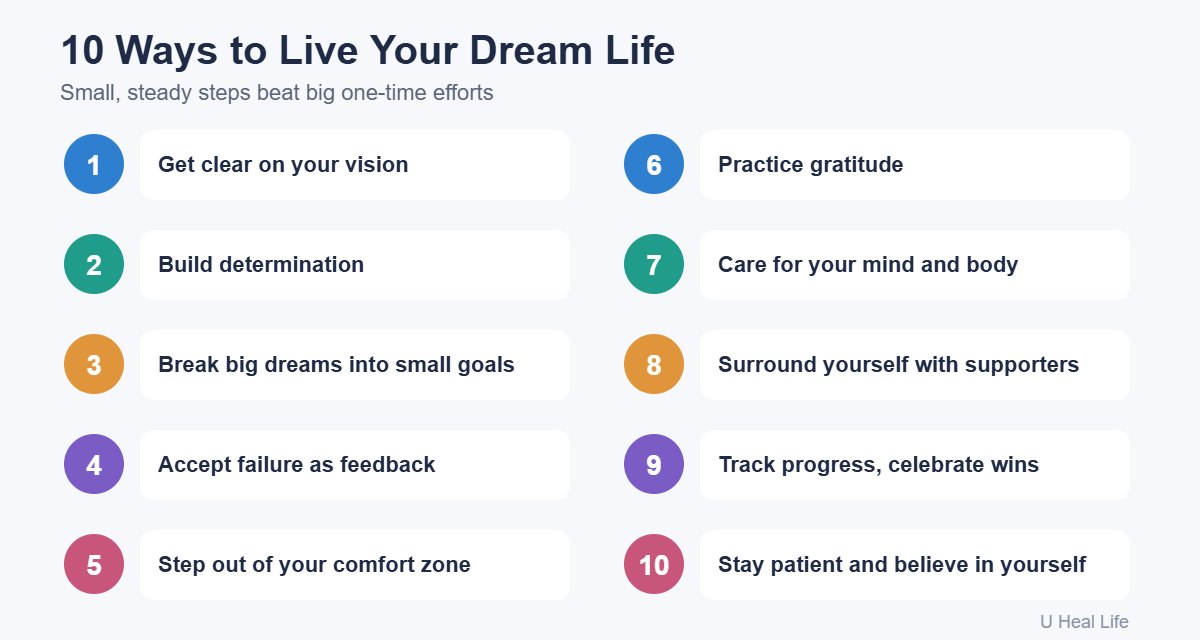
Infographic listing 10 ways to live your dream life, from getting clear on your vision to staying patient and believing in yourself
10 ways to live your dream life at a glance.

What Does “Living Your Dream Life” Really Mean?

A dream life is different for everyone. For one person it may be a satisfying career. For another it may be peace of mind, a loving family, better health, financial stability or the freedom to travel. There is no single right answer.

What matters is that your dream life feels meaningful to you, not just impressive to others. Before you follow any of the ways to live your dream life below, take a moment to ask yourself: “What do I really want, and why?”

10 Ways to Live Your Dream Life

1. Get Clear on What Your Dream Life Looks Like

You cannot move toward something you cannot see. Take 15 minutes with a notebook and write down:

  • How you want to feel every day
  • What kind of work, relationships and lifestyle you want
  • What is missing in your life right now

Be specific. “Be happy” is vague. “Have a calm morning, work I enjoy and time with my family” is clear.

2. Build Determination

Your determination decides whether you keep going when things get hard. It helps you handle struggles, disappointments and failures. A clear vision of your dream makes it easier to stay committed.

Remind yourself why you started. Put your goal where you can see it every day, such as on your phone wallpaper or a sticky note on your desk.

3. Break Big Dreams Into Small Goals

A huge dream can feel scary and slow. Break it into small steps you can finish this week and this month.

  • Write one big goal.
  • Split it into 3 smaller goals.
  • Choose one action for today.

Small steps done daily beat big plans that never start.

4. Accept That Failure Is Part of the Journey

To live the life you want, you need to be willing to face struggles and pass through them. If you give up at the first hurdle, it is hard to taste success. Almost every successful person has failed many times along the way.

When you fail, ask: “What did I learn? What will I try differently?” Then try again. Failure is feedback, not the end of the story.

5. Step Out of Your Comfort Zone

When you feel you are facing hurdles, it often means you are doing something outside your comfort zone. That is a sign of growth. The sooner you understand this, the easier it becomes.

Start small: speak up in a meeting, learn a new skill, or reach out to someone you admire. Be mentally and emotionally ready, and take one brave step at a time.

6. Practice Gratitude

Gratitude can take you a long way. We all face bad days, and it is easy to focus only on what is missing. Make it a habit to notice the little things you already have: good health, a warm meal, a kind friend.

Each night, write three things you are thankful for. Gratitude does not ignore problems. It helps you see the whole picture and stay positive while you work.

7. Take Care of Your Mind and Body

You cannot chase your dreams if you are exhausted. Protect your sleep, move your body, eat well and give your mind rest. Our guide on daily habits that support long-term brain health shows simple ways to start. A short 10-minute evening routine to reduce stress can also help you reset after a hard day.

If you often feel drained, read the signs you need a mental health day.

8. Surround Yourself With Supportive People

The people around you influence your mindset. Spend more time with people who encourage you, and share your goals with someone you trust. If someone constantly puts you down, create some distance.

You can also learn from mentors, books and online communities. You do not have to do this alone.

9. Track Your Progress and Celebrate Small Wins

Progress is easy to miss when you only look at the far-away goal. Keep a simple log of what you completed each week. When you hit a small milestone, celebrate it. This keeps you motivated and shows you how far you have come.

10. Stay Patient and Believe in Yourself

Change takes time. There will be slow days and doubts. Keep your mind and vision clear, trust the process, and be kind to yourself. Self-belief and steady hard work give you the best chance of reaching your goals.

Common Mistakes to Avoid

  • Waiting for the perfect moment. Start small, right now.
  • Comparing yourself with others. Your path is your own.
  • Setting too many goals at once. Focus on one or two.
  • Ignoring rest. Burnout slows you down.
  • Giving up after one failure. Learn and try again.

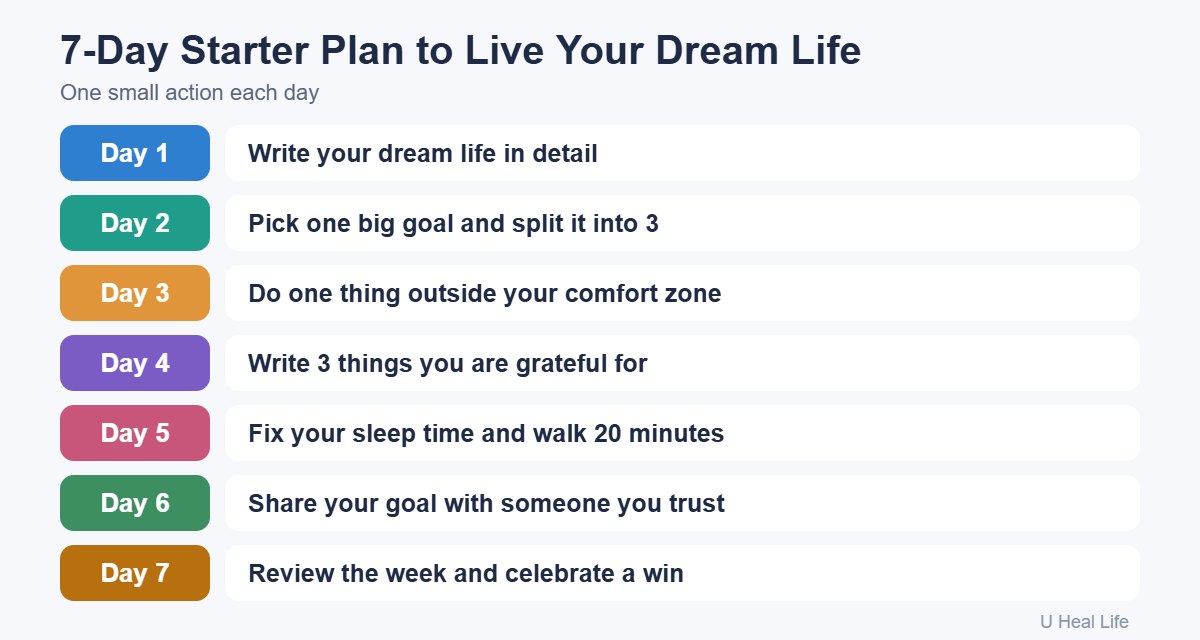
A Simple 7-Day Starter Plan

DayAction
Day 1Write what your dream life looks like in detail
Day 2Pick one big goal and split it into 3 small goals
Day 3Do one small thing outside your comfort zone
Day 4Write down 3 things you are grateful for
Day 5Fix your sleep time and take a 20-minute walk
Day 6Share your goal with someone you trust
Day 7Review your week and celebrate one small win
7-day starter plan with ways to live your dream life: write your vision, set goals, leave your comfort zone, practice gratitude, rest, share your goal and review your week
A simple 7-day plan to get started.

When Your Dream Feels Too Heavy

Chasing a dream can bring stress, worry and self-doubt. If you feel constantly anxious, hopeless or stuck, please talk to a trusted person or a mental health professional. Our guides on feeling anxious for no reason and how to stop overthinking at night may help you understand what you are feeling.

If you are thinking about harming yourself, call or text 988 (the Suicide & Crisis Lifeline in the US) or your local emergency number right away.
Frequently Asked Questions About Ways to Live Your Dream Life

How do I start living my dream life?

Start by writing what you really want, then pick one small action you can do today. Repeat it daily and build from there.

What if I do not know what my dream life is?

That is normal. Try new things, notice what makes you feel energized, and write down what you value. Your vision can change over time.

How long does it take to live your dream life?

There is no fixed time. It depends on your goals and effort. Focus on steady progress rather than a deadline.

Is it too late to start?

No. You can start at any age. Small steps today still move you forward.

How do I stay motivated when things get hard?

Remind yourself why you started, break the goal into smaller steps, celebrate small wins and ask for support when you need it.

Final Thoughts

Living your dream life is not about being perfect. It is about knowing what you want, taking small steps, learning from setbacks and being grateful along the way. Pick one idea from this list and try it today. Your future self will thank you.

Disclaimer: This article is for general information and motivation only and is not professional advice. If you are struggling with your mental health, please speak with a qualified professional.

How can I stop overthinking every little thing?
4

Tips to stop overthinking and dealing with possible anxiety

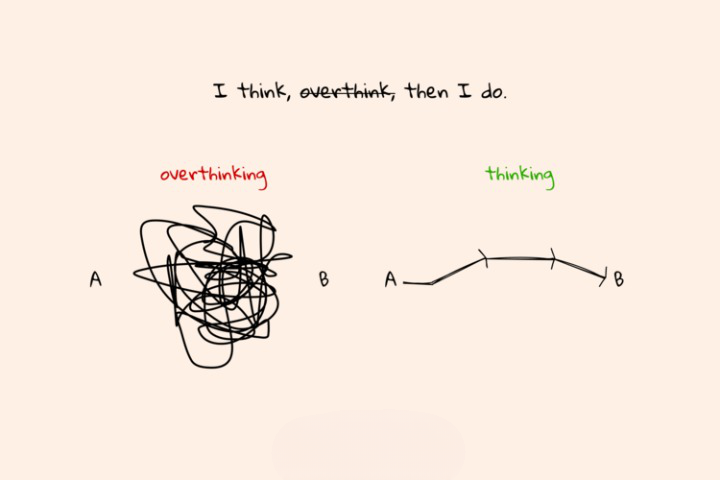
When you’re calm, you can think your way through a problem instead of just worrying about it. Think about the worst thing that can happen, how likely that is and what you could do if it happens. In a stressful situation, think about the different ways you can respond and decide which one is the most intelligent.

Don’t make mountains out of molehills.

When you use the thinking brain, you get control of the emotional brain, and you feel better.

Also, replace negative thoughts with positive thoughts. Count your blessings and remind yourself of your successes.

The treatments for anxiety range from simple stress reduction methods to therapy and medication.

Don’t overlook stress management – it can help even with very bad anxiety.

Video – a lot of helpful information, including the 3-part program of Brown and Gerbarg –

Thought patterns are like habits, and like habits, they are tough to break, but it is possible to change them. It might be easier to add good thought patterns and that way increase the amount of time you think healthily/positively, to balance out the bad. Anxiety and bad thoughts are normal functions and can’t be completely stopped, but it can be reduced to a manageable and healthy level.

Anxiety – an Overview and Ways to Treat It

Introduction

Do you often feel anxious, or do you know someone else who is? Read on to find about more about what it is it, and learn a number strategies to help prevent it, or reduce the severity of the symptoms if you have it.

Anxiety is a common mental health problem, which is prevalent throughout the world and can be really serious in some cases. Studies show that more than 1 in 10 people will develop a disabling anxiety disorder at some stage in their life.

Anxiety is usually assessed on a degree of severity, ranging from mild, to moderate, to severe.

There are a number of different anxiety disorders, which include: generalized anxiety disorder, phobias, social anxiety disorder, separation anxiety disorder, agoraphobia, panic disorder, obsessive-compulsive disorder, and selective mutism.

Symptoms

The symptoms associated with anxiety are quite varied, and can range from quite mild or to quite severe.

1) Behavioural – social withdrawal, sleeping problems, loss of appetite, increased motor tension.

2) Emotional – feelings of dread, trouble concentrating, feeling tense or jumpy, anticipating the worst, irritability, restlessness, blank mind, nightmares, obsessions about sensations, sense of ‘deja vu’, feeling trapped in your mind.

3) Cognitive – thoughts about suspected dangers, such as fear of dying, believing that chest pains are heart attack, believing shooting pains in your head are a tumor or aneurysm, feeling an intense fear when you think of dying, or you may think of it more often than normal, or can’t get it out of your mind.

4) Physiological – headaches, vertigo, digestive problems, nausea, shortness of breath, palpitations, and fatigue.

Cause

The risk factors associated with anxiety include:

1) Neuroanatomical – Neural circuitry involving the amygdala (which regulates emotions like anxiety and fear, stimulating the HPA Axis and sympathetic nervous system) and hippocampus (which is implicated in emotional memory along with the amygdala) is thought to underlie anxiety. People who have anxiety tend to show high activity in response to emotional stimuli in the amygdala.

2) Genetics – Genetics and family history may put an individual at increased risk of an anxiety disorder, but generally external stimuli will trigger its onset or exacerbation.

3) Medical conditions – Many medical conditions can cause anxiety. This includes conditions that affect the ability to breathe, like COPD and asthma, and the difficulty in breathing that often occurs near death. Conditions that cause abdominal pain or chest pain can cause anxiety and may in some cases be a somatization of anxiety.

4) Substance-induced – Several drugs can cause or worsen anxiety, whether in intoxication, withdrawal or from chronic use. These include alcohol, tobacco, cannabis, sedatives (including prescription benzodiazepines), opioids (including prescription pain killers and illicit drugs like heroin), stimulants (such as caffeine, cocaine and amphetamines), hallucinogens, and inhalants.

5) Psychological – Poor coping skills (e.g., rigidity/inflexible problem solving, denial, avoidance, impulsivity, extreme self-expectation, negative thoughts, affective instability, and inability to focus on problems) are associated with anxiety. Anxiety is also linked and perpetuated by the person’s own pessimistic outcome expectancy and how they cope with feedback negativity. Temperament (e.g., neuroticism) and attitudes (e.g. pessimism) have been found to be risk factors for anxiety.

6) Social – Social risk factors for anxiety include a history of trauma (e.g., physical, sexual or emotional abuse or assault), early life experiences and parenting factors (e.g., rejection, lack of warmth, high hostility, harsh discipline, high parental negative affect, anxious childrearing, modelling of dysfunctional and drug-abusing behaviour, discouragement of emotions, poor socialization, poor attachment, and child abuse and neglect), cultural factors (e.g., stoic families/cultures, persecuted minorities including the disabled), and socioeconomics (e.g., uneducated, unemployed, impoverished although developed countries have higher rates of anxiety disorders than developing countries).

Tip 1: Mindfulness

Mindfulness is a psychological process, which involves bringing oneтАЩs attention to what you are experiencing in the present moment, which can be developed through the practice of meditation.

To perform mindfulness you must adopt a particular orientation toward oneтАЩs experiences in the present moment, which is characterized by a mixture of acceptance, curiosity, and openness.

Mindfulness practice has been shown to reduce symptoms of depression, stress, anxiety, and can is also used to treat drug addiction.

1) Awareness – Notice the thoughts which arise in your mind and the sensations that feel in your body. Do they feel hot or cold? Notice your heartbeat. Be aware of your breathing. Allow yourself to feel these sensations without resistance

2) Acceptance – Rather than accept or reject your thoughts, try to just observe them without judgment and allow them to flow in and out of your mind.

3) Present Moment – We often worry about the future or dwell on the past, but you should learn to focus on the present moment and bring your attention back to what is happening in the now.

Tip 2: Breathing

Square breathing is a simple technique which involves taking slow, deep breaths. It is good for stress reduction and can increase performance and concentration.

To start, visualize a square, then follow the instructions going clockwise:

1) Breathe in for 4 seconds picturing one side of the square.

2) Hold your breath for 4 seconds visualizing the second side of the square.

3) Breathe out over 4 seconds visualizing the third side of the square.

4) Hold your breath for 4 seconds visualizing the fourth side of the square.

This exercise should be completed as many times as required for the breathing to become calm and regular.

Tip 3: Other Ideas

1) Keep a journal – Write down your current thoughts, and brainstorm possible solutions to your problems.

2) Reading – Read one of your favourite books, or shop around for a new self-help book.

3) Write a poem – Turn your current worries and problems into a poem to give meaning to them.

4) Colouring – Get some coloured pencils, or crayons, and draw whatever comes to mind. Try some random patterns, or if you are feeling more adventurous create a stunning piece of art.

5) Music – Listen to your favorite band, or play your instrument if you have one.

6) Dance – Move your body to your favorite song, to help keep fit and distract yourself at the same time.

7) Walk – Take a walk outside and, and pay attention to your surroundings. Count houses, cars or trees as you pass them.

8) Relaxation – Take a warm, relaxing bubble bath or a warm shower, whichever you prefer.

9) List – Write a list of positive things in your life, such as good memories and your best attributes, and read them whenever you feel bad.

10) Triggers – Make a list of your triggers, and give it to your therapist if you have one.