Wellness Retreat vs Spa Vacation vs Mental Health Retreat: What Is the Difference?
A spa weekend, a wellness retreat and a mental health retreat can sound alike, but they are very different. Choosing the wrong one can waste money, or leave you without the care you need. This guide compares them side by side in simple words.
Quick answer: A spa vacation is for relaxing treatments, a wellness retreat is a planned program for healthy habits and rest, and a mental health retreat focuses on emotional wellbeing, either with wellness-style support or with licensed clinicians. Only clinical programs led by licensed professionals provide mental health treatment.
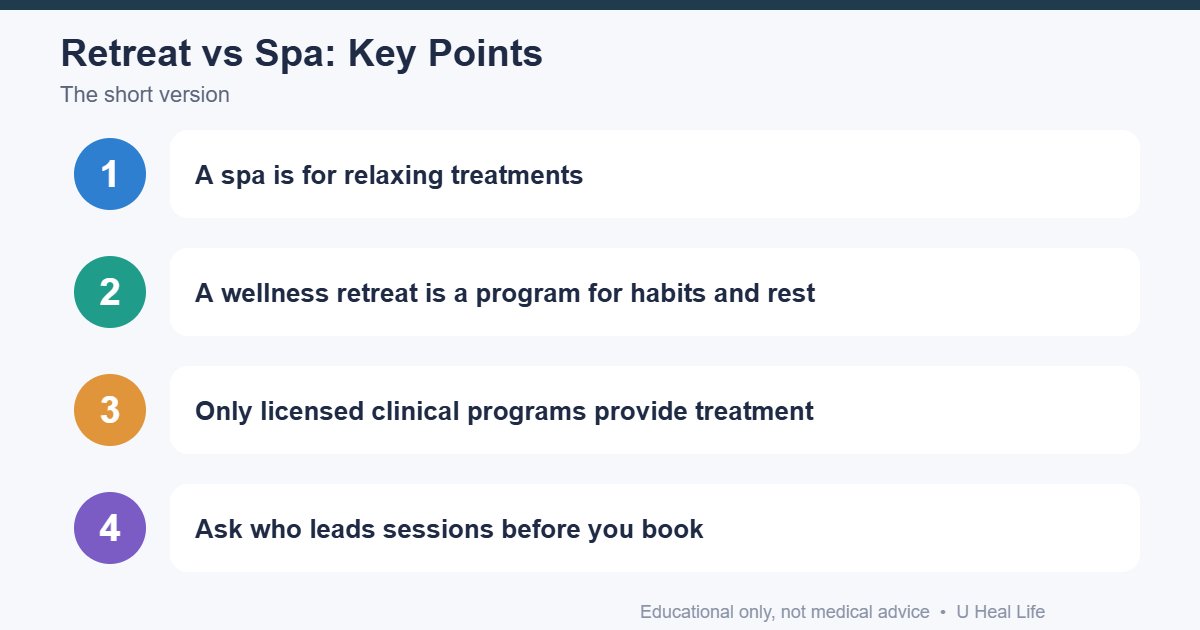
Table of Contents
Wellness Retreat vs Spa vs Mental Health Retreat: Quick Comparison
| Spa vacation | Wellness retreat | Mental health retreat | |
|---|---|---|---|
| Main goal | Relaxation and treatments | Healthy habits, rest, reflection | Emotional wellbeing or treatment |
| Typical activities | Massage, facials, pools | Yoga, meditation, meals, workshops | Therapy, group work, coping skills |
| Who leads | Spa therapists | Coaches, teachers, facilitators | Licensed clinicians (clinical programs) |
| Medical or clinical care | No | Rarely | Yes, in clinical programs |
| Length | 1 to 3 days | 3 to 7+ days | Days to weeks, or longer |
| Cost | Pay per treatment or package | Often all-inclusive | Varies widely |
| Insurance | No | Usually no | Sometimes, for clinical programs |
| Best for | Rest and pampering | A reset and new routines | Support for stress, mood or trauma |
What Is a Spa Vacation?
A spa vacation focuses on treatments such as massage, facials and thermal pools. There is usually no set program. It can help you relax, but it is not designed to build long-term habits. See Florida wellness retreats for resort examples.
What Is a Wellness Retreat?
A wellness retreat is a planned stay with a daily program of movement, mindfulness, healthy meals and talks. It is not medical treatment. Learn more in what is a wellness retreat.
What Is a Mental Health Retreat?
A mental health retreat focuses on emotional wellbeing. Some are wellness-style stays with workshops. Others are clinical programs run by licensed psychologists, therapists or psychiatrists. Always ask who leads sessions. Read how to choose a mental health retreat.
Which One Should You Choose?
- I am tired and need to relax: a spa vacation or short wellness retreat
- I want to build healthy routines: a wellness retreat
- I feel anxious, low or overwhelmed most days: talk to a doctor or licensed therapist first, then consider a clinical program or retreat they support
- I want deep quiet and reflection: a silent retreat, after reading what is a silent retreat
Common Mistakes
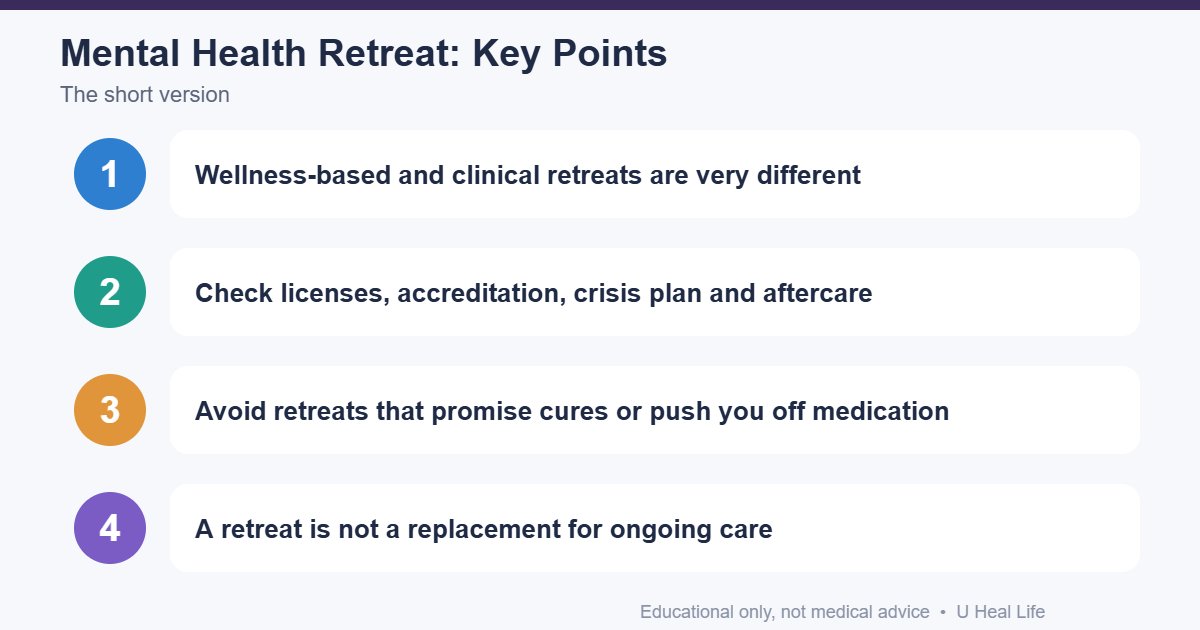
- Choosing a wellness retreat when you need treatment
- Assuming a “mental health” label means licensed care
- Stopping medicine or therapy to “try a retreat”
- Not checking what is included before paying
Frequently Asked Questions About Wellness Retreat vs Mental Health Retreat
Can a wellness retreat replace therapy?
No. It can support your wellbeing but does not replace professional care.
Is a mental health retreat the same as rehab?
Not always. Clinical programs may treat mental health or substance use conditions. Wellness-style retreats are not treatment.
Which one is most expensive?
It depends. Luxury spas and retreats can be very expensive, and clinical residential care can also cost a lot.
Can I combine them?
Some people go on a wellness retreat while continuing therapy. Talk to your therapist first.
What if I am in crisis?
Call or text 988 in the US, or your local emergency number. A retreat is not an emergency service.
Helpful resource: Two well-known accreditation bodies for clinical programs are The Joint Commission and CARF International.
Related Reading
- What Is a Wellness Retreat?
- Mental Health Retreat: How to Choose a Safe One
- Mental Health Retreats Near Me
- Luxury Wellness Retreats in the USA
- 8 Signs You Need a Mental Health Day
Disclaimer: This article is for general information only and is not medical or mental health advice. Prices, programs and availability change, so please check current details with each provider. If you are in crisis or thinking about harming yourself, call or text 988 (the Suicide & Crisis Lifeline in the US) or your local emergency number right away.