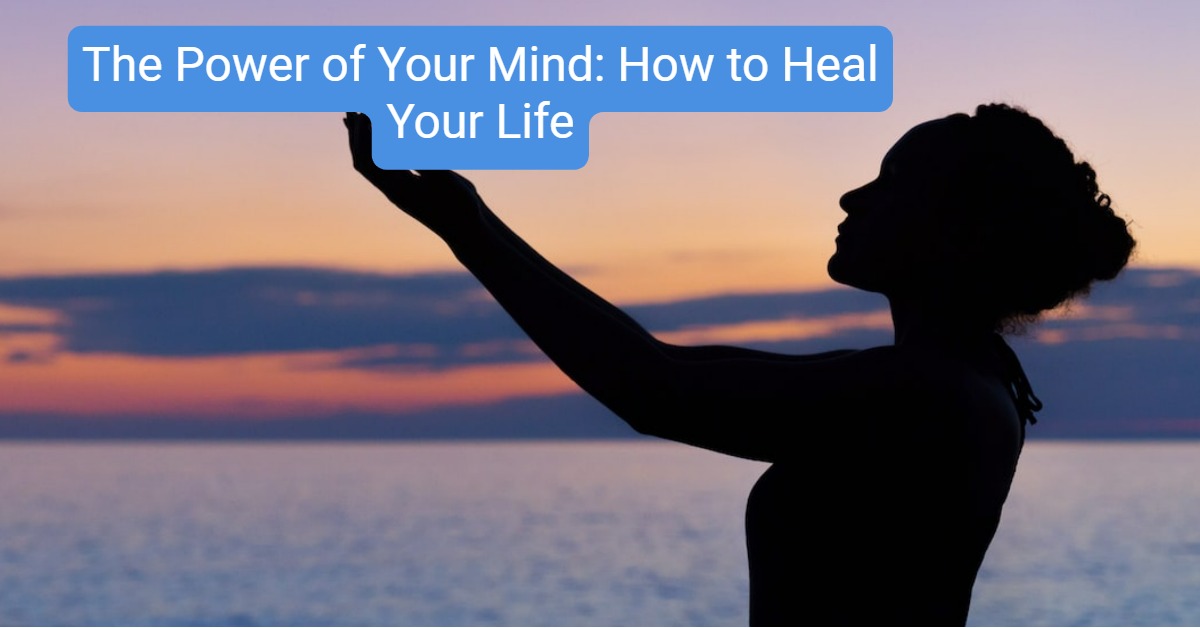
The Power of Your Mind: How to Heal Your Life

The mind is a powerful thing. It can control our thoughts, our emotions, and even our physical health. In recent years, there has been a growing body of scientific research that supports the idea that the mind can actually heal the body.

One of the most well-known examples of this is the placebo effect. A placebo is a fake treatment that has no known medical effect. However, studies have shown that people who receive placebos can often experience real improvements in their health, simply because they believe they are being treated.

This suggests that our expectations can have a powerful impact on our physical health. When we believe that we are going to get better, our bodies are more likely to heal themselves.

There are a number of things that we can do to harness the power of our minds to heal our bodies. Here are a few examples:

  • Positive thinking: Studies have shown that people who have a positive outlook on life are more likely to recover from illness. This is because positive thinking can help to reduce stress, which can weaken the immune system and make it more difficult for the body to heal itself.
  • Visualization: Visualization is a technique where you imagine yourself being healthy and healed. This can help to reprogram your subconscious mind and create a new reality for yourself.
  • Meditation: Meditation is a powerful tool for reducing stress and improving overall health. It can also help to increase self-awareness and self-control, which are essential for healing.

If you are struggling with a health condition, don’t give up hope. There is evidence to suggest that the power of your mind can help you to heal. By using the techniques mentioned above, you can give your body the best chance of recovery.

Here are some additional tips for using the power of your mind to heal your life:

  • Identify your negative thoughts and beliefs. What are the things that you are telling yourself about your health? Are these thoughts helpful or harmful?
  • Replace your negative thoughts with positive ones. When you catch yourself thinking negative thoughts, challenge them and replace them with positive ones.
  • Focus on your goals. What do you want to achieve in terms of your health? Keep your goals in mind and use them as motivation to keep going.
  • Be patient. Healing takes time. Don’t get discouraged if you don’t see results immediately. Just keep working at it and you will eventually reach your goals.

The power of your mind is a powerful tool. Use it wisely and you can create a healthier, happier life for yourself.thumb_upthumb_downuploadGoogle itmore_vert

Yoga and Meditation for Beginners: A Guide to Finding Inner Peace with UhealLife

Yoga and meditation have been practiced for thousands of years and have become increasingly popular in recent times as a way to find inner peace and reduce stress. If you’re a beginner, it can be overwhelming to start practicing yoga and meditation, but don’t worry – UhealLife is here to guide you through the process.

First of all, it’s important to understand that yoga and meditation are two different practices that work together to help you find inner peace. Yoga is a physical practice that involves various postures or asanas, while meditation is a mental practice that involves focusing your attention on the present moment.

To start practicing yoga, it’s best to begin with simple poses and gradually progress to more advanced ones. UhealLife offers a range of yoga classes for beginners that can help you get started. You can also find many online resources, such as instructional videos and blogs, to help you learn different poses.

It’s important to remember that yoga is not about achieving perfect poses, but rather about focusing on your breath and being present in the moment. Don’t worry if you can’t do a certain pose – just do what feels comfortable for you.

Once you’re comfortable with yoga, it’s time to start practicing meditation. UhealLife offers guided meditation sessions that can help you get started. You can also find many resources online, such as meditation apps and guided meditation videos.

Meditation can be challenging at first, as it involves training your mind to focus on the present moment and letting go of distracting thoughts. However, with practice, you’ll be able to quiet your mind and find inner peace.

One of the key benefits of practicing yoga and meditation is stress reduction. Both practices help you to slow down and focus on the present moment, which can help reduce anxiety and promote relaxation.

In addition to stress reduction, yoga and meditation have numerous other benefits for both your physical and mental health. Yoga can improve flexibility, balance, and strength, while meditation can improve your mental clarity and focus.

Overall, yoga and meditation are powerful practices that can help you find inner peace and improve your overall well-being. With the help of UhealLife and other online resources, beginners can start practicing these ancient techniques and experience the benefits for themselves.

In conclusion, if you’re a beginner looking to start practicing yoga and meditation, don’t be intimidated. With the help of UhealLife and other resources, you can learn the basics and begin experiencing the many benefits of these powerful practices. Remember, the key is to focus on your breath and be present in the moment – the rest will come with practice.

How to live longer and healthier life

Living a longer and healthier life is something that many people aspire to achieve. However, the path to a healthy lifestyle can be challenging, especially with the numerous temptations and distractions that surround us. Nevertheless, there are practical steps that one can take to increase their chances of living a long and healthy life. Here are some tips on how to live longer and healthier:

Exercise Regularly
Regular exercise is essential for maintaining good health and living a longer life. Exercise has numerous benefits, including strengthening the immune system, reducing the risk of chronic diseases, improving mental health, and boosting energy levels. Aim to exercise for at least 30 minutes a day, five days a week.

Eat a Healthy Diet
A healthy diet is critical for maintaining good health and reducing the risk of chronic diseases. Focus on consuming whole, nutrient-dense foods, including fruits, vegetables, whole grains, lean proteins, and healthy fats. Limit your intake of processed foods, sugary drinks, and unhealthy fats.

Get Enough Sleep
Getting enough sleep is essential for good health. Lack of sleep can lead to numerous health problems, including weight gain, weakened immune system, and increased risk of chronic diseases. Aim to get at least seven hours of sleep each night.

Manage Stress
Stress is a common factor in modern life, but it can have significant negative impacts on health. Long-term stress can lead to chronic health problems such as heart disease, depression, and anxiety. Find healthy ways to manage stress, such as meditation, exercise, or spending time with loved ones.

Avoid Tobacco and Excessive Alcohol Consumption
Smoking and excessive alcohol consumption can have significant negative impacts on health. Smoking is a leading cause of lung cancer, heart disease, and other health problems, while excessive alcohol consumption can lead to liver disease, cancer, and other health problems. Quit smoking and limit your alcohol intake to promote good health.

Stay Active and Engaged
Staying active and engaged is essential for maintaining good mental and emotional health. Stay involved in social activities, pursue hobbies and interests, and maintain relationships with family and friends. These activities can help prevent depression, anxiety, and other mental health problems.

Regular Health Checkups
Regular health checkups are essential for detecting health problems early and treating them effectively. Visit your doctor for regular checkups, and be sure to follow any recommended screenings or tests.

In conclusion, living a longer and healthier life requires making conscious lifestyle choices that promote good health. By incorporating regular exercise, healthy eating, stress management, sufficient sleep, and avoiding harmful habits like smoking and excessive alcohol consumption, one can increase their chances of living a long and healthy life. Remember, it’s never too late to start making positive changes to improve your health and well-being.

Cognitive-Behavioral Therapy: A Modern Approach to Mental Health Treatment

Mental health problems such as anxiety, depression, and obsessive-compulsive disorder (OCD) can have a profound impact on our daily lives, leaving us feeling helpless, hopeless, and overwhelmed. However, with the right kind of support, it is possible to regain control over our thoughts, feelings, and behaviors, and improve our overall well-being. One of the most effective forms of treatment for a wide range of mental health issues is Cognitive-Behavioral Therapy (CBT).

In this article, we will explore what CBT is, how it works, and what makes it such an effective form of treatment for a wide range of mental health problems.

What is Cognitive-Behavioral Therapy?

Cognitive-Behavioral Therapy (CBT) is a type of psychotherapy that was developed in the 1960s and 1970s by a group of therapists and researchers who were interested in improving the treatment of depression. CBT is based on the idea that our thoughts, feelings, and behaviors are all interconnected, and that by changing our thoughts and behaviors, we can change our feelings.

CBT is a goal-oriented, time-limited, and structured form of therapy that focuses on the here-and-now, rather than exploring deep-rooted psychological issues from the past. CBT is usually delivered in individual or group therapy sessions, and it involves working with a therapist to identify and challenge negative thoughts, beliefs, and behaviors that are contributing to mental health problems.

How Does CBT Work?

CBT works by helping people to identify the negative thoughts and beliefs that are causing them distress, and then to challenge and change these thoughts and beliefs in a systematic and evidence-based manner.

One of the key components of CBT is the development of a therapeutic relationship between the client and therapist, where the client feels heard, understood, and supported. This allows the client to explore their thoughts, feelings, and behaviors in a safe and non-judgmental environment.

Another important aspect of CBT is the use of homework assignments and practical exercises that help the client to put what they have learned in therapy into practice in their everyday life. This helps to reinforce the new, more positive and constructive thought patterns, and to build self-confidence and self-esteem.

What Makes CBT So Effective?

There are several reasons why CBT is such an effective form of treatment for mental health problems.

First, CBT is based on a solid evidence base, with numerous studies demonstrating its effectiveness in treating a wide range of mental health problems, including anxiety, depression, obsessive-compulsive disorder (OCD), and post-traumatic stress disorder (PTSD).

Second, CBT is a flexible and adaptable form of treatment that can be tailored to meet the individual needs and preferences of each client. This means that the therapy can be adapted to suit the specific needs of each person, and that it can be used in a variety of settings, including individual, group, or online therapy sessions.

Finally, CBT is a relatively short-term form of therapy, with most clients completing treatment within 12 to 20 sessions. This makes it an affordable and accessible form of treatment for many people, and it allows clients to make rapid and lasting changes to their thoughts, feelings, and behaviors.

Conclusion

Cognitive-Behavioral Therapy (CBT) is a modern, effective, and evidence-based form of treatment for a wide range of mental health problems. By helping people to identify and challenge negative

Mental Health Awareness: Understanding and Coping with Mental Health Issues

Mental health is an important aspect of our overall well-being, yet it is often neglected or ignored. With the increasing stress and pressures of daily life, it is not surprising that the incidence of mental health issues is on the rise. Mental health problems can range from mild anxiety and depression to more severe conditions such as bipolar disorder and schizophrenia. The impact of mental health issues can be devastating, not just for the individual but also for their loved ones and the wider community.

This article aims to provide a comprehensive guide to mental health awareness, including an overview of common mental health issues, the causes, symptoms, and available treatment options. We will also explore ways to cope with mental health problems and support those who are affected.

What are Mental Health Issues?

Mental health issues refer to a wide range of conditions that can affect our thinking, mood, and behavior. These conditions can range from mild to severe, and can interfere with our ability to lead a productive and fulfilling life. Some of the most common mental health problems include anxiety disorders, depression, bipolar disorder, and schizophrenia.

Causes of Mental Health Issues

The causes of mental health issues are complex and can be difficult to determine. There is no single factor that causes mental health problems, but rather a combination of genetic, environmental, and lifestyle factors. Some of the key causes of mental health issues include:

  • Genetics: Mental health disorders can run in families, and genetic factors can play a role in their development.
  • Trauma: Traumatic experiences, such as abuse, neglect, or exposure to violence, can increase the risk of developing mental health issues.
  • Brain chemistry: Imbalances in the chemicals in the brain can contribute to the development of mental health problems.
  • Substance abuse: Substance abuse, such as alcohol and drug use, can increase the risk of developing mental health problems.
  • Chronic stress: Chronic stress can have a negative impact on mental health and contribute to the development of mental health problems.

Symptoms of Mental Health Issues

The symptoms of mental health issues can vary depending on the condition, but some common signs include:

  • Feelings of sadness, anxiety, or irritability
  • Changes in appetite or sleep patterns
  • Difficulty concentrating
  • Fatigue
  • Loss of interest in activities that were once enjoyable
  • Thoughts of self-harm or suicide

Treatment Options for Mental Health Issues

There are a range of effective treatments available for mental health issues, including therapy, medication, and lifestyle changes.

  • Therapy: Therapy, such as cognitive-behavioral therapy (CBT), can be an effective treatment for mental health problems. CBT helps individuals to identify and change negative thought patterns, and can be particularly helpful for conditions such as anxiety and depression.
  • Medication: There are several types of medications that can be effective in treating mental health issues. Antidepressants, for example, are commonly used to treat depression and anxiety disorders.
  • Lifestyle changes: Making lifestyle changes, such as getting regular exercise, eating a healthy diet, and reducing stress, can help to improve mental health and reduce the risk of developing mental health problems.

Coping with Mental Health Issues

It can be difficult to cope with mental health problems, but there are several strategies that can help. These include:

  • Talking to someone: Talking to a trusted friend, family member, or mental health professional can help to reduce feelings of isolation and provide support.
Here’s how to increase self-esteem and build confidence

A little backstory which you can skip: I was a complete loser, I’d lie about the person I wanted to be, I’d be so insecure of taking a single picture that after taking one I’d edit the fuck out of it making myself look even more weird matching those gross beauty standards, I couldn’t talk in social situations due to my social anxiety and was always awkward and didn’t get exposed to much social situations, it’d overwhelm me when ppl would display talents and have so much personality and zest in them and I’d always compare myself and fall flat. I came from a super small house and we had tons of financial issues, I couldn’t afford to have a decent diet, no clothes which would look good on me cuz I was so fucking fat, self harming, no good relations w family, barely any in real life friends, etc like, you can imagine how fucked up it was and it’s not even the end of the things I was facing but I mentioned these cuz they’d seem relatable. Now, I hit gym 6 days a week, lost weight from 85 kgs to 68 kgs, kickboxing, learning flute, quit porn and all social media except reddit, reading books, meditating, socialising and speaking my mind often, forcing myself to get out of my comfort zones, making helpful notes as I journal, learning shuffle dance, more about investing, doing well w studies, I’m so much liked and respected by my friends, developed a good bond w my family right from the scratch, I’m a lot more patient too, having amazing convos w ppl and I’m speaking my mind out, who’re genuinely so nice and kind at the gym, clg and at the kickboxing gym, getting some really nice attention from the girls around, my mental health is getting better and better and I’m so grateful for all the good and bad things which happened to me, basically I’m doing well w every aspect of life!

Here’s how to increase confidence and self-esteem:

Confidence is boosted when you expose yourself to difficult situations and come over them. You have to leave many things behind like how you’ll look in front of the camera or what others think of you, try not to care about it or even if you’re feeling afraid, do it anyway, cuz no matter what, you’ll live, you’ll survive this social situation. Ppl are only concerned about themselves, they won’t remember how stupid you looked. The more you expose yourself, the more confident and stronger you’ll come out to be. Cold approach that woman you found pretty, ask your tailor how did his day go, have deep and personal conversations w your friends like just show that you’re interested and ask more about them, pick up a new hobby which might scare you or try to break that gym PR by a small limit (pls be safe and no ego lifting.) GET OUT OF YOUR COMFORT ZONE! And don’t ever lie to yourself, STOP LYING! TO OTHERS AND TO YOURSELF! Show your real self, I’ve started to upload more pictures of myself on stories too and it’s so freeing, to show your real self without editing and scraping it cuz you look so weird. TAKE THAT RISK!

  1. Journal your insecurities, write down how to get over them as well, you know the answer deep down. If you don’t, there’s YouTube to help you out but yes, you’ll have to put in the time to map out a schedule which you can execute. Set up goals, literally sit down and write what kind of person you want to be and how you could be that, then slowly start incorporating things and habits to become who you want to be. Start gratitude journalling, it’s 100% effective way to become happier.
  2. Go on a dopamine detox, slowly start incorporating healthier habits (Cuz tons of things would overwhelm you), start w personal and basic hygiene, beard cut/hair cut every 2-3 weeks, start wearing stainless steel accessories which are cheap, get clothes which fit or alter them accordingly, take care of your skin (Wake up early and at the same time everyday, wash your face w face wash, then apply moisturizer and then sunscreen before stepping out in the sun, basic skincare is that easy and it’ll do wonders to your skin), eat healthy food like 225g of spinach, 4 eggs and 2 carrots everyday along w high protein diet, these should be a non compromising thing cuz it improves your skin so much and makes you look better w tons of nutrients, looking better makes you feel better and appear more confident! Looks matter! Join a gym, lose that extra fat, get dream body, eat in a calorie deficit and w high protein! Gym is so so SO IMPORTANT!
    • Tell yourself you’re grateful for how much you’re putting in efforts for yourself, gratitude journal daily, find out the things which you love about yourself, NSDR daily for 15 mins, it’s like easy meditation for beginners and helps you feel rejuvenated, incorporate skills and be good at them, it takes time, but you’ll be good at them someday and progress makes one so happy, take baby steps to achieve the realistic goals which you’ve set up for yourself, your respect for yourself will start slowly increasing cuz you’re slowly becoming the person you want to be, upgrade your self image, cuz you’ll keep falling back into the patterns of the person you think you’re, tell yourself you’re a work in progress or you’re an athlete or an artist or anything which uplifts your self image, then things will start to become easier to stick to cuz they’ll become the new norm of what your self image is, you need to absolutely earn your own respect!
    • Talk to people, man, please talk to people, get to know about them and their interest of things or the random things they talk about, you get to learn so much. Go out there, find good ppl who have a growth mindset and are working on themselves, loneliness and all that lone wolf bs sucks, I was there, all my life but being w nice ppl is just so amazing, to increase your social skills I strongly recommend reading How to win friends and influence people by Dale Carnegie, then read The Rudest Book Ever by Shwetabh Gangwar, then I recommend Compound effect, these books are perfect cuz each focuses on different aspects, first for social skills, second for self image and self respect, last one for healthier habits/for success, if you have some issues to read them in a physical copy then audiobooks or PDFs are available too online. YOU GOT THIS!!! DON’T GIVE UP, DON’T LOSE HOPE! Tell yourself everyday it’s only about to get better and no matter what, you’ll be okay. Adopt an abundance mindset!
    Here are some tips for detoxing your mind
    Here are some tips for detoxing your mind

    From my perspective, the mind is one of the most important organisms of the body. Therefore having a clear mindset and vision is fundamental for achieving anything in life. Following are 5 ways in which a person can detox the mind and make room for better things.

    Unfollow anyone who does not add positive value to your life

    Be mindful of the things you are following on social media. Make sure those accounts are adding value to your life. Many of the things we see on social media are products of technology. In other words, computers can create and edit the perfect online life, but real life is a different thing. Constantly track the accounts you follow and unfollow those who are not adding value to your path. Clear out your social media space as you clean out your room, closet, or house.

    Became selectively social

    Who you share your time with is a product of who you are. So be aware of the people around you. Those associations have a meaningful impact in your life, it has the power to change your perspective of life. Be mindful of who you give your energy to and from who you are receiving energy.

    Meditate

    Meditation is a powerful tool to organize your mind. Do not confuse meditation with shooting your mind off; meditation is the power to organize your thoughts. When you are meditating, focus on one thing at a time, this is how meditation works. You are supposed to pay attention to one aspect of your life at the time, and that will create a habit of concentration. Preventing you from focusing your time on unnecessary stuff, there you will have a clear and organized mind all the time.

    Ask yourself important questions.

    Everyone has questions about life and how it works. Ask yourself, what is working on my life and what is not working? What aspects of my life can I improve to become a better person? Do I currently have any relationship that is not adding value or joy to my life? What is one habit that prevents me from becoming a better person, and how can I break it? You can ask yourself multiple questions daily to find out how you are doing in life and where you want to go. Ask those questions all the time.

    Say “NO” whenever you are not ready.

    If you have a habit of being a people pleaser or you find yourself overbook all the time, it is time for you to learn how to say NO. Is essential to prioritize your time and spend it on things that will fulfill your path and purpose in life. You should help other people with their path if you can, but do not forget that you are your masterpiece; therefore, you need most of your time.

    Discover the power of the pause. Close your eyes and breath throughout your body. Slowly breathe through your nose and out throughout your mouth. Please your body needs, please your organisms by practicing simple steps. Detox your mind, and you will detox your life.

    detox mind
    How to DETOX your mind.

    Though We have miles to go in terms of learning what it means to take care of our bodies, we are even further behind on how
    to take care of our minds. Our brains construct our experiences and there are so many factors that alter and shift our perspectives that are completely in our control but totally out of our awareness. Here, a few things you can do to detox your mind, deprogram and wipe the slate clean now and again. Following are 18 ways in which a person can detox the mind and make room for better things.

    1.Trvel to assimilate culture. Alter your base-point concept of “normal.” What it will show you is how many behaviors/values/beliefs you have unconsciously adopted from your surroundings ( and ways you can change them).

    2. Create physical solutions for emotional problems. People default on the idea that one emotion will cancel out or fix another. If you are upset, seek a high to eliminate it. But negative emotions are just called to action that being ignored through a little mental gymnastics and a lot of justification, Detoxing your mind is letting go of emotion high in place of creating actual solutions.

    3. know that emotional toxicity is born of mental resistance. listed if trying to create a certain emotional experience.

    4. Identify your tethers. The Problems that are in from of you are actually behind you: they are cracks in your foundation that are holding you back. stop trying to dismantle symptoms; go back and identify the causes.

    5. Go for a long drive and let yourself get lost. Drive through neighborhoods you never would have known existed.
    See how other people live. See them come home from work and what their living rooms look like from the outside. It will comfort you in that you will realize how small you are in a more practical way than just staring at the ocean. You don’t know what you don’t know.

    6. Rearrange your furniture. Your brain constructs your experiences through props and signals that those props fire off. you are continual. subconsciously triggering negative or stagnant associations because of how your brain processes your surroundings- change how you think, change what you feel.

    7. Do a Mental purge. Just write down whatever weird thoughts continually, cross your mind of the little incoherent bits that are clogging your head. Just getting them out will give you relief.

    8. Restructure your digital life. It’s not realistic(or desirable to lot of people) to be forever disconnected, but it’s also not realistic to keep things that don’t serve you positively in you social feeds and expect it not to affect you.

    9. Notice your unconscious movements. Notice your feet walking and how you are not deciding yo ligy each one up and forward and yet because your mind said, “Okay, self lets get to this point today,” you began to go. Consider your morning intentions similarly.

    10. Cleanse your space emotionally. Consider the emotional attachment you have to the things you keep around you. Did you buy those clothes to someone you’re not?
    Do you have decor around your apartment that you got during a particularly crappy time in your life? Let those
    things go, but decide what to let go by thinking about what they make you feel.

    11. Place yourself. Make a chart with three columns and on the left write everything you feel you’ve
    accomplished in your life and the middle writes down what your daily life entails and then on the right put what those consistent habits will lead to what you hope to do in the future. It helps you focus on the big picture; getting lost
    in minutiae usually causes people anxiety.

    12. Shift your physical position every time you start falling back into toxic thought cycles. This basically creates a new experience for your body and refocuses you in the moment( and it’s simple enough to do at your desk at work)

    13. Stretch your brain. Pick up a book on something that interests you and learn more about it. Look at research on something you have a theory about.

    14. Reevaluate the extent of your connected disconnectedness. if the bulk of your relationships happen digitally (that are not long distance) and you have not had a conversation in person without being interrupted by a phone in a long enough time , evaluate how much you are prioritizing people in your life, and realize that screens>people is basically the best way to create an extremely anxious lifestyle for yourself.

    15. Identify what your addictions are keeping you distracted from. Most things people struggle with are addictions in some form: a thing you keep doing though you don’t really want to. Understand that addiction is a disconnection from yourself, and a disconnection from yourself is born of something present that you (think) you can’t face.

    16. Learn to let “good enough” not be the opposite of perfect. If there is one thing that will give you the most mental-emotional relief it is in letting food enough be good enough.

    17. Dismantle the parts of your life that are solely performative. The thing is that most of what clogs our minds is all the
    the unnecessary effort we put into constructing a life that seems a little more palatable, a little more noble, a little better than someone else’s (so therefore good enough) But it accomplishes the opposite of what we intend: We place ourselves further from a genuinely happy experience (which is in accepting that life is small and simple and more than enough)
    through grandiose ideas and attachments that end up making us into characters, not people.

    18. Write down what you hate about other people. This is what you need to change about yourself/ your life( but are resisting too much to actually do something about). Know that it’s often not a surface-level issue: You don’t hate your annoying neighbor because she always bothers other people for lunch, you hate her because she acts as though she’s
    desperate for love and you feel that way too but avoid it because you think it’s embarrassing. This is a cheat sheet to see what’s actually wrong in your life. It’s important because completely understanding the problem is the same thing as knowing the solution. If you don’t know what to do, you don’t know what’s wrong. If you don’t know what’s wrong, its because some part of you is resisting seeing it.

    reason people think meditation is difficult
    The main reason people think meditation is difficult

    The common idea is that meditation is difficult. This is not true. Meditation, itself, is extremely simple. It is a unidimensional practice, requiring nothing more than alert observation. Sure, the mind wanders, thoughts and emotions enter the picture, and on and on.

    But these are not part of the meditation. They occur ‘peripherally’ in the mind. As you become comfortable and confident with the process of meditation, some aids (physical as well as attitudinal approaches that I term ‘meditation toolkit’) will help you with the ancillary problems mentioned. A guide who is willing to instruct you one-on-one can be a great help in dealing with these ‘ancillary’ problems.

    Regardless of the method selected (and most folks who have meditated for a while settle on one), the practice involves observing a particular ‘anchor’ (e.g. breath, chant, mantra, chakras, music, thought, etc.) while keeping a portion of the mind (the portion that is not ‘holding on’ to the anchor) open, permitting thoughts and emotions to intrude. This is facilitated by being completely aware of anything that arises in the mind (e.g. thought, emotion, idea, belief, bodily sensations, external sensations [e.g. a dog barking], and movements that are motivated by the mind [as opposed to those that occur without being impelled or continued by the mind]). This is ‘total awareness.’

    Mere observation of any intrusion without ‘engaging’ (any intellectual or emotional interaction including scrutiny, reason, argument, pacification, justification, complimenting, criticism, suppression, or blockage) causes it to weaken.

    Depending on the intensity of the thought or emotion, it may recur. No problem; repeat the observation without engagement. The thought will gradually weaken to the point of either disappearing or remain in the mind without being a bother or distraction. The disappearance is not important. Allowing the thought to exist without bothering the practitioner is more important.

    Some people recommend that the thought be entertained with positive internal comments and that, after observation, to ‘shift’ attention to breath, chant, etc. Actually, since the thought weakens on its own, the question of shifting does not arise. Total awareness prevails.

    Some methods of meditation ‘bind’ the mind. Such binding is not as beneficial as permitting thoughts to enter and observing them; the intrusion of thoughts and emotions and the method of dealing with them helps not only during meditation but also during difficult times the rest of the day. As binding the mind does not permit thoughts to enter, the individual does not develop the skill and confidence to reconcile with the thought or emotion. By the way, thoughts accompanied by emotion are more distracting and bothersome than thoughts by themselves.

    So, if meditation is simple in itself, why so many queries, problems, and posts about the difficulty of meditation?

    The answer is very simple: EXPECTATION.

    The expectation that the mind will be free of thought/emotion and that peace will reign is the culprit. Lack of fulfillment of such expectation causes disappointment, frustration, self-criticism, self-flagellation, and, if not addressed, the possibility of dropping out of the practice of meditation.

    So, instead of trying to ‘remedy’ meditation, peripheral issues such as distraction, expectation, and emotional upheavals accompanying life need to be understood and addressed as needed.

    Expectations thus predispose you to disappointment. When you meditate without expectations, your progress in meditation is facilitated.

    In addition, practitioners need access and the ability to incorporate measures to deal and cope with difficult times. The more such measures are put into practice, the more they are available and effective in times of need.

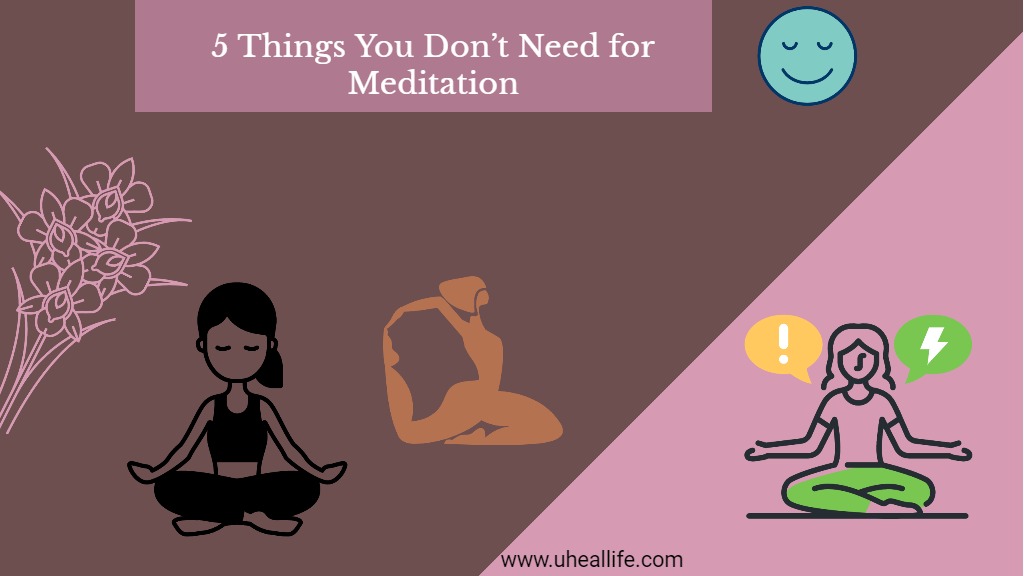
    5 Things You Don’t Need for Meditation
    5 Things You Don’t Need for Meditation

    Meditation should lend itself to various times and places—what I term battleground meditation.

    What is the point refining a fire drill to perfection but not being able to implement it when a real fire occurs and the power is out, people are yelling and panicky, and the floor is slippery? If the fire drill cannot be put into practice, it is a waste of effort.

    Similarly, the ability to employ meditation under various conditions and settings, particularly stressful ones, is a great help and serves the purpose of the practice in the first place.

    Here are five things you don’t need for meditation. Knowing this will help you meditate in different conditions and settings.

    1. Freedom from thought:

    This misconception is not only an improper understanding of meditation but is also destructive in that it drives away many potential students of the discipline. To make matters worse, people are told that meditation can bestow freedom from thought. Where does that leave the prospective student? Can’t meditate unless free of thought and require meditation to be free of thought.

    The above misunderstanding arises from the common statement, ‘….in meditation, one is free of thought…’ That is misconstrued to mean that meditation requires freedom from thought. In fact, in meditation, thoughts may be present or absent and, even when present, they do not bother the aspirant.

    2. Specific posture:

    No posture is an absolute for meditation. The posture utilized should be one that is comfortable and does not interfere with the practice. Remember, meditation occurs at the level of the mind, not any body part. One of my students has a health problem that makes him move constantly. He was getting frustrated. After a discussion, he agreed to try meditating while walking up and down in a room or on his terrace. He has obtained satisfactory results. In fact, he is also comfortable now meditating for brief periods with eyes open.

    1. No movement:

    Some folks believe that, once you sit for meditation, no movement should be undertaken. I disagree. If you have an itch on the forehead or a discomfort in the position of the knee, for example, go ahead and scratch the darned forehead or move the darned knee. Sure, it is a brief interruption of meditation. But it beats spending the time in meditation focusing on the forehead or knee. In addition, meditation should be pleasant and enjoyable, not a punishment. So, relax and enjoy it!

    Practicing meditation while still is certainly useful to develop skill and, more importantly, confidence to adhere to the practice and to progress. With time, practice and confidence, you can gain the ability to meditate under difficult conditions. Get comfortable with this and you are on your way to becoming a ‘master!’


    4. Focus eyes:

    Focusing eyes at the tip of the nose or the middle of the forehead is sometimes recommended. I have had many students say that they tried this and were uncomfortable. My experience with this practice has consistently resulted in headache and discomfort.

    5. Chant/breath control:

    Chanting and breath control are not harmful. I do not dissuade folks from these. Generally, chanting and breath control are difficult to implement in settings other than in a quiet, dark room unless they are silent and in a manner that others cannot detect.