7 Supplements to Boost Metabolism: What the Evidence Really Says (2026)
Search for “supplements to boost metabolism” and you will find hundreds of products promising to burn fat and speed up your calorie burn. The honest answer is more modest. No pill can reliably “fire up” your metabolism, and most research on these supplements shows small effects or mixed results. This guide looks at seven popular supplements, what the evidence says, who should be careful, and what actually supports a healthy metabolism.
Quick answer: There is no proven supplement that significantly boosts metabolism. Green tea extract, capsaicin and a few others show small or mixed effects in studies, while B vitamins, magnesium, CoQ10 and omega-3s support normal body functions but are not shown to speed up metabolism if you are not low in them. Sleep, strength training, enough protein and an active day matter far more. Talk to your doctor before taking any supplement.
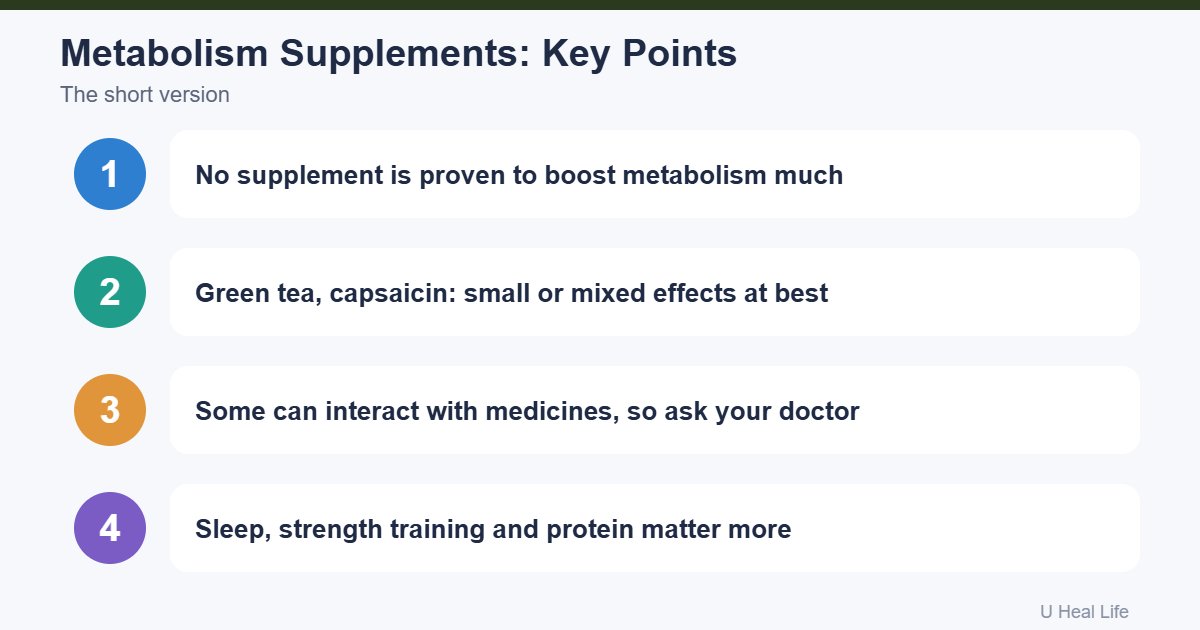
Table of Contents
By the U Heal Life editorial team. Last updated: October 2026. We are not doctors, and this article is general information based on public health sources, not medical advice. This page contains one affiliate link, explained clearly near the end. If you buy through it, we may earn a commission at no extra cost to you.
How Metabolism Really Works
Your metabolic rate is the number of calories your body uses in a day. It is commonly described in three parts:
- Basal metabolic rate (BMR): the energy you use just to stay alive. This is the biggest part, often described as about 60 to 70 percent of daily use.
- Thermic effect of food: the energy used to digest and absorb food, often described as about 10 percent.
- Physical activity: everything from walking to workouts, often described as about 20 to 30 percent.
Body size, muscle mass, age, sex and genetics play the main roles. Muscle uses more energy than fat, which is one reason strength training helps.
The 7 Supplements at a Glance
| Supplement | What people hope it does | What the evidence suggests | Main cautions |
|---|---|---|---|
| Green tea extract | Small boost to calorie burn | Small or mixed effects on weight | Rare liver injury reported with concentrated extracts; caffeine |
| L-carnitine | Help the body use fat for energy | Limited evidence for weight loss | Stomach upset; may interact with some medicines |
| Capsaicin | Slightly raise calorie burn and reduce appetite | Small effects in some short studies | Stomach discomfort |
| B vitamins | Support energy metabolism | Helpful if you are low, not a booster otherwise | Very high doses of some B vitamins can cause problems |
| CoQ10 | Support cell energy | Not shown to boost metabolism | May interact with blood thinners such as warfarin |
| Magnesium | Support many body reactions | Helpful if you are low, not shown to boost metabolism | High supplement doses can cause diarrhea |
| Omega-3 fatty acids | Support heart health and reduce inflammation | Good for heart-related goals, not a metabolism booster | May increase bleeding risk at high doses |
What the Evidence Says, One by One
1. Green Tea Extract
Green tea contains caffeine and plant compounds called catechins, including EGCG. Reviews of studies have found at most a small effect on weight, and some reviews found no meaningful effect. Concentrated green tea extracts have been linked to rare cases of liver injury, especially at high doses and on an empty stomach. If you are sensitive to caffeine, pregnant, or have liver problems, ask your doctor first.
2. L-Carnitine
Your body makes L-carnitine, and it helps move fatty acids into cells to be used for energy. Taking more has not been shown to cause meaningful weight loss in healthy people. Side effects can include nausea and stomach upset.
3. Capsaicin
Capsaicin is the compound that makes chili peppers hot. Some short studies suggest a small rise in calorie burn and a small drop in appetite, but the effects are modest and may fade over time. It can irritate the stomach.
4. B Vitamins
B vitamins help your body turn food into energy. If you are low in a B vitamin, such as B12, you may feel tired, and fixing the shortage can help. If your levels are normal, extra B vitamins are not expected to speed up metabolism.
5. CoQ10
CoQ10 is involved in making energy inside cells. It is popular for general health, but there is no strong evidence that it boosts metabolism or causes weight loss. It may reduce the effect of blood thinners such as warfarin.
6. Magnesium
Magnesium takes part in many body processes, and many people do not get enough from food. Correcting a low level is useful. It is not shown to raise metabolism in people who are not low. High supplement doses can cause diarrhea, so follow label limits and ask your doctor.
7. Omega-3 Fatty Acids
Omega-3s from fish oil are well studied for heart health and for lowering triglycerides. They are not a proven metabolism booster. High doses may increase bleeding risk, so talk to your doctor if you take blood thinners.
Ingredients and Products to Be Careful With
- “Fat burners” with many stimulants: these can raise heart rate and blood pressure.
- Bitter orange (synephrine): safety concerns have been raised, especially for the heart.
- Raspberry ketones: there is little good evidence in humans.
- Chromium picolinate: results are mixed, and any benefit appears small.
- Ephedra: the FDA banned ephedra supplements in the US because of safety risks.
- Anything promising fast, easy fat loss: the FDA has warned about weight-loss products that secretly contain drugs.
Dietary supplements in the US are not approved by the FDA before they are sold, so quality and claims can vary.
What Actually Supports a Healthy Metabolism
- Build and keep muscle. Strength training two or more days a week helps.
- Eat enough protein and enough food overall. Crash diets can slow your progress.
- Sleep well. Poor sleep affects appetite and energy.
- Move through the day. Walking and everyday activity add up.
- Manage stress. Our 10-minute evening routine to reduce stress can help you wind down.
- Get tested if something feels off. Fatigue, sudden weight change or a racing heart can have medical causes, including thyroid conditions. See our guide on overactive thyroid symptoms in men.
How to Choose a Supplement More Safely
- Talk to your doctor or pharmacist first, especially if you take medicines, are pregnant or have a health condition
- Look for independent testing marks such as USP or NSF on the label
- Check the dose and stay within label limits
- Start with one product at a time, and stop if you feel unwell
- Be careful with miracle claims and “before and after” photos
A Note About the Product Link on This Page
Some readers ask about specific products. The link below is an affiliate link: if you buy through it, we may earn a commission at no extra cost to you. We have not tested this product, we make no claims about results, and we are not recommending it over the careful steps above. Please check the ingredients, doses and safety information yourself and ask your doctor first.
See the product page (affiliate link)
Frequently Asked Questions About Supplements to Boost Metabolism
Do supplements to boost metabolism really work?
Most show small or mixed effects at best. Supplements are not a substitute for sleep, movement and a balanced diet.
What is the best supplement to boost metabolism?
There is no proven best one. Fixing a real nutrient shortage, if your doctor finds one, is the most reliable use of supplements.
Are metabolism supplements safe?
It depends on the product, dose and your health. Some can interact with medicines or cause side effects. Ask your doctor before starting.
How long do they take to work?
There is no set time. If a supplement has an effect, it is usually small, so judge your progress by habits, energy and checkups, not only the scale.
Do metabolism supplements work without exercise?
Any effect is likely to be very small without exercise and good nutrition.
When should I see a doctor?
See a doctor if you have sudden weight changes, ongoing fatigue, a racing heart, heat or cold intolerance, or other symptoms that worry you.
Sources and Further Reading
- NIH Office of Dietary Supplements has fact sheets on weight-loss supplements and individual nutrients.
- U.S. Food and Drug Administration publishes warnings about unsafe supplements and tainted weight-loss products.
Related Reading
- Overactive Thyroid Symptoms in Men
- 10-Minute Evening Routine to Reduce Stress
- Daily Habits That Support Long-Term Brain Health
- How to Calm Down After a Stressful Day
- Healthiest Cooking Oils for Indian Kitchens
Disclaimer: This article is for general information only and is not medical advice. Dietary supplements are not intended to diagnose, treat, cure or prevent any disease. Talk to a qualified healthcare professional before taking any supplement.