What Is a Silent Retreat? What Happens, Rules and Benefits
The idea of staying quiet for days can sound scary, or very appealing. A silent retreat is a stay where you choose not to talk for a set time so your mind can slow down. This guide explains what a silent retreat is, what happens each day, the usual rules, possible benefits and who should be careful.
Quick answer: A silent retreat is a retreat where participants stay silent for all or part of the program, often while meditating, walking and resting. Some, like 10-day Vipassana courses, ask for full silence and no phones, reading or writing. Others only keep silence at certain times. It can be calming, but it can also bring up strong feelings.
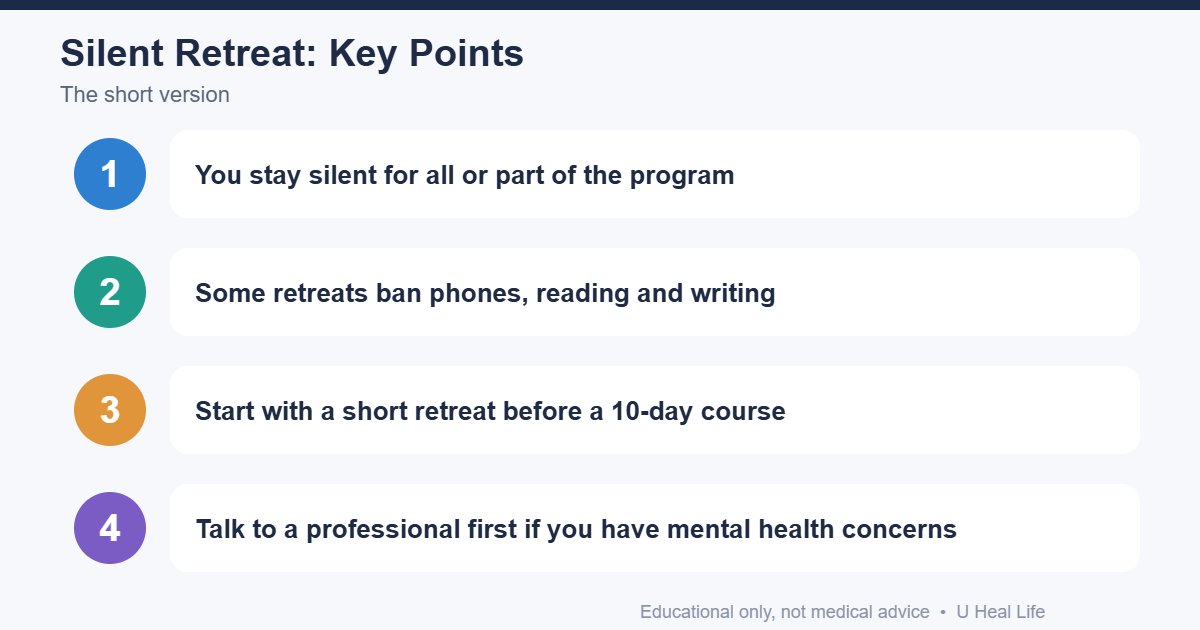
Table of Contents
What Is a Silent Retreat? (Silent Retreat Meaning)
The silent retreat meaning is simple: you give up talking, and often phones, books and other distractions, so you can focus on your breath, body and thoughts. Silence is usually the main tool, not a punishment. Retreats run from a single day to several weeks.
There are two common styles:
- Full silence (“noble silence”): no talking, no eye contact or gestures with other guests. Strict Vipassana courses follow this.
- Partial silence: quiet during set hours, with group sharing or optional talks at other times. Many yoga-based silent retreats work this way.
What Is Noble Silence?
In the Vipassana tradition taught by S.N. Goenka, noble silence means silence of body, speech and mind. Students keep it from the start of the course until the morning of the last full day, then speaking opens up again so people can ease back into normal life.
What Happens on a Silent Retreat?
A 10-day Vipassana course, one of the best known formats, usually looks like this, according to the Vipassana centers themselves:
- Days start very early, around 4 a.m.
- About ten hours of meditation are spread through the day, with breaks and rest
- The Vipassana technique itself is taught from about day 4
- A loving-kindness (mettā) meditation is taught on day 10, and silence ends
- The course ends on the morning of day 11
Other silent retreats are gentler. Days may include seated and walking meditation, yoga, quiet meals, journaling and free time in nature.
Common Rules
Rules differ, so read each retreat’s code of conduct. At strict courses you may be asked to give up:
- Talking and eye contact with other students
- Phones and other electronics
- Reading and writing
- Exercise other than walking
- Alcohol and other intoxicants
Some retreats allow journaling or reading. Always check before you go.
How Much Does a Silent Retreat Cost?
Vipassana courses run on a donation basis. The centers say that food and lodging are covered by donations from past students, and you may give a donation after completing a course. Other silent retreats, especially at resorts or private centers, charge a normal price, which can range from a modest fee to several hundred dollars for a few days. See our guide on wellness retreat costs.
Possible Benefits
People often describe feeling calmer, more focused and more aware of their thoughts. Quiet time may also help you notice stress habits. Research is still limited and mostly small, so benefits are not guaranteed.
Who Should Be Careful?
Long periods of silence and meditation can stir up strong emotions. Please talk to your doctor or therapist before attending if you have a history of trauma, severe anxiety, depression, psychosis or other mental health conditions. Many retreats ask about this on the application. A silent retreat is not a treatment for any condition.
Tips for Your First Silent Retreat
- Start with a weekend or a short program before a 10-day course.
- Practice 10 to 20 minutes of daily meditation first. Our simple mindfulness exercises are a good start.
- Tell friends and family you will be offline.
- Pack comfortable layers. See what to pack for a retreat.
- Expect hard moments such as boredom, restlessness or sadness. They often pass.
Frequently Asked Questions About What Is a Silent Retreat
Do I need to be religious or Buddhist?
No. Many retreats welcome people of any belief, but read what each retreat teaches.
Can I leave early?
Some programs, such as 10-day Vipassana courses, ask students to stay for the full course. Ask before you book.
Is a silent retreat only for experienced meditators?
No. Many centers teach beginners, but starting small is wise.
What if I feel very upset during the retreat?
Tell a teacher or staff member. Retreats usually have a way to speak with them even during silence.
How long should my first retreat be?
Two to three days is a gentle start for most people.
Helpful resource: You can read how 10-day courses work on the official Vipassana site, dhamma.org.
Related Reading
- What Is a Wellness Retreat?
- Silent Retreats in Europe, Including Greece
- How to Calm Your Mind in 5 Minutes
- How to Stop Overthinking at Night
- Mental Health Retreat: How to Choose a Safe One
Disclaimer: This article is for general information only and is not medical or mental health advice. Prices, programs and availability change, so please check current details with each provider. If you are in crisis or thinking about harming yourself, call or text 988 (the Suicide & Crisis Lifeline in the US) or your local emergency number right away.