What to Pack for a Silent or Wellness Retreat: Simple Checklist
Packing for a retreat is different from packing for a normal trip. You need comfortable clothes, a few simple tools for rest, and a plan for what to leave behind. This guide gives you a clear checklist for a wellness retreat or silent retreat, plus things you may be asked not to bring.
Quick answer: For a wellness or silent retreat, pack loose comfortable layers, soft shoes, basic toiletries, a water bottle, any medicines, an eye mask and earplugs. Check the retreat’s rules first: some silent retreats do not allow phones, books, writing or exercise gear, and many ask for unscented products.
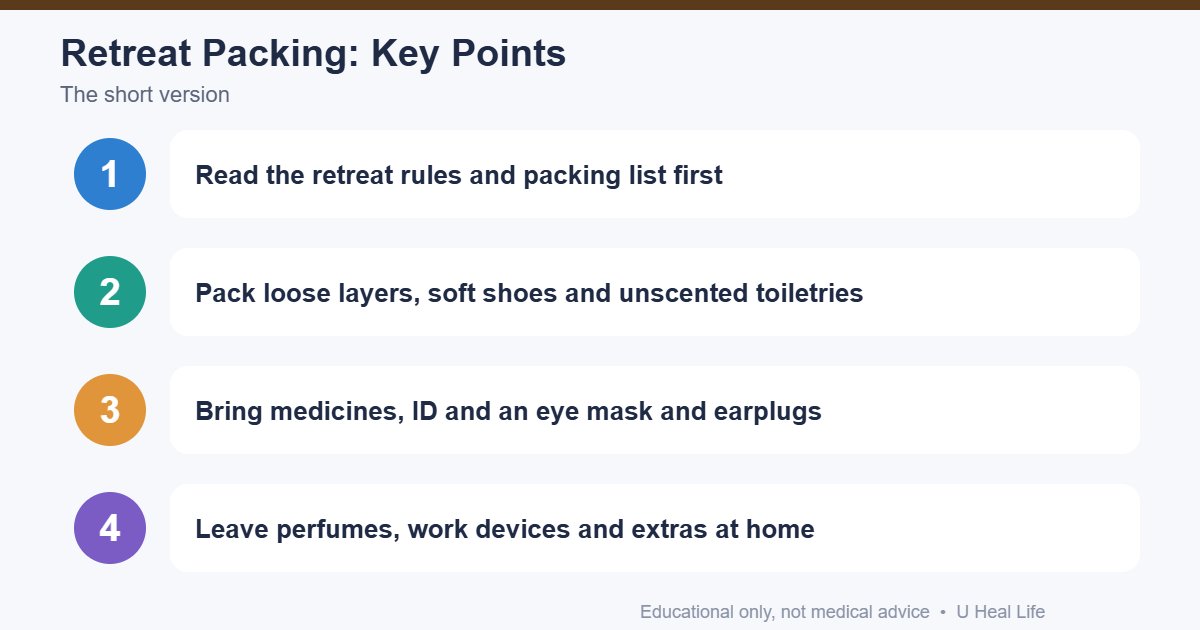
Table of Contents
First, Read the Retreat’s Packing List and Rules
Every retreat is different. Before you pack, read the “what to bring” page and the code of conduct. Strict silent courses, such as 10-day Vipassana retreats, ask students to give up phones, reading and writing, so check what is allowed. When in doubt, email the organizer.
What to Pack: Checklist
Clothing
- Loose, comfortable clothes you can move and sit in
- Layers for morning and evening (a sweater or shawl)
- Modest clothing if the center asks for it
- Comfortable socks and slip-on shoes (you may remove shoes often)
- Walking shoes if there are hikes
- Swimwear if the retreat has a pool, sea or hot springs
Rest and Comfort
- Eye mask and earplugs
- Small pillow or cushion if you want extra comfort
- Light blanket or scarf
- Reusable water bottle
Toiletries and Health
- Basic toiletries, preferably unscented (many retreats ask for this)
- Any prescribed medicines in original packaging
- Sunscreen, lip balm and hand cream
- Basic first-aid items and any personal health items
Documents and Money
- ID, booking confirmation and travel insurance details
- Some cash for tips or small purchases
- Emergency contact details written on paper
Optional
- Journal and pen (only if allowed)
- A mat or yoga towel (many retreats provide mats)
- Reusable bag and a small flashlight for evening walks
What to Leave at Home
| Item | Why |
|---|---|
| Strong perfumes | Many retreats ask for scent-free products |
| Work laptop | Helps you really switch off |
| Books and notebooks (for strict silent retreats) | Some courses do not allow reading or writing |
| Valuables and lots of jewelry | You do not need them |
| Heavy snacks or outside food | Some centers have food rules |
What About Your Phone?
Rules vary. Some retreats ask you to hand in your phone for the whole stay. Others allow it in your room. Tell family and work in advance that you will be offline, and share the retreat’s contact number for emergencies. If you struggle to unplug, our 10-minute evening routine to reduce stress can help you practice at home first.
Before You Go
- Practice 10 to 20 minutes of daily meditation. Try our simple mindfulness exercises.
- Sleep well in the week before you travel
- Tell the organizer about health needs and allergies
- Plan how you will get home calmly
- Read what is a silent retreat if this is your first time
Frequently Asked Questions About What to Pack for a Wellness Retreat
Should I bring a yoga mat?
Many retreats provide mats. Check the packing list.
Can I bring my phone to a silent retreat?
Often not. Strict courses ask students to give up phones. Always check.
What should I wear?
Loose, comfortable, modest layers that are easy to move in.
Do I need to bring food?
Usually not. Meals are normally included, and outside food may not be allowed.
What if I forget something?
Most retreats can help with basics, but ask before you go.
Helpful resource: Strict silent courses publish their rules, for example on dhamma.org.
Related Reading
- What Is a Wellness Retreat?
- What Is a Silent Retreat?
- How Much Does a Wellness Retreat Cost?
- Simple Mindfulness Exercises for Busy People
- 10-Minute Evening Routine to Reduce Stress
Disclaimer: This article is for general information only and is not medical or mental health advice. Prices, programs and availability change, so please check current details with each provider. If you are in crisis or thinking about harming yourself, call or text 988 (the Suicide & Crisis Lifeline in the US) or your local emergency number right away.