
How to Find a Therapist: A Step-by-Step Guide for Beginners
Starting therapy is a big step, and finding the right person can feel confusing. The good news is that there is a clear way to do it. This guide explains how to find a therapist step by step: the types of providers, where to search, what to ask and how to tell if it is a good fit.
By the U Heal Life editorial team. Last updated: October 2026. This is general information, not medical, legal or financial advice. We are not licensed clinicians.
Quick answer: To find a therapist, decide what you want help with, learn the main provider types, check your insurance or budget, search trusted directories, verify the license, and ask a few questions on a first call. Give the match a few sessions, and feel free to switch. Common providers include psychologists, licensed clinical social workers, licensed professional counselors and psychiatrists, who can prescribe medicine.
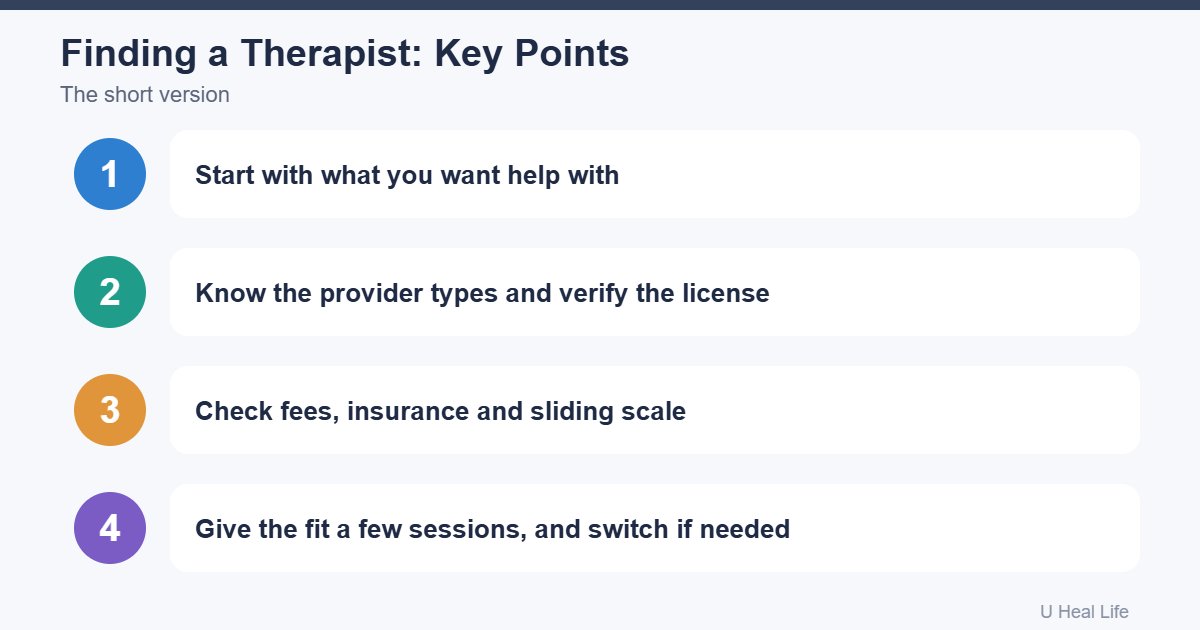
Table of Contents
Step 1: Think About What You Want Help With
You do not need a perfect label. Notice what you are struggling with, such as stress, sleep, grief, a life change or relationships. Also think about practical needs: online or in-person, evenings or weekends, and your budget.
Step 2: Know the Main Types of Providers
| Provider | Short description |
|---|---|
| Psychologist | Holds a doctoral degree and provides talk therapy and assessment. In most of the US, psychologists do not prescribe medicine |
| Licensed clinical social worker (LCSW) | Master’s-level provider who offers counseling and assessment |
| Licensed professional counselor (LPC) | Counselor trained to provide talk therapy |
| Marriage and family therapist (LMFT) | Works with individuals, couples and families |
| Psychiatrist | A medical doctor who can diagnose and prescribe medicine and may also provide therapy |
Titles and rules differ by state. The most important thing is that the person is licensed and you feel comfortable with them.
Step 3: Check Insurance and Costs
Call your insurer to ask what mental health services are covered and which therapists are in network. If you do not have insurance, read how much therapy costs without insurance and free and low-cost therapy options. Our insurance coverage guide also helps.
Step 4: Search in Trusted Places
- Your insurer’s provider directory
- Directories such as Psychology Today
- Open Path Collective for lower-fee therapy
- The SAMHSA treatment locator for community options
- Your doctor, a school or an employer program for referrals
- NAMI’s helpline at 1-800-950-NAMI for local support information
Step 5: Verify the License
Check your state licensing board’s website to confirm that the therapist’s license is active. If you plan to use online therapy, confirm the therapist can practice in your state. Read more in online therapy vs in-person therapy.
Step 6: Ask Questions on a First Call
- What is your experience with concerns like mine?
- What is your approach, and what will sessions look like?
- What are your fees, cancellation rules and payment options?
- Do you take my insurance or offer a sliding scale?
- How soon can we start, and how often will we meet?
Step 7: Give the Fit a Few Sessions
Feeling comfortable matters. After a few sessions, ask yourself whether you feel heard and whether you understand the plan. If not, it is normal to look for someone else.
Signs to Look for Another Provider
- They dismiss or judge you
- They promise a quick cure
- They pressure you to buy products or extra services
- You cannot confirm their license
If you are in crisis or thinking about harming yourself, do not wait for an appointment. Call or text 988 in the US or your local emergency number.
Frequently Asked Questions: How To Find A Therapist
What kind of therapist should I see?
Start with a licensed therapist who has experience with what you want help with. Fit matters more than the exact title.
How long does it take to find one?
It can take a few calls or emails. Some therapists have waitlists, so contact several.
Do I need a referral?
Often not for therapy, but check your insurance plan.
What if I cannot afford therapy?
Look at sliding scale options, clinics and community programs in our low-cost therapy guide.
Is it okay to change therapists?
Yes. A good fit is important, and a good therapist will understand.
Helpful resource: See the Mayo Clinic’s guide to mental health providers.
Related Reading
- How Much Does Therapy Cost Without Insurance?
- Online Therapy vs In-Person Therapy
- Does Health Insurance Cover Therapy?
- 8 Signs You Need a Mental Health Day
- How to Stop Overthinking at Night
Disclaimer: This article is for general information only and is not medical, mental health, tax or insurance advice. Prices, rules and availability change, so please check current details with each provider or plan. If you are in crisis or thinking about harming yourself, call or text 988 (the Suicide and Crisis Lifeline in the US) or your local emergency number right away.