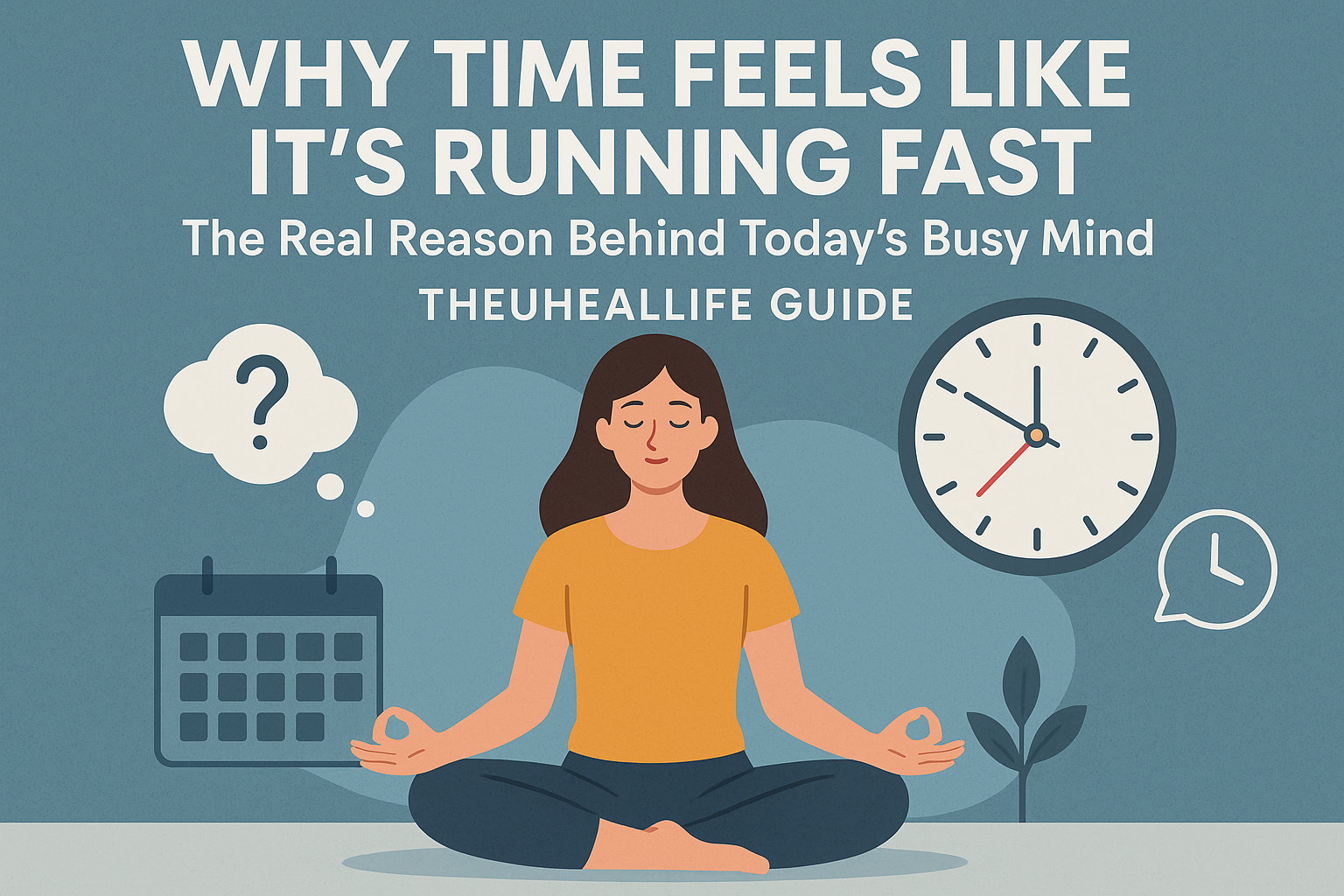

Why Time Feels Like It’s Running Fast: The Real Reason Behind Today’s Busy Mind – TheUHealLife Guide

Introduction: Why Does Time Feel Faster These Days?

Almost everyone today says the same thing:
“I don’t even notice when the day ends… months are passing so fast.”

But is time actually speeding up, or is our mind creating this feeling?

This TheUHealLife Guide explains the real psychology behind why time feels fast — and what you can do to slow it down.


Is Time Really Moving Fast? The Truth

Scientifically, time never changes its speed.
One minute is always 60 seconds — no matter how busy or free you are.

So the real question is:
Why does it feel like time is running?

The answer lies inside the brain.


1. The Busy Mind Effect: Mental Overload Blurs Time

Today’s lifestyle has overloaded our brain with information:

  • Social media
  • Messages
  • Work pressure
  • News
  • Constant notifications
  • Family responsibilities

Your brain is processing too much, too fast.

When the mind is overloaded, time feels compressed — as if hours pass in minutes.

This phenomenon is called cognitive overload.


2. Repetitive Routine Makes Time Feel Shorter

As children, time felt slow because everything was new — new schools, new friends, new experiences.

New experiences create strong memories, and this makes time feel long.

But as adults, our routine becomes repetitive:

  • Same work
  • Same daily habits
  • Same routes
  • Same environment

When life becomes predictable, days feel shorter and time feels fast.


3. Digital Distraction Speeds Up Your Perception of Time

Short-form content (reels, shorts, TikTok-style videos) trains your brain to expect fast stimulation.

You scroll for 10 minutes — but your brain feels like only 1–2 minutes passed.

This is called digital time compression.

Overuse of:

  • Reels
  • YouTube shorts
  • Social media
  • Endless scrolling

…makes your internal clock lose accuracy.


4. Stress & Anxiety Make Time Run Mentally Faster

When your mind is stressed:

  • Thoughts overlap
  • Focus breaks
  • You lose track of time
  • You don’t remember the day properly

A busy mind = time feels fast
An anxious mind = time feels blurred

Stress steals your sense of presence.


5. Poor Sleep Disrupts the Internal Clock

When you sleep less or sleep poorly:

  • Your brain processes the day faster
  • Memory becomes shallow
  • You feel that the day slipped away

Good sleep is essential to normalize your sense of time.


TheUHealLife Tips: How to Make Time Feel Slow Again

These simple practices will help you regain clarity and slow down your internal clock.


1. Add “New Moments” to Your Daily Life

New experiences make time feel longer.

Try:

  • A new walking route
  • A new hobby
  • A new activity
  • A new recipe
  • Visiting a new place (even nearby)

Novelty = slower time perception.


2. Reduce Screen Overload

Set “no-phone windows” for 20–30 minutes every few hours.

This stops digital time compression.


3. Practice 5 Minutes of Mindfulness

Being present slows the mind.

Try this simple breathing technique:

  • Inhale 4 seconds
  • Hold 4 seconds
  • Exhale 4 seconds

Mindfulness stretches your experience of the moment.


4. Break Your Day Into Segments

Instead of repeating the same routine all day, divide time into phases:

  • Morning
  • Afternoon
  • Evening

Each segment should have different types of tasks.
This adds variety → time feels slower.


5. Improve Your Sleep Cycle

Healthy sleep is one of the strongest ways to rebalance your internal sense of time.

Tips:

  • Avoid screens 1 hour before sleeping
  • Eat light at night
  • Target 7–8 hours of sleep

Conclusion: Time Isn’t Running Fast — Your Mind Is Overloaded

Fast lifestyle, continuous stress, digital distractions, and repetitive routines make the brain feel like time is speeding up.

But when you create space in your mind and introduce new moments,
you can slow down your experience of life.

This is the core message of TheUHealLife:
Heal the mind, slow the moment, and return to conscious living.

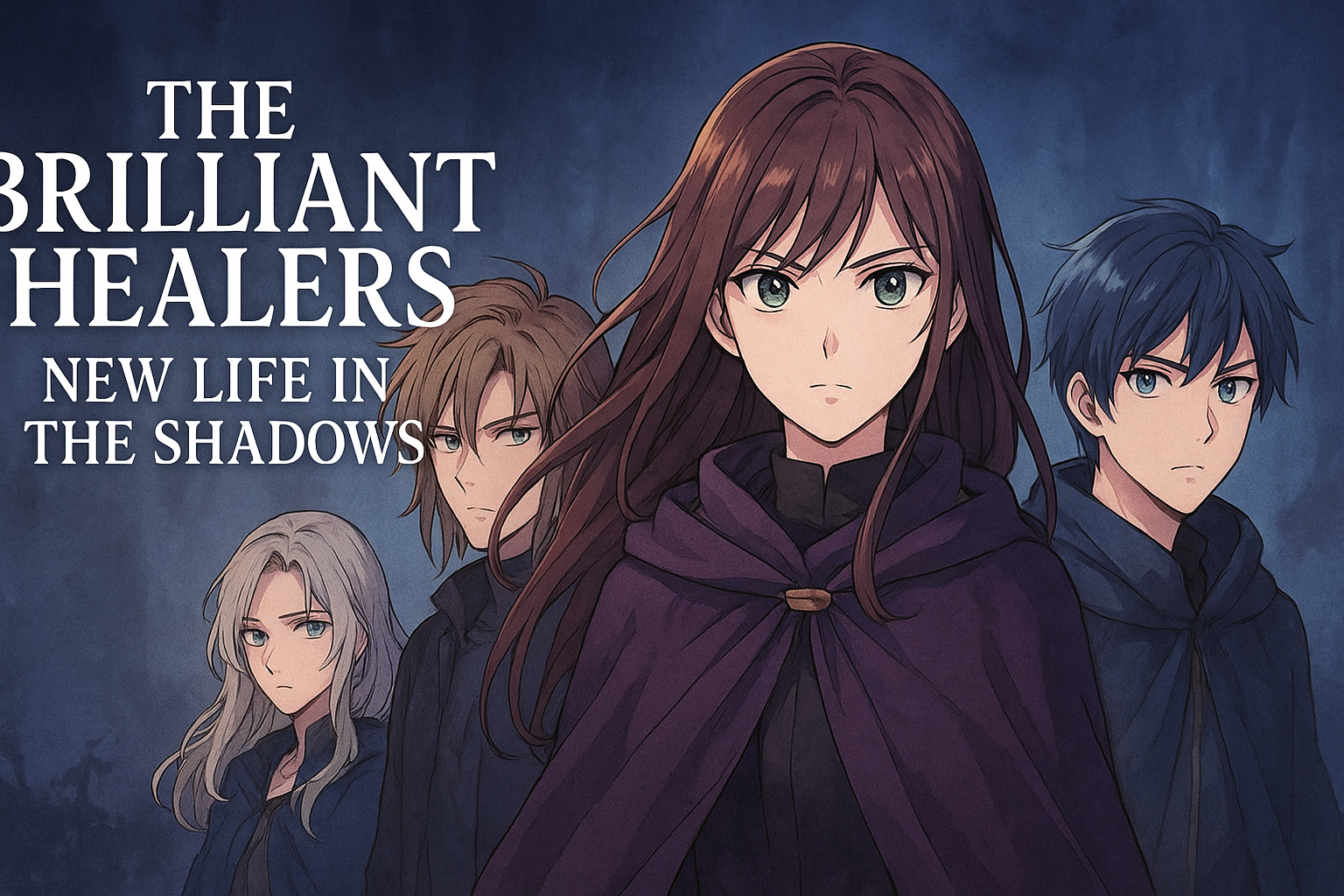
The Brilliant Healers: New Life in the Shadows – Story Overview & Why It’s Trending

A beginner-friendly guide to the series everyone is talking about

“The Brilliant Healers: New Life in the Shadows” has quickly become one of the most searched fantasy titles online, capturing the attention of fans who love mystery, magic, and emotionally rich storytelling. Whether you’re discovering it for the first time or trying to understand why it’s suddenly trending, this guide breaks down everything you need to know — without spoilers.


What Is “The Brilliant Healers: New Life in the Shadows” About?

At its core, The Brilliant Healers is a fantasy story that blends supernatural healing abilities with deep human emotion. The plot follows a group of gifted healers who possess extraordinary powers, yet they choose to live hidden from society. Their abilities can cure deadly illnesses, mend injuries instantly, and even restore lost memories — but they carry a heavy cost.

After a major incident forces them out of the public eye, the healers begin a new life in the shadows, where survival depends on secrecy, trust, and confronting their past mistakes. As danger resurfaces, these hidden healers must decide whether to stay concealed or return to the world that once feared them.

The story combines drama, action, and moral dilemmas, making it intriguing for a wide audience.


A Quick Story Overview (Spoiler-Free)

Without revealing key plot points, the series explores several major themes:

1. Hidden Powers & Secret Identities

The healers’ abilities make them valuable — and dangerous. Their decision to hide sets the foundation for suspense and emotional conflict.

2. A Dark Past They Can’t Escape

Something happened before the story begins, forcing the healers into the shadows. The mystery around this event keeps readers hooked.

3. Emotional Bonds & Team Dynamics

The main characters rely on each other for survival. Their relationships add heart and depth to the storyline.

4. Villains Behind the Scenes

Powerful enemies are searching for the healers, creating tension and building the series’ central conflict.

5. A Journey of Redemption

One of the strongest elements of the story is how each character attempts to heal not just others, but themselves.


Why Is “The Brilliant Healers” Trending Right Now?

The sudden spike in searches and online discussions comes from several factors:

1. A Unique Concept in the Fantasy Genre

Healing powers are usually a side ability in fantasy stories — rarely the main focus. This fresh twist draws in fans who want something different.

2. Strong Emotional Storytelling

The series deals with trauma, trust, sacrifice, and inner conflict, making it relatable and gripping.

3. Rising Popularity on Social Media

TikTok, Reddit, and anime/manga forums have played a major role in boosting interest. Fans are sharing fan art, theories, and discussions, increasing its visibility.

4. Rumors of an Anime Adaptation

Although not yet confirmed, speculation about an upcoming anime version has sparked major excitement.

5. Perfect Timing With Global Fantasy Trends

Fantasy and supernatural series are dominating entertainment platforms. “The Brilliant Healers” fits perfectly into what audiences currently love.


Who Should Read or Watch This Series?

You will enjoy “The Brilliant Healers: New Life in the Shadows” if you like:

  • Emotional fantasy stories
  • Mystery and hidden identities
  • Team-based character development
  • Healing powers, supernatural worlds
  • Dramatic storytelling with dark twists

It’s beginner-friendly and easy to get into, even if you’re new to the fantasy genre.


Final Thoughts

“The Brilliant Healers: New Life in the Shadows” has earned its growing popularity because it offers something unique — a fantasy world centered on healers living in hiding, combined with emotional depth and gripping mystery. As more fans discover it, the buzz around the series continues to grow, and it’s likely to become one of the standout fantasy titles of the year.

Whether you’re exploring it for entertainment, curiosity, or to join the global fan community, this is the perfect time to dive into the world of the brilliant healers.

Mind Your Business: What the New TV Show Reveals About Modern Entrepreneurship in America

In recent years, American audiences have developed a growing interest in entrepreneurship, side hustles, innovation, and financial independence. The new television show “Mind Your Business” arrives at the perfect moment, capturing the energy, urgency, and challenges of modern business life in the United States. More than just entertainment, the show offers a realistic look at how American entrepreneurs think, work, and survive in a highly competitive market.

This deep dive explores what “Mind Your Business” reveals about today’s U.S. business culture— from the rise of self-made founders to the influence of technology and the shifting expectations of customers.


1. The Rise of the Self-Made Entrepreneur

One of the biggest themes showcased in Mind Your Business is the rise of self-made success. Unlike traditional business shows of the past, this series highlights:

  • First-time business owners
  • Solo founders
  • Underrepresented entrepreneurs
  • Creators building careers from social media
  • Young founders entering the startup world without formal business education

This reflects a major trend in America: anyone with an idea, passion, and determination can start their own business. The show inspires viewers to take the first step, even if they don’t have big investments or connections.


2. Technology Is the Heart of Modern Business

From online stores to digital marketing, Mind Your Business emphasizes the role of technology in shaping success. The show mirrors real U.S. business culture by highlighting:

  • The importance of strong social media presence
  • Using AI tools for automation
  • Online branding and storytelling
  • E-commerce growth
  • Remote work and digital collaboration

In America today, businesses that don’t adapt to digital tools struggle to compete. The show effectively demonstrates how tech-savvy entrepreneurs gain a massive edge.


3. The Reality of Financial Pressure

Unlike overly glamorous business shows, Mind Your Business does not hide the financial challenges that real entrepreneurs face. It highlights:

  • Cash flow issues
  • Rising cost of living
  • Inflation pressures
  • The difficulty of getting funding
  • Managing debt and investments

This reflects the true business environment in the USA, where entrepreneurs must be smart, flexible, and resilient to survive financially.


4. Customer Expectations Are Higher Than Ever

Modern consumers demand more transparency, quality, and authenticity. The show depicts business owners working hard to:

  • Deliver top-tier customer service
  • Respond to online reviews
  • Build trust through transparency
  • Offer personalized products and experiences

This mirrors the U.S. market, where customers often choose brands based on values, online reputation, and emotional connection rather than price alone.


5. Mental Health and Work-Life Balance Matter

One of the most refreshing aspects of Mind Your Business is its honest portrayal of burnout, stress, and pressure. Today’s U.S. entrepreneurs face:

  • Long work hours
  • High competition
  • Social media comparison
  • Difficulty balancing personal life and business

The show encourages founders to take care of their emotional well-being and highlights the importance of support systems, mentorship, and healthy routines.


6. Diversity and Inclusion Are Shaping the Future

America’s business landscape is becoming more diverse, and Mind Your Business reflects this shift. It showcases:

  • Women entrepreneurs
  • Minority-owned businesses
  • Immigrant founders
  • LGBTQ+ innovators
  • People from different socioeconomic backgrounds

This diversity adds richness and authenticity to the show, making it relatable to a wide U.S. audience and inspiring individuals who have traditionally faced barriers in business.


7. Entrepreneurial Storytelling Drives Brand Success

One standout feature of the show is the storytelling power behind every business. In the U.S. market, customers want to understand the why behind a brand. The series highlights how entrepreneurs use:

  • Personal stories
  • Emotional connections
  • Mission-driven branding
  • Social impact initiatives

In today’s America, storytelling is no longer optional—it’s a key factor that separates successful startups from the rest.


Conclusion: A Fresh Reflection of America’s Business Evolution

Mind Your Business is more than a television show; it is a realistic mirror of modern entrepreneurship in America. It captures the struggles, innovation, diversity, and spirit that define today’s business culture.

For U.S. entrepreneurs—whether established or just starting—this show provides valuable insight into what it really takes to succeed in the current economy. From embracing technology and building strong customer relationships to prioritizing mental health and inclusivity, Mind Your Business highlights the shifting priorities shaping the future of American business.

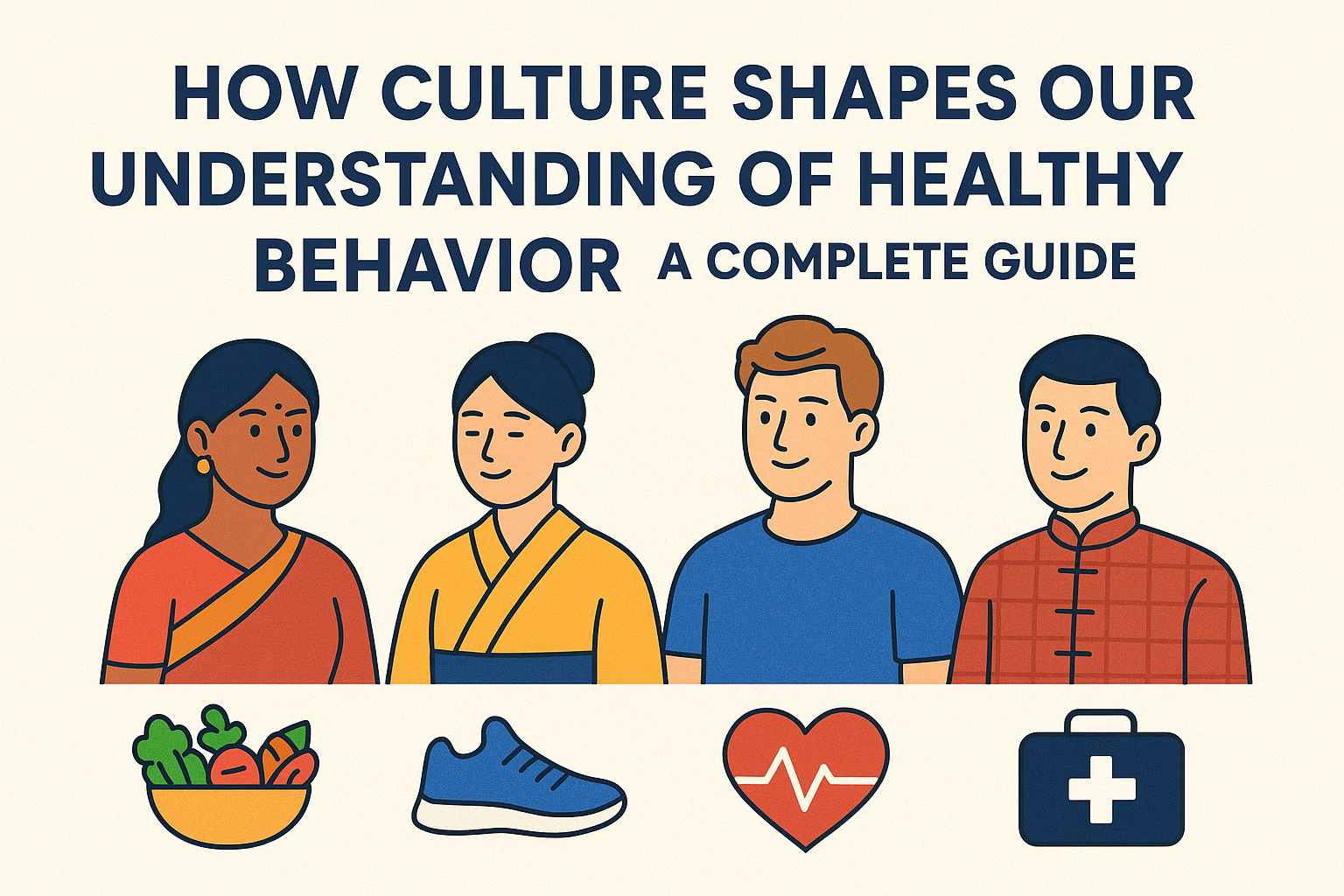
How Culture Shapes Our Understanding of Healthy Behavior:
How Culture Shapes Our Understanding of Healthy Behavior: A Complete Guide

Health is not just about eating right, exercising, or visiting the doctor. It is also shaped by the culture we are born into, the society we grow up in, and the values we learn from family, community, and religion.
Culture plays a powerful role in telling us what is “right,” what is “normal,” and what is “healthy.”

In this complete guide, we’ll explore how culture shapes healthy behavior, why people from different cultures follow different health practices, and how understanding cultural viewpoints can improve our personal well-being.


What Is Culture?

Culture includes:

  • Beliefs
  • Traditions
  • Values
  • Language
  • Food habits
  • Social rules
  • Lifestyle patterns

These influence how people think, behave, and make decisions—including decisions about their health.


How Culture Influences Healthy Behavior

Culture affects health behaviors in many ways. Let’s break them down:

1. Food Habits and Diet Choices

Every culture has unique food traditions:

  • Indians focus on spices, lentils, and vegetarian meals.
  • Japanese meals include fish, rice, and green tea.
  • Mediterranean culture emphasizes olive oil, nuts, and fresh vegetables.

These cultural diets influence:

  • Digestion
  • Heart health
  • Immunity
  • Weight

For example, the Japanese diet is associated with the longest life expectancy in the world, while Mediterranean food is known for improving heart health.


2. Physical Activity and Daily Routine

Culture determines how active people are:

  • In Western countries, gym workouts are common.
  • In Asian cultures, morning walks, yoga, and tai chi are part of daily life.
  • Rural communities stay active through daily physical labor.

Culture shapes what we consider “exercise.”


3. Family Structure and Emotional Health

Mental health is strongly influenced by cultural values:

  • Some cultures encourage open emotional expression.
  • Others consider discussing feelings a sign of weakness.
  • Many cultures value joint families, which provide emotional support.
  • Individualistic cultures encourage independence.

These differences shape how people:

  • Handle stress
  • Communicate
  • Seek help
  • Solve problems

4. Attitudes Toward Healthcare

Cultural beliefs influence how often people visit doctors or seek treatment.

Examples:

  • Some cultures trust herbal remedies more than modern medicine.
  • Others rely on preventive checkups.
  • Many communities use home remedies passed down for generations.

This affects how quickly people seek help and how well they recover.


5. Social Norms and Health Behavior

Culture tells us what is acceptable behavior.

For example:

  • Some cultures discourage smoking and alcohol.
  • Others see alcohol as part of celebration.
  • Some communities promote early rising and disciplined routines.
  • Others follow late-night lifestyles.

These habits influence long-term physical and mental health.


Why Different Cultures Have Different Ideas of Healthy Behavior

Because every culture has unique:

  • Climate
  • Historical background
  • Religious beliefs
  • Environment
  • Social practices

For example:

  • Cold countries prefer high-calorie meals for warmth.
  • Tropical countries prefer light and hydrating foods.
  • Cultures with strong religious traditions may avoid certain foods.

There is no single definition of healthy behavior. It changes from place to place.


Examples of Cultural Health Practices Around the World

India

  • Yoga
  • Ayurveda
  • Eating fresh, home-cooked meals
  • Spices for healing

Japan

  • Eating slowly (Hara Hachi Bu)
  • Minimal processed foods
  • Walking daily

Mediterranean Countries

  • Olive oil-based diets
  • Social eating (improves emotional health)

China

  • Tai Chi
  • Traditional Chinese medicine
  • Herbal teas

Each culture contributes valuable knowledge to healthy living.


How Understanding Culture Can Improve Your Health

Here’s how you can benefit from cultural awareness:

✔ Adopt the best health habits from different cultures

Yoga for flexibility, Mediterranean diet for heart health, Japanese eating habits for longevity.

✔ Reduce stress by respecting cultural differences

Understanding others prevents conflict and improves relationships.

✔ Improve mental health

Recognizing cultural impacts helps you understand your emotional patterns better.

✔ Build better communication skills

You become more empathetic and culturally aware.


How to Create Healthy Behavior in a Multi-Cultural World

We live in a time where people interact across cultures daily.
To build healthy habits:

  1. Stay open-minded
    Different cultures have different priorities—learn from them.
  2. Choose what works best for your body
    Every diet or lifestyle doesn’t suit everyone.
  3. Blend traditional and modern methods
    For example, yoga + gym, Ayurveda + modern checkups.
  4. Avoid cultural stereotypes
    Healthy behavior is personal, not dictated by society alone.

Final Thoughts

Culture deeply shapes how we understand healthy behavior—what we eat, how we think, how we exercise, and how we take care of ourselves.
By learning from different cultures, we can adopt balanced, holistic, and healthier lifestyles.

Whether it’s mindfulness from Asian cultures, nutrition from Mediterranean regions, or active living from Western countries—every culture carries wisdom for better health.

Q1: How does culture influence health behavior?

Culture shapes food choices, exercise habits, emotional expression, social rules, and how often people seek medical help.

Q2: Why do different cultures have different ideas of healthy living?

Because each culture has unique climate conditions, traditions, religious beliefs, and historical influences.

Q3: What is an example of cultural health behavior?

Japan’s “Hara Hachi Bu” encourages people to eat only until 80% full, which supports weight control and longevity.

Q4: How can understanding culture improve health?

It helps you adopt better habits, reduce stress, improve relationships, and make balanced lifestyle decisions.

Q5: What cultural practices promote a healthy lifestyle?

Yoga, Mediterranean diet, tai chi, mindful eating, herbal remedies, and social-community support systems.

basic unit of life
The Cell: The Basic Structural and Functional Unit of Life

Every living organism — from the tiniest bacterium to the largest whale — is built from one or more cells. Cells are often called the basic unit of life because they are the smallest structures capable of performing all the essential functions that define living things. But what exactly does that mean? Let’s explore why the cell holds this title, the differences between types of cells, and the key principles of the cell theory that form the foundation of modern biology.


🧫 What Is the Basic Unit of Life?

The cell is the basic unit of life. It is the smallest structure that can carry out all processes necessary for life — including metabolism, growth, response to stimuli, and reproduction.
Just as bricks form the foundation of a building, cells form the foundation of every living organism.

There are two main types of organisms:

  • Unicellular organisms (like bacteria) consist of a single cell.
  • Multicellular organisms (like humans, plants, and animals) are made up of many specialized cells that perform unique functions.

🔬 Why Is the Cell Called the Basic Unit of Life?

The cell is called the basic unit of life because:

  1. All living things are made of cells. Whether single-celled or multicellular, cells are the building blocks of all organisms.
  2. Cells perform vital life functions. Every process that keeps an organism alive — from energy production to waste removal — happens inside cells.
  3. New cells come from pre-existing cells. This means life continues through cellular reproduction.

In simple terms, without cells, life would not exist.


⚖️ What Is the Difference Between Prokaryotic and Eukaryotic Cells?

Cells can be classified into two major categories based on their structure:

FeatureProkaryotic CellsEukaryotic Cells
NucleusNo true nucleus (DNA floats freely in the cytoplasm)Has a well-defined nucleus enclosed by a membrane
OrganellesFew or no membrane-bound organellesContains many organelles (like mitochondria, Golgi apparatus, etc.)
ExamplesBacteria and ArchaeaPlants, Animals, Fungi, and Protists
SizeSmaller (1–10 µm)Larger (10–100 µm)

In summary:
Prokaryotic cells are simpler and evolved earlier, while eukaryotic cells are more complex and make up most of the organisms we see around us.


🧠 What Is the Basic Structural and Functional Unit of Life?

The cell serves both as the structural unit (it gives shape and form to living beings) and the functional unit (it carries out all life activities).
Just like organs in your body perform specific roles, different parts of a cell — such as the nucleus, cytoplasm, and cell membrane — work together to maintain life.


📜 What Are the Three Parts of the Cell Theory?

The cell theory is one of the most important principles in biology. It was developed in the 19th century by scientists Matthias Schleiden, Theodor Schwann, and Rudolf Virchow.

The three parts of the cell theory are:

  1. All living organisms are made up of one or more cells.
  2. The cell is the basic structural and functional unit of life.
  3. All cells arise from pre-existing cells.

This theory revolutionized biology by proving that all life shares a common building block — the cell.


🌱 Conclusion

The cell truly is the basic unit of life — the foundation upon which all living beings are built. Whether you’re studying single-celled organisms like bacteria or complex multicellular beings like humans, understanding how cells work helps us understand how life itself functions.

From the discovery of the first cell to the study of advanced cell biology today, this tiny unit continues to be at the heart of all biological science.


what percentage of us children aged 3-17 have a mental
What Percentage of U.S. Children Aged 3–17 Have a Diagnosed Mental Health Condition in 2025?”

Mental health is increasingly recognised as a key component of overall health—especially among children. For parents, educators and policy-makers in the U.S., a critical question is: What percentage of children aged 3–17 are diagnosed with a mental, emotional, developmental or behavioural condition? Understanding this figure—and how it’s changing—is essential for planning services, reducing stigma and supporting early-intervention efforts.


What the Data Shows: Prevalence Among Ages 3-17

Overall prevalence

  • According to the Centers for Disease Control and Prevention (CDC), 11% of children ages 3–17 had a current, diagnosed anxiety disorder in 2022-23 (9% of males; 12% of females). CDC
  • The same data show 8% of children 3–17 had a current, diagnosed behaviour disorder and 4% had a current, diagnosed depression. CDC
  • More broadly, data show that “more than 1 in 4 children age 3-17 years had a current, diagnosed mental, emotional, developmental or behavioural (MEDB) condition” in 2022, according to the Health Resources and Services Administration (HRSA). mchb.hrsa.gov
  • Survey data indicate that about 25.8% of children aged 3–17 had one or more reported MEDB problems in a 2022 sample. nschdata.org+2CDC+2
  • Between 2016 and 2021, prevalence of “mental, behavioural and developmental disorders” (MBDD) for ages 3-17 increased from 25.3% to 27.7%. CDC

Interpretation for 2025

Although exact 2025-only data may not yet be fully released, the most current figures (2022-23) suggest about one in four children aged 3-17 in the U.S. has been diagnosed with some form of mental, emotional, developmental or behavioural condition.
Given the trend of rising prevalence (see above), it is reasonable to project that by 2025 the figure will be at or above ~25-30%.


Breakdown by Condition & Age Group

  • Anxiety is the most commonly diagnosed specific condition in children 3-17: ~11%. CDC
  • Behaviour disorders: ~8%. CDC
  • Depression: ~4% in this age range. CDC+1
  • In adolescents ages 12-17, a recent survey shows ~20.3% had a current, diagnosed mental or behavioural health condition (2023 data). mchb.hrsa.gov

Trends: What’s Changing

  • The prevalence of MBDD among ages 3-17 increased from 25.3% in 2016 to 27.7% in 2021. CDC
  • Among adolescents 12-17, diagnosed conditions increased ~35% between 2016 and 2023 (from ~15.0% to ~20.3%) with particularly large jumps in anxiety (+61%) and depression (+45%). mchb.hrsa.gov
  • The data suggest that children in certain demographics (poverty, caregiver mental health issues, etc.) may have higher risk. NCBI+1

Why This Matters

Early-life impact

Mind and behaviour issues in childhood can affect school performance, social relationships, and long-term health. Early diagnosis and support can improve outcomes.

Service & access gap

Even though a significant percentage of children have diagnosed conditions, many do not receive adequate counselling or mental health services. mchb.hrsa.gov+1

Public health policy & education

Reliable prevalence statistics are key for funding mental health programs, school-based services, and community outreach.

Parental/educator awareness

Understanding “1 in 4 children may have a mental/emotional/behavioural condition” helps reduce stigma and encourages families to seek help early.


Implications for Parents, Schools & Policymakers

  • For parents: Know the signs (anxiety, behaviour changes, mood shifts) and seek evaluation early if you suspect an issue.
  • For schools: Given that ~25% of students may be affected, school programmes for screening, counselling, and referral are essential.
  • For policymakers: Allocate resources for child mental health services, integrate behavioural health in pediatric care, and support underserved communities.
  • For service providers: Expand access (especially telehealth), emphasise early-intervention, and tailor services for younger age groups (3-7, 8-12, etc.).

Challenges & Areas for Improvement

  • Diagnosis vs. treatment gap: Many children who are diagnosed still do not receive timely or adequate services. CDC+1
  • Data lag & variation: Some metrics lag by 1-2 years, and different studies define “mental, emotional, developmental or behavioural condition” differently, making direct comparisons tricky.
  • Social determinants: Factors like poverty, caregiver stress, housing instability and access to care play a big role in outcomes. Johns Hopkins Public Health
  • Stigma & access: Even with increasing awareness of mental health issues, stigma and lack of providers (especially in rural areas) remain barriers.

Conclusion

In the U.S., among children aged 3-17, the prevalence of diagnosed mental, emotional, developmental or behavioural conditions is about 1 in 4 (≈ 25%) or more based on the most recent data (2022-23). With rising trends and evolving awareness, the figure by 2025 is likely to be at or slightly above that threshold.
This high prevalence underscores the importance of early detection, intervention, access to care and policy support. For anyone (parents, educators, policymakers) concerned with child wellbeing, these numbers are a call to action: mental health is not a niche concern—it’s central to child development, education and long-term outcomes.

Behavioral Health Trends 2025 – Sagent Behavioral Health
7 Key Trends in U.S. Behavioral Health in 2025 & How Sagent Behavioral Health Fits In

The U.S. behavioral health landscape is evolving faster than ever. Rising awareness of mental well-being, new digital tools, and integrated care models are reshaping how Americans access therapy and psychiatric care. In this changing environment, Sagent Behavioral Health is emerging as a key player—uniting multiple leading regional brands under one name and creating a nationwide network of accessible, compassionate behavioral health services.

In this blog, we’ll explore seven major trends shaping behavioral health in 2025 and how Sagent Behavioral Health aligns with these transformations.


1. Expansion of Telehealth and Virtual Therapy

The pandemic accelerated telehealth adoption, and in 2025 it remains a cornerstone of behavioral care. Virtual therapy sessions make it easier for patients in rural and urban areas alike to connect with licensed professionals from home.

Sagent Behavioral Health has integrated advanced telehealth platforms, ensuring seamless access to therapy, psychiatry, and medication management—bridging the gap for clients who prefer remote care.

Keywords: telehealth behavioral health, virtual therapy USA, Sagent Behavioral Health telehealth


2. Focus on Integrated Physical and Mental Health Care

A growing body of research shows the link between physical and mental health. Clinics are now offering integrated care models—combining behavioral health with primary care to treat the whole person.

Sagent Behavioral Health embraces this approach, collaborating with medical professionals to ensure patients receive comprehensive, coordinated care that addresses both mental and physical wellness.

Keywords: integrated care behavioral health, mind-body wellness, Sagent Behavioral Health integrated model


3. Rise in Youth and Adolescent Mental Health Services

An alarming increase in anxiety, depression, and social stress among youth has pushed the need for specialized adolescent behavioral care.

Sagent Behavioral Health is responding with dedicated child and adolescent programs, combining therapy, family counseling, and evidence-based interventions to support young people’s mental health in schools and communities.

Keywords: youth mental health trends 2025, adolescent therapy programs, Sagent Behavioral Health youth care


4. Increasing Use of Technology and Data-Driven Insights

AI, data analytics, and digital tracking tools are helping therapists personalize treatment plans. In 2025, the behavioral health sector continues to adopt technology for progress tracking, medication management, and real-time assessments.

Sagent Behavioral Health uses data-driven tools to enhance patient outcomes, streamline care coordination, and provide measurable progress updates to both patients and clinicians.

Keywords: behavioral health technology, AI in therapy, data-driven mental health, Sagent Behavioral Health innovation


5. Growing Emphasis on Accessibility and Affordability

Behavioral health has historically been difficult to access due to cost, insurance limits, and stigma. Now, leading networks like Sagent Behavioral Health are expanding services to more regions, offering in-person and online sessions that are affordable and insurance-friendly.

By uniting more than 1,600 clinicians under one brand, Sagent improves efficiency and access—helping thousands of Americans find care without barriers.

Keywords: affordable mental health care USA, behavioral health access, Sagent Behavioral Health locations


6. Focus on Clinician Support and Workforce Expansion

The shortage of licensed behavioral health professionals has become a national concern. Providers are now focusing on training, retention, and clinician well-being to sustain care quality.

Sagent Behavioral Health stands out by supporting its extensive clinician network through ongoing professional development, flexible scheduling, and strong community collaboration—ensuring both provider and patient satisfaction.


7. Emphasis on Holistic and Preventive Mental Health

Prevention-focused care—such as mindfulness, stress management, and early intervention—is replacing crisis-based models.

Sagent Behavioral Health incorporates holistic and preventive strategies, promoting wellness before conditions worsen. Its services go beyond therapy to include mindfulness-based programs, lifestyle coaching, and integrative approaches to emotional resilience.

Conclusion

The year 2025 marks a new era for behavioral health in the U.S.—where technology, accessibility, and integration redefine how we understand and manage mental wellness.

With its innovative approach, Sagent Behavioral Health is at the forefront of this transformation—empowering individuals and families through accessible, data-driven, and compassionate mental health care.

If you’re exploring modern, patient-centered behavioral care, Sagent Behavioral Health represents the future of mental wellness—uniting care, compassion, and technology to create lasting change.

Reclaim Wellness Carmel
How Reclaim Wellness Carmel Empowers You to Take Back Your HealthWellnessHow Reclaim Wellness Carmel Empowers You to Take Back Your Health

In today’s fast-paced world, most people focus on treating symptoms instead of addressing the real cause of their health challenges. But at Reclaim Wellness Carmel, the philosophy is different. This leading holistic wellness center in Carmel, Indiana helps individuals take back control of their health through a root-cause, integrative approach that focuses on long-term healing, not temporary relief.

🌿 The Reclaim Wellness Philosophy: Heal from the Inside Out

At Reclaim Wellness Carmel, wellness isn’t just about the absence of illness — it’s about achieving balance in body, mind, and spirit. The center’s approach is based on functional medicine and holistic care, combining modern science with natural healing methods.

Rather than prescribing quick fixes, the expert team looks at the whole person — lifestyle, nutrition, mental health, and environment — to uncover what’s truly affecting your wellbeing. This personalized care model helps restore balance and empowers you to become an active participant in your healing journey.

💪 Key Services That Help You Reclaim Your Health

Reclaim Wellness Carmel offers a wide range of services designed to improve vitality, energy, and mental clarity. Each program is tailored to meet the specific needs of every individual.

1. Functional Medicine & Root-Cause Diagnosis

Through advanced lab testing and health assessments, the team identifies the underlying factors behind chronic fatigue, hormonal imbalance, gut issues, and inflammation. The goal is to correct these imbalances naturally and sustainably.

2. IV Therapy & Nutrient Optimization

For those dealing with nutrient deficiencies or low energy, IV therapy provides a direct boost of vitamins, minerals, and hydration. This therapy supports immunity, enhances metabolism, and promotes recovery from stress or illness.

3. Weight Management & Metabolic Health

Instead of crash diets or fad solutions, Reclaim Wellness focuses on long-term metabolic balance. Customized nutrition guidance, body composition tracking, and lifestyle support help you lose weight while improving overall wellness.

4. Hormone Optimization & Anti-Aging Treatments

Hormonal imbalance is one of the most common yet overlooked issues affecting both men and women. The clinic provides bioidentical hormone replacement therapy and anti-aging programs to restore vitality, improve sleep, and enhance mood.

5. Mind-Body Therapies & Stress Management

Emotional health plays a crucial role in overall wellness. Mind-body therapies, meditation guidance, and stress-relief programs help patients reduce anxiety, improve mental clarity, and build emotional resilience.

🌸 Why Choose Reclaim Wellness Carmel

  • Personalized care: Every treatment plan is tailored to your body and lifestyle.
  • Integrative approach: Combines traditional medicine, nutrition, and holistic therapies.
  • Root-cause focus: Addresses underlying issues, not just symptoms.
  • Expert practitioners: A team of skilled professionals with years of experience in integrative health.
  • Community-centered care: A welcoming, supportive environment where your health journey truly matters.

🌞 The Power to Reclaim Your Health Starts with You

Taking back control of your health is not about short-term results — it’s about sustainable change. Reclaim Wellness Carmel gives you the tools, guidance, and ongoing support to live a healthier, more balanced life.

If you’ve been struggling with fatigue, stress, or unexplained health issues, it’s time to stop managing symptoms and start reclaiming your vitality.

👉 Visit Reclaim Wellness Carmel today to begin your journey toward true healing and holistic wellness.

Jackie Robinson: How One Man Changed Baseball Forever

Jackie Robinson’s story is more than a chapter in baseball history — it’s a story about courage, equality, and the power of determination.
When Jackie Robinson stepped onto the field for the Brooklyn Dodgers on April 15, 1947, he did more than just play baseball. He shattered the color barrier in Major League Baseball (MLB) and changed the course of American sports and civil rights forever.

Today, more than 75 years later, Jackie Robinson remains a symbol of hope, strength, and integrity — a man who proved that one person’s courage can inspire an entire nation.


Who Was Jackie Robinson?

Born January 31, 1919, in Cairo, Georgia, Jack Roosevelt Robinson grew up in a time of deep racial segregation. After his father left the family, Jackie’s mother, Mallie Robinson, moved the family to Pasadena, California, in search of better opportunities.

From an early age, Robinson’s athletic ability was obvious. At UCLA, he became the first student to earn varsity letters in four sports — baseball, football, basketball, and track. But while he excelled on the field, he also experienced racial discrimination off it, shaping his lifelong fight for equality.


Early Career and the Negro Leagues

Before joining Major League Baseball, African American players were barred from playing in the major leagues. They instead showcased their talent in the Negro Leagues, which featured some of the best players in baseball history.

In 1945, Jackie Robinson joined the Kansas City Monarchs of the Negro Leagues. His incredible speed, hitting skills, and leadership caught the attention of Branch Rickey, the general manager of the Brooklyn Dodgers. Rickey wasn’t just looking for a talented player — he was searching for someone who had the strength to endure racial abuse without retaliation. Jackie Robinson was that man.


Breaking Baseball’s Color Barrier

On April 15, 1947, Jackie Robinson made his MLB debut with the Brooklyn Dodgers, becoming the first Black player in modern Major League Baseball. The moment marked the beginning of a new era in American sports.

However, Robinson’s first season was far from easy. He faced:

  • Racist slurs from fans and opponents
  • Threats to his life and family
  • Rejection from some teammates

Despite the hate, Jackie Robinson maintained his composure. Branch Rickey had famously told him, “I’m looking for a ballplayer with guts enough not to fight back.” Robinson embodied that discipline perfectly.

His performance spoke volumes — he finished the 1947 season with a .297 batting average, 12 home runs, and 29 stolen bases, earning him the Rookie of the Year Award.


Dominating the Game

As years went by, Jackie Robinson continued to prove himself as one of the league’s best.
Some of his career highlights include:

  • Six-time All-Star (1949–1954)
  • National League MVP (1949)
  • .311 lifetime batting average
  • World Series Champion (1955)
  • Stole home 19 times — a rare and electrifying baseball feat

He wasn’t just a good player; he was a game-changer. His aggressive playing style, athleticism, and leadership helped the Dodgers become one of baseball’s dominant teams of the 1950s.


How Jackie Robinson Changed Baseball

Jackie Robinson’s arrival in MLB didn’t just change a team — it transformed the culture of professional sports.
Before Robinson, baseball was seen as a “white man’s game.” After him, it became a sport for everyone.

1. He Opened Doors for Future Generations

Jackie Robinson’s success proved that Black athletes could thrive in Major League Baseball. Within a few years, more players from the Negro Leagues joined MLB, including Willie Mays, Hank Aaron, and Ernie Banks — all of whom became legends themselves.

2. He Brought Integration to the Forefront

Baseball was America’s pastime, and when Jackie Robinson integrated the league, it sent a message across the country that racial segregation was morally and socially wrong. His courage helped accelerate the Civil Rights Movement that would define the 1950s and 1960s.

3. He Inspired Social Change Beyond Sports

Jackie Robinson wasn’t just a baseball hero — he became a national civil rights icon. His grace under pressure inspired millions of Americans to challenge racism and demand equality in schools, workplaces, and communities.


Jackie Robinson’s Life Beyond Baseball

After retiring in 1956, Robinson remained active in business and civil rights.
He became the first Black vice president of a major American corporation, Chock full o’Nuts, and later helped establish the Freedom National Bank in Harlem to support Black-owned businesses.

He also worked with Dr. Martin Luther King Jr. and the NAACP, using his fame to raise awareness for racial equality, voting rights, and fair employment.

Even after facing personal and professional challenges, Jackie Robinson never stopped advocating for justice until his passing on October 24, 1972.


Honoring Jackie Robinson’s Legacy

Jackie Robinson’s legacy continues to inspire people around the world. His life has been celebrated in books, documentaries, and the acclaimed 2013 film “42”, starring Chadwick Boseman.

Major League Baseball honors him every year on April 15, known as Jackie Robinson Day. On this day:

  • Every player, coach, and umpire wears #42
  • Teams host special ceremonies
  • Fans reflect on how one man’s bravery reshaped sports and society

In 1997, MLB officially retired Jackie Robinson’s number 42 across all teams, ensuring that no other player would ever wear it again — a tribute shared by no other athlete in professional baseball.


Jackie Robinson’s Lessons for Today

Even decades after his debut, Jackie Robinson’s lessons remain relevant:

  1. Courage Over Comfort: True strength lies in standing firm when the world tests your limits.
  2. Equality Through Action: Change doesn’t happen through words alone — it takes action and perseverance.
  3. Legacy Through Integrity: Robinson showed that success means more when it lifts others up along the way.

Athletes, leaders, and young fans today still look to Jackie Robinson as proof that one person’s courage can inspire an entire generation.


Famous Quotes by Jackie Robinson

“A life is not important except in the impact it has on other lives.”
— Jackie Robinson

“I’m not concerned with your liking or disliking me… All I ask is that you respect me as a human being.”

These words capture the spirit of a man who used his platform not for fame, but for change.


Conclusion

Jackie Robinson wasn’t just a baseball player — he was a trailblazer who redefined what it meant to be an American hero. By breaking baseball’s color barrier, he opened doors for future generations and proved that dignity, discipline, and determination can overcome even the deepest prejudice.

Today, his story remains a beacon of inspiration — reminding us that the power to change the world often begins with one brave decision.

Mind Reading Cognitive Distortion Explained — Examples, Psychology & How to Stop It

What Is the Mind Reading Cognitive Distortion?

Have you ever caught yourself thinking, “They must be judging me,” or “She probably thinks I’m stupid” — without any real proof?
That’s called mind reading, a cognitive distortion where you assume you know what others are thinking, usually in a negative way.

In psychology, mind reading is part of a group of distorted thinking patterns that cause unnecessary stress, anxiety, and conflict. When you assume others’ thoughts without evidence, you’re essentially projecting your own fears or insecurities onto them.


The Psychology Behind Mind Reading

Mind reading often develops as a defense mechanism. Our brains evolved to predict others’ intentions for survival, but in modern life, this can backfire.
Cognitive behavioral psychologists explain that this distortion stems from automatic negative thoughts (ANTs) — mental shortcuts that jump to conclusions without data.

For example:

  • You see a friend texting while you’re talking and think, “They’re bored of me.”
  • A coworker doesn’t reply to your message, and you assume, “They must be upset with me.”

In reality, your friend might just be responding to an urgent message, and your coworker might be busy. But your brain interprets uncertainty as rejection.


Common Examples of Mind Reading Cognitive Distortion

  1. Social Anxiety Situations
    “Everyone at the party thinks I’m awkward.”
    → You avoid conversations and reinforce isolation.
  2. Workplace Scenarios
    “My boss didn’t smile today — she must think my work is bad.”
    → You lose confidence and overthink your performance.
  3. Relationships
    “He didn’t text me back; he must have lost interest.”
    → You start acting distant or defensive, creating tension that didn’t exist before.

How Mind Reading Affects You

Constantly assuming what others think leads to:

  • Increased anxiety and self-doubt
  • Miscommunication and strained relationships
  • Negative self-talk that reinforces low self-esteem
  • Emotional exhaustion from overanalyzing every interaction

Over time, this thinking pattern can make you overly self-conscious and disconnected from reality.


How to Stop Mind Reading Cognitive Distortion

1. Ask Instead of Assuming

When in doubt, communicate directly.
Example: Instead of thinking, “They’re mad at me,” ask, “Hey, is everything okay between us?”

2. Challenge Your Thoughts

Write down your assumptions and question them:

  • What’s my evidence for this thought?
  • Is there another explanation?
  • Would I think the same way if I was in a calm state?

3. Practice Mindfulness

Stay grounded in the present moment.
Mindfulness helps you observe thoughts without automatically believing them.

4. Use Cognitive Behavioral Therapy (CBT) Techniques

CBT helps identify and reframe distorted thinking.
You can learn to replace “They think I’m boring” with “I don’t actually know what they think — and that’s okay.”

5. Build Self-Confidence

When your self-esteem improves, you rely less on others’ imagined opinions.
Engage in positive self-affirmations and celebrate small wins daily.


Final Thoughts

The mind reading cognitive distortion tricks you into believing assumptions are facts.
By challenging these thoughts, communicating openly, and practicing mindfulness, you can break free from this mental trap and enjoy more honest, peaceful relationships.