Mental Health Retreat: What It Is and How to Choose a Safe One
When life feels heavy, a quiet stay away from home can sound like exactly what you need. But the words “mental health retreat” are used for very different things, from a relaxing weekend to a clinical program with doctors and therapists. This guide explains what a mental health retreat is and how to choose a safe one.
Quick answer: A mental health retreat is a stay focused on emotional wellbeing. Some are wellness retreats with workshops and rest, and some are clinical programs run by licensed professionals. Before booking, check licenses, staff training, accreditation, crisis plans and aftercare. A retreat is not a replacement for ongoing mental health care.
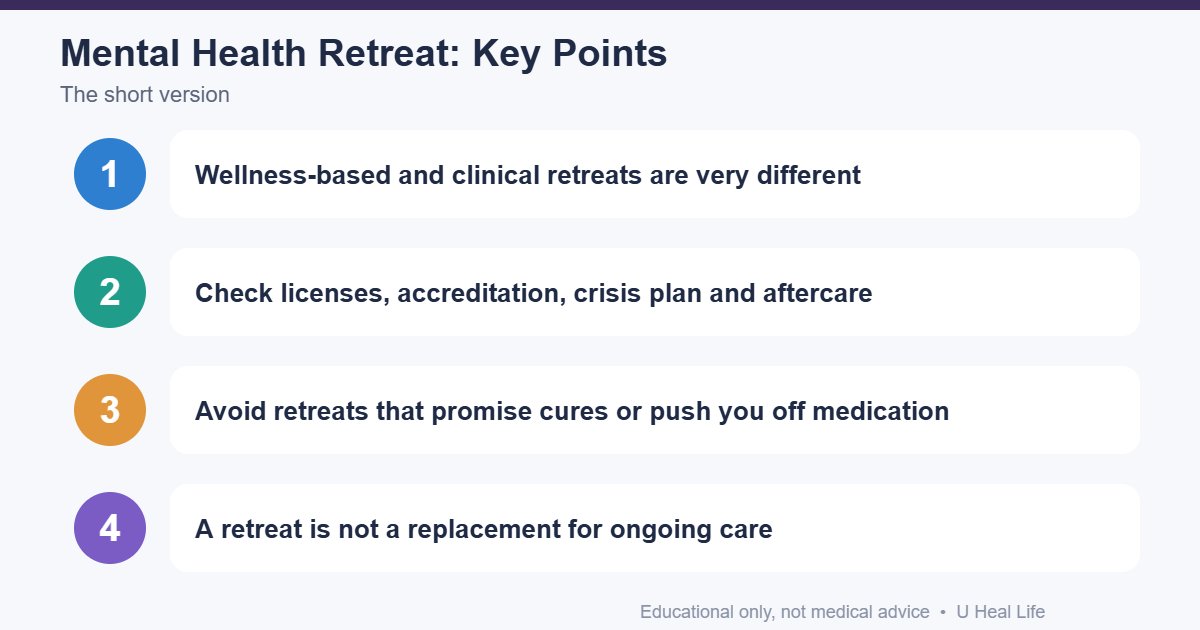
Table of Contents
What Is a Mental Health Retreat?
A mental health retreat is a short or longer stay that centers on stress, mood, relationships or emotional healing. The label is not regulated, so one retreat may offer yoga and journaling while another offers therapy with licensed clinicians. Knowing which type you are booking is the most important step.
Two Very Different Types
| Wellness-based retreat | Clinical or residential program | |
|---|---|---|
| Main goal | Rest, reflection, healthy habits | Treat a mental health condition |
| Who leads | Coaches, teachers, facilitators | Licensed psychologists, therapists, psychiatrists |
| Therapy | Usually none, or light group work | Individual and group therapy |
| Medication care | Not provided | Often available |
| Accreditation | Usually none | Often CARF or Joint Commission |
| Insurance | Rarely covered | Sometimes covered |
Retreats led by coaches or healers may have certificates, but that is not the same as being a licensed mental health provider.
What to Check Before You Book
- Licenses and training. Ask who leads the sessions and which licenses they hold. Check the state licensing board for clinicians.
- Accreditation. For clinical programs, look for The Joint Commission or CARF accreditation and a state license. The Anxiety and Depression Association of America (ADAA) also advises checking this before choosing a residential program.
- Crisis plan. Ask what happens if a guest has a mental health emergency.
- Medication rules. Ask how they handle your current medicines and whether a doctor is involved.
- Aftercare. Good programs help you plan what comes next.
- Clear costs and policies. Get prices and refund rules in writing.
Red Flags
- Promises to cure depression, anxiety or trauma
- Pressure to stop medication or leave therapy
- Leaders with no clear training or licenses
- Intense confrontation exercises with no safety plan
- Vague answers about costs or what happens in a crisis
Does Insurance Cover Mental Health Retreats?
Wellness retreats are rarely covered. Clinical residential programs sometimes are, but only if they meet accreditation and medical necessity rules. Call your insurer first. Our mental health insurance coverage guide explains the basics.
Who Might Benefit?
A wellness-based retreat may help if you feel stressed, burned out or need a quiet reset. A clinical program may be right if symptoms are making daily life hard. If you are not sure, start by talking to a doctor or licensed therapist. Women looking at residential care can also read our guide on women’s trauma recovery and residential treatment.
Frequently Asked Questions About Mental Health Retreats
Is a mental health retreat the same as therapy?
No. Some include therapy, but many do not. Always ask who leads the sessions.
Can a retreat help with depression or anxiety?
Rest and support may help you feel better for a time, but retreats are not a cure. Ongoing care with a professional matters most.
How long do mental health retreats last?
From a weekend to several weeks. Clinical programs can run longer.
Should I stop my medication before a retreat?
No. Talk to your prescriber before making any change.
When should I get help right away?
If you are in crisis or thinking about harming yourself, call or text 988 in the US, or your local emergency number.
Helpful resource: To look for licensed treatment, you can use SAMHSA’s FindTreatment.gov, and for urgent help the 988 Suicide and Crisis Lifeline.
Related Reading
- Mental Health Retreats Near Me: How to Find a Licensed Program
- Wellness Retreat vs Spa vs Mental Health Retreat
- 8 Signs You Need a Mental Health Day
- Why Do I Feel Anxious for No Reason?
- What Is a Wellness Retreat?
Disclaimer: This article is for general information only and is not medical or mental health advice. Prices, programs and availability change, so please check current details with each provider. If you are in crisis or thinking about harming yourself, call or text 988 (the Suicide & Crisis Lifeline in the US) or your local emergency number right away.