
The Paradox of Our Time: Lessons From Bob Moorehead on Balanced Living
In a world where we move faster, own more, and achieve more than ever before, many of us are quietly struggling with something deeper: disconnection. Despite the outward signs of success, life can often feel rushed, stressful, and emotionally empty.
Bob Moorehead’s thought-provoking essay, “The Paradox of Our Time,” beautifully captures this contradiction. While technology and convenience have skyrocketed, our sense of peace, purpose, and presence seems to be shrinking. In this article, we’ll explore the core message of Moorehead’s words—and how they serve as a powerful guide for anyone seeking balance, healing, and wholeness.
Quick answer: “The Paradox of Our Time” is an essay, usually attributed to Bob Moorehead, about how modern life gives us more speed and comfort but less connection and peace. Its message is a reminder to put people before possessions, slow down, set digital boundaries and rethink what success means.
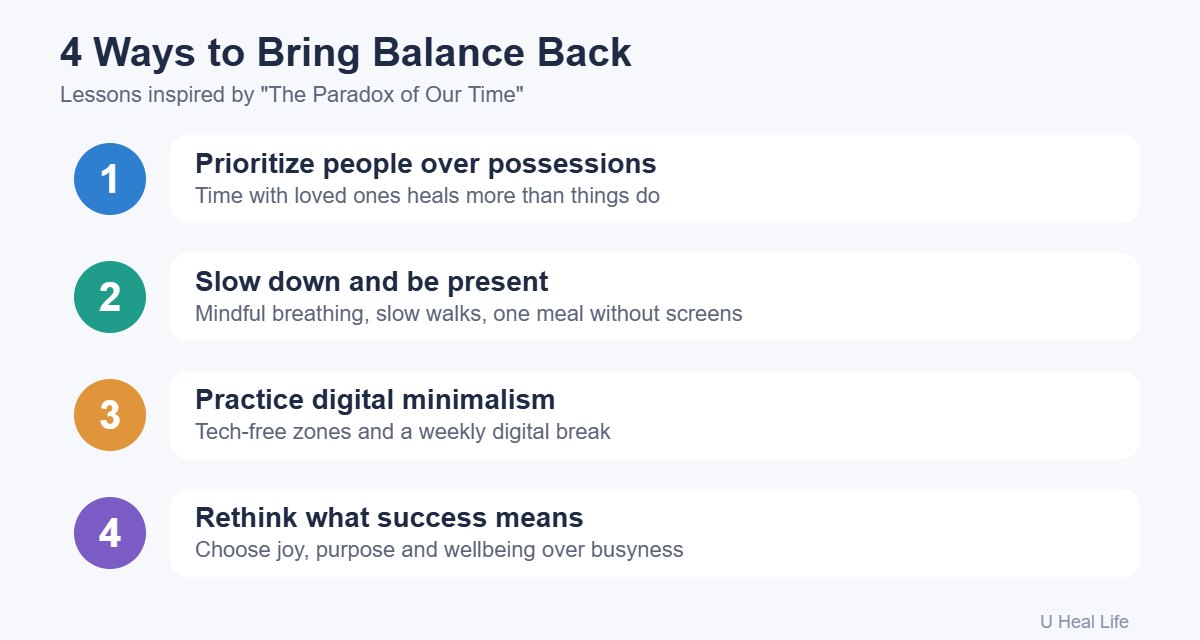
Table of Contents
What Is “The Paradox of Our Time”?
The essay opens with a now-famous line:
“We have taller buildings but shorter tempers, wider freeways but narrower viewpoints.”
Written in the late 1990s and often circulated online, “The Paradox of Our Time” critiques modern life’s contradictions. It reminds us that while we’ve made great strides in science, industry, and comfort, we’ve often lost touch with the deeper elements of life—relationships, presence, simplicity, and spiritual wellness.
Though the authorship of the essay has sometimes been disputed, it’s most frequently attributed to Bob Moorehead, a former pastor and author. Regardless of its origin, the message resonates deeply in today’s wellness-conscious world—and offers timeless wisdom for those on a path of self-healing and conscious living.
The Problem: Modern Life Is Making Us Sick
In many ways, we’re living in the most advanced time in human history. We have smartphones, smart homes, and more knowledge at our fingertips than our ancestors could ever dream of. And yet:
- Anxiety and depression affect millions of people worldwide.
- Chronic stress is linked to numerous physical and mental health issues.
- Digital addiction is eroding our ability to be present.
- Loneliness has been called a public health concern by the US Surgeon General.
Moorehead’s essay points out that we’ve learned how to “make a living, but not a life.” We’re overbooked, overworked, and overwhelmed. We pursue productivity but sacrifice peace. We collect things, but lose time. We scroll endlessly but rarely feel seen.
This is the paradox—and it’s costing us our health, happiness, and wholeness.
The Solution: Healing Through Simplicity and Connection
At UHeallife, we believe in whole-person wellness. That means caring for the body, mind, and spirit—not just managing symptoms, but addressing the root causes of imbalance. Bob Moorehead’s message aligns perfectly with this mission.
Let’s explore some practical ways to bring more balance and healing into your life.
1. Prioritize People Over Possessions
One of the essay’s central themes is the importance of human connection. In today’s consumer-driven culture, we often substitute things for meaning. But true healing begins with authentic relationships.
Try this:
- Schedule weekly “tech-free” time with loved ones.
- Call a friend instead of texting.
- Practice active listening in your daily conversations.
When you prioritize connection, you create emotional safety—a critical foundation for healing.
2. Slow Down and Be Present
We live in a culture that glorifies speed. But Moorehead reminds us that “we’ve learned to rush, but not to wait.”
Mindful living is the antidote to this rush. It means choosing presence over pressure. It means breathing deeply, observing the moment, and stepping out of autopilot.
Try this:
- Start your day with 5 minutes of mindful breathing.
- Eat one meal per day without distractions.
- Take slow walks in nature to ground your energy.
The more present you are, the more peace you create.
3. Practice Digital Minimalism
Modern life revolves around screens, notifications, and noise. But constant digital input fragments our attention and increases stress.
To reconnect with yourself and others, you need intentional digital boundaries.
Try this:
- Create tech-free zones in your home (like the bedroom or dining table).
- Use apps to monitor and reduce screen time.
- Take one “digital Sabbath” each week—no devices, just real life.
Digital minimalism can support mental clarity, better sleep and more meaningful time.
4. Reevaluate Your Definition of Success
Moorehead points out that we’ve “added years to life, not life to years.” In other words, living longer doesn’t mean living better.
True success is not found in status, possessions, or busyness—but in joy, purpose, and well-being.
Ask yourself:
- What brings me genuine fulfillment?
- Am I chasing goals that don’t align with my values?
- How can I make space for what really matters?
At UHeallife, we believe healing starts with alignment—between your actions and your deepest truth.
Why This Matters for Your Health
Lifestyle and health are closely connected. Research suggests that chronic stress, loneliness and poor sleep can affect inflammation, immune function and overall health.
Simple habits like mindfulness, better sleep and meaningful connection may support your wellbeing and help you cope with stress.
- Less stress may support a healthier immune system
- More presence may support better sleep
- Deeper connections can support mental health
- Authenticity can support long-term fulfillment
By living more in tune with your values, you don’t just feel better—you become better.
Continue Your Journey With Small Steps
At UHeallife, our goal is to share simple, practical guides that support your physical, mental and emotional wellbeing.
We invite you to take small steps today:
- Try our 10-minute evening routine to reduce stress.
- Explore these simple mindfulness exercises for busy people.
- Read about daily habits that support long-term brain health.
Your path to wholeness starts with awareness—and every step matters.
Frequently Asked Questions About “The Paradox of Our Time”
What is “The Paradox of Our Time”?
It is an essay that has circulated widely online since the 1990s. It contrasts modern progress and comfort with a loss of connection, presence and meaning in everyday life.
Who wrote “The Paradox of Our Time”?
It is most often attributed to Bob Moorehead, a pastor and author. Versions have been shared and changed over the years, and some details of its authorship are disputed.
What is the main message of the essay?
We have gained speed, technology and convenience, but we may have lost closeness, peace and purpose. It invites us to slow down and focus on what truly matters.
How can I live a more balanced life?
Start small: put people before possessions, slow down and be present, set digital boundaries and rethink what success means to you. Our guide to simple mindfulness exercises for busy people is a good first step.
Can I quote the essay in my own writing?
Short quotes with clear attribution are common, but the full text may be protected by copyright. Use brief excerpts and link to a trusted source.
When should I talk to a professional?
If stress, loneliness or low mood last for weeks or affect your sleep, work or relationships, please speak with a doctor or licensed mental health professional.
Final Thoughts: Choosing Healing in a Hurried World
Bob Moorehead’s “The Paradox of Our Time” is more than a poetic essay—it’s a call to wake up. To slow down. To remember what it means to be fully alive.
The world will always be busy. But you don’t have to be.
You can choose peace. You can choose presence. You can choose healing.
And we’re here to help.
Related Reading
- Simple Mindfulness Exercises for Busy People
- 10-Minute Evening Routine to Reduce Stress
- Social Media Anxiety: 9 Signs and 7 Ways to Feel Better
- Daily Habits That Support Long-Term Brain Health
- How to Calm Your Mind in 5 Minutes
- 8 Signs You Need a Mental Health Day
Disclaimer: This article is for general information and inspiration only and is not medical or professional advice. If you are struggling with stress, loneliness or your mental health, please speak with a qualified professional. If you are in crisis or thinking about harming yourself, call or text 988 (the Suicide & Crisis Lifeline in the US) or your local emergency number right away.