detox mind
How to DETOX your mind.

Though We have miles to go in terms of learning what it means to take care of our bodies, we are even further behind on how
to take care of our minds. Our brains construct our experiences and there are so many factors that alter and shift our perspectives that are completely in our control but totally out of our awareness. Here, a few things you can do to detox your mind, deprogram and wipe the slate clean now and again. Following are 18 ways in which a person can detox the mind and make room for better things.

1.Trvel to assimilate culture. Alter your base-point concept of “normal.” What it will show you is how many behaviors/values/beliefs you have unconsciously adopted from your surroundings ( and ways you can change them).

2. Create physical solutions for emotional problems. People default on the idea that one emotion will cancel out or fix another. If you are upset, seek a high to eliminate it. But negative emotions are just called to action that being ignored through a little mental gymnastics and a lot of justification, Detoxing your mind is letting go of emotion high in place of creating actual solutions.

3. know that emotional toxicity is born of mental resistance. listed if trying to create a certain emotional experience.

4. Identify your tethers. The Problems that are in from of you are actually behind you: they are cracks in your foundation that are holding you back. stop trying to dismantle symptoms; go back and identify the causes.

5. Go for a long drive and let yourself get lost. Drive through neighborhoods you never would have known existed.
See how other people live. See them come home from work and what their living rooms look like from the outside. It will comfort you in that you will realize how small you are in a more practical way than just staring at the ocean. You don’t know what you don’t know.

6. Rearrange your furniture. Your brain constructs your experiences through props and signals that those props fire off. you are continual. subconsciously triggering negative or stagnant associations because of how your brain processes your surroundings- change how you think, change what you feel.

7. Do a Mental purge. Just write down whatever weird thoughts continually, cross your mind of the little incoherent bits that are clogging your head. Just getting them out will give you relief.

8. Restructure your digital life. It’s not realistic(or desirable to lot of people) to be forever disconnected, but it’s also not realistic to keep things that don’t serve you positively in you social feeds and expect it not to affect you.

9. Notice your unconscious movements. Notice your feet walking and how you are not deciding yo ligy each one up and forward and yet because your mind said, “Okay, self lets get to this point today,” you began to go. Consider your morning intentions similarly.

10. Cleanse your space emotionally. Consider the emotional attachment you have to the things you keep around you. Did you buy those clothes to someone you’re not?
Do you have decor around your apartment that you got during a particularly crappy time in your life? Let those
things go, but decide what to let go by thinking about what they make you feel.

11. Place yourself. Make a chart with three columns and on the left write everything you feel you’ve
accomplished in your life and the middle writes down what your daily life entails and then on the right put what those consistent habits will lead to what you hope to do in the future. It helps you focus on the big picture; getting lost
in minutiae usually causes people anxiety.

12. Shift your physical position every time you start falling back into toxic thought cycles. This basically creates a new experience for your body and refocuses you in the moment( and it’s simple enough to do at your desk at work)

13. Stretch your brain. Pick up a book on something that interests you and learn more about it. Look at research on something you have a theory about.

14. Reevaluate the extent of your connected disconnectedness. if the bulk of your relationships happen digitally (that are not long distance) and you have not had a conversation in person without being interrupted by a phone in a long enough time , evaluate how much you are prioritizing people in your life, and realize that screens>people is basically the best way to create an extremely anxious lifestyle for yourself.

15. Identify what your addictions are keeping you distracted from. Most things people struggle with are addictions in some form: a thing you keep doing though you don’t really want to. Understand that addiction is a disconnection from yourself, and a disconnection from yourself is born of something present that you (think) you can’t face.

16. Learn to let “good enough” not be the opposite of perfect. If there is one thing that will give you the most mental-emotional relief it is in letting food enough be good enough.

17. Dismantle the parts of your life that are solely performative. The thing is that most of what clogs our minds is all the
the unnecessary effort we put into constructing a life that seems a little more palatable, a little more noble, a little better than someone else’s (so therefore good enough) But it accomplishes the opposite of what we intend: We place ourselves further from a genuinely happy experience (which is in accepting that life is small and simple and more than enough)
through grandiose ideas and attachments that end up making us into characters, not people.

18. Write down what you hate about other people. This is what you need to change about yourself/ your life( but are resisting too much to actually do something about). Know that it’s often not a surface-level issue: You don’t hate your annoying neighbor because she always bothers other people for lunch, you hate her because she acts as though she’s
desperate for love and you feel that way too but avoid it because you think it’s embarrassing. This is a cheat sheet to see what’s actually wrong in your life. It’s important because completely understanding the problem is the same thing as knowing the solution. If you don’t know what to do, you don’t know what’s wrong. If you don’t know what’s wrong, its because some part of you is resisting seeing it.
Tips for maintaining good mental health

A famous psychiatrist, Abraham Low, says that when people are depressed it’s therapeutic for them to go about their daily activities as close to normal as possible. This is liable to be slower than usual, but that’s all right.

Low also recommended simple motivation methods for helping people overcome their sense of helplessness. These methods have been shown to work for generations.

Therapist/researcher Stephen Ilardi says that activity – esp. physical activity, including light exercise – is therapeutic for depression.

Emma Seppala of Yale suggests conserving our energy by going back and forth between challenging tasks and easy ones.

I can tell you some self-help things but I’m not saying necessarily that these are all you need. Treating a serious case of depression with nothing but self-help is risky.

Being active is therapeutic in more ways than one. It gives you confidence. It stimulates your nervous system and makes your brain work.

Taking things in baby steps – very important. This is the key to motivation and motivation is the key to recovery.

Just 20 min of brisk walking a day can help, and you can add to that gradually so long as you don’t make yourself sick of exercise with too much.

If a task seems like it’s too big, think of it as a series of tasks that you can take on one at a time, and start with something really, really easy. Cleaning – start by cleaning for 3 or 4 min and take a 5 min break. Reading – start by previewing a chapter you’re going to read by looking at headings, sub-headings, etc.

You can even use the baby steps principle for having fun. If you’re not getting any enjoyment out of things, here’s something that people here have said is helpful with that problem. Look all over and do a complete inventory. You should be able to find at least one or two things you like, such as your favorite music or movie. If there’s just one movie you like, watch it once or twice. Then, find movies that are like it in some way – with similar story or the same actor. Keep adding to your entertainment supply to give it variety.

reason people think meditation is difficult
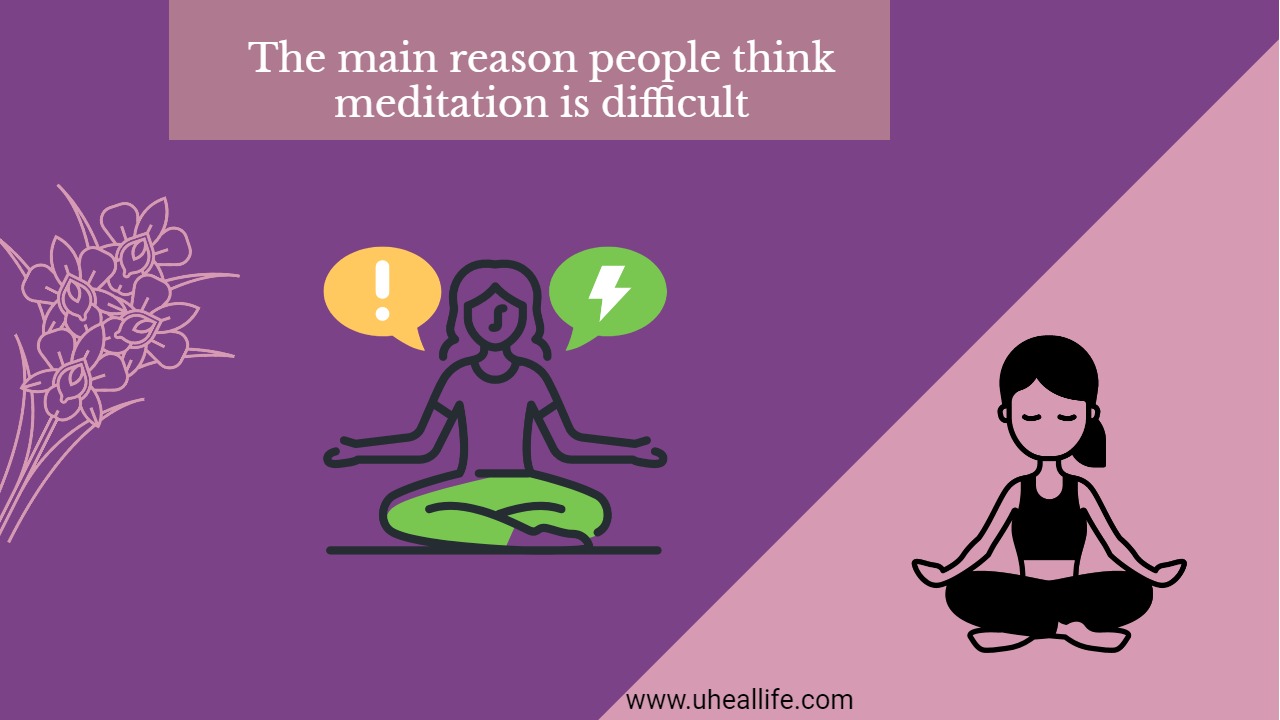
The main reason people think meditation is difficult

The common idea is that meditation is difficult. This is not true. Meditation, itself, is extremely simple. It is a unidimensional practice, requiring nothing more than alert observation. Sure, the mind wanders, thoughts and emotions enter the picture, and on and on.

But these are not part of the meditation. They occur ‘peripherally’ in the mind. As you become comfortable and confident with the process of meditation, some aids (physical as well as attitudinal approaches that I term ‘meditation toolkit’) will help you with the ancillary problems mentioned. A guide who is willing to instruct you one-on-one can be a great help in dealing with these ‘ancillary’ problems.

Regardless of the method selected (and most folks who have meditated for a while settle on one), the practice involves observing a particular ‘anchor’ (e.g. breath, chant, mantra, chakras, music, thought, etc.) while keeping a portion of the mind (the portion that is not ‘holding on’ to the anchor) open, permitting thoughts and emotions to intrude. This is facilitated by being completely aware of anything that arises in the mind (e.g. thought, emotion, idea, belief, bodily sensations, external sensations [e.g. a dog barking], and movements that are motivated by the mind [as opposed to those that occur without being impelled or continued by the mind]). This is ‘total awareness.’

Mere observation of any intrusion without ‘engaging’ (any intellectual or emotional interaction including scrutiny, reason, argument, pacification, justification, complimenting, criticism, suppression, or blockage) causes it to weaken.

Depending on the intensity of the thought or emotion, it may recur. No problem; repeat the observation without engagement. The thought will gradually weaken to the point of either disappearing or remain in the mind without being a bother or distraction. The disappearance is not important. Allowing the thought to exist without bothering the practitioner is more important.

Some people recommend that the thought be entertained with positive internal comments and that, after observation, to ‘shift’ attention to breath, chant, etc. Actually, since the thought weakens on its own, the question of shifting does not arise. Total awareness prevails.

Some methods of meditation ‘bind’ the mind. Such binding is not as beneficial as permitting thoughts to enter and observing them; the intrusion of thoughts and emotions and the method of dealing with them helps not only during meditation but also during difficult times the rest of the day. As binding the mind does not permit thoughts to enter, the individual does not develop the skill and confidence to reconcile with the thought or emotion. By the way, thoughts accompanied by emotion are more distracting and bothersome than thoughts by themselves.

So, if meditation is simple in itself, why so many queries, problems, and posts about the difficulty of meditation?

The answer is very simple: EXPECTATION.

The expectation that the mind will be free of thought/emotion and that peace will reign is the culprit. Lack of fulfillment of such expectation causes disappointment, frustration, self-criticism, self-flagellation, and, if not addressed, the possibility of dropping out of the practice of meditation.

So, instead of trying to ‘remedy’ meditation, peripheral issues such as distraction, expectation, and emotional upheavals accompanying life need to be understood and addressed as needed.

Expectations thus predispose you to disappointment. When you meditate without expectations, your progress in meditation is facilitated.

In addition, practitioners need access and the ability to incorporate measures to deal and cope with difficult times. The more such measures are put into practice, the more they are available and effective in times of need.

5 Things You Don’t Need for Meditation

Meditation should lend itself to various times and places—what I term battleground meditation.

What is the point refining a fire drill to perfection but not being able to implement it when a real fire occurs and the power is out, people are yelling and panicky, and the floor is slippery? If the fire drill cannot be put into practice, it is a waste of effort.

Similarly, the ability to employ meditation under various conditions and settings, particularly stressful ones, is a great help and serves the purpose of the practice in the first place.

Here are five things you don’t need for meditation. Knowing this will help you meditate in different conditions and settings.

  1. Freedom from thought:

This misconception is not only an improper understanding of meditation but is also destructive in that it drives away many potential students of the discipline. To make matters worse, people are told that meditation can bestow freedom from thought. Where does that leave the prospective student? Can’t meditate unless free of thought and require meditation to be free of thought.

The above misunderstanding arises from the common statement, ‘….in meditation, one is free of thought…’ That is misconstrued to mean that meditation requires freedom from thought. In fact, in meditation, thoughts may be present or absent and, even when present, they do not bother the aspirant.

2. Specific posture:

No posture is an absolute for meditation. The posture utilized should be one that is comfortable and does not interfere with the practice. Remember, meditation occurs at the level of the mind, not any body part. One of my students has a health problem that makes him move constantly. He was getting frustrated. After a discussion, he agreed to try meditating while walking up and down in a room or on his terrace. He has obtained satisfactory results. In fact, he is also comfortable now meditating for brief periods with eyes open.

  1. No movement:

Some folks believe that, once you sit for meditation, no movement should be undertaken. I disagree. If you have an itch on the forehead or a discomfort in the position of the knee, for example, go ahead and scratch the darned forehead or move the darned knee. Sure, it is a brief interruption of meditation. But it beats spending the time in meditation focusing on the forehead or knee. In addition, meditation should be pleasant and enjoyable, not a punishment. So, relax and enjoy it!

Practicing meditation while still is certainly useful to develop skill and, more importantly, confidence to adhere to the practice and to progress. With time, practice and confidence, you can gain the ability to meditate under difficult conditions. Get comfortable with this and you are on your way to becoming a ‘master!’


4. Focus eyes:

Focusing eyes at the tip of the nose or the middle of the forehead is sometimes recommended. I have had many students say that they tried this and were uncomfortable. My experience with this practice has consistently resulted in headache and discomfort.

5. Chant/breath control:

Chanting and breath control are not harmful. I do not dissuade folks from these. Generally, chanting and breath control are difficult to implement in settings other than in a quiet, dark room unless they are silent and in a manner that others cannot detect.

How can mindfulness be used to break bad habits?

Mindfulness shows us what’s going on at a given moment, so we can assess our actions and let go of old habits and form new ones. Mindfulness involves being curious about what’s going on, which can be a rewarding experience for the brain. Curiosity might make you realize that you’re feeling restless or stressed.
I got carried away indulging things. We want to break bad habits, but those habits bring us enjoyment of some shape or kind. The fact is, we become involved in things. You have to ask yourself: what is bad about your habits? How might you change them? Do something different?

If you pay close attention, awareness doesn’t change the contents of the experience — rather, it frees us, here and now, to choose what to do with the contents of the experience, and how to view it.

Awareness puts things into their context. In other words, being mindful is not a thing that you are doing, instead, we might say, being mindful is ceasing to become involved in things. We see the bigger picture, the long game.

That is how mindfulness helps “break bad habits.” It doesn’t break them. You must choose freely to do something else. We cease to become involved in things that no longer serve us. Whatever we are attached to, we let go.

Example: “I’m quitting smoking.” Or binging, or drinking, or whatever. When we are mindful, we don’t need to think about smoking etc., because even if or when we find ourselves reaching for a smoke — or we’re deep into a binge — wherever we are, whenever, the moment we awake and become aware of our situation, we are “presented” with a choice: (1) continue our behavior or (2) do anything else. Here’s where breathing is useful. If you choose option 2: breathe. Recognize the moment of transition. How might one live differently?

Having a plan is important, a method. Each time I think about smoking I get to choose whether to indulge a painful/pleasure-seeking/dangerous/seductive vice or do anything else, have an entirely different trip.

Experiment. Try different things. Practice mindfulness wherever/whenever you can. May you find what you seek.

What are the benefits of meditating every day for one year?

Off the top of my head from personal experience: I feel like I have more energy throughout the day. it’s easier to concentrate. my mind feels sharper as in thoughts come easier. I don’t often have that “it’s on the tip of my tongue but I can’t completely recall it” sensation. I feel more emotionally consistent (if that makes sense?). My mood basically stays stable throughout the day a lot and I don’t fluctuate based on my feelings as much. I just feel more centered. I just feel cognitively sharper.

I also don’t consider myself having a particularly robust meditation practice. I meditate for about 15-25 minutes daily depending on time / my schedule.

I’d say that the biggest benefit is that you’d be well on your way to having established a lifelong habit of mindfulness practice which is probably the most effective thing you could do to have a happier life long term.

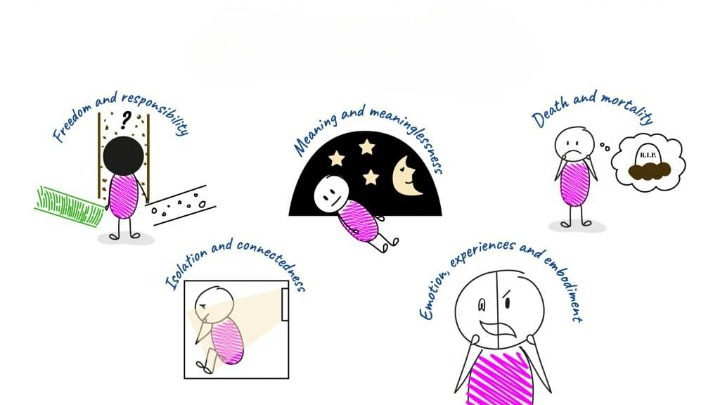
tips for dealing with existential thoughts
Here are some tips for dealing with existential thoughts

Existential thought is full of shit

You don’t know this world, all you have is your current experience in the moment

Any information you ‘think’ you know is just a perspective and a temporary one at that

So sure are you that you know everything and the way the universe is and yourself and how it will all go and end?

Please Go out into your experience of reality and just enjoy the process of whatever happens

Stop believing your own bullshit

Come back to the I that is aware of these thoughts and know that your default setting is peace and joy. You only experience these thoughts when you are not being the real you, awareness. Once you return to yourself, thoughts and fears disappear naturally because they cannot survive the light of awareness that you are. So explore your “I”. Rupert Spira and Michael A Singer can help!

self improvement
Advancing Self-Help/Improvement Topics: How to make the most of this difficult year!

It is recommended that you take precautions and do your best to ensure. There are some of us, however, who have reached higher levels of understanding, and we can approach this adversity in a different way.

1- You have a strong internal locus of control

Psychologists explain that you have an internal locus of control is when you are in control of your life. Meanwhile, if you have an external locus of control, you believe that anything wrong that happens to you can be attributed to factors outside of your control.

If you are in the former group, you can focus on the how-to best tackle the situation at hand. Get it down and then focus on how you can make the best of the situation. However, if you have an external locus of control, you might have a meltdown and start panicking. It’s fascinating that it didn’t make out any of this. Instead, I’m seeing how different groups of people are dealing with the situation at hand. While some can make the necessary precautions and focus on their goals, others letting the case break them down.

2- During this downtime you can start valuing what matters to you

Hopefully, by now you this situation serves as a wake-up call for some of you. You now know that life and time are finite, and they can end at the drop of a hat. If you have been living your life as a cog in the machine, you can unplug yourself and genuinely have this time to rethink your life decisions.

If you have been living your life scared or worried over the most mundane things like handing in homework late or arguing with your superiors, then now it’s the time to stop that! It’s time for you to appreciate the life you have as a unique gift.

3- An Optimist sees the opportunity

I’ve seen cynism taking advantage of people during these hard times. For instance, people who would use price gauging to charge others for essential items, a morally reprehensible behavior.

However, in your case, you can use this time to finally do an online job that you’ve wanted to do for a long time. Or to start a small online business. Now that you see the flimsiness of life, you can begin to be daring and taking the risk since there’s nothing to fear.

4- You can use this time to pursue your goals aggressively

While some acquaintances of mine were panicking, those who I admired made the most out of the situation. For instance, this LA singer who I like started doing challenges for her fans and took this stay at home time to connect better with her fanbase. Meanwhile, a friend who is a fashion designer has taken this time off to produce more content. At this stage, he can create one video a day, which will help him exponentially grow his brand.

This experience has taught me a life lesson. While we are all going through the same situation, some of us deal with it radically different. On the one hand, we have entrepreneurs and hustlers who find creative ways to keep on thriving. Meanwhile, we have others who easily crumble under pressure. Now, I’m not talking about first responders who are admirable. I’m talking about those people who find ways to make a problematic situation worst for themselves and others.

Conclusion

Anyway, guys, I thought I’d share that life lesson since I see it all around. It’s undeniable. This situation is serious, and your main priority is to keep yourself and your family safe. However, it’s also essential to try and make the best out of any bad situation we have. It also invites us to a broader reflection. Sometimes some of you ask me, “If my parents were rich, my life would have been different” or “If the people at my high school were good, I would have had an incredible social life.” How can we see that different groups of people are dealing with the same cards, yet some see it as a catastrophe others see its ways to overcome it?

Some questions to reflect on:

“How can I make the best out of the situation?”

How to support mental health in workplace

We all know the value of mental health. We can’t live without it, and yet many are only now starting to prioritize it. It is important to look at how to support mental health in workplace, review some recent studies and statistics, and we will explore ways that you can help instill better mental health in workplaces and workplaces in general.
Mental health is important to every person in the workplace. It has a direct effect on your productivity and ability to perform tasks efficiently on an hourly basis. There are many strategies you can implement to help improve mental health within your organization, whether it be through suggestion boxes, employee assistance groups (EAGs), or in-office workshops addressing mental health issues. When employees feel less pressure and strain caused by mental illness, they tend to work more efficiently and productively.

People with mental health problems in the workplace can sometimes find it hard to feel comfortable talking about their problems, especially when they’re connected to their job and career. There are several ways to help them feel more comfortable — so they can do their best at work, to be rewarded for their productivity and self-confidence, and of course stay loyal.

Mental illness is, unfortunately, a very common thing among the general population. According to the American Psychiatric Association’s Diagnostic and Statistical Manual of Mental Disorders (DSM-5), Major depressive disorder affects nearly 6 percent of adults in the U.S. alone and approximately 1 in 4 people will experience either depression or anxiety at some point in their lifetimes. Since mental health is crucial to our everyday lives, it is important that we pay attention to this topic as a society. In particular, it’s vital that we create awareness about workplace mental health so employers can create an environment where people can thrive and feel safe at work – an environment that’s free from the stigma surrounding mental health issues.

Mental health is a topic I’m very interested in and can be a good starting point for a conversation about mental health issues in the workplace. Both managers and employees are looking for ways to support their mental health – by helping employees deal with stress better and also by identifying potential or existing problems to get them the needed help.

Why old people don’t believe in mental health issues and blame it all on video games etc.?

A lot of the time, we isolate the people we care about. Ignore the signs of mental health issues and blame them all on video games, or having too much free time, or simply not exercising enough. We tell ourselves that they’re fine, or they’ll snap out of it eventually. It’s all bullshit — “they’re fine” doesn’t work when you know something is wrong and don’t value their opinion enough to listen to them. I’m going to be blunt, if you have someone in your life who is suffering from depression, here’s what you do: Quit giving them shit about it. Stop asking them “why are you like this” and realizing that their problems are caused by videogames and forking over loads of money for therapy etc. This will make them feel like shit with self-doubt that won’t go away unless addressed properly and honestly by an actual professional.

A lot of mental health issues are caused by the stigma that comes with being a “young person” and is completely ignored by parents. This stigma is fueled by people who don’t understand the fact that depression and anxiety can come from any age, especially when you have a family history of mental illness (e.g. your great grandma was bipolar or your mom has been suffering from depression).

Aging is a fact of life and it is important for us to focus on healthy aging, including behavioral health issues not only during May, which is both Older Americans Month and Mental Health Awareness Month, but throughout the year.

Free resources on mental health and substance use disorders among older adults