
Daily Habits That Support Long-Term Brain Health
Affiliate disclosure: This article contains affiliate links. If you buy through our links, we may earn a commission at no extra cost to you. Our content is educational and based on public product information and published research, not personal testing.
Your brain works hard every day, and the habits you build now can affect how you think and remember for years. The good news is that most of the best habits are simple and free.
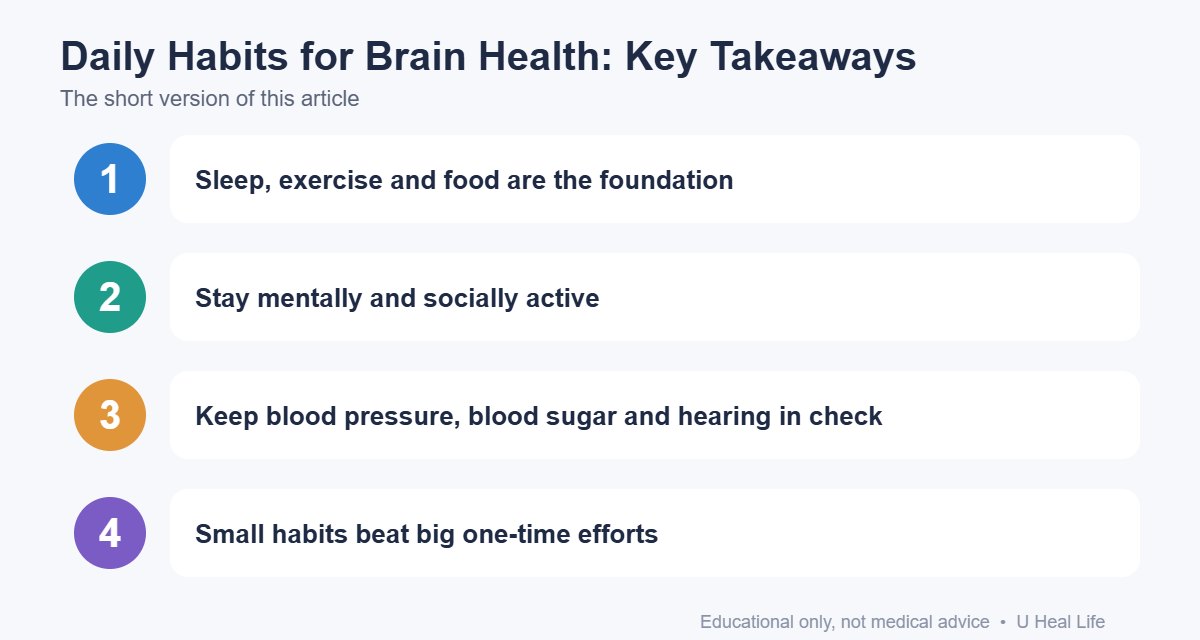
Quick answer: To support long-term brain health, sleep well, move your body, eat a balanced diet, stay socially and mentally active, manage stress, keep blood pressure and blood sugar in check, protect your hearing and head, and avoid smoking and heavy drinking. Small habits done for years matter most.
10 Daily Habits for a Healthier Brain
1. Sleep 7 or More Hours
Sleep helps your brain clear out waste and store memories. Keep a regular schedule and a cool, dark bedroom.
2. Move Your Body
Regular activity supports blood flow to the brain and helps mood. A common goal is about 150 minutes of moderate activity a week, such as brisk walking.
3. Eat a Balanced Diet
Eating patterns such as the Mediterranean style, rich in vegetables, fruit, whole grains, beans, nuts, olive oil and fish, are linked with better overall health. Try to limit highly processed foods and too much sugar.
4. Stay Socially Connected
Time with friends and family keeps your mind engaged and your mood steady. Call someone, join a group, or volunteer.
5. Keep Learning
Learn a new skill, language, instrument or hobby. New, challenging activities keep your brain flexible.
6. Manage Stress
Long-term stress can affect sleep, mood and attention. Try breathing exercises, walks, and our simple mindfulness exercises.
7. Watch Blood Pressure, Blood Sugar and Cholesterol
What is good for your heart is generally good for your brain. Regular check-ups can catch problems early.
8. Protect Your Hearing and Vision
Untreated hearing or vision problems can make daily life harder and may affect thinking and mood. Ask your doctor about screening.
9. Avoid Smoking and Limit Alcohol
Smoking harms blood vessels, and heavy drinking harms the brain and sleep.
10. Protect Your Head
Wear a helmet when cycling or riding a motorbike, and use a seat belt in a car.
A Simple Weekly Plan
| Habit | Easy starting goal |
|---|---|
| Sleep | Same bedtime 6 nights a week |
| Movement | A 20-minute walk most days |
| Food | Add vegetables to two meals a day |
| Social | One call or meet-up with a friend each week |
| Learning | 15 minutes on a new skill, 3 times a week |
| Stress care | 5 minutes of slow breathing daily |
| Health checks | Book a yearly check-up |
The National Institute on Aging offers reliable guidance on keeping your brain healthy as you age.
What About Supplements?
Experts say there is not enough evidence that supplements can prevent memory loss or dementia. The NCCIH has a helpful overview of dietary supplements and cognitive function. Healthy habits come first.
Where Do Supplements Fit In?
Supplements are optional extras, not a shortcut. Sleep, food, movement and stress care come first, and a doctor should check any new supplement against your health and medicines. If you are curious about multi-ingredient nootropic supplements, read our independent BrainPill review for a balanced look at the evidence and safety points. If you decide to read more, the manufacturer’s page is below.
See BrainPill’s Official Product Details
Paid affiliate link. We may earn a commission from qualifying purchases.
Frequently Asked Questions
What is the best habit for brain health?
There is no single best habit. Sleep, exercise and a balanced diet are the foundation for most people.
Can I improve my brain health at any age?
Yes. It is never too late to build healthier habits.
Do brain games prevent memory loss?
They can improve the tasks you practice, but real-life protection is less certain. Learning new things and staying social are good choices.
When should I see a doctor?
If you notice memory problems that affect daily life, confusion, or big changes in mood or behavior, speak to a healthcare professional.
Final Thoughts
Brain health is built day by day. Pick one habit from this list, practice it for two weeks, then add another.
Related Reading
- How to Improve Memory and Concentration in Adults
- Best Ways to Improve Focus and Concentration Naturally
- How to Stay Mentally Sharp During a Busy Workday
- BrainPill Review 2026: Ingredients, Benefits, Side Effects & Does It Really Work?
Disclaimer: This article is for educational purposes only and is not medical advice. Dietary supplements are not intended to diagnose, treat, cure, or prevent any disease. Talk to a qualified healthcare professional before using supplements, especially if you take medicine, are pregnant or breastfeeding, or have a health condition.