How to Calm Down After a Stressful Day: 12 Easy Ways to Relax
Some days just feel too heavy. Work was stressful, people were difficult, and your mind is still racing even after you reach home.
If you can’t switch off after a hard day, you are not alone. Stress stays in your body and mind unless you give it a way out.
In this guide, you will find 12 simple ways to calm down after a stressful day. You can try them tonight.
Quick answer: To calm down after a stressful day, slow your breathing, move your body, take a break from screens, do something relaxing, and talk or write about your feelings. Small habits done every day work better than big changes once in a while.
Why Do We Feel So Stressed After a Hard Day?
When you are stressed, your body gets ready to deal with danger. Your heart beats faster, your muscles get tight, and your mind stays alert.
This is useful for a short time. But if you don’t relax afterward, your body may stay in “stress mode.” That is why you may feel tired but still tense, or find it hard to sleep.
Calming down gives your body the signal: “You are safe now. You can rest.”
12 Easy Ways to Calm Down After a Stressful Day
1. Pause and Take 5 Slow Breaths
Before doing anything else, stop for one minute. Breathe in slowly through your nose for 4 seconds, then breathe out for 6 seconds. Do this 5 times.
Slow breathing helps your body relax almost right away.
2. Change Your Clothes and Wash Up
This sounds small, but it works. Changing clothes and washing your face or taking a shower helps your mind feel like the work day is over. A warm shower can also relax tight muscles.
3. Go for a Short Walk
A 10 to 20 minute walk helps release stress energy. Fresh air and sunlight can also lift your mood. You don’t need to walk fast. Just move slowly and notice what is around you.
4. Stretch Your Body
Stress often shows up as tight shoulders, neck, and back. Try:
- Rolling your shoulders slowly
- Gently turning your neck side to side
- Reaching up and then bending forward
- Child’s pose or simple yoga stretches
Even 5 minutes can make you feel lighter.
5. Put Your Phone Down for a While
Emails, messages, and social media keep your brain “on.” Try taking 30 to 60 minutes away from your phone. Turn off notifications if you can.
6. Listen to Calming Music
Slow, soft music can help calm your heart rate and thoughts. Choose music that makes you feel peaceful, not music that makes you feel more worked up.
7. Write Down Your Thoughts
Take a notebook and write:
- What made today stressful
- How you feel right now
- One thing that went well today, even a small thing
Writing helps you let go of thoughts so they don’t keep running in your head.
8. Do Something You Enjoy
Give yourself a small treat. It could be:
- Reading
- Drawing or coloring
- Cooking a simple meal
- Watching a light, funny show
- Playing with a pet
Doing something you love tells your brain that life is not only about work and problems.
9. Talk to Someone You Trust
Sharing your day with a friend or family member can make you feel lighter. You don’t need advice. Sometimes just being heard is enough.
10. Try the 5-4-3-2-1 Method
If your mind is still racing, bring it back to the present moment. Notice:
- 5 things you can see
- 4 things you can touch
- 3 things you can hear
- 2 things you can smell
- 1 thing you can taste
11. Eat Something Nourishing and Drink Water
Stress can make us skip meals or reach for too much junk food or caffeine. Try to have a simple, healthy meal and drink enough water. A warm herbal tea, such as chamomile, can be a comforting evening drink.
12. Make a Plan for Tomorrow
If worries about tomorrow keep coming up, spend 5 minutes writing a short to-do list. Choose just the top 3 things. Once it is written, your brain can stop trying to remember everything.
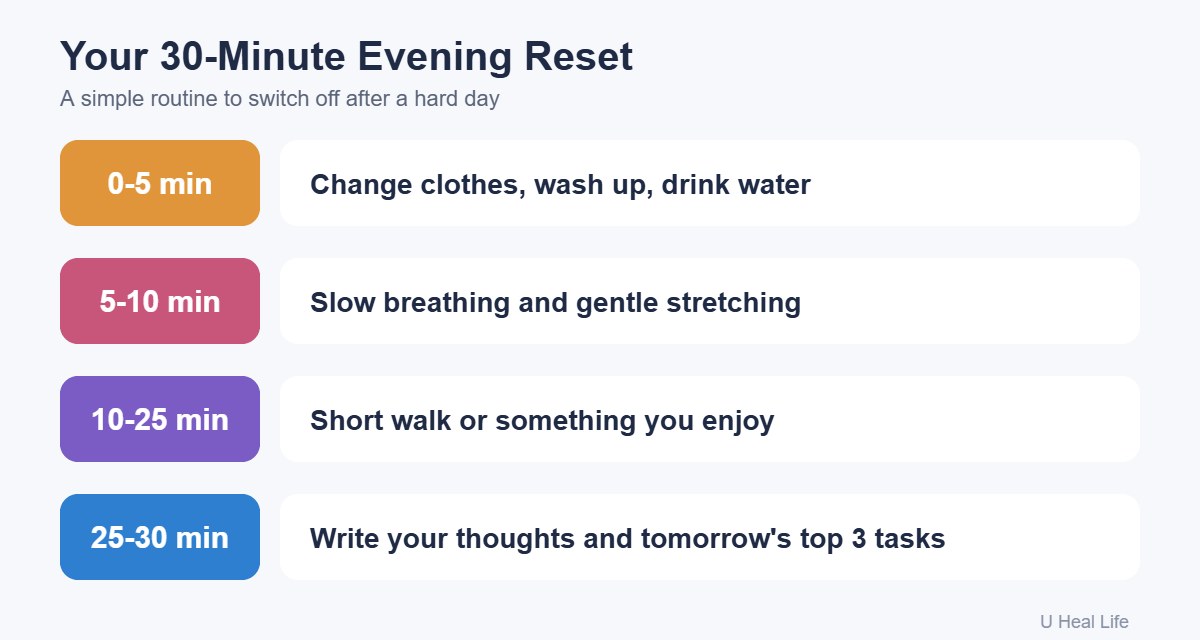
A Simple 30-Minute Evening Reset
If you want an easy routine, try this:
| Time | What to Do |
|---|---|
| 0-5 minutes | Change clothes, wash up, drink water |
| 5-10 minutes | Slow breathing and gentle stretching |
| 10-25 minutes | Short walk or something you enjoy |
| 25-30 minutes | Write down your thoughts and tomorrow’s top 3 tasks |
Things to Avoid When You’re Stressed
- Too much caffeine late in the day
- Doom-scrolling news or social media
- Drinking alcohol to cope. It may feel relaxing at first but can make stress and sleep worse
- Overworking late at night
- Being too hard on yourself
How to Stress Less Over Time
Calming down after a hard day is helpful. But it’s also good to lower stress in the long run:
- Sleep 7 to 9 hours most nights
- Exercise a few times a week
- Take short breaks during work
- Learn to say “no” when you are overloaded
- Spend time with people who support you
- Try meditation or mindfulness, even for 5 minutes a day
When to Get Extra Help
Everyone has stressful days. But please talk to a doctor or mental health professional if:
- You feel stressed or overwhelmed almost every day
- You can’t sleep, eat, or focus properly
- You feel hopeless, very sad, or anxious
- Stress is affecting your health or relationships
You deserve support, and help is available.
Frequently Asked Questions
How do I calm down quickly after a stressful day?
Start with slow breathing for a minute or two. Then try a short walk, stretching, or listening to calm music.
How long does it take to calm down after stress?
It depends on the person. Some feel better in a few minutes with deep breathing. For others, it may take an hour or more. Practice helps.
What is the best way to relax after work?
There is no single best way. Walking, stretching, music, a warm shower, and talking to a loved one are all good options. Choose what works for you.
Why can’t I relax even after the day is over?
Your body may still be in stress mode. Slow breathing, movement, and a calm evening routine can help your body switch off.
Is it OK to nap after a stressful day?
A short nap of 20 minutes is fine for many people. Long naps late in the day may make it harder to sleep at night.
What foods or drinks help reduce stress?
There is no magic food, but regular meals, water, and calming drinks like herbal tea can help. Try to limit caffeine and alcohol.
Can stress make me physically sick?
Long-term stress can lead to headaches, poor sleep, stomach issues, and tiredness. If you are worried about your health, please see a doctor.
Final Thoughts
You don’t need a perfect routine to feel calm. Even a few small steps, like deep breathing, a short walk, and a screen break, can make a big difference.
Be gentle with yourself. You did your best today, and now it’s time to rest.
Disclaimer: This article is for general information only and is not medical advice. If stress is affecting your health or daily life, please speak with a qualified healthcare professional.