Mental Health Retreats Near Me: How to Find a Licensed, Safe Program
Searching “mental health retreat near me” can bring up hundreds of results, from spa-style getaways to hospital-level programs. It is hard to tell which ones are safe and which are only good marketing. This guide gives you simple steps to find programs near you and a checklist to judge them.
Quick answer: To find a mental health retreat near you, decide whether you want a wellness retreat or a clinical program, then search by state and verify each place: licenses, accreditation, staff credentials, crisis plan and aftercare. For clinical care, SAMHSA’s FindTreatment.gov and Psychology Today’s treatment directory are good places to start.
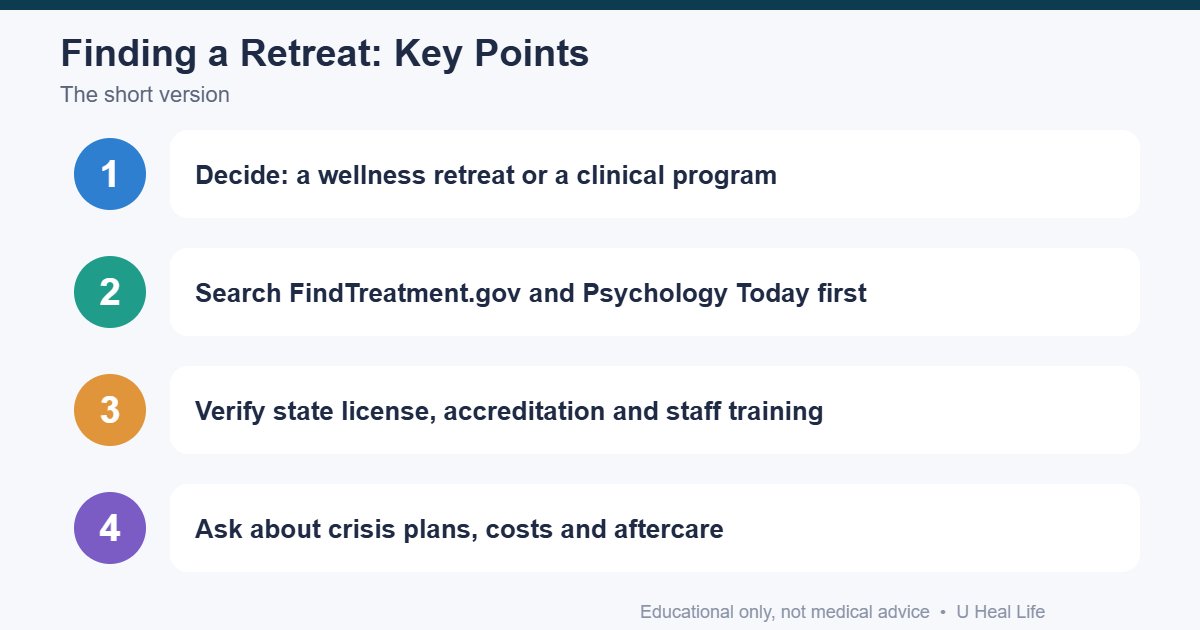
Table of Contents
Step 1: Decide What You Need
- Rest and reset: a wellness-based retreat may be enough
- Treatment for a condition: you need a licensed clinical or residential program
If you are unsure, ask your doctor or therapist before you book. Our guide to how to choose a mental health retreat explains the difference.
Step 2: Where to Search
- Your therapist or doctor. They can recommend programs they trust.
- FindTreatment.gov. This is SAMHSA’s national locator for mental health and substance use treatment.
- Psychology Today’s treatment directory. The ADAA also points readers to it.
- Your insurance company. Ask for in-network residential or intensive programs.
- Local search and maps. Use “mental wellness retreat” plus your state or city, then verify everything below.
Step 3: Check the Basics
| What to check | Good sign | Red flag |
|---|---|---|
| State license | Facility and clinicians are licensed | No license shown or vague answers |
| Accreditation | The Joint Commission or CARF | None, with claims of “clinical” care |
| Staff | Licensed psychologists, therapists, psychiatrists | Only coaches or “healers” doing therapy |
| Crisis plan | Clear emergency steps | No answer |
| Medications | A doctor reviews your medicines | Pressure to stop medication |
| Costs | Prices and refunds in writing | Hidden fees or pressure to pay now |
| Aftercare | A plan for after you leave | “One retreat will fix it” |
Step 4: Questions to Ask on the Phone
- Who leads sessions and what are their licenses?
- What happens if a guest has a crisis at night?
- Do you coordinate with my therapist or doctor?
- What is a typical day like?
- What is the total cost, and what does insurance cover?
- Can I speak with a past guest or read independent reviews?
Step 5: Think About Distance and Day Options
Nearby is not always best. A program a few hours away can still be fine if it is licensed and safe. If you cannot leave home, ask about day programs, intensive outpatient programs or weekend workshops led by licensed therapists.
Costs and Insurance
Wellness retreats are rarely covered by insurance. Clinical programs may be covered if they meet your plan’s rules. Always call your insurer first. See our insurance coverage guide.
If You Need Help Right Now
A retreat is not for emergencies. If you are in crisis or thinking about harming yourself, call or text 988 (the Suicide & Crisis Lifeline in the US) or your local emergency number.
Frequently Asked Questions About Mental Health Retreats Near Me
How do I know a retreat is legitimate?
Verify licenses with your state board, check for Joint Commission or CARF accreditation for clinical programs, and read independent reviews.
Are mental health retreats covered by insurance?
Wellness retreats rarely are. Clinical programs sometimes are. Call your insurer.
Can I go to a retreat if I am on medication?
Often yes, but tell the program and your prescriber. Never stop medication on your own.
What if there is no program near me?
Look at online therapy, intensive outpatient programs or a nearby wellness retreat after talking to your therapist.
How long should I stay?
It depends on your goal. Wellness retreats range from a weekend to a week or more. Clinical programs vary.
Helpful resource: SAMHSA’s national locator, FindTreatment.gov, lists licensed mental health and substance use programs, and the 988 Lifeline offers support in a crisis.
Related Reading
- Mental Health Retreat: How to Choose a Safe One
- Women’s Mental Health and Trauma Recovery
- Mental Health Insurance Coverage Guide
- Wellness Retreat vs Spa vs Mental Health Retreat
- 8 Signs You Need a Mental Health Day
Disclaimer: This article is for general information only and is not medical or mental health advice. Prices, programs and availability change, so please check current details with each provider. If you are in crisis or thinking about harming yourself, call or text 988 (the Suicide & Crisis Lifeline in the US) or your local emergency number right away.