Presently, five regional coordination centres have been set up, along with 51 state or union territory-level cells.
The Union Ministry of Health & Family Welfare of India has formally launched this week its national tele-mental health programme.
WHAT IT’S ABOUT
Called Tele Mental Health Assistance and Networking Across States (Tele-MANAS), it will provide free, round-the-clock teleconsultation service for mental health concerns. It runs a network of 23 tele-mental health centres of excellence with the National Institute of Mental Health and Neurosciences (NIMHANS) at its core and the International Institute of Information Technology-Bangalore providing technology support.
The Indian Institute of Technology-Bengaluru and the National Health Systems Resource Centre are also providing technical support for the programme.
It will be organised in a two-tier system: Tier 1 comprises state-level cells with trained counsellors and mental health specialists and Tier 2 comprises the e-Sanjeevani, India’s national telemedicine service, which provides audio-visual consultation, and specialists from the District Mental Health Programme and partner medical colleges who are providing in-person consultations.
In a press statement, the union government said it aims to open at least one Tele-MANAS cell in each state or union territory across the country. Presently, five regional coordination centres have been set up, along with 51 state or union territory-level Tele-MANAS cells.
Additionally, about 900 counsellors have been trained by NIMHANS for the programme.
This initial rollout, the government said, will provide basic support and counselling through a centralized Interactive Voice Response system that is being customised for use across states and union territories.
Tele-MANAS is planned to be linked with other services such as e-Sanjeevani and Ayushman Bharat Digital Mission, as well as with mental health professionals and emergency psychiatric facilities.
“Eventually, this will include the entire spectrum of mental wellness and illness, and integrate all systems that provide mental health care,” the government added.
WHY IT MATTERS
In launching Tele-MANAS, the Indian government recognises the ongoing mental health crisis in the country in the wake of the COVID-19 pandemic. Since the start of the pandemic, around 40% of Indians have been experiencing some form of mental health problems, according to a survey report by the Indian Psychiatry Society.
The government also acknowledges the “urgent need” to establish a digital mental health network to address population health challenges brought about by the pandemic.
THE LARGER CONTEXT
The establishment of a national tele-mental health programme was first announced early this year in the release of the Union Budget 22-23.
In an earlier statement, Health Minister Mansukh Mandaviya said the programme aims to transform access to mental healthcare by providing counselling and care using standard, evidence-based, culturally appropriate tools; enhancing access to quality, standardised, and free mental health services; and helping to connect with various mental health care services. source: healthcareitnews
You will attend a weekend retreat. There is no phone, internet, or technology. It is possible to notice a subtle anxiety that you didn’t even realize you had by meditating. Our knowledge of meditation is greatly enhanced by meditation retreats.
Let me tell you We did meditations during the day, and I was able to really lift some of that anxiety I felt. After the retreat, I felt profoundly calm and reviatalised. I was reluctant to use my Phone and have since made changes so that my phone isn’t as big a part of my life, as It became obvious that it was a big contributor to my anxiety. I meditate daily now and have more motivation to do it now since I experienced and created that blissful space during the retreat.
Breakups are not painful. The self-loathing after a failed relationship is painful.
Failure in a career/studies are not painful. The self-loathing after those failures are painful.
Getting rejected is not painful. That self-loathing voice that tells yourself “You’re a failure” after being rejected is painful.
Once you tell yourself “It’s okay to fail.”, all the pain just magically disappears.
My whole life I’ve been trying so hard to fix “problems” to ease the pain, using self-loathing as a whip to somehow propel me towards finding a solution to everything “wrong” with me. But ultimately, acceptance is the only true freedom from pain. And only with the freedom, comes the energy to get out of bed and actually get stuff done. So accept yourself, in whatever “broken” form you are, and be free from misery.
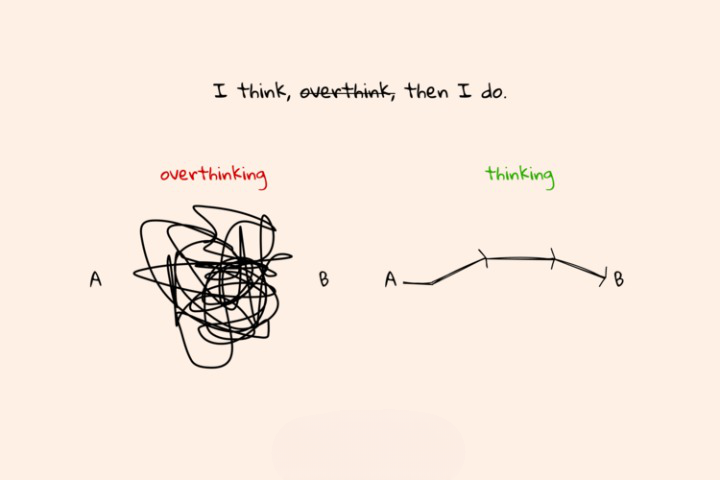
When you’re calm, you can think your way through a problem instead of just worrying about it. Think about the worst thing that can happen, how likely that is and what you could do if it happens. In a stressful situation, think about the different ways you can respond and decide which one is the most intelligent.
Don’t make mountains out of molehills.
When you use the thinking brain, you get control of the emotional brain, and you feel better.
Also, replace negative thoughts with positive thoughts. Count your blessings and remind yourself of your successes.
The treatments for anxiety range from simple stress reduction methods to therapy and medication.
Don’t overlook stress management – it can help even with very bad anxiety.
Video – a lot of helpful information, including the 3-part program of Brown and Gerbarg –
Thought patterns are like habits, and like habits, they are tough to break, but it is possible to change them. It might be easier to add good thought patterns and that way increase the amount of time you think healthily/positively, to balance out the bad. Anxiety and bad thoughts are normal functions and can’t be completely stopped, but it can be reduced to a manageable and healthy level.
Anxiety – an Overview and Ways to Treat It
Introduction
Do you often feel anxious, or do you know someone else who is? Read on to find about more about what it is it, and learn a number strategies to help prevent it, or reduce the severity of the symptoms if you have it.
Anxiety is a common mental health problem, which is prevalent throughout the world and can be really serious in some cases. Studies show that more than 1 in 10 people will develop a disabling anxiety disorder at some stage in their life.
Anxiety is usually assessed on a degree of severity, ranging from mild, to moderate, to severe.
There are a number of different anxiety disorders, which include: generalized anxiety disorder, phobias, social anxiety disorder, separation anxiety disorder, agoraphobia, panic disorder, obsessive-compulsive disorder, and selective mutism.
Symptoms
The symptoms associated with anxiety are quite varied, and can range from quite mild or to quite severe.
1) Behavioural – social withdrawal, sleeping problems, loss of appetite, increased motor tension.
2) Emotional – feelings of dread, trouble concentrating, feeling tense or jumpy, anticipating the worst, irritability, restlessness, blank mind, nightmares, obsessions about sensations, sense of ‘deja vu’, feeling trapped in your mind.
3) Cognitive – thoughts about suspected dangers, such as fear of dying, believing that chest pains are heart attack, believing shooting pains in your head are a tumor or aneurysm, feeling an intense fear when you think of dying, or you may think of it more often than normal, or can’t get it out of your mind.
4) Physiological – headaches, vertigo, digestive problems, nausea, shortness of breath, palpitations, and fatigue.
Cause
The risk factors associated with anxiety include:
1) Neuroanatomical – Neural circuitry involving the amygdala (which regulates emotions like anxiety and fear, stimulating the HPA Axis and sympathetic nervous system) and hippocampus (which is implicated in emotional memory along with the amygdala) is thought to underlie anxiety. People who have anxiety tend to show high activity in response to emotional stimuli in the amygdala.
2) Genetics – Genetics and family history may put an individual at increased risk of an anxiety disorder, but generally external stimuli will trigger its onset or exacerbation.
3) Medical conditions – Many medical conditions can cause anxiety. This includes conditions that affect the ability to breathe, like COPD and asthma, and the difficulty in breathing that often occurs near death. Conditions that cause abdominal pain or chest pain can cause anxiety and may in some cases be a somatization of anxiety.
4) Substance-induced – Several drugs can cause or worsen anxiety, whether in intoxication, withdrawal or from chronic use. These include alcohol, tobacco, cannabis, sedatives (including prescription benzodiazepines), opioids (including prescription pain killers and illicit drugs like heroin), stimulants (such as caffeine, cocaine and amphetamines), hallucinogens, and inhalants.
5) Psychological – Poor coping skills (e.g., rigidity/inflexible problem solving, denial, avoidance, impulsivity, extreme self-expectation, negative thoughts, affective instability, and inability to focus on problems) are associated with anxiety. Anxiety is also linked and perpetuated by the person’s own pessimistic outcome expectancy and how they cope with feedback negativity. Temperament (e.g., neuroticism) and attitudes (e.g. pessimism) have been found to be risk factors for anxiety.
6) Social – Social risk factors for anxiety include a history of trauma (e.g., physical, sexual or emotional abuse or assault), early life experiences and parenting factors (e.g., rejection, lack of warmth, high hostility, harsh discipline, high parental negative affect, anxious childrearing, modelling of dysfunctional and drug-abusing behaviour, discouragement of emotions, poor socialization, poor attachment, and child abuse and neglect), cultural factors (e.g., stoic families/cultures, persecuted minorities including the disabled), and socioeconomics (e.g., uneducated, unemployed, impoverished although developed countries have higher rates of anxiety disorders than developing countries).
Tip 1: Mindfulness
Mindfulness is a psychological process, which involves bringing one’s attention to what you are experiencing in the present moment, which can be developed through the practice of meditation.
To perform mindfulness you must adopt a particular orientation toward one’s experiences in the present moment, which is characterized by a mixture of acceptance, curiosity, and openness.
Mindfulness practice has been shown to reduce symptoms of depression, stress, anxiety, and can is also used to treat drug addiction.
1) Awareness – Notice the thoughts which arise in your mind and the sensations that feel in your body. Do they feel hot or cold? Notice your heartbeat. Be aware of your breathing. Allow yourself to feel these sensations without resistance
2) Acceptance – Rather than accept or reject your thoughts, try to just observe them without judgment and allow them to flow in and out of your mind.
3) Present Moment – We often worry about the future or dwell on the past, but you should learn to focus on the present moment and bring your attention back to what is happening in the now.
Tip 2: Breathing
Square breathing is a simple technique which involves taking slow, deep breaths. It is good for stress reduction and can increase performance and concentration.
To start, visualize a square, then follow the instructions going clockwise:
1) Breathe in for 4 seconds picturing one side of the square.
2) Hold your breath for 4 seconds visualizing the second side of the square.
3) Breathe out over 4 seconds visualizing the third side of the square.
4) Hold your breath for 4 seconds visualizing the fourth side of the square.
This exercise should be completed as many times as required for the breathing to become calm and regular.
Tip 3: Other Ideas
1) Keep a journal – Write down your current thoughts, and brainstorm possible solutions to your problems.
2) Reading – Read one of your favourite books, or shop around for a new self-help book.
3) Write a poem – Turn your current worries and problems into a poem to give meaning to them.
4) Colouring – Get some coloured pencils, or crayons, and draw whatever comes to mind. Try some random patterns, or if you are feeling more adventurous create a stunning piece of art.
5) Music – Listen to your favorite band, or play your instrument if you have one.
6) Dance – Move your body to your favorite song, to help keep fit and distract yourself at the same time.
7) Walk – Take a walk outside and, and pay attention to your surroundings. Count houses, cars or trees as you pass them.
8) Relaxation – Take a warm, relaxing bubble bath or a warm shower, whichever you prefer.
9) List – Write a list of positive things in your life, such as good memories and your best attributes, and read them whenever you feel bad.
10) Triggers – Make a list of your triggers, and give it to your therapist if you have one.
Inner Engineering is a technology that is designed for better well-being. Some people also called this process as yoga or meditation. In this process, you can find a way to balance between your day-to-day life and inner peace.
There are different definitions available for this kind of practice; some people call it yoga, while others call it as holistic science or inner engineering. Using yoga, you can find a connection with God or spiritual power. The word yoga is derived from the Sanskrit term ‘yog’ that is in addition. This addition is between self and god.
A few scientists say that yoga helps in connecting with your deeper self. By the word deeper self, I mean the supreme entity rests. The supreme entity is a combination of our soul and mind.
The inner engineering helps the folks to have integration between the mind and soul, which helps to experience the true power of the mind. Also, you can sharpen the skills of monitoring the mind and thoughts for handling the emotions using the method derived from yoga.
Yoga is a process of training your mind, where you learn to control your material thoughts in a single way. Thoughts have the capacity of triggering emotions, which can, in turn, trigger your physical movements. Our mind is a difficult thing to handle, but once you are able to do, you will know your divine power. The mind can’t be idle at any point of time. This is because it is medically proven that your mind is always busy even when you are sleeping. In fact, the scientist says that our mind is more active when we sleep. By controlling the thoughts, you can control the actions.
Thus, it is necessary to have a positive attitude towards life, which will reflect on your life. The communication that happens within yourself will directly have an impact on how you communicate and how you visualize the world.
To achieve this kind of positive attitude and self-awareness you need to practice inner engineering, which people also call as yoga or meditation. By this process, you also get an idea about the self-awareness. It is necessary to be aware of how self-help can mold our thoughts.
Using self-awareness you can alter the negative emotions. You need to push out all degrading thoughts using the regular and rigorous practice of yoga or inner engineering.
In this article, we have thrown light on how you can create a balanced mind and enlight your soul with the divine treasure of knowledge.
मानसिक रूप से बीमार होना कोई मजाक की बात नहीं है। ये बहुत दर्दनाक चीज़ है। आप को अगर कोई शारीरिक रोग है तो सभी आप के लिये करुणावान होंगे, पर जब आप को कोई मानसिक रोग है तो, दुर्भाग्यवश, आप हँसी के पात्र बन जायेंगे। ऐसा इसलिये है क्योंकि ये मालूम करना बहुत कठिन है कि कोई कब बीमार है और कब बेवकूफी कर रहा है? यदि किसी के परिवार में कोई मानसिक रूप से परेशान, अशांत है, तो ये उनके लिये सबसे बड़ी समस्या है। आप को पता ही नहीं चलता कि वे कब वास्तव में पीड़ा भोग रहे हैं और कब ऐसे ही बनावट कर रहे हैं ? आप समझ नहीं पाते कि कब आप उनके साथ करुणावान हों और कब कठोर?
मनुष्य का मानसिक स्वास्थ्य एक नाजुक चीज़ है। स्वस्थचित्तता और पागलपन के बीच एक बहुत छोटा अंतर होता है। यदि आप अंतर की इस सीमारेखा को रोज़ धक्का मारते हैं, तो आप उसे कभी पार भी कर लेंगे। आप जब क्रोध में होते हैं, तो हम कहते हैं, “वो गुस्से से पागल हो रहा है” या, “वो अभी पागल हो गया है”। आप उस थोड़े से पागलपन का मजा भी ले सकते हैं। आप थोड़ी देर के लिये सीमा पार करते हैं और एक तरह की स्वतंत्रता और शक्ति का अनुभव करते हैं। पर किसी दिन, अगर आप इसे पार कर के वापस लौट न पायें, तो पीड़ा शुरू हो जाती है। ये शारीरिक दर्द की तरह नहीं है, ये बहुत ज्यादा गहरी पीड़ा है। मैं ऐसे बहुत से लोगों के साथ रहा हूँ, जो मानसिक रूप से बीमार हैं और उनकी सहायता करता रहा हूँ। ऐसा किसी को नहीं होना चाहिये, पर दुर्भाग्यवश अब दुनिया में ये छूत की बीमारी की तरह फैल रहा है।
सुरक्षा जाल से परे जाना
पश्चिमी समाजों में ये बहुत बड़े स्तर पर हो रहा है, और भारत भी बहुत पीछे नहीं है। भारत में, खास तौर पर शहरी इलाकों के लोग इस दिशा में कई तरह से आगे बढ़ेंगे क्योंकि शहरी भारत पश्चिम की अपेक्षा ज्यादा पश्चिमी होता जा रहा है। अमेरिका की तुलना में यहाँ ज्यादा लोग डेनिम पहनते हैं। मानसिक बीमारियाँ, पहले के किसी भी समय की अपेक्षा, अब ज्यादा बढ़ रही हैं क्योंकि हम वे सब सहारे, साथ, सहयोग के साधन खींच कर फेंक रहे हैं जो लोगों के पास थे। पर हम इन सहारों के स्थान पर कुछ भी ला नहीं रहे हैं। अगर लोग अपने आप में चेतन और सक्षम हों तो सब कुछ ठीक रहेगा, भले ही आप सभी सहारों को खींच कर अलग कर दें। पर वो सक्षमता दिये बिना अगर आप सहारे तोड़ देंगे तो लोग टूट जायेंगे।
मानसिक बीमारियाँ, पहले के किसी भी समय की अपेक्षा, अब ज्यादा बढ़ रही हैं क्योंकि हम वे सब सहारे, साथ, सहयोग के साधन खींच कर फेंक रहे हैं, जो लोगों के पास थे। पर हम इन सहारों के स्थान पर कुछ भी नहीं ला रहे हैं।
बहुत लंबे समय से, हम अपनी मानसिक और भावनात्मक स्थिरता के लिये कुछ चीजों पर निर्भर रहे हैं। पर अब, ये सब चीजें ले ली जा रही हैं। इन चीजों में से एक है परिवार। परिवार हमें सहारा देता है – चाहे कुछ भी हुआ हो, कोई न कोई हमेशा आप के साथ खड़ा होता था। जब आप चीजें सही करते हैं तो हर कोई आप के साथ होता है, पर जब आप कुछ गलत करते हैं तो वे सब दूर हो जाते हैं। परिवार ऐसे लोगों का समूह था जो आप के द्वारा किये जा रहे सर्कस के लिये एक सुरक्षा जाल जैसा था। आप चाहे किसी भी तरफ गिरें, कुछ देर के लिये आप को पकड़ने वाला कोई न कोई ज़रूर होता था। लेकिन बहुत से लोगों के लिये वो सुरक्षा जाल अब नहीं है। जब आप गिरते हैं तो गिर ही जाते हैं। इस कारण से लोग टूट रहे हैं।
भारत की संस्कृति में, एक समय ऐसी परम्परा थी कि कुल आबादी के 30% लोग संन्यासी होते थे। उन्होंने जागरूकतापूर्वक बिना परिवार के रहने का निर्णय लिया था, बिना सहारे के रहने का, बिना घर के रहने का। इसलिये नहीं कि उनके पास साधन नहीं थे, बल्कि इसलिये कि उन्होंने इस विकल्प का चयन किया था। उन्हें कभी भी कोई अवसाद नहीं होता था क्योंकि वे सुरक्षा तंत्र की आवश्यकता के परे चले गये थे।
अगर आप ने ट्रेपीज़ बार झूले पर झूलना ठीक तरह से सीख लिया है तो आप इसे सुरक्षा जाल के बिना भी कर सकते हैं। पर अगर आप इसे ठीक ढंग से नहीं कर रहे हैं तो बेहतर होगा कि आप सुरक्षा जाल रखें, नहीं तो आप अपना सिर तोड़ लेंगे। यही सब तो हो रहा है। हमारे पास जो पारम्परिक साथ, सहयोग की व्यवस्था थी हम उसे निकाल कर फेंक रहे हैं।
दूसरा पहलू ‘धर्म’ है। मनुष्य के मनोवैज्ञानिक संतुलन को धर्म आसानी से संभाल लेता था। “ईश्वर तुम्हारे साथ है, चिंता मत करो”, इसी बात से बहुत सारे लोग शांत, स्थिर हो जाते थे। इस बात के महत्व को कम मत समझिये। आज लोग मनोचिकित्सकों के पास जा रहे हैं। भारत के पास 100 करोड़ लोगों के लिये पर्याप्त संख्या में मनोचिकित्सक नहीं हैं। किसी भी देश में नहीं हैं। और सबसे मुख्य बात – वे बहुत ही अकुशल हैं क्योंकि वे एक समय में एक ही रोगी को देख सकते हैं, और उन्हें बहुत सारे साजो-सामान की ज़रूरत होती है। पूरे सम्मान के साथ, हमें धर्म के इस पहलू को स्वीकार करना चाहिये। ये अत्यंत कम खर्चीली, सभी लोगों को एक साथ संभालने वाली मनोचिकित्सा है।
करण जौहर: :इस सब के लिये आप का धन्यवाद, क्योंकि मैं जानता हूँ कि निश्चित रूप से ये एक बड़ी विपत्ति है जो हम पर आ रही है और जैसा कि मैंने कहा, कुछ लोग मदद लेते हैं। कई बार इसका निदान रासायनिक असंतुलन के रूप में किया जाता है और उसके लिये दवाईयाँ दी जाती हैं। आप ने पहले भी, अपने आप को खोजने तथा अंदर की सुखदता को पाने के बारे में कहा है। तो ऐसी परिस्थितियों में ये हमें किस प्रकार सहायता दे सकता है?
रसायनों का एक आर्केस्ट्रा
सद्गुरु: मानव सुखदता को कई अलग-अलग तरीकों से देखा जा सकता है। इसको देखने का एक आसान तरीक़ा यह है कि प्रत्येक मानवीय अनुभव का एक रासायनिक आधार होता है। आप जिसे शांति, खुशी, प्रेम, उथल पुथल, स्वस्थचित्तता, मानसिक पीड़ा, उल्लास आदि कहते हैं, उन सभी का एक रासायनिक आधार होता है। स्वास्थ्य और अस्वस्थता का भी एक रासायनिक आधार होता है। आज दवाईयों का सारा ज्ञान बस रसायनों द्वारा आप के स्वास्थ्य का प्रबंधन करने का प्रयत्न कर रहा है। अब चिकित्सा का काम केवल रसायनों के बैंड का उपयोग कर के स्वास्थ्य का प्रबंधन करना ही रह गया है।
मानसिक अस्वस्थता का प्रबंधन भी ज्यादातर बाहर के रासायनिक पदार्थ दे कर ही किया जा रहा है। लेकिन इस धरती पर आप जितने भी रसायनों के बारे में सोच सकते हैं, वे सब, किसी न किसी प्रकार से, आप के शरीर में उपस्थित ही हैं। सही चीज़ का पता लगाना मूल रूप से स्वास्थ्य का अर्थ है सुखदता का एक विशेष स्तर। जब आप का शरीर सुख में होता है तो हम इसे अच्छा स्वास्थ्य कहते हैं। अगर ये बहुत ज्यादा सुखी हो जाता है तो हम इसे प्रसन्नता कहते हैं। अगर आप का मन सुख में होता है तो हम इसे शांति कहते हैं। जब ये बहुत ज्यादा सुखी होता है तो हम इसे परमानंद कहते हैं। अगर आप की भावनायें सुखद हैं तो हम इसे प्रेम कहते हैं। जब ये बहुत ज्यादा सुखद होती हैं तो हम इसे करुणा कहते हैं। जब आप की उर्जायें सुखद होती हैं तो हम इसे आनंद कहते हैं। जब ये बहुत ज्यादा सुखद हो जाती हैं तब हम इसे उल्लास कहते हैं। जब आप के आसपास का वातावरण सुखद हो जाता है तो हम इसे सफलता कहते हैं।
जगत का सबसे अदभुत इंजीनियर आप के अंदर है। यही वो बात है जिसके आधार पर हम आप को इनर इंजीनियरिंग देते हैं – अपनी आंतरिक व्यवस्था की इंजीनियरिंग कर के अपने जीवन का प्रभार स्वयं लेने का काम! हम जिस तरह से जन्म लेते हैं, जिस तरह से हम जीते हैं, सोचते हैं, महसूस करते हैं और अपने जीवन का अनुभव करते हैं, हम कहाँ पहुंचेंगे और कैसे मरेंगे – यह हर व्यक्ति द्वारा स्वयं ही तय किया जाता है।