L-Theanine for Focus: Does It Really Help?
Affiliate disclosure: This article contains affiliate links. If you buy through our links, we may earn a commission at no extra cost to you. Our content is educational and based on public product information and published research, not personal testing.
Many people love the calm, clear feeling of a cup of tea. L-theanine is one of the compounds believed to play a part. It is now sold as a supplement for focus and stress. Does it really help?
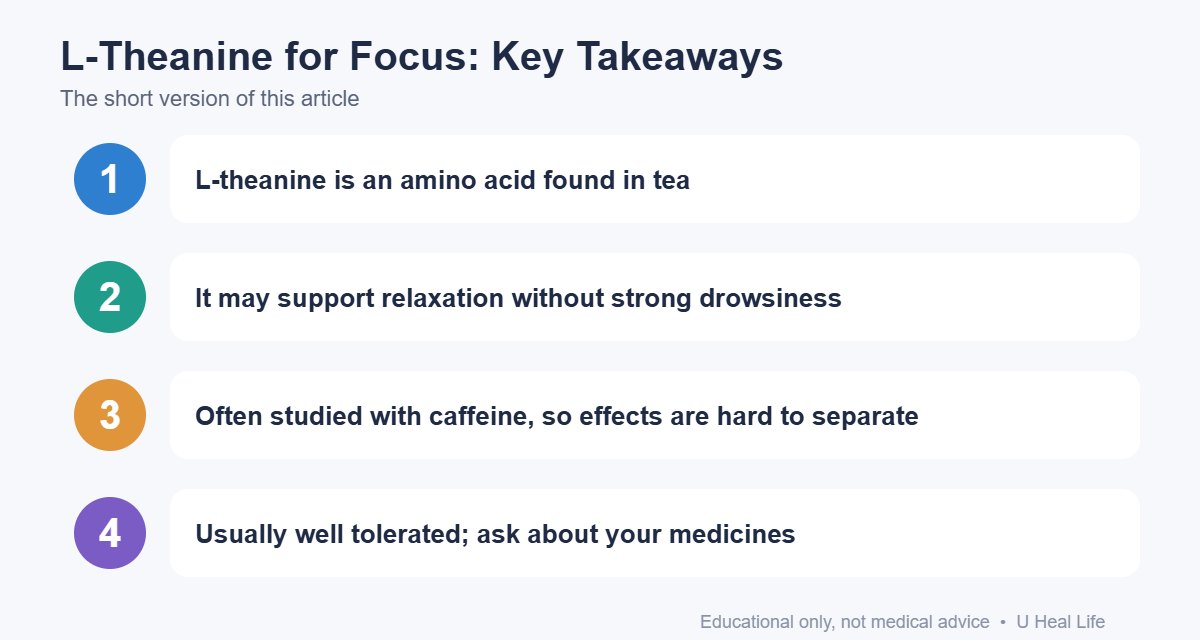
Quick answer: L-theanine may support relaxation and attention in some people, especially when combined with caffeine, but the effects look modest. Research often tests it with caffeine, so it is hard to say what L-theanine does alone. It is usually well tolerated, but ask a professional if you take medicine.
What Is L-Theanine?
L-theanine is an amino acid found mainly in tea leaves and in small amounts in some mushrooms. A cup of tea contains a small amount. Supplements provide it in capsules or powder, usually in larger amounts than tea.
What Does Research Suggest?
Studies have looked at L-theanine for:
- Relaxation: Some small studies suggest it may promote a calm state without strong drowsiness.
- Attention: When combined with caffeine, some studies report better attention and fewer mistakes on tasks.
- Stress and sleep: A few small trials suggest possible benefits for stress or sleep quality, but results are not consistent.
Doses in studies commonly range from about 100 to 200 mg, although products and studies vary. Most trials are small and short, so we cannot say how well L-theanine works for most healthy adults.
The Caffeine Question
Many studies test L-theanine together with caffeine. This pairing is popular because caffeine can raise alertness, and L-theanine may soften jitters. But if the effects come from the combination, you cannot give credit to L-theanine alone.
Strength of the Evidence
| Claim | Evidence |
|---|---|
| Promotes relaxation | Some small studies, modest effects |
| Improves focus alone | Unclear |
| Improves attention with caffeine | Some positive results, limited studies |
| Helps with sleep or anxiety | Early and mixed |
Possible Side Effects and Cautions
L-theanine is generally well tolerated in studies. Some people may notice headache or an upset stomach. Ask a doctor or pharmacist first if you:
- Take blood pressure medicine, since it may lower blood pressure slightly
- Take sedatives or other regular prescription medicine
- Are pregnant or breastfeeding, because safety data are limited
Natural Ways to Get It
Tea is the simplest source. Enjoy a cup in the morning or early afternoon, and avoid caffeinated tea late in the day so it does not hurt your sleep.
L-Theanine in Multi-Ingredient Products
L-theanine is one of the ingredients listed in BrainPill. We explain how it fits with the others in our guide to BrainPill ingredients and in our full BrainPill review.
See BrainPill’s Official Product Details
Paid affiliate link. We may earn a commission from qualifying purchases.
Frequently Asked Questions
Does L-theanine help with focus?
It may help attention a little, especially with caffeine, but evidence is limited.
Can I take L-theanine every day?
Studies often use daily doses for a few weeks. Ask a professional about long-term use.
Does L-theanine make you sleepy?
It is not usually described as a sedative, but some people feel more relaxed.
Is it better to get L-theanine from tea or supplements?
Tea is a gentle, low-cost option. Supplements give larger doses but are not necessary for most people.
Final Thoughts
L-theanine is a friendly, well-liked ingredient with some modest research behind it. It is not a miracle focus booster, but it may fit into a calm daily routine for some people.
Related Reading
- What Are Nootropics? Benefits, Risks and Evidence
- Best Ways to Improve Focus and Concentration Naturally
- Citicoline for Cognitive Health: What Research Shows
- BrainPill Review 2026: Ingredients, Benefits, Side Effects & Does It Really Work?
Disclaimer: This article is for educational purposes only and is not medical advice. Dietary supplements are not intended to diagnose, treat, cure, or prevent any disease. Talk to a qualified healthcare professional before using supplements, especially if you take medicine, are pregnant or breastfeeding, or have a health condition.