Impact-Site-Verification: 65ebaf0c-2dbc-4200-9d50-11ea7af40e54

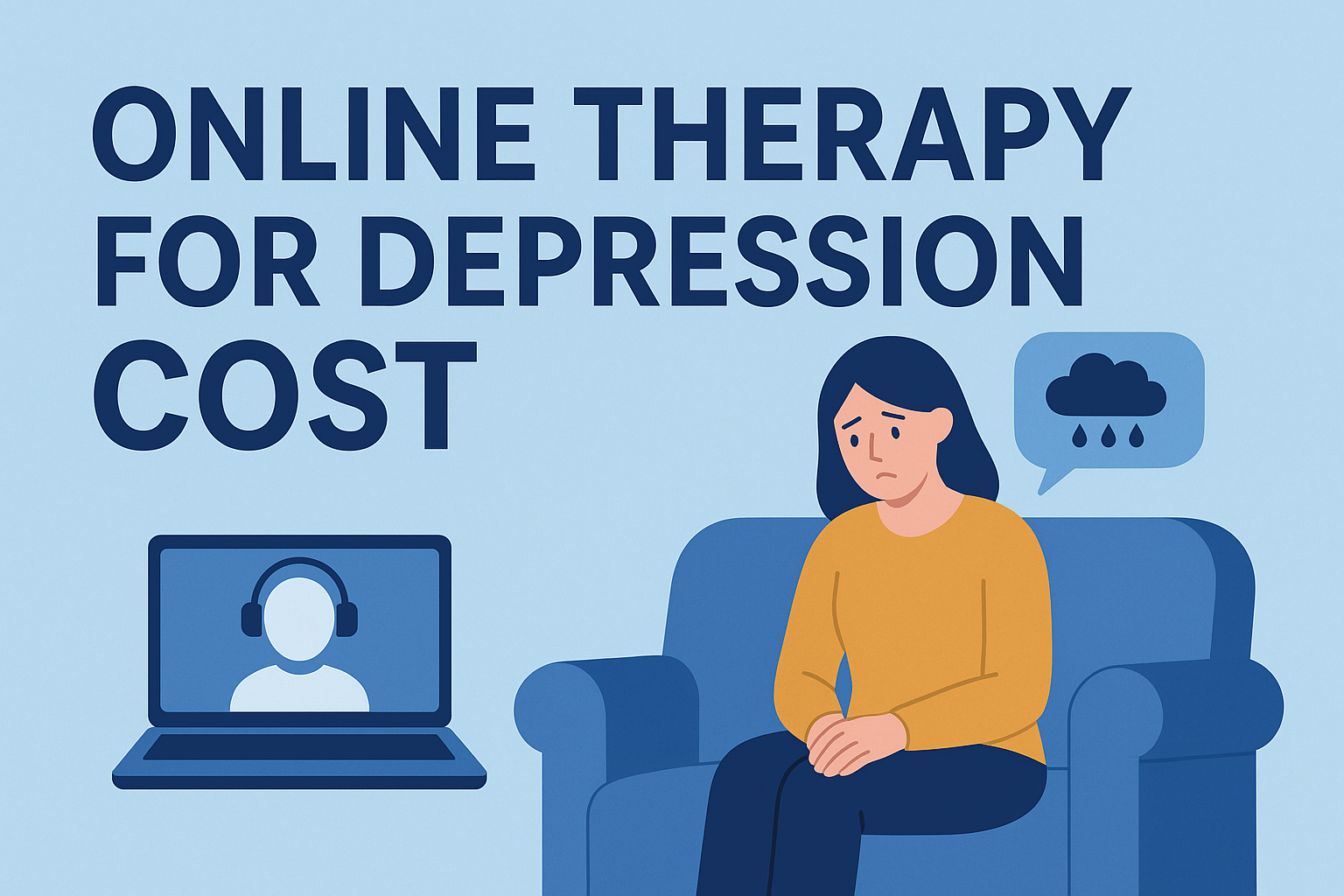
Online Therapy for Depression Cost: Complete Pricing Guide (2025-26)

Depression is one of the most common mental health conditions worldwide. With the rise of digital healthcare, online therapy for depression has become a convenient, affordable, and effective solution for many people. But the most common question people search for is:

👉 How much does online therapy for depression cost?

In this detailed guide, we’ll break down:

  • Average online therapy prices
  • Cost comparison by country
  • Factors that affect pricing
  • Affordable options
  • Insurance coverage
  • Whether online therapy is worth the cost

What Is Online Therapy for Depression?

Online therapy for depression is professional mental health treatment delivered through:

  • Video calls
  • Audio sessions
  • Live chat
  • Mobile apps

It is provided by licensed psychologists, therapists, counselors, and psychiatrists. It is especially useful for people who prefer privacy, flexible timing, or live in remote areas.


Average Cost of Online Therapy for Depression

The cost of online therapy for depression depends on the platform, therapist qualification, session length, and location.

✅ Global Average Pricing

Therapy TypeCost Per Session
Text-based therapy$40–$70
Live chat session$50–$90
Video therapy$70–$150
Psychiatric consultation (medication)$100–$250

Online Therapy for Depression Cost in India

In India, online therapy is significantly more affordable compared to Western countries.

Service TypeAverage Cost (₹)
Chat-based therapy₹500–₹1,000
Video therapy (40–60 min)₹700–₹2,000
Psychiatric consultation₹1,000–₹3,000

✅ Many platforms also offer monthly therapy plans starting at ₹2,000–₹5,000.


Online Therapy for Depression Cost in the USA

The USA has higher therapy fees:

Service TypeAverage Cost ($)
Video therapy$90–$200
Chat therapy$60–$120
Psychiatrist visit$150–$300

However, many insurance plans now cover online mental health therapy.


Factors That Affect the Cost of Online Therapy

Several factors influence pricing:

🔹 1. Therapist Experience

Senior clinical psychologists charge more than trainee counselors.

🔹 2. Session Duration

30-minute sessions are cheaper than 60-minute sessions.

🔹 3. Therapy Type

CBT, trauma therapy, and psychiatric therapy cost more than general counseling.

🔹 4. Platform vs Independent Therapist

Apps usually offer lower packages than private clinic sessions.

🔹 5. Location

Costs vary by country and city.


Is Online Therapy for Depression Cheaper Than Offline Therapy?

✅ Yes, online therapy is 30%–60% cheaper than in-person therapy.

TypeAverage Cost
Offline therapy (India)₹1,500–₹3,500
Online therapy (India)₹700–₹2,000
Offline therapy (USA)$150–$250
Online therapy (USA)$90–$150

Affordable Online Therapy Options

If you’re on a budget, here are low-cost options:

  • ✅ University counseling services
  • ✅ NGO mental health programs
  • ✅ Community mental health platforms
  • ✅ Subscription-based therapy apps
  • ✅ Free helplines + trial sessions

Does Insurance Cover Online Therapy for Depression?

✅ In the USA:

Most insurance companies now cover:

  • Video therapy
  • Online psychiatric consultations
  • Depression treatment plans

✅ In India:

Coverage is improving but still limited. Some private health insurers cover online therapy under mental health benefits after 2020 IRDAI guidelines.


Is Online Therapy Worth the Cost?

✅ Yes, it is worth it if:

  • You’re dealing with anxiety or depression
  • You need flexible appointment timing
  • You want privacy and comfort at home
  • You live in areas with limited mental health services

Studies show online CBT therapy is as effective as face-to-face therapy for depression.


How to Reduce the Cost of Online Therapy

  • 🔹 Choose monthly therapy plans
  • 🔹 Use first-session discounts
  • 🔹 Opt for group therapy
  • 🔹 Use insurance benefits
  • 🔹 Watch for festival & wellness offers

Final Thoughts on Online Therapy for Depression Cost

The cost of online therapy for depression depends on location, therapist expertise, and session type. On average:

  • India: ₹700–₹2,000 per session
  • USA: $90–$150 per session

It is more affordable, flexible, and accessible than traditional therapy and can be life-changing for people dealing with mental health challenges.


Frequently Asked Questions (FAQs)

❓ Is online therapy for depression effective?

Yes, online therapy is backed by scientific research and works well for mild to moderate depression.

❓ Can I get free online therapy?

Some NGOs, government programs, and universities offer free or low-cost options.

❓ How many sessions are required for depression?

Typically 8–16 sessions depending on severity.

❓ Is medication included in online therapy cost?

No, psychiatric medication fees are usually charged separately.


What Was the Most Stressful Event Found on the Social Readjustment Rating Scale With a LCU Score of 100? Complete Explanation

Stress affects everyone differently, but psychologists have long tried to measure how stressful major life events can be. One of the most widely used tools is the Social Readjustment Rating Scale (SRRS), created by Thomas Holmes and Richard Rahe in 1967. This scale assigns a Life Change Unit (LCU) score to major life events to show how much stress they typically cause.

But which event has the highest stress score of LCU 100?

Let’s explore the answer in detail and understand why it matters.


⭐ The Most Stressful Event With an LCU Score of 100: Death of a Spouse

On the Social Readjustment Rating Scale, the event that carries the highest possible stress score (100 LCU) is:

➡️ Death of a Spouse

This means that, according to psychological research, losing a spouse is the single most stressful life event a person can experience.


❤️ Why Is the Death of a Spouse Considered the Most Stressful Event?

Losing a life partner impacts nearly every part of a person’s emotional, financial, psychological, and social life. Here’s why the stress level is so high:


1️⃣ Deep Emotional Pain and Grief

The emotional bond between spouses is often the strongest relationship in a person’s life.
Losing that bond creates:

  • Intense sadness
  • Loneliness
  • Shock and denial
  • Long-term grief
  • Emotional numbness

The grieving process can take months or years, which is why the LCU score is so high.


2️⃣ Major Lifestyle Adjustments

A spouse is often a partner in:

  • Finances
  • Parenting
  • Household work
  • Emotional support
  • Daily decision-making

After the loss, the surviving partner must adjust to an entirely new way of living.


3️⃣ Increased Risk of Health Problems

Research shows that people who lose a spouse have a higher risk of:

  • Depression
  • Anxiety
  • High blood pressure
  • Sleep disorders
  • Weakened immunity

This additional pressure contributes to the high LCU score.


4️⃣ Financial Stress

Depending on how finances were shared, a spouse’s death can lead to:

  • Income loss
  • Medical expenses
  • Funeral costs
  • Increased responsibilities

These changes add significant stress.


5️⃣ Social and Emotional Support Disruption

A spouse is often the closest emotional support person.
Losing that support leads to:

  • Feeling isolated
  • Difficulty adjusting socially
  • Loss of shared dreams and goals

These long-term emotional effects justify an LCU score of 100.


🧠 Understanding the SRRS (Social Readjustment Rating Scale)

To understand the importance of an LCU score of 100, it helps to know what the scale includes.

The SRRS lists 43 life events, each given a stress value:

Life EventLCU Score
Death of Spouse100
Divorce73
Marital separation65
Jail term63
Death of a close family member63
Personal injury or illness53
Marriage50
Fired from job47
Pregnancy40
Change in financial state38

Events scoring above 200–300 LCUs in a year indicate a high risk of developing stress-related health problems.


🔍 Why Is the SRRS Important Today?

Even though it was created in 1967, the SRRS is still widely used in:

  • Psychology
  • Mental health counseling
  • Stress research
  • Workplace health programs

It helps identify people who may need support due to high stress levels.


🌿 How to Cope With High-Stress Life Events

If someone faces a major stressor—especially one with a high LCU score—they should consider:

✔ Emotional support from friends and family

✔ Counseling or therapy

✔ Mindfulness and meditation

✔ Stress management activities

✔ Healthy lifestyle habits

✔ Joining grief support groups

These methods help reduce long-term mental and emotional strain.


📌 Final Answer

The most stressful event on the Social Readjustment Rating Scale, with an LCU score of 100, is the Death of a Spouse.

This event impacts every aspect of life—emotionally, socially, physically, and financially—which is why it has the highest possible stress rating.

Understanding this helps people identify the importance of mental health support during major life transitions.

Disclaimer:
This article is for educational and informational purposes only. The Social Readjustment Rating Scale (SRRS) and Life Change Unit (LCU) scores are psychological research tools and are not intended to diagnose, treat, or replace medical or mental-health evaluation. Every individual experiences stress differently, and the impact of life events can vary widely. If you are experiencing high levels of stress, grief, anxiety, or emotional distress, please contact a licensed mental-health professional, therapist, or healthcare provider in your region. If you are in the United States and facing a mental-health emergency, you can call or text 988 for immediate support.

Gluten-Free-Kids-Snacks-
Top 7 Gluten-Free Snacks Loved by American Kids (Healthy & Easy Options)

Finding healthy, gluten-free snacks that American kids actually love can feel challenging. With food allergies rising and more families choosing gluten-free diets, parents need options that are safe, nutritious, and easy to prepare.
This guide shares the top 7 gluten-free snacks that kids enjoy, all parent-approved, budget-friendly, and widely available in the USA.


1. Rice Cake Mini Sandwiches

Why kids love it: Light, crunchy, and easy to customize.
Spread with peanut butter, almond butter, Nutella, cream cheese, or mashed banana.
Parent tip: Choose plain or lightly salted rice cakes to avoid hidden gluten.


2. Fresh Fruit Kabobs

Why kids love it: Fun, colorful, and naturally sweet.
Use strawberries, grapes, blueberries, and melon cubes.
Parent tip: Serve with a gluten-free yogurt dip for extra protein.


3. Gluten-Free Granola Bars

Why kids love it: Sweet, chewy, and lunchbox-friendly.
Choose brands like Kind Kids, MadeGood, or Larabar (certified gluten-free).
Parent tip: Avoid bars with barley malt (contains gluten).


4. Veggie Sticks With Hummus

Why kids love it: Crunch + creamy dip = perfect combo.
Use carrots, cucumbers, celery, and bell peppers.
Parent tip: Always check your hummus label—most are gluten-free, but a few flavored ones may contain additives.


5. Popcorn (Air-Popped or Flavored Gluten-Free)

Why kids love it: Salty, snacky, and perfect for movie time.
Plain popcorn is naturally gluten-free.
Parent tip: Choose certified gluten-free flavored popcorns like Boom Chicka Pop or SkinnyPop.


6. Gluten-Free Cheese Crackers

Why kids love it: Cheesy, crunchy, addictive.
Try brands like Simple Mills, Annie’s Gluten-Free Cheddar Bunnies, or Good Thins Rice Crackers.
Parent tip: Keep a snack-size pack ready for school or sports days.


7. Smoothie Cups or Popsicles

Why kids love it: Cold, fruity, and refreshing.
Blend fruits with lactose-free or dairy milk alternatives (almond, oat, coconut).
Parent tip: Freeze leftovers in molds for healthy gluten-free popsicles.


Bonus: DIY Gluten-Free Trail Mix (Kid Favorite!)

Mix:

  • Almonds or peanuts
  • Gluten-free pretzel sticks
  • Dark chocolate chips
  • Raisins or cranberries
  • Corn or rice cereal (gluten-free only)

It’s budget-friendly and customizable!


How to Make Sure a Snack Is Gluten-Free (Quick Checklist)

Before buying, check for:
✔ Certified Gluten-Free label
✔ No wheat, rye, barley, or malt
✔ No cross-contamination warnings
✔ Simple, clean ingredients


Why Gluten-Free Snacks Are Trending Among American Parents

  • Rise in celiac disease & gluten sensitivity
  • More schools adopting allergen-friendly policies
  • Health-conscious moms and dads prefer whole-food snacks
  • Brands launching better gluten-free options than ever

This trend is expected to grow in 2025 and beyond, making it a great niche for food + parenting content.


Final Thoughts

Choosing gluten-free snacks doesn’t have to be difficult. With these top 7 kid-approved options, parents can easily pack safer, healthier, and tastier treats for school, travel, or home.
They’re easy to make, affordable, and perfect for picky eaters too!

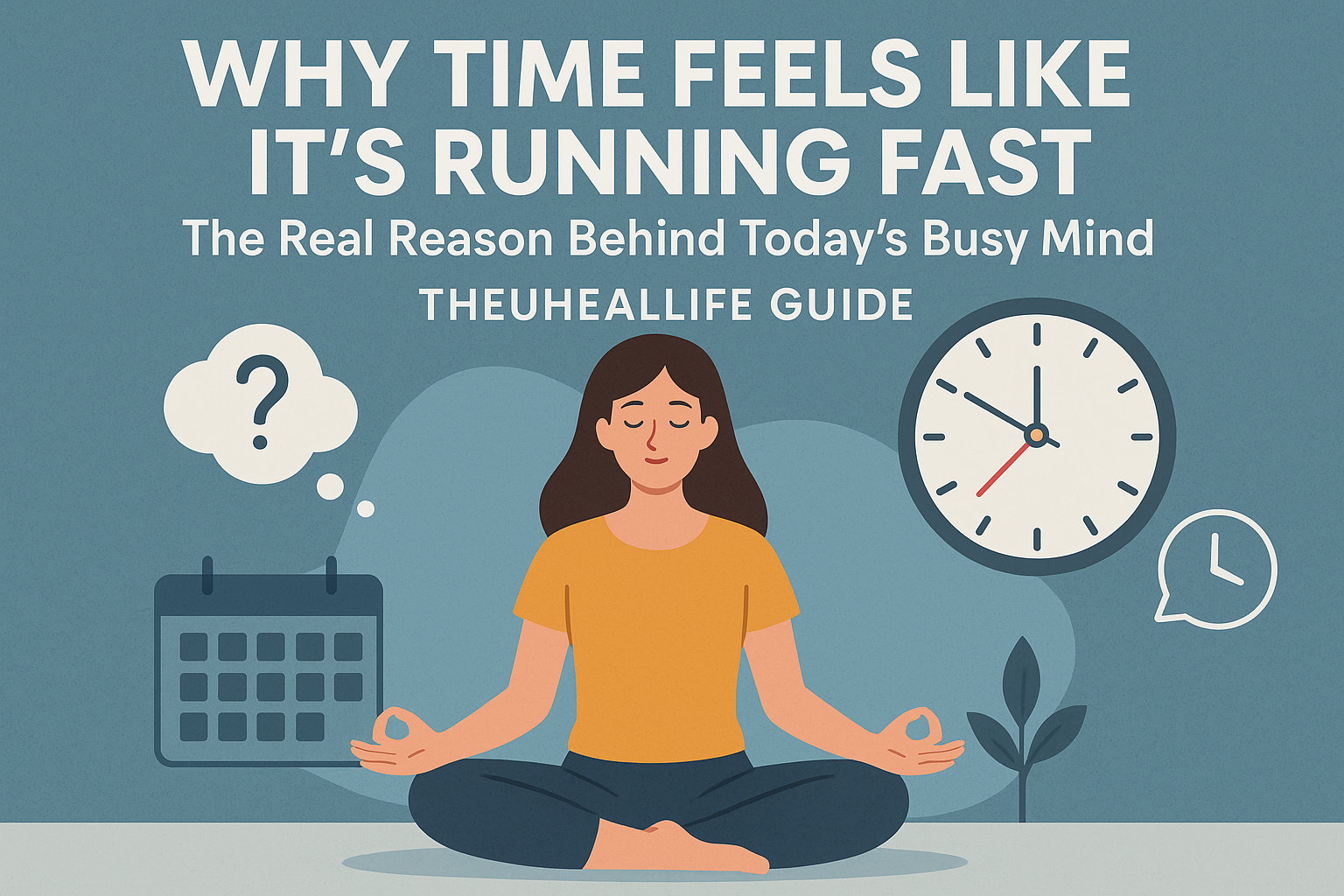
Why Time Feels Like It’s Running Fast: The Real Reason Behind Today’s Busy Mind – TheUHealLife Guide

Introduction: Why Does Time Feel Faster These Days?

Almost everyone today says the same thing:
“I don’t even notice when the day ends… months are passing so fast.”

But is time actually speeding up, or is our mind creating this feeling?

This TheUHealLife Guide explains the real psychology behind why time feels fast — and what you can do to slow it down.


Is Time Really Moving Fast? The Truth

Scientifically, time never changes its speed.
One minute is always 60 seconds — no matter how busy or free you are.

So the real question is:
Why does it feel like time is running?

The answer lies inside the brain.


1. The Busy Mind Effect: Mental Overload Blurs Time

Today’s lifestyle has overloaded our brain with information:

  • Social media
  • Messages
  • Work pressure
  • News
  • Constant notifications
  • Family responsibilities

Your brain is processing too much, too fast.

When the mind is overloaded, time feels compressed — as if hours pass in minutes.

This phenomenon is called cognitive overload.


2. Repetitive Routine Makes Time Feel Shorter

As children, time felt slow because everything was new — new schools, new friends, new experiences.

New experiences create strong memories, and this makes time feel long.

But as adults, our routine becomes repetitive:

  • Same work
  • Same daily habits
  • Same routes
  • Same environment

When life becomes predictable, days feel shorter and time feels fast.


3. Digital Distraction Speeds Up Your Perception of Time

Short-form content (reels, shorts, TikTok-style videos) trains your brain to expect fast stimulation.

You scroll for 10 minutes — but your brain feels like only 1–2 minutes passed.

This is called digital time compression.

Overuse of:

  • Reels
  • YouTube shorts
  • Social media
  • Endless scrolling

…makes your internal clock lose accuracy.


4. Stress & Anxiety Make Time Run Mentally Faster

When your mind is stressed:

  • Thoughts overlap
  • Focus breaks
  • You lose track of time
  • You don’t remember the day properly

A busy mind = time feels fast
An anxious mind = time feels blurred

Stress steals your sense of presence.


5. Poor Sleep Disrupts the Internal Clock

When you sleep less or sleep poorly:

  • Your brain processes the day faster
  • Memory becomes shallow
  • You feel that the day slipped away

Good sleep is essential to normalize your sense of time.


⭐ TheUHealLife Tips: How to Make Time Feel Slow Again

These simple practices will help you regain clarity and slow down your internal clock.


1. Add “New Moments” to Your Daily Life

New experiences make time feel longer.

Try:

  • A new walking route
  • A new hobby
  • A new activity
  • A new recipe
  • Visiting a new place (even nearby)

Novelty = slower time perception.


2. Reduce Screen Overload

Set “no-phone windows” for 20–30 minutes every few hours.

This stops digital time compression.


3. Practice 5 Minutes of Mindfulness

Being present slows the mind.

Try this simple breathing technique:

  • Inhale 4 seconds
  • Hold 4 seconds
  • Exhale 4 seconds

Mindfulness stretches your experience of the moment.


4. Break Your Day Into Segments

Instead of repeating the same routine all day, divide time into phases:

  • Morning
  • Afternoon
  • Evening

Each segment should have different types of tasks.
This adds variety → time feels slower.


5. Improve Your Sleep Cycle

Healthy sleep is one of the strongest ways to rebalance your internal sense of time.

Tips:

  • Avoid screens 1 hour before sleeping
  • Eat light at night
  • Target 7–8 hours of sleep

Conclusion: Time Isn’t Running Fast — Your Mind Is Overloaded

Fast lifestyle, continuous stress, digital distractions, and repetitive routines make the brain feel like time is speeding up.

But when you create space in your mind and introduce new moments,
you can slow down your experience of life.

This is the core message of TheUHealLife:
Heal the mind, slow the moment, and return to conscious living.

what percentage of us children aged 3-17 have a mental
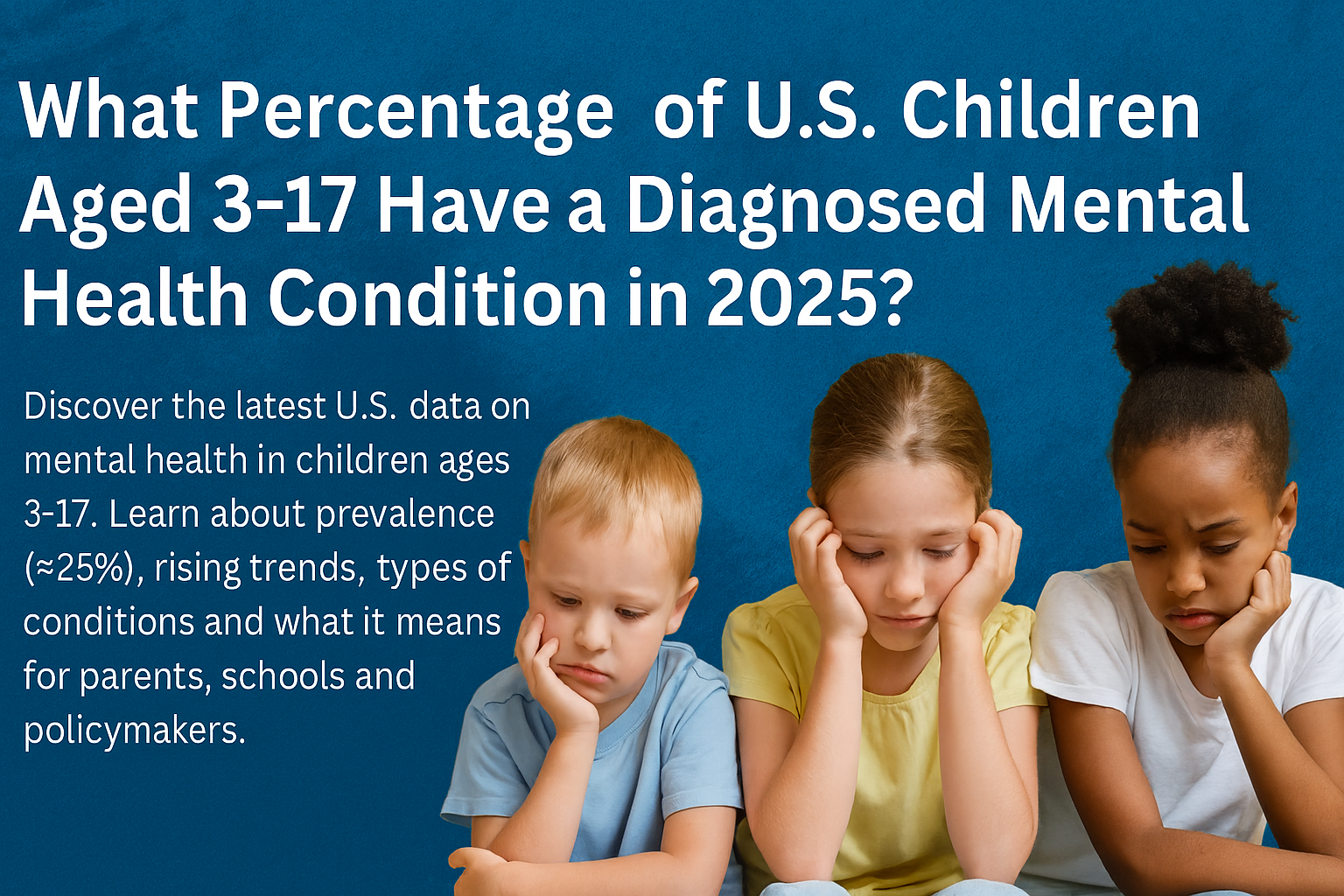
What Percentage of U.S. Children Aged 3–17 Have a Diagnosed Mental Health Condition in 2025?”

Mental health is increasingly recognised as a key component of overall health—especially among children. For parents, educators and policy-makers in the U.S., a critical question is: What percentage of children aged 3–17 are diagnosed with a mental, emotional, developmental or behavioural condition? Understanding this figure—and how it’s changing—is essential for planning services, reducing stigma and supporting early-intervention efforts.


What the Data Shows: Prevalence Among Ages 3-17

Overall prevalence

  • According to the Centers for Disease Control and Prevention (CDC), 11% of children ages 3–17 had a current, diagnosed anxiety disorder in 2022-23 (9% of males; 12% of females). CDC
  • The same data show 8% of children 3–17 had a current, diagnosed behaviour disorder and 4% had a current, diagnosed depression. CDC
  • More broadly, data show that “more than 1 in 4 children age 3-17 years had a current, diagnosed mental, emotional, developmental or behavioural (MEDB) condition” in 2022, according to the Health Resources and Services Administration (HRSA). mchb.hrsa.gov
  • Survey data indicate that about 25.8% of children aged 3–17 had one or more reported MEDB problems in a 2022 sample. nschdata.org+2CDC+2
  • Between 2016 and 2021, prevalence of “mental, behavioural and developmental disorders” (MBDD) for ages 3-17 increased from 25.3% to 27.7%. CDC

Interpretation for 2025

Although exact 2025-only data may not yet be fully released, the most current figures (2022-23) suggest about one in four children aged 3-17 in the U.S. has been diagnosed with some form of mental, emotional, developmental or behavioural condition.
Given the trend of rising prevalence (see above), it is reasonable to project that by 2025 the figure will be at or above ~25-30%.


Breakdown by Condition & Age Group

  • Anxiety is the most commonly diagnosed specific condition in children 3-17: ~11%. CDC
  • Behaviour disorders: ~8%. CDC
  • Depression: ~4% in this age range. CDC+1
  • In adolescents ages 12-17, a recent survey shows ~20.3% had a current, diagnosed mental or behavioural health condition (2023 data). mchb.hrsa.gov

Trends: What’s Changing

  • The prevalence of MBDD among ages 3-17 increased from 25.3% in 2016 to 27.7% in 2021. CDC
  • Among adolescents 12-17, diagnosed conditions increased ~35% between 2016 and 2023 (from ~15.0% to ~20.3%) with particularly large jumps in anxiety (+61%) and depression (+45%). mchb.hrsa.gov
  • The data suggest that children in certain demographics (poverty, caregiver mental health issues, etc.) may have higher risk. NCBI+1

Why This Matters

Early-life impact

Mind and behaviour issues in childhood can affect school performance, social relationships, and long-term health. Early diagnosis and support can improve outcomes.

Service & access gap

Even though a significant percentage of children have diagnosed conditions, many do not receive adequate counselling or mental health services. mchb.hrsa.gov+1

Public health policy & education

Reliable prevalence statistics are key for funding mental health programs, school-based services, and community outreach.

Parental/educator awareness

Understanding “1 in 4 children may have a mental/emotional/behavioural condition” helps reduce stigma and encourages families to seek help early.


Implications for Parents, Schools & Policymakers

  • For parents: Know the signs (anxiety, behaviour changes, mood shifts) and seek evaluation early if you suspect an issue.
  • For schools: Given that ~25% of students may be affected, school programmes for screening, counselling, and referral are essential.
  • For policymakers: Allocate resources for child mental health services, integrate behavioural health in pediatric care, and support underserved communities.
  • For service providers: Expand access (especially telehealth), emphasise early-intervention, and tailor services for younger age groups (3-7, 8-12, etc.).

Challenges & Areas for Improvement

  • Diagnosis vs. treatment gap: Many children who are diagnosed still do not receive timely or adequate services. CDC+1
  • Data lag & variation: Some metrics lag by 1-2 years, and different studies define “mental, emotional, developmental or behavioural condition” differently, making direct comparisons tricky.
  • Social determinants: Factors like poverty, caregiver stress, housing instability and access to care play a big role in outcomes. Johns Hopkins Public Health
  • Stigma & access: Even with increasing awareness of mental health issues, stigma and lack of providers (especially in rural areas) remain barriers.

Conclusion

In the U.S., among children aged 3-17, the prevalence of diagnosed mental, emotional, developmental or behavioural conditions is about 1 in 4 (≈ 25%) or more based on the most recent data (2022-23). With rising trends and evolving awareness, the figure by 2025 is likely to be at or slightly above that threshold.
This high prevalence underscores the importance of early detection, intervention, access to care and policy support. For anyone (parents, educators, policymakers) concerned with child wellbeing, these numbers are a call to action: mental health is not a niche concern—it’s central to child development, education and long-term outcomes.

Behavioral Health Trends 2025 – Sagent Behavioral Health
7 Key Trends in U.S. Behavioral Health in 2025 & How Sagent Behavioral Health Fits In

The U.S. behavioral health landscape is evolving faster than ever. Rising awareness of mental well-being, new digital tools, and integrated care models are reshaping how Americans access therapy and psychiatric care. In this changing environment, Sagent Behavioral Health is emerging as a key player—uniting multiple leading regional brands under one name and creating a nationwide network of accessible, compassionate behavioral health services.

In this blog, we’ll explore seven major trends shaping behavioral health in 2025 and how Sagent Behavioral Health aligns with these transformations.


1. Expansion of Telehealth and Virtual Therapy

The pandemic accelerated telehealth adoption, and in 2025 it remains a cornerstone of behavioral care. Virtual therapy sessions make it easier for patients in rural and urban areas alike to connect with licensed professionals from home.

Sagent Behavioral Health has integrated advanced telehealth platforms, ensuring seamless access to therapy, psychiatry, and medication management—bridging the gap for clients who prefer remote care.

Keywords: telehealth behavioral health, virtual therapy USA, Sagent Behavioral Health telehealth


2. Focus on Integrated Physical and Mental Health Care

A growing body of research shows the link between physical and mental health. Clinics are now offering integrated care models—combining behavioral health with primary care to treat the whole person.

Sagent Behavioral Health embraces this approach, collaborating with medical professionals to ensure patients receive comprehensive, coordinated care that addresses both mental and physical wellness.

Keywords: integrated care behavioral health, mind-body wellness, Sagent Behavioral Health integrated model


3. Rise in Youth and Adolescent Mental Health Services

An alarming increase in anxiety, depression, and social stress among youth has pushed the need for specialized adolescent behavioral care.

Sagent Behavioral Health is responding with dedicated child and adolescent programs, combining therapy, family counseling, and evidence-based interventions to support young people’s mental health in schools and communities.

Keywords: youth mental health trends 2025, adolescent therapy programs, Sagent Behavioral Health youth care


4. Increasing Use of Technology and Data-Driven Insights

AI, data analytics, and digital tracking tools are helping therapists personalize treatment plans. In 2025, the behavioral health sector continues to adopt technology for progress tracking, medication management, and real-time assessments.

Sagent Behavioral Health uses data-driven tools to enhance patient outcomes, streamline care coordination, and provide measurable progress updates to both patients and clinicians.

Keywords: behavioral health technology, AI in therapy, data-driven mental health, Sagent Behavioral Health innovation


5. Growing Emphasis on Accessibility and Affordability

Behavioral health has historically been difficult to access due to cost, insurance limits, and stigma. Now, leading networks like Sagent Behavioral Health are expanding services to more regions, offering in-person and online sessions that are affordable and insurance-friendly.

By uniting more than 1,600 clinicians under one brand, Sagent improves efficiency and access—helping thousands of Americans find care without barriers.

Keywords: affordable mental health care USA, behavioral health access, Sagent Behavioral Health locations


6. Focus on Clinician Support and Workforce Expansion

The shortage of licensed behavioral health professionals has become a national concern. Providers are now focusing on training, retention, and clinician well-being to sustain care quality.

Sagent Behavioral Health stands out by supporting its extensive clinician network through ongoing professional development, flexible scheduling, and strong community collaboration—ensuring both provider and patient satisfaction.


7. Emphasis on Holistic and Preventive Mental Health

Prevention-focused care—such as mindfulness, stress management, and early intervention—is replacing crisis-based models.

Sagent Behavioral Health incorporates holistic and preventive strategies, promoting wellness before conditions worsen. Its services go beyond therapy to include mindfulness-based programs, lifestyle coaching, and integrative approaches to emotional resilience.

Conclusion

The year 2025 marks a new era for behavioral health in the U.S.—where technology, accessibility, and integration redefine how we understand and manage mental wellness.

With its innovative approach, Sagent Behavioral Health is at the forefront of this transformation—empowering individuals and families through accessible, data-driven, and compassionate mental health care.

If you’re exploring modern, patient-centered behavioral care, Sagent Behavioral Health represents the future of mental wellness—uniting care, compassion, and technology to create lasting change.

Reclaim Wellness Carmel
How Reclaim Wellness Carmel Empowers You to Take Back Your HealthWellnessHow Reclaim Wellness Carmel Empowers You to Take Back Your Health

In today’s fast-paced world, most people focus on treating symptoms instead of addressing the real cause of their health challenges. But at Reclaim Wellness Carmel, the philosophy is different. This leading holistic wellness center in Carmel, Indiana helps individuals take back control of their health through a root-cause, integrative approach that focuses on long-term healing, not temporary relief.

🌿 The Reclaim Wellness Philosophy: Heal from the Inside Out

At Reclaim Wellness Carmel, wellness isn’t just about the absence of illness — it’s about achieving balance in body, mind, and spirit. The center’s approach is based on functional medicine and holistic care, combining modern science with natural healing methods.

Rather than prescribing quick fixes, the expert team looks at the whole person — lifestyle, nutrition, mental health, and environment — to uncover what’s truly affecting your wellbeing. This personalized care model helps restore balance and empowers you to become an active participant in your healing journey.

💪 Key Services That Help You Reclaim Your Health

Reclaim Wellness Carmel offers a wide range of services designed to improve vitality, energy, and mental clarity. Each program is tailored to meet the specific needs of every individual.

1. Functional Medicine & Root-Cause Diagnosis

Through advanced lab testing and health assessments, the team identifies the underlying factors behind chronic fatigue, hormonal imbalance, gut issues, and inflammation. The goal is to correct these imbalances naturally and sustainably.

2. IV Therapy & Nutrient Optimization

For those dealing with nutrient deficiencies or low energy, IV therapy provides a direct boost of vitamins, minerals, and hydration. This therapy supports immunity, enhances metabolism, and promotes recovery from stress or illness.

3. Weight Management & Metabolic Health

Instead of crash diets or fad solutions, Reclaim Wellness focuses on long-term metabolic balance. Customized nutrition guidance, body composition tracking, and lifestyle support help you lose weight while improving overall wellness.

4. Hormone Optimization & Anti-Aging Treatments

Hormonal imbalance is one of the most common yet overlooked issues affecting both men and women. The clinic provides bioidentical hormone replacement therapy and anti-aging programs to restore vitality, improve sleep, and enhance mood.

5. Mind-Body Therapies & Stress Management

Emotional health plays a crucial role in overall wellness. Mind-body therapies, meditation guidance, and stress-relief programs help patients reduce anxiety, improve mental clarity, and build emotional resilience.

🌸 Why Choose Reclaim Wellness Carmel

  • Personalized care: Every treatment plan is tailored to your body and lifestyle.
  • Integrative approach: Combines traditional medicine, nutrition, and holistic therapies.
  • Root-cause focus: Addresses underlying issues, not just symptoms.
  • Expert practitioners: A team of skilled professionals with years of experience in integrative health.
  • Community-centered care: A welcoming, supportive environment where your health journey truly matters.

🌞 The Power to Reclaim Your Health Starts with You

Taking back control of your health is not about short-term results — it’s about sustainable change. Reclaim Wellness Carmel gives you the tools, guidance, and ongoing support to live a healthier, more balanced life.

If you’ve been struggling with fatigue, stress, or unexplained health issues, it’s time to stop managing symptoms and start reclaiming your vitality.

👉 Visit Reclaim Wellness Carmel today to begin your journey toward true healing and holistic wellness.

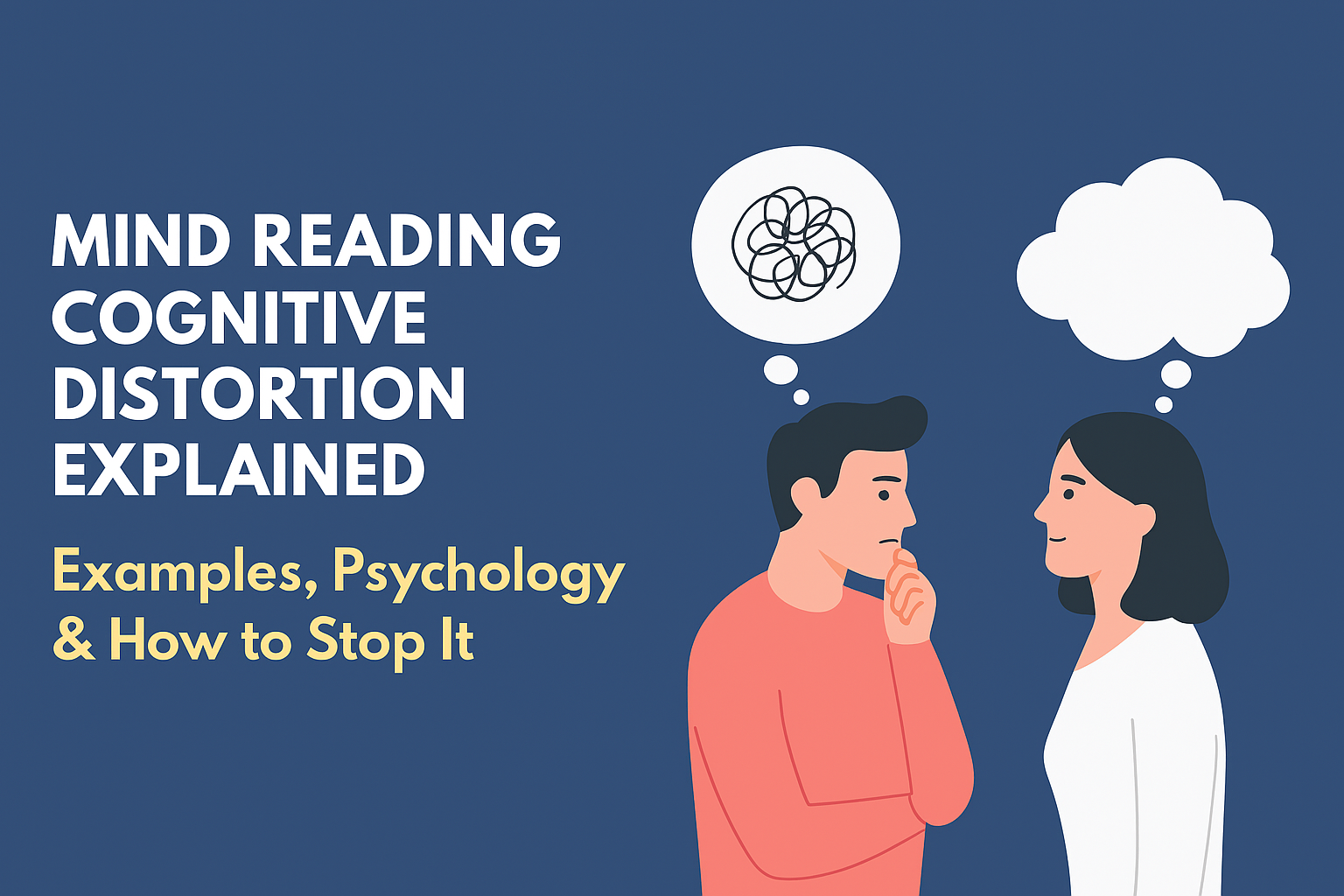
Mind Reading Cognitive Distortion Explained — Examples, Psychology & How to Stop It

What Is the Mind Reading Cognitive Distortion?

Have you ever caught yourself thinking, “They must be judging me,” or “She probably thinks I’m stupid” — without any real proof?
That’s called mind reading, a cognitive distortion where you assume you know what others are thinking, usually in a negative way.

In psychology, mind reading is part of a group of distorted thinking patterns that cause unnecessary stress, anxiety, and conflict. When you assume others’ thoughts without evidence, you’re essentially projecting your own fears or insecurities onto them.


The Psychology Behind Mind Reading

Mind reading often develops as a defense mechanism. Our brains evolved to predict others’ intentions for survival, but in modern life, this can backfire.
Cognitive behavioral psychologists explain that this distortion stems from automatic negative thoughts (ANTs) — mental shortcuts that jump to conclusions without data.

For example:

  • You see a friend texting while you’re talking and think, “They’re bored of me.”
  • A coworker doesn’t reply to your message, and you assume, “They must be upset with me.”

In reality, your friend might just be responding to an urgent message, and your coworker might be busy. But your brain interprets uncertainty as rejection.


Common Examples of Mind Reading Cognitive Distortion

  1. Social Anxiety Situations
    “Everyone at the party thinks I’m awkward.”
    → You avoid conversations and reinforce isolation.
  2. Workplace Scenarios
    “My boss didn’t smile today — she must think my work is bad.”
    → You lose confidence and overthink your performance.
  3. Relationships
    “He didn’t text me back; he must have lost interest.”
    → You start acting distant or defensive, creating tension that didn’t exist before.

How Mind Reading Affects You

Constantly assuming what others think leads to:

  • Increased anxiety and self-doubt
  • Miscommunication and strained relationships
  • Negative self-talk that reinforces low self-esteem
  • Emotional exhaustion from overanalyzing every interaction

Over time, this thinking pattern can make you overly self-conscious and disconnected from reality.


How to Stop Mind Reading Cognitive Distortion

1. Ask Instead of Assuming

When in doubt, communicate directly.
Example: Instead of thinking, “They’re mad at me,” ask, “Hey, is everything okay between us?”

2. Challenge Your Thoughts

Write down your assumptions and question them:

  • What’s my evidence for this thought?
  • Is there another explanation?
  • Would I think the same way if I was in a calm state?

3. Practice Mindfulness

Stay grounded in the present moment.
Mindfulness helps you observe thoughts without automatically believing them.

4. Use Cognitive Behavioral Therapy (CBT) Techniques

CBT helps identify and reframe distorted thinking.
You can learn to replace “They think I’m boring” with “I don’t actually know what they think — and that’s okay.”

5. Build Self-Confidence

When your self-esteem improves, you rely less on others’ imagined opinions.
Engage in positive self-affirmations and celebrate small wins daily.


Final Thoughts

The mind reading cognitive distortion tricks you into believing assumptions are facts.
By challenging these thoughts, communicating openly, and practicing mindfulness, you can break free from this mental trap and enjoy more honest, peaceful relationships.


Mind Reading Cognitive Distortion
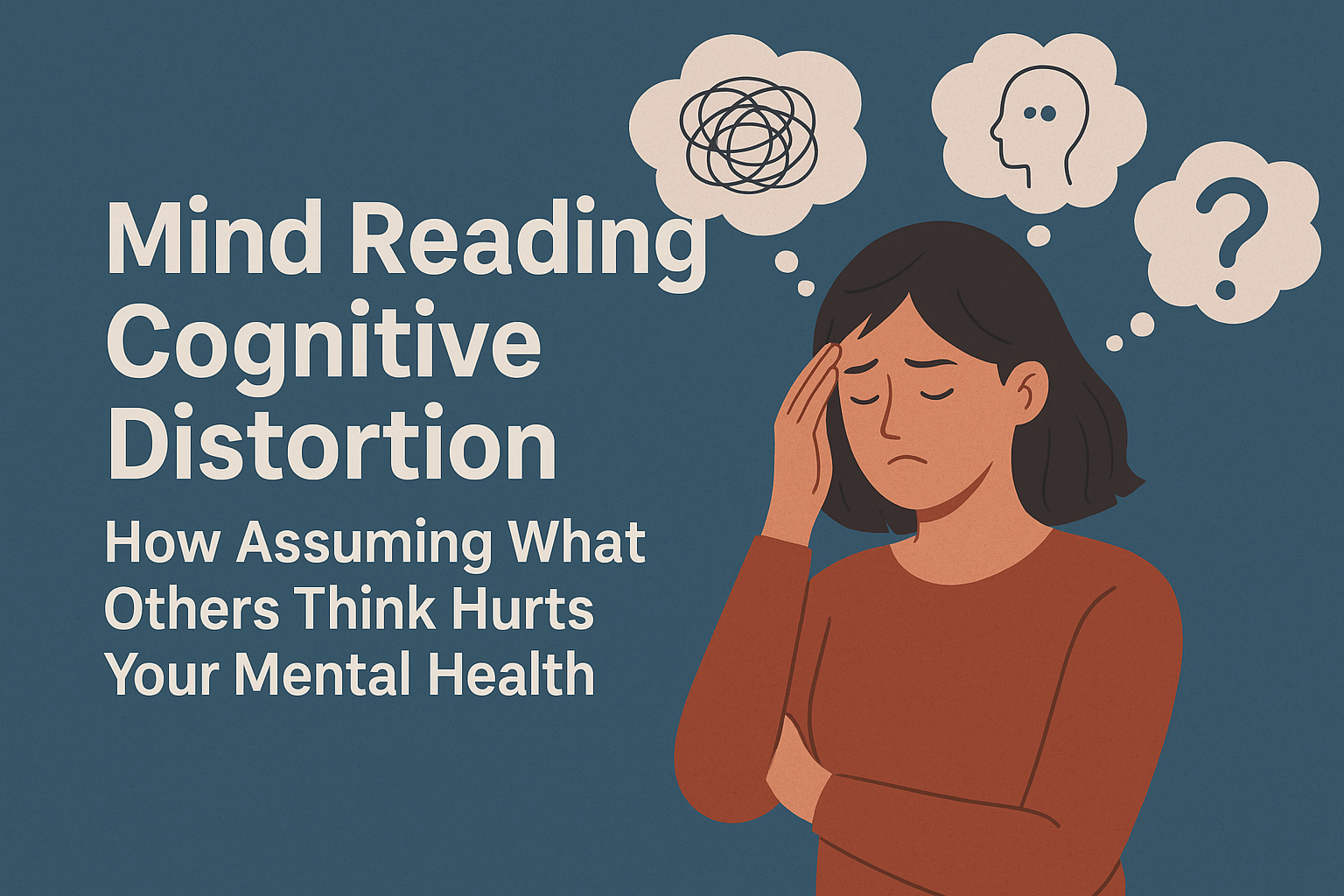
Mind Reading Cognitive Distortion: How Assuming What Others Think Hurts Your Mental Health

Have you ever caught yourself thinking, “They must be judging me” or “She probably thinks I’m not good enough”?
If so, you’ve experienced what psychologists call Mind Reading — a common cognitive distortion that can seriously affect your confidence and mental health.

This article explains what the mind reading distortion is, how it harms your mental well-being, and how to stop assuming what others think about you.


What Is Mind Reading Cognitive Distortion?

The Mind Reading Cognitive Distortion occurs when you assume you know what others are thinking — usually something negative about you — without any real evidence.

Examples include:

  • “My boss didn’t smile today; she must be unhappy with my work.”
  • “My friend didn’t reply; he must be ignoring me.”
  • “People probably think I’m awkward in social situations.”

This distortion is part of Cognitive Behavioral Therapy (CBT) principles, which identify unhelpful thought patterns that distort reality and contribute to anxiety and depression.


Why We Fall Into the Mind Reading Trap

Humans are naturally social and wired to interpret others’ emotions. However, when our self-esteem is low or we’re under stress, our brains start filling in the blanks with negative assumptions.

This often happens because of:

  • Fear of rejection or criticism
  • Past negative experiences
  • Perfectionism or social anxiety
  • Low self-worth

Essentially, mind reading acts as a self-defense mechanism — but instead of protecting you, it often makes you feel worse.


How Mind Reading Hurts Your Mental Health

Constantly trying to guess what others think creates emotional exhaustion. Here’s how it damages your mental well-being:

  1. Increases Anxiety
    You become hyper-focused on others’ reactions, reading hidden meanings in every word or gesture.
  2. Destroys Self-Confidence
    Believing others think poorly of you lowers your self-esteem and prevents you from expressing your authentic self.
  3. Causes Miscommunication
    You might act defensively or withdraw, leading to misunderstandings and strained relationships.
  4. Triggers Overthinking
    Instead of living in the present, your mind replays interactions, searching for “proof” that someone disapproves of you.

Signs You’re Engaging in Mind Reading

Ask yourself:

  • Do I often assume what others feel without asking them?
  • Do I think people are judging me even when they haven’t said anything?
  • Do I interpret neutral behavior as rejection?
    If you said yes to most of these, you might be stuck in the mind reading loop.

How to Stop Mind Reading

Breaking free from this cognitive distortion takes awareness and practice. Here’s how:

1. Challenge Your Thoughts

Ask yourself:

  • Do I have solid evidence for this belief?
  • Could there be another explanation for their behavior?

2. Communicate Directly

Instead of guessing, ask. Open communication helps replace assumption with clarity.

3. Practice Mindfulness

Mindfulness helps you observe thoughts without judgment, allowing you to notice distorted thinking before it takes over.

4. Build Self-Esteem

The more confident you are, the less you’ll care about others’ opinions. Focus on your achievements and values.

5. Use CBT Techniques

Journaling your thoughts and reframing negative assumptions are key tools from Cognitive Behavioral Therapy that can help you see reality more clearly.


Example of Reframing a Mind Reading Thought

Before: “She didn’t reply to my text — she must be angry.”
After: “There could be many reasons she hasn’t replied. Maybe she’s busy or didn’t see it yet.”

By reframing, you stop assigning negative meanings to neutral events.


The Psychology Behind Mind Reading

Psychologists link mind reading to cognitive bias — specifically, the negativity bias, where people focus more on negative interpretations than positive or neutral ones.

Over time, this pattern can contribute to:

  • Social anxiety disorder (SAD)
  • Depressive thinking
  • Low emotional resilience

Recognizing and correcting this bias is essential for mental well-being.


Final Thoughts

Mind reading may seem harmless, but over time, it fuels anxiety, isolation, and self-doubt. Remember — you can’t truly know what someone else is thinking.

The key to better mental health is challenging your assumptions, communicating clearly, and focusing on facts, not fears.

When you stop trying to read minds, you start freeing your own.

Married to Mind Reader Chinese Drama Explained — Full Plot Summary & Ending
Married to Mind Reader Chinese Drama Explained — Plot Summary & Ending

If you’re a fan of romantic Chinese dramas with a touch of mystery and telepathy, Married to Mind Reader is a must-watch. This drama has recently captured the attention of C-drama lovers for its unique storyline and emotional depth. In this post, we’ll explain the full plot, introduce the main characters, and break down the ending for you — spoiler alert ahead!


Plot Summary

Married to Mind Reader follows the story of Su Nian, a cheerful and kind-hearted writer, and Gu Jun, a cold yet intelligent CEO who has an unusual ability — he can read minds.

Su Nian accidentally marries Gu Jun through a twist of fate when a misunderstanding during a business event turns into a viral scandal. To save their reputations, both agree to a contract marriage. But soon, Gu Jun’s hidden power starts complicating their relationship. He can hear Su Nian’s true thoughts — from her insecurities to her genuine love and fear.

As they start living together, Gu Jun begins to realize that hearing someone’s mind isn’t as easy as it seems. He discovers Su Nian’s painful past and her struggle to trust again. Over time, his cold heart starts to melt, and genuine love blossoms between them.


Main Characters

  • Gu Jun (Male Lead) – A brilliant businessman with the ability to read minds. Though distant at first, he eventually learns the true meaning of love.
  • Su Nian (Female Lead) – A warm-hearted writer who teaches Gu Jun that emotions are not meant to be controlled but felt.
  • Lin Yue (Second Lead) – Su Nian’s best friend who provides comic relief and emotional support.
  • Qin Hao (Antagonist) – A rival businessman who discovers Gu Jun’s secret and uses it against him.

Themes and Message

The drama explores several key themes:

  • Trust and vulnerability in relationships
  • The burden of knowing too much about others’ thoughts
  • Healing through love and emotional honesty

It beautifully balances fantasy and realism, showing how love can overcome even supernatural challenges.


Ending Explained

In the final episodes, Gu Jun’s mind-reading ability starts to fade — a symbolic moment showing his emotional healing. He learns to trust Su Nian without relying on his power.

The couple faces one last conflict when Qin Hao exposes Gu Jun’s ability to the media. Su Nian, instead of running away, stands by Gu Jun and confesses her love publicly.

In the end, Gu Jun proposes again — this time out of pure love, not obligation. The drama closes with a heartfelt wedding scene where both promise to build a life based on honesty and understanding.

The ending delivers a powerful message:

“Love doesn’t need mind reading; it needs trust.”


Why Fans Love This Drama

  • A refreshing romantic fantasy concept
  • Strong chemistry between the leads
  • Emotional storytelling with a satisfying ending
  • Beautiful cinematography and soundtrack

Viewers describe Married to Mind Reader as a blend of romance, comedy, and emotional healing that stays in your heart long after the final episode.


Where to Watch

You can stream Married to Mind Reader on:

  • iQIYI
  • YouTube (official channels)
  • Viki (depending on your region)

Always check for English subtitles for the best experience!


Final Thoughts

Married to Mind Reader is more than just a romantic fantasy — it’s a heartfelt story about trust, love, and understanding. Whether you’re new to Chinese dramas or a longtime fan, this series is worth adding to your watchlist.