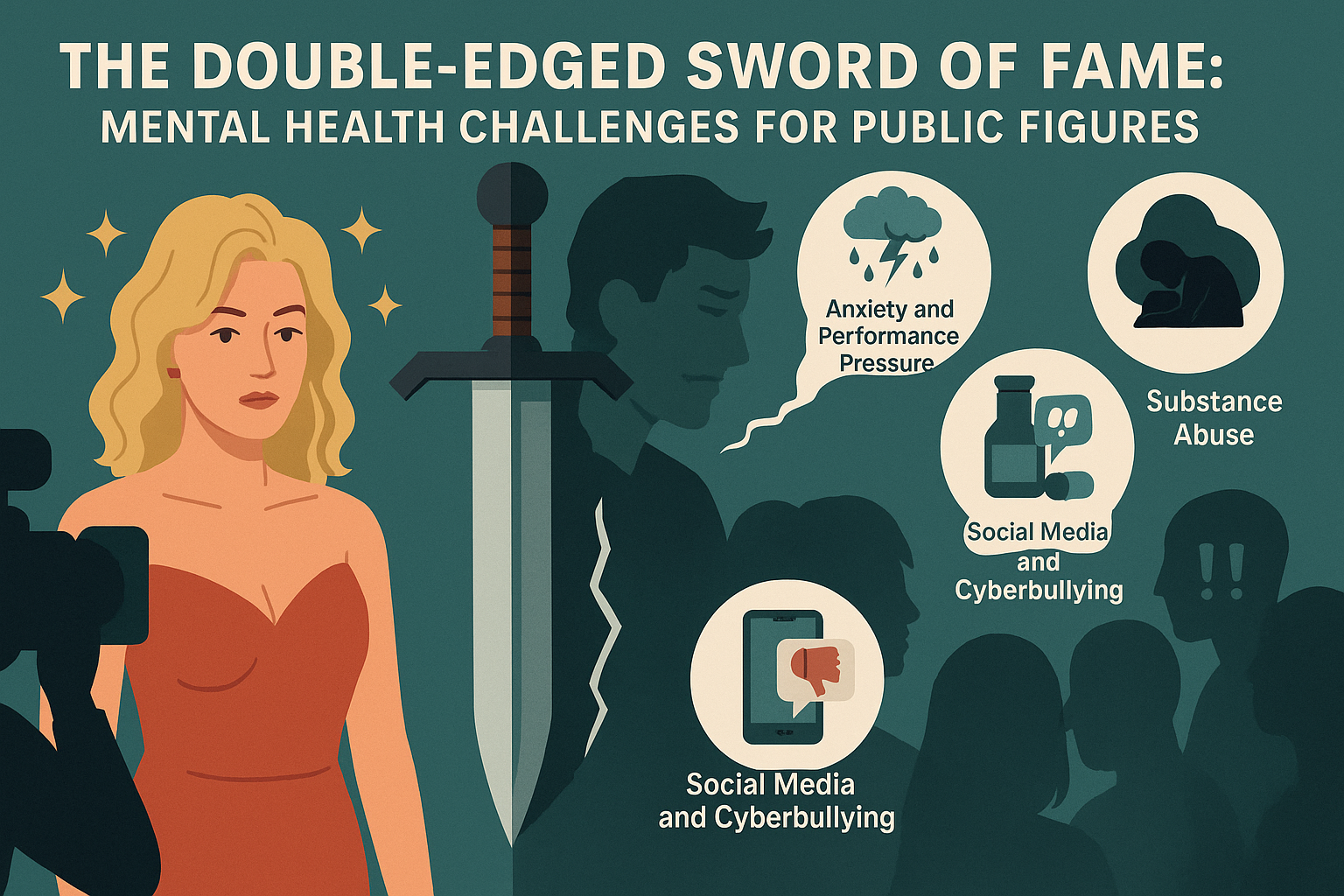
The Double-Edged Sword of Fame: Mental Health Challenges for Public Figures

The Hidden Side of Fame

While fame brings visibility and influence, it also strips away anonymity, personal freedom, and privacy. This constant spotlight can create an overwhelming pressure to perform, maintain a public persona, and meet unrealistic expectations—all of which contribute to emotional strain.

Common Mental Health Challenges Faced by Public Figures

1. Anxiety and Performance Pressure

Public figures frequently feel immense pressure to remain relevant, successful, and liked. This can lead to chronic anxiety, panic attacks, and obsessive behaviors aimed at preserving their image.

2. Depression and Isolation

Fame can be isolating. Surrounded by people yet feeling deeply alone, many celebrities struggle to maintain genuine connections. The fear of being exploited or misunderstood often results in emotional withdrawal.

3. Substance Abuse

The use of alcohol and drugs as coping mechanisms is unfortunately common in the entertainment and sports industries. These substances may provide temporary relief but often exacerbate underlying mental health issues.

4. Impostor Syndrome

Despite success, many public figures suffer from impostor syndrome—the feeling that they are frauds who don’t deserve their achievements. This persistent self-doubt can be mentally exhausting.

5. Social Media and Cyberbullying

Online platforms give fans unprecedented access to celebrities—but this access can quickly turn toxic. Cyberbullying, body shaming, and relentless criticism can have devastating effects on mental well-being.

The Role of the Media

The media plays a powerful role in shaping public perception of celebrities. Tabloid journalism, paparazzi invasions, and sensationalist headlines can dehumanize individuals and trivialize their struggles. The commodification of personal lives can make it difficult for public figures to seek help without judgment or backlash.

Breaking the Silence: Advocating for Mental Health

Fortunately, a growing number of public figures are now speaking openly about their mental health challenges. Celebrities like Lady Gaga, Dwayne “The Rock” Johnson, and Selena Gomez have helped de-stigmatize mental illness, encouraging others to seek support.

Ways to Support Public Figures’ Mental Health:

  • Create safer online spaces by avoiding harmful comments and promoting kindness.
  • Support privacy laws that protect personal boundaries.
  • Encourage open conversations about mental health without judgment or mockery.
  • Recognize humanity behind celebrity—everyone struggles, regardless of status.

Conclusion

Fame is not a cure for insecurity or emotional pain—it often amplifies them. Understanding the mental health challenges faced by public figures is essential not only for those in the spotlight but also for fans, media, and society at large. By promoting empathy, responsible media consumption, and open dialogue, we can help ensure that fame doesn’t come at the cost of mental well-being.

Legal and Ethical Dimensions of Involuntary Treatment

Involuntary treatment, particularly in the context of mental health care, presents one of the most complex intersections of law, ethics, and medical practice. While the goal is often to protect individuals and ensure public safety, this form of treatment can raise serious concerns about autonomy, consent, and human rights. Understanding the legal and ethical dimensions of involuntary treatment is critical for mental health professionals, legal practitioners, and policymakers alike.

What Is Involuntary Treatment?

Involuntary treatment refers to medical or psychiatric care provided to an individual without their explicit consent. It typically applies in situations where a person is deemed to be a danger to themselves or others, or is unable to make informed decisions due to a mental illness or cognitive impairment. Common examples include involuntary hospitalization, forced medication, or court-ordered therapy.

Legal Frameworks Governing Involuntary Treatment

The legal basis for involuntary treatment varies across jurisdictions but generally includes:

1. Mental Health Acts or Statutes

Most countries have laws that specify the criteria for detaining and treating individuals involuntarily. These laws aim to balance individual rights with public safety.

2. Due Process and Legal Safeguards

Individuals subjected to involuntary treatment are typically granted legal rights, including:

  • The right to be informed
  • The right to legal representation
  • The right to appeal the treatment order

3. Criteria for Involuntary Commitment

Legal systems often require that:

  • A licensed clinician or psychiatrist confirms a diagnosis
  • The individual poses a risk to self or others
  • Less restrictive alternatives have been considered

Ethical Considerations in Involuntary Treatment

From an ethical standpoint, involuntary treatment raises profound concerns. Key ethical principles in this debate include:

1. Autonomy vs. Beneficence

Ethical dilemmas arise when healthcare providers must choose between respecting a patient’s autonomy (right to refuse treatment) and beneficence (acting in the patient’s best interest).

2. Least Restrictive Environment

Ethically, treatment should occur in the least restrictive setting possible to maintain dignity and promote recovery.

3. Informed Consent

While the very nature of involuntary treatment bypasses consent, ethical standards require that providers make every effort to inform and involve patients in decisions once they are capable.

4. Cultural Sensitivity and Non-Discrimination

It is crucial to ensure that involuntary treatment practices do not disproportionately affect marginalized communities.

Opportunities for Reform and Improvement

To address both legal and ethical concerns, several reforms are being explored globally:

  • Use of Advance Directives: Legal tools that allow individuals to outline preferred treatment in case of future incapacity.
  • Increased Judicial Oversight: Ensuring that courts rigorously assess the necessity and proportionality of involuntary treatment.
  • Community-Based Alternatives: Investing in outpatient care and crisis intervention services to reduce the need for coercive measures.

Conclusion

The legal and ethical dimensions of involuntary treatment require ongoing dialogue and reform to protect individual rights while ensuring effective care. As societies evolve and mental health awareness grows, so too must the frameworks that govern how and when involuntary treatment is administered.

Navigating Mental Health Care: Challenges and Opportunities

The Growing Importance of Mental Health

Mental health is just as important as physical health. Depression, anxiety, PTSD, and other conditions can deeply impact a person’s ability to function, build relationships, and enjoy life. According to the World Health Organization, 1 in 8 people globally live with a mental disorder — a number that has risen significantly since the COVID-19 pandemic.

Despite this growing prevalence, accessing quality mental health care remains a struggle for millions.


Key Challenges in Mental Health Care

1. Limited Access to Services

Long waiting lists, lack of nearby providers, and high costs are major barriers. In many rural or underserved areas, mental health professionals are in short supply, forcing individuals to travel long distances or go without care entirely.

2. Stigma and Discrimination

Mental illness still carries a stigma in many communities, discouraging people from seeking help. This can lead to untreated conditions, social isolation, and even worsening of symptoms.

3. Inconsistent Quality of Care

From overmedication to misdiagnosis, not all mental health care experiences are equal. A lack of standardization and oversight means some patients don’t receive the comprehensive care they need.

4. Insurance and Financial Barriers

While some health insurance plans cover mental health, many do not cover therapy sessions, counseling, or inpatient treatment adequately. Out-of-pocket costs can be prohibitive, especially for long-term care.


Promising Opportunities for Improvement

1. Telehealth and Digital Therapy

The rise of virtual therapy sessions, mobile mental health apps, and online support communities has made mental health care more accessible than ever before. Telehealth eliminates geographic barriers and helps individuals get support from the comfort of their homes.

2. Workplace Mental Health Initiatives

More companies are recognizing the importance of mental wellness in the workplace. Programs that offer employee assistance, stress management, and mental health days are becoming more common, helping to normalize mental health conversations.

3. Policy and Legal Reforms

Governments are starting to prioritize mental health with reforms in funding, legislation, and service provision. For example, mental health parity laws aim to ensure that mental health care is treated equally to physical health in insurance policies.

4. Community-Based Solutions

Grassroots organizations, peer support networks, and culturally tailored mental health services are helping reach marginalized communities that traditional systems often overlook.


How to Navigate Mental Health Care Effectively

  • Know Your Rights: Understand what mental health services are covered by your insurance or local health authority.
  • Start with Your GP or Primary Care Provider: They can help with referrals or assessments.
  • Use Reputable Online Resources: Platforms like Mind, Mental Health UK, and NAMI provide guidance and tools.
  • Don’t Be Afraid to Speak Up: Advocate for your needs. Ask questions, seek second opinions, and explore different types of therapy.

Conclusion

The path to effective mental health care is not always straightforward, but it is evolving. By addressing existing challenges and embracing emerging opportunities, we can create a system that truly supports everyone’s mental well-being. Whether you are seeking help for yourself or someone else, remember: you are not alone — and help is out there.

Understanding ‘Sectioning’: A Look into the UK’s Mental Health Act

Introduction

The term “sectioning” is often mentioned in conversations about mental health, yet many people aren’t fully aware of what it entails. In the UK, sectioning refers to the legal process of detaining someone for assessment or treatment of a mental health condition under the Mental Health Act 1983 (amended 2007).

Understanding this process is vital not only for those who may experience it but also for their families, carers, and the broader community.


What Is Sectioning?

Sectioning occurs when an individual is compulsorily admitted to a hospital or mental health facility for assessment and/or treatment due to concerns about their mental health. This process is legally authorised through various “sections” of the Mental Health Act.

Why Might Someone Be Sectioned?

Someone may be sectioned if:

  • They are a danger to themselves or others
  • Their mental health condition requires urgent treatment
  • They are unwilling or unable to consent to voluntary admission
  • A doctor or social worker believes a structured environment is necessary for their well-being

Key Sections of the Mental Health Act

Section 2 – Assessment

  • Used for assessing a person’s mental health condition.
  • Duration: Up to 28 days.
  • Requires recommendation from two doctors and an Approved Mental Health Professional (AMHP).

Section 3 – Treatment

  • For individuals already diagnosed who need hospital treatment.
  • Duration: Up to 6 months, renewable.
  • Requires the same professional approvals as Section 2.

Section 4 – Emergency Detention

  • Used in urgent situations when immediate admission is needed.
  • Duration: Up to 72 hours.
  • Requires only one doctor’s recommendation.

Section 136 – Place of Safety

  • Applies when a person is found in a public place and appears to need immediate care.
  • Duration: Up to 24 hours in a designated “place of safety” (e.g., hospital).
  • Initiated by police officers.

What Happens During Sectioning?

  1. Mental Health Assessment
    A team of professionals—including psychiatrists and an AMHP—evaluate the person’s mental state, behaviour, and risk factors.
  2. Hospital Admission
    If sectioned, the individual is taken to a mental health hospital for further assessment or treatment.
  3. Treatment and Monitoring
    Medical staff provide necessary treatment, therapy, and medication under strict legal and ethical guidelines.
  4. Right to Appeal
    Patients have the legal right to appeal their detention through a Mental Health Tribunal or Hospital Managers’ Hearing.

Patient Rights and Safeguards

Even when sectioned, individuals maintain important rights:

  • The right to be informed of the reasons for detention
  • The right to access an Independent Mental Health Advocate (IMHA)
  • The right to appeal the detention
  • The right to refuse treatment in some circumstances (except when overridden by legal orders)

Support for Families and Carers

Loved ones often play a critical role. They can:

  • Provide background information during assessments
  • Be kept informed of care decisions (with patient consent)
  • Receive support from mental health charities and advocacy groups

However, it’s important to note that consent and confidentiality laws may limit what professionals can share without the patient’s permission.


Controversies and Calls for Reform

The Mental Health Act has faced criticism for:

  • Disproportionate impact on Black and minority ethnic groups
  • Concerns about involuntary treatment and patient autonomy
  • The need for better community-based support

In response, the UK government proposed reforms aiming to:

  • Increase patient choice
  • Reduce detentions
  • Improve cultural sensitivity in mental health care

Conclusion

Sectioning under the UK’s Mental Health Act is a complex but necessary process designed to protect individuals and those around them in moments of serious mental health crisis. While it can be distressing, understanding the system, rights, and available support can make the experience more manageable and transparent.

Mental health is a collective concern, and by staying informed, we can reduce stigma and ensure respectful, compassionate care for those who need it most.

The Power of Speaking Out: Encouraging Open Conversations About Mental Health

Introduction

Mental health affects everyone, yet conversations around it remain shrouded in silence and stigma. Speaking out about mental health is a powerful act of courage—one that not only benefits the individual but also empowers others to do the same. Open discussions can reduce shame, build stronger communities, and even save lives.

In this article, we explore the importance of talking about mental health, highlight the benefits of openness, and share practical steps to foster meaningful dialogue in your personal and professional life.


Why Mental Health Conversations Matter

1. Breaks Down Stigma

For decades, mental illness has been surrounded by misconceptions. When people speak openly about their struggles—whether anxiety, depression, or burnout—they help normalize mental health issues as common, treatable human experiences.

2. Builds Connection and Support

Sharing mental health experiences helps others feel less alone. It opens the door to empathy, support, and collective understanding. Connection is one of the strongest protective factors against mental health deterioration.

3. Encourages Early Intervention

When mental health is openly discussed, people are more likely to recognize symptoms and seek help before reaching a crisis point. Early intervention can lead to quicker recovery and less disruption to daily life.

4. Improves Workplace and School Culture

Organizations that encourage open mental health conversations foster environments of trust and psychological safety. This leads to higher morale, better collaboration, and improved overall well-being.


The Risks of Silence

  • Internalized Shame – Keeping struggles hidden reinforces the belief that there is something wrong with needing help.
  • Isolation – Silence increases feelings of loneliness and disconnection.
  • Worsened Symptoms – Without conversation and support, symptoms of mental health conditions may intensify, leading to crises or chronic conditions.

How to Start the Conversation

Speaking about mental health doesn’t require grand gestures. Here’s how to make it easier:

1. Use Simple, Honest Language

Phrases like “I’ve been feeling overwhelmed” or “I’ve been dealing with anxiety” can initiate meaningful dialogue without sounding clinical or dramatic.

2. Choose the Right Setting

Private, relaxed environments are best for sensitive conversations. Make sure both you and the other person feel comfortable.

3. Listen Without Judgment

If someone opens up to you, practice active listening. Avoid rushing to fix things. Sometimes, being heard is the most healing gift.

4. Share Resources

Encourage professional help when appropriate. Offer resources like mental health hotlines, counselors, or support groups.

5. Model the Behavior

By openly discussing your own mental health journey, you set an example that it’s okay to be vulnerable.


Creating a Culture of Openness

In Workplaces

  • Implement mental health days
  • Offer training on emotional intelligence and resilience
  • Normalize talking about stress and burnout during check-ins

In Schools

  • Teach emotional literacy from a young age
  • Provide access to school counselors
  • Encourage students to express how they feel through journaling or art

In Communities

  • Host mental health awareness events
  • Support local mental health nonprofits
  • Use social media to amplify messages of hope and healing

Conclusion

Speaking out about mental health is not just an individual act—it’s a cultural shift. Every honest conversation chips away at stigma, making space for healing and hope. Whether you’re sharing your story or simply listening to someone else’s, your voice has the power to create lasting change.

Let’s build a world where mental health is discussed as freely and respectfully as physical health. The more we speak, the more we heal—together.

Building a Supportive Network: Lessons from Tom Dwan’s Experience

Introduction

In the world of professional poker, the spotlight often shines on strategy, earnings, and high-stakes wins. But behind the scenes, emotional resilience and mental strength are just as critical to long-term success. One figure who has quietly reshaped this narrative is Tom Dwan — a poker icon whose recent challenges highlighted the transformative power of a strong support system.

This article explores the importance of building a supportive network, drawing powerful lessons from Tom Dwan’s experience that are relevant not just to poker players, but to anyone facing mental health challenges.


Who Is Tom Dwan?

Known by his online moniker “durrrr,” Tom Dwan emerged as one of the most fearless and innovative poker players of his generation. From dominating online poker rooms to competing in televised high-stakes games, Dwan’s genius at the table was undeniable. Yet his journey also reflects the mental and emotional demands of life in the spotlight.


The Power of Community: A Turning Point

In recent years, concerns about Dwan’s well-being sparked conversations throughout the poker community. While specific details were kept private, his reduced public presence and erratic tournament participation led to speculation. More importantly, it triggered a wave of public and private support from fans, fellow players, and the broader poker world.

How the Poker Community Stepped Up

1. Offering Public Encouragement

Top professionals like Phil Galfond and Daniel Negreanu used their platforms to express concern and offer solidarity. These gestures not only uplifted Dwan but also normalized discussions around mental health in poker.

2. Raising Awareness

Poker streamers, YouTubers, and content creators began spotlighting the emotional strain of high-stakes competition. Conversations shifted from performance to well-being, reinforcing the value of mental resilience and interpersonal connection.

3. Creating Safe Spaces

Online forums and poker groups began emphasizing mental wellness, encouraging members to check in on one another and share experiences.


Key Lessons from Tom Dwan’s Experience

1. Vulnerability is Strength

Dwan’s story demonstrates that stepping back and seeking support isn’t a sign of weakness — it’s a vital step toward healing and long-term success.

2. Community Can Be a Lifeline

Whether it’s close friends, professional peers, or online networks, having people who genuinely care makes a measurable difference in recovery and stability.

3. Support Should Be Proactive, Not Reactive

Dwan’s situation reminded the community that support shouldn’t wait until a crisis hits. Regular communication, emotional check-ins, and mental health resources should be embedded into every high-performance environment.

4. Privacy Matters

Respecting an individual’s space and choices is a crucial part of support. The poker community showed restraint by avoiding speculation and focusing instead on offering care without judgment.


How to Build Your Own Support Network

You don’t need to be a poker pro to benefit from the same principles. Here are actionable steps to create a resilient and supportive circle:

  • Be Honest About Your Needs: Let trusted friends or peers know what kind of support helps you most.
  • Prioritize Communication: Schedule regular check-ins with people you trust.
  • Join Communities: Whether in-person or online, shared-interest groups can be a source of empathy and encouragement.
  • Seek Professional Help: Therapists, counselors, and support hotlines are invaluable components of a healthy support system.
  • Be a Support to Others: Showing up for others creates reciprocal relationships that strengthen your own network.

Conclusion

Tom Dwan’s experience serves as a reminder that even the most successful individuals need support. Whether you’re navigating the psychological grind of professional poker or everyday challenges, the right people around you can make all the difference.

As mental health awareness grows in every industry — including poker — Dwan’s journey will continue to inspire players and fans alike to prioritize human connection over performance alone.

Beyond the Table: The Importance of Mental Health Awareness in Competitive Sports

Introduction

The roar of the crowd, the pressure of performance, and the pursuit of perfection — competitive sports demand more than just physical strength. Behind every athlete is a mind navigating intense pressure, expectation, and emotional highs and lows. Today, the sports world is waking up to a critical truth: mental health is just as important as physical fitness.


Why Mental Health in Sports Matters

Historically, athletes were expected to be mentally unshakeable — resilient to the point of silence. However, ignoring mental health can lead to anxiety, depression, burnout, and even long-term trauma. As more professional athletes speak out, it’s clear that mental health awareness is not a weakness, but a winning strategy.


Common Mental Health Challenges Athletes Face

1. Performance Anxiety

High-stakes competition and fear of failure can cause intense stress, affecting both performance and self-esteem.

2. Burnout

Rigorous training schedules with little rest can lead to physical and emotional exhaustion, reducing motivation and enjoyment of the sport.

3. Depression After Loss or Injury

Injuries or career setbacks can lead to feelings of worthlessness, isolation, or hopelessness, especially when an athlete’s identity is tied to their sport.

4. Body Image and Eating Disorders

In sports where appearance or weight is scrutinized (gymnastics, wrestling, etc.), athletes are at higher risk for body dysmorphia and disordered eating.

5. Substance Abuse

Some athletes turn to performance-enhancing drugs, stimulants, or depressants to cope with pressure or to push through pain.


The Role of Coaches, Teams, and Organizations

Creating a mentally healthy environment isn’t just an individual effort — coaches, trainers, and sports organizations must lead the change:

  • Mental Health Training for Coaches: Understanding signs of distress helps coaches respond with support rather than punishment.
  • On-Site Counselors and Sports Psychologists: Professional support should be as accessible as a team doctor or nutritionist.
  • Open Conversations About Mental Health: Normalizing emotional check-ins and therapy reduces stigma.
  • Mental Health Days: Just like recovery days for muscles, mental health days help restore emotional energy.

Athletes Who Are Changing the Game

Several elite athletes have broken the silence surrounding mental health:

  • Simone Biles prioritized mental health over Olympic competition, opening dialogue about pressure in elite sports.
  • Michael Phelps has been a vocal advocate for depression and mental health awareness in swimming and beyond.
  • Naomi Osaka stepped away from media duties and tournaments to focus on mental well-being, inspiring athletes across all sports.

These courageous decisions remind us that mental resilience includes knowing when to pause.


How Mental Health Awareness Improves Athletic Performance

  • Improved Focus and Confidence: Managing mental health supports concentration and belief in one’s ability.
  • Better Team Dynamics: Emotionally aware athletes communicate and collaborate more effectively.
  • Sustainable Careers: Athletes who prioritize mental well-being are less likely to experience burnout or early retirement.
  • Stronger Recovery After Setbacks: Resilience is built through mental skills, not just physical strength.

Conclusion

Beyond medals, rankings, and records lies the human experience of sport. By embracing mental health awareness, we not only safeguard the well-being of athletes but also elevate the spirit of competition. In the arena of competitive sports, it’s time we recognize that a strong mind is just as crucial as a strong body.

When the Mind Bluffs: Understanding Psychosis in High-Pressure Careers

Introduction

In high-performance environments—think finance, law, medicine, or elite-level gaming—success often demands unwavering focus, long hours, and emotional suppression. While ambition can drive excellence, unrelenting pressure may trigger serious mental health issues, including psychosis. This article explores how psychosis manifests in high-stress careers, its warning signs, and why proactive mental health care is essential.


What Is Psychosis?

Psychosis is a mental health condition where a person loses touch with reality. It can involve hallucinations (seeing or hearing things that aren’t there), delusions (false beliefs), disorganized thinking, or erratic behavior. Contrary to stereotypes, psychosis isn’t always violent or chaotic—it often begins subtly and can affect high-functioning individuals.


How High-Pressure Environments Contribute to Psychosis

1. Sleep Deprivation and Cognitive Overload

High-pressure professionals often push themselves beyond healthy limits. Chronic sleep loss impairs brain function and increases vulnerability to hallucinations and delusions.

2. Unrelenting Stress

Constant decision-making, tight deadlines, and fear of failure can overwhelm the brain’s stress regulation systems, potentially leading to psychotic breaks.

3. Isolation and Overwork

Many high-achievers sacrifice social connection and personal well-being, which are critical buffers against mental health decline.

4. Perfectionism and Internalized Pressure

Those who equate self-worth with performance may suppress emotional distress, allowing early symptoms of psychosis to go unnoticed.


Common Warning Signs of Psychosis in Professionals

  • Paranoia or unjustified distrust of others
  • Disorganized thoughts or speech
  • Unusual perceptual experiences (e.g., voices or visual distortions)
  • Extreme mood swings
  • Withdrawing from social or professional interactions
  • Irrational beliefs that defy logic or feedback

If these symptoms persist or intensify, it’s crucial to seek professional assessment.


Real-Life Cases and Industry Examples

  • Wall Street professionals facing psychotic breaks after weeks without sleep during trading seasons.
  • Medical residents showing early psychotic symptoms during 80+ hour work weeks.
  • Creative professionals developing delusions tied to their work under pressure to perform.

These cases show that psychosis is not a result of weakness—but of unmet psychological needs in high-stress conditions.


Prevention and Support Strategies

1. Normalize Mental Health Conversations

Workplace culture must shift to embrace vulnerability and mental health education.

2. Mandatory Mental Health Screenings

Regular psychological check-ins can catch early symptoms before they escalate.

3. Encourage Work-Life Balance

Promote sustainable workloads and restorative time off.

4. Offer Access to Mental Health Professionals

Confidential access to therapy, coaching, and psychiatric care should be a standard benefit.

5. Teach Stress Management and Resilience

Training in mindfulness, emotional regulation, and time management helps professionals protect their mental health.


Conclusion

High-pressure careers can push individuals to greatness—but they can also push the mind beyond its limits. Understanding psychosis in this context is not about placing blame, but about promoting awareness, early intervention, and a healthier approach to success. Just as no one is immune to burnout, no one is immune to mental illness—and the strongest thing anyone can do is ask for help when the mind begins to bluff.

The Hidden Toll: Mental Health Challenges in Professional Poker

Introduction

Professional poker may appear glamorous, with high-stakes games, international travel, and the thrill of competition. But behind the poker face lies a world of psychological pressure, emotional fatigue, and mental health challenges. The unique lifestyle of a poker pro—marked by irregular hours, intense competition, and financial uncertainty—can take a significant toll on mental well-being.


Why Mental Health Matters in Professional Poker

Mental health is the cornerstone of peak performance. While physical health is important, the mental strain of decision-making, emotional regulation, and resilience is what often separates good players from great ones—or burnout from balance.


Common Mental Health Challenges in the Poker World

1. Chronic Stress and Anxiety

Poker is high-pressure. Players must make rapid, complex decisions with large sums of money on the line. This constant tension can lead to chronic stress and anxiety disorders.

2. Depression and Isolation

Professional poker often involves solo travel, late nights, and hours of isolated gameplay. Without strong social connections, this can result in loneliness and depressive symptoms.

3. Sleep Disruption and Fatigue

Tournaments often run late into the night or across time zones, disturbing sleep schedules and reducing cognitive function—impacting both health and performance.

4. Addiction Risks

The gambling environment can exacerbate risky behaviors, leading to problematic gambling, substance abuse, or compulsive habits as coping mechanisms.

5. Emotional Burnout

Endless grinding, financial swings, and the mental burden of variance (luck-based outcomes) can cause emotional exhaustion and a loss of joy in the game.


Why Mental Health Is Often Ignored in Poker

  • Stigma around mental health, especially in competitive male-dominated spaces.
  • Cultural glorification of toughness, emotional detachment, and grinding through adversity.
  • Lack of structure or HR systems that are standard in traditional careers.
  • Financial instability making it harder to prioritize health over income.

Strategies to Protect and Improve Mental Health in Poker

1. Professional Counseling or Therapy

Working with a therapist—especially one familiar with high-performance environments—can provide essential tools for mental resilience.

2. Routine and Self-Care

Implementing regular routines for sleep, nutrition, and exercise improves mental stability and decision-making.

3. Peer Support Networks

Connecting with fellow players or online communities to share experiences reduces isolation and fosters understanding.

4. Mindfulness and Emotional Regulation

Practices like meditation, journaling, or even therapy apps can help players stay grounded and reduce tilt (emotional reactivity).

5. Financial Planning and Backup Plans

Working with financial advisors to create stability and reduce pressure helps players avoid feeling like every hand is a make-or-break moment.


Conclusion

The poker world needs to go all-in on mental health. Success at the table is as much about emotional resilience and mental clarity as it is about strategy. By acknowledging the hidden toll and implementing support systems, the professional poker community can promote a healthier, more sustainable way to play.

Preventative Measures: Implementing Mental Health Education in Schools

Introduction

Mental health challenges often begin during childhood and adolescence, yet many schools still lack comprehensive strategies to address emotional well-being. By implementing mental health education in schools, we can equip students with the knowledge and tools they need to recognize, manage, and seek help for mental health concerns. Early education is not just preventative—it’s transformative.


Why Mental Health Education Matters

  1. Early Intervention Saves Lives
    Half of all lifetime mental illnesses begin by age 14, according to the National Institute of Mental Health. Teaching students to recognize signs and symptoms early can lead to timely support and treatment.
  2. Reduces Stigma
    Open dialogue around mental health helps normalize these conversations, empowering students to speak up and seek help without shame.
  3. Promotes Emotional Intelligence
    Emotional awareness, empathy, and self-regulation are just as vital as academic skills. Mental health education fosters these competencies.
  4. Improves Academic Performance
    Students who are mentally and emotionally healthy are better able to concentrate, perform academically, and form positive relationships.
  5. Encourages Healthy Coping Mechanisms
    Mental health programs teach students how to handle stress, manage anxiety, and build resilience—all essential for long-term well-being.

Key Components of a School-Based Mental Health Program

1. Curriculum Integration

Mental health topics should be woven into existing subjects such as health, science, or social studies. Topics may include:

  • Understanding emotions
  • Stress management
  • Anxiety and depression awareness
  • Substance abuse prevention
  • Suicide prevention

2. Trained Educators and Staff

Teachers, counselors, and staff should receive proper training to identify signs of mental distress and know how to respond appropriately.

3. Peer Support Programs

Creating peer-led support groups or mentorship initiatives can foster connection and a sense of community among students.

4. Access to On-Site Counselors

Schools should provide access to licensed mental health professionals who can offer assessments, counseling, and referrals.

5. Parent and Community Involvement

Workshops and communication with parents ensure consistent mental health messaging between school and home environments.


Best Practices for Implementation

  • Start Early: Introduce basic mental health concepts in elementary grades.
  • Use Evidence-Based Materials: Adopt resources and programs backed by research.
  • Promote Inclusivity: Ensure content is culturally sensitive and inclusive of diverse student backgrounds.
  • Evaluate and Adapt: Regularly assess the program’s effectiveness through surveys and feedback.

Challenges and How to Overcome Them

  • Lack of Funding: Advocate for government and community support, or seek grants from mental health organizations.
  • Resistance to Change: Educate stakeholders on the long-term benefits of mental health programs.
  • Limited Resources: Partner with local mental health agencies or nonprofits for additional support.

Conclusion

Implementing mental health education in schools is not a luxury—it’s a necessity. As we prioritize emotional well-being alongside academic success, we empower students to thrive in every area of life. Schools have a unique opportunity to become a cornerstone of mental health prevention and early intervention, shaping a brighter and healthier future for all.