Why don’t schools teach us how to make money? You’ll be surprised when you find out the real reason behind it.

क्या आपने कभी सोचा है कि हम स्कूल में इतिहास, भूगोल और विज्ञान तो पढ़ते हैं, लेकिन “पैसा कैसे काम करता है” यह कभी नहीं पढ़ाया जाता?

यह कोई गलती नहीं है। इसके पीछे एक बहुत बड़ा और आसान सा कारण है: “अगर लोग सच में पैसे को समझ जाएँ, तो उन्हें इस सिस्टम की ज़रूरत ही न पड़े।”

यह बात सुनने में थोड़ी कड़वी लग सकती है, लेकिन यही सच्चाई है। आज हम उस सच से पर्दा उठाएंगे जो आपको आर्थिक रूप से आजाद (Financially Free) होने से रोक रहा है।

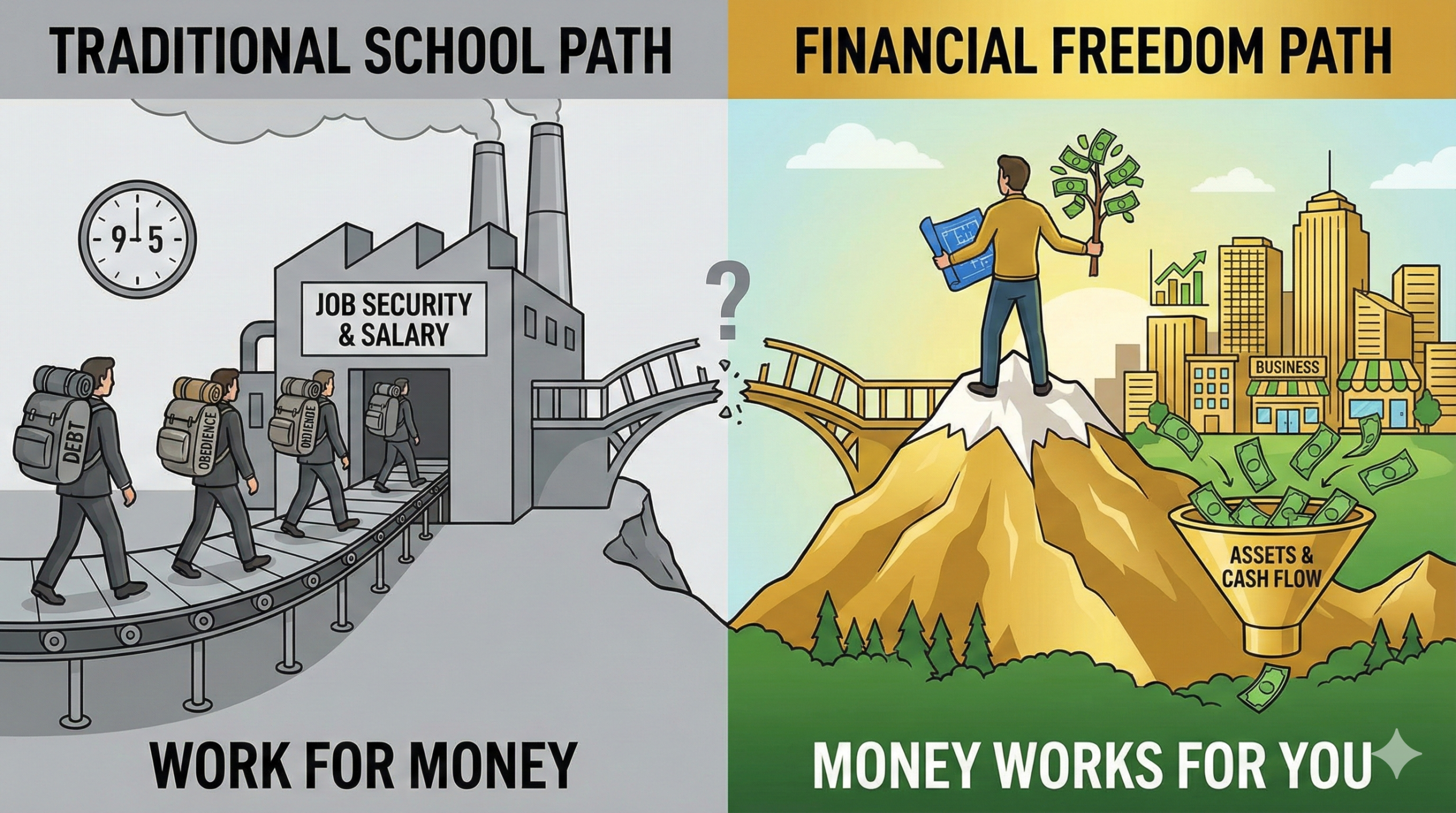
1. स्कूल का असली मकसद: कर्मचारी बनाना, मालिक नहीं

आधुनिक शिक्षा व्यवस्था का डिज़ाइन आपको अमीर बनाने के लिए नहीं किया गया था। कार्ल मार्क्स और पुरानी औद्योगिक सोच का प्रभाव आज भी हमारे स्कूलों पर दिखता है।

इस सिस्टम का मकसद सिर्फ ऐसे लोग तैयार करना है जो:

  • समय पर ऑफिस आएँ।
  • चुपचाप निर्देशों का पालन करें।
  • प्रमोशन और सैलरी बढ़ने का इंतज़ार करें।
  • और पूरी जिंदगी पेंशन या सरकार के भरोसे रहें।

स्कूल आपको “आज्ञाकारी” होने का इनाम देते हैं, न कि कुछ नया सोचने का। वे आपको “रटना” सिखाते हैं, “सोचना” नहीं। इसीलिए स्कूल से ‘कर्मचारी’ निकलते हैं, ‘उद्यमी’ (Entrepreneurs) नहीं।

2. मेरे दो पिता: एक ने दी सुरक्षा, दूसरे ने दी आज़ादी

मेरी ज़िंदगी में दो तरह की सोच का प्रभाव रहा।

  • मेरे गरीब पिता: वे बहुत पढ़े-लिखे थे, पीएचडी होल्डर थे और सरकारी नौकरी करते थे। वे कहते थे— “कड़ी मेहनत करो, पैसे बचाओ और एक सुरक्षित नौकरी लो।” वे मानते थे कि सरकार उनका ख्याल रखेगी।
  • मेरे अमीर पिता: वे कम पढ़े-लिखे हो सकते थे, लेकिन वे आर्थिक आज़ादी (Financial Freedom) में विश्वास रखते थे। उन्होंने मुझे सिखाया— “पैसे के लिए काम मत करो, बल्कि पैसे को अपने लिए काम पर लगाओ।”

यही एक लाइन सब कुछ बदल देती है। एक सोच आपको ज़िंदगी भर नौकरी में फंसाए रखती है, और दूसरी सोच आपको मालिक बनाती है।

3. अगर स्कूल ‘पैसे’ के बारे में सिखाते तो क्या होता?

ज़रा सोचिए, अगर हमारे सिलेबस में वित्तीय साक्षरता (Financial Literacy) होती, तो समाज कैसा होता?

  • लोग रिटायरमेंट फंड या नौकरी को ही “सुरक्षा” नहीं मानते।
  • लोग यह पूछते कि “मेरे पैसों को असल में कंट्रोल कौन कर रहा है?”
  • कर्ज़ (Loan) डरावना नहीं लगता, क्योंकि लोग जानते कि “अच्छा कर्ज़” (Good Debt) और “बुरा कर्ज़” (Bad Debt) क्या होता है।
  • लोग सिर्फ मार्केट बढ़ने की उम्मीद नहीं करते, बल्कि अपना खुद का कैश फ्लो (Cash Flow) बनाते।

4. सिस्टम आपको ‘आज़ाद’ क्यों नहीं होने देना चाहता?

सच यह है कि आज़ाद लोगों को कंट्रोल करना मुश्किल होता है।

जिस दिन आप पैसे की ताकत को समझ जाते हैं:

  • आप बाज़ार गिरने पर घबराते नहीं हैं।
  • आप सरकार से मदद की भीख नहीं मांगते।
  • आप नौकरी जाने के डर से सहमे नहीं रहते।

सिस्टम को ऐसे लोग चाहिए जो डरे हुए हों और सैलरी पर निर्भर हों। इसीलिए वित्तीय शिक्षा को जानबूझकर ‘वैकल्पिक’ (Optional) रखा गया है। इसकी कोई परीक्षा नहीं होती।

5. अब आपको क्या करना चाहिए?

यह सब समझने के बाद आपके पास दो रास्ते हैं। या तो आप पुराने रास्ते पर चलें और सैलरी बढ़ने का इंतज़ार करें, या फिर अमीर लोगों वाले सवाल पूछना शुरू करें:

  1. “पैसा असल में काम कैसे करता है?”
  2. “मैं अपनी ज़िंदगी का मालिक कैसे बनूँ, किराएदार नहीं?”
  3. “मैं सैलरी के पीछे भागने की बजाय एसेट्स (Assets) कैसे बनाऊँ?”

याद रखें, स्कूल आपको नौकरी दे सकता है, लेकिन आर्थिक आज़ादी आपको खुद सीखनी होगी। आज ही से सीखना शुरू करें, क्योंकि यही वह शिक्षा है जो सच में मायने रखती है।


अगर यह पोस्ट आपकी सोच को बदलने में सफल रही, तो इसे अपने दोस्तों के साथ शेयर जरूर करें। उन्हें भी इस “सिस्टम” की सच्चाई जानने का हक़ है!

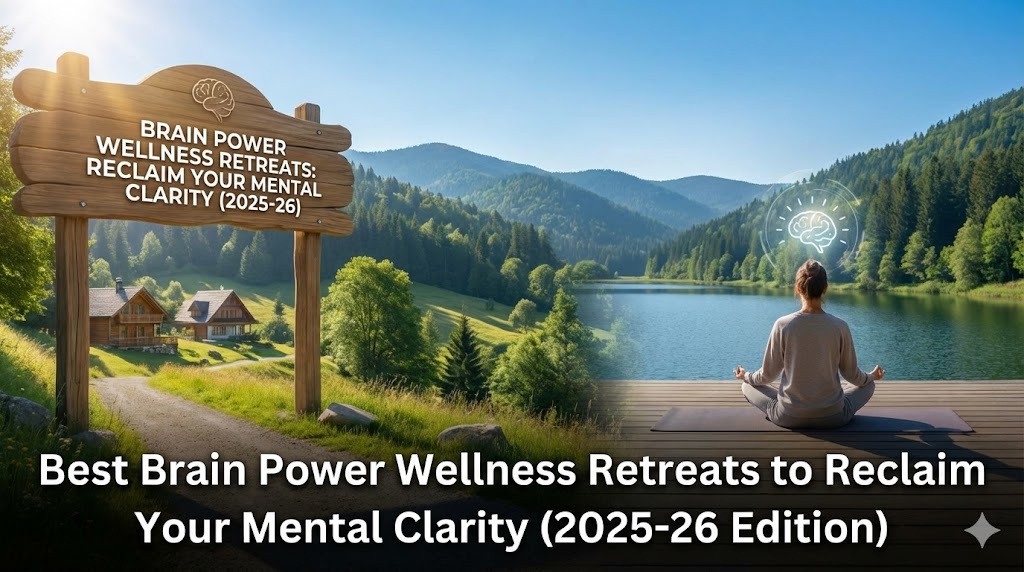
7 Best Brain Power Wellness Retreats to Reclaim Your Mental Clarity (2025-26 Edition)

In a world of relentless notifications, 60-hour workweeks, and information overload, our brains are tired. We aren’t just physically exhausted; we are cognitively drained. This modern epidemic has a name: Brain Fog.

For high-performing professionals, executives, and creatives, a standard beach vacation is no longer enough. Sipping a margarita by the pool might relax your body, but it doesn’t necessarily turn off the racing thoughts or restore your sharp focus.

To truly reset, you need something different. You need a brain power wellness retreat.

These aren’t your typical spas. They are scientifically designed sanctuaries that combine neuroscience, mindfulness, nutrition, and digital detoxing to heal your nervous system and optimize cognitive function.

If you are ready to trade burnout for brilliance, here is our curated list of the 7 best brain power wellness retreats in the USA and beyond for 2025-26.


What is a Brain Power Wellness Retreat?

Before we dive into the list, it is essential to understand what separates these mental clarity getaways from a regular holiday.

A brain power wellness retreat focuses specifically on cognitive health. While a regular resort focuses on leisure, these retreats focus on neuroplasticity—the brain’s ability to reorganize itself by forming new neural connections.

Key features often include:

  • Neuro-nutrition: Meals designed to lower inflammation and fuel brain cells.
  • Mindfulness & Meditation: Techniques to thicken the prefrontal cortex (the area responsible for focus).
  • Digital Detox: Strict “no-phone” policies to break the dopamine addiction loop.
  • Biohacking: Use of cryotherapy, infrared saunas, or neurofeedback to optimize brain function.

1. Canyon Ranch (Tucson, Arizona)

The Gold Standard for Integrative Wellness

For decades, Canyon Ranch has been the heavyweight champion of wellness in the USA. However, their “Life Enhancement” pathways take cognitive health retreats to a new level. Located in the stunning Sonoran Desert, this destination offers a comprehensive medical and holistic approach to brain health.

Why it’s great for Brain Power: Canyon Ranch employs board-certified physicians, nutritionists, and therapists. They don’t just guess what your brain needs; they test. Their “Executive Health” packages often include cognitive assessments, sleep studies, and stress management workshops tailored to rewire a stressed mind.

  • Best For: Executives and data-driven individuals seeking medical validation.
  • The Experience: Expect a mix of desert hiking (to boost BDNF – a protein that promotes brain cell growth) and lectures on sleep hygiene and stress resilience.

2. Eupepsia Wellness Resort (Virginia)

The Ayurvedic Approach to Cognitive Health

Nestled in the heart of the Blue Ridge Mountains, Eupepsia is a hidden gem that has repeatedly won “Best Wellness Resort” titles. Unlike the clinical feel of some resorts, Eupepsia focuses on Ayurveda—the ancient science of life—to restore mental balance.

Why it’s great for Brain Power: According to Ayurveda, mental fog is often a result of poor digestion and an imbalance in the body’s energies (doshas). Their program focuses on “Gut-Brain Axis” health. By fixing your digestion with farm-to-table vegetarian meals and herbal tonics, they aim to clear the mind.

  • Best For: Those looking for a holistic, spiritual, and nature-immersive reset.
  • The Experience: Hydrotherapy, halo-therapy (salt therapy), and forest bathing to calm the sympathetic nervous system.

3. The Ranch Malibu (California)

The Hard Reset for High Achievers

If your idea of relaxing is pushing your limits to break through mental barriers, The Ranch Malibu is for you. This is a rigorous, results-oriented program often favored by Hollywood celebrities and CEOs.

Why it’s great for Brain Power: The philosophy here is simple: Clarity through discipline. There is no Wi-Fi. There is no caffeine. There is no alcohol. There is no meat. By removing all toxins and distractions and engaging in 4-hour daily hikes, your brain is forced into a state of deep detoxification.

  • Best For: Type-A personalities who need a strict “boot camp” structure to disconnect.
  • The Experience: You will hike the Santa Monica mountains every morning. The intense physical activity releases a flood of endorphins and dopamine, effectively “washing” the brain of stress hormones.

4. Civana Wellness Resort & Spa (Carefree, Arizona)

The Customizable Mental Clarity Getaway

Not everyone wants a boot camp or a medical exam. Sometimes, brain power returns simply by having the freedom to choose. Civana offers a more flexible approach to cognitive health retreats in the USA.

Why it’s great for Brain Power: Civana specializes in “inner work.” Their schedule is packed with over 70 weekly classes, many focusing on mental conditioning. From sound bath meditations to “aerial yoga” (which improves blood flow to the brain), you can curate a schedule that feels restorative to you.

  • Best For: Solo travelers and beginners to the wellness retreat world.
  • The Experience: Don’t miss their “Aqua Therapy” sessions. Floating weightlessly in warm water is proven to lower cortisol levels and induce a theta-brainwave state (similar to deep meditation).

5. The Art of Living Retreat Center (Boone, North Carolina)

Mastering the Breath for Mental Focus

Located high in the Heavenly Mountain range, this center is rooted in yogic wisdom. It is one of the few places in the US that focuses intensely on Breathwork and Silence.

Why it’s great for Brain Power: They offer a “Silent Retreat” (Stepping into Silence). Research shows that silence can stimulate the growth of new cells in the hippocampus, the brain region linked to memory. By stopping the constant output of speech and social interaction, your brain gets the rare chance to process and file away information properly.

  • Best For: Spiritual seekers and those suffering from deep emotional exhaustion.
  • The Experience: You will learn the Sudarshan Kriya, a breathing technique scientifically proven to reduce stress and anxiety significantly.

6. Four Seasons Westlake Village (California)

Luxury Meets Neuroscience

If you want luxury accommodation combined with cutting-edge science, the Center for Health & Wellbeing at the Four Seasons Westlake Village is the pinnacle. This isn’t just a hotel; it’s a wellness institute.

Why it’s great for Brain Power: They offer specific “Mind & Body” retreats. You can access life coaches, hypnotherapists, and guided meditation experts. Their approach is highly personalized—you might start your day with a luxury breakfast and end it with a biofeedback session to learn how to control your heart rate variability (HRV).

  • Best For: Luxury travelers who want 5-star comfort while working on their mental health.
  • The Experience: Their “Somadome” meditation pod is a futuristic experience that uses color and sound therapy to guide your brain into a state of deep relaxation.

7. Hillock Nature Retreat (The Exotic “Digital Detox” Option)

The Hidden Gem for Total Disconnection

While the USA has incredible options, sometimes the best way to reclaim your brain power is to leave the country entirely. For the adventurous soul, Hillock Nature Retreat (an emerging eco-luxury destination) offers something American resorts can’t: Raw, Untouched Nature.

Why it’s great for Brain Power: Located away from the hum of cities, this retreat offers a “Green Detox.” The Japanese concept of Shinrin-yoku (Forest Bathing) is the core here. Being surrounded by diverse flora and natural sounds reduces cognitive fatigue faster than any machine can.

  • Best For: Travelers wanting a complete culture shift and a true escape from the Western rat race.
  • The Experience: Farm-to-table organic eating, sunrise yoga on natural terrain, and a complete break from the digital world.

Why You Need a Cognitive Health Retreat Now

You might be thinking, “Can’t I just take a nap?”

Sleep is crucial, but it is not the same as a cognitive reset. Chronic stress shrinks the brain’s neural networks. A weekend of binge-watching TV doesn’t fix that; it just pauses the stress.

A dedicated brain power wellness retreat provides:

  1. Environment Design: You cannot heal in the same environment where you got sick. Changing your physical location is the first step to changing your mindset.
  2. Community: Being around other people who are prioritizing their mental health removes the stigma of “taking a break.”
  3. Tools for Life: The best retreats don’t just relax you for a week; they teach you breathing techniques, nutritional habits, and mental frameworks to protect your brain power when you return to the office.

Final Thoughts: Invest in Your Mind

Your brain is your most valuable asset. Whether you are a CEO negotiating million-dollar deals or a parent managing a chaotic household, your ability to think clearly, focus deeply, and remain calm is your superpower.

In 2025, don’t just book a vacation. Book a transformation.

Whether you choose the discipline of The Ranch Malibu, the medical expertise of Canyon Ranch, or the serene silence of the Art of Living Center, prioritizing a mental clarity getaway is the smartest investment you will make this year.

Ready to reclaim your focus? Start planning your itinerary today.
Escape to Hillock Nature Retreat: The Ultimate Exotic Wellness Getaway

Let’s face it: The hustle of daily life in the US can be exhausting. Between the 9-to-5 grind, the constant ping of emails, and the noise of the city, true relaxation feels like a distant dream.

Sometimes, a weekend trip to the nearest national park just isn’t enough. You need a complete reset. You need to go where the Wi-Fi is weak, but the connection to nature is strong.

Enter Hillock Nature Retreat.

Tucked away in the lush, untouched landscapes of India, this hidden gem is quickly becoming a bucket-list destination for international travelers seeking peace, luxury, and a genuine connection with the earth.

If you are planning your next big international trip, here is why Hillock Nature Retreat needs to be at the top of your list.


1. A Sanctuary for the Soul (Far from the Tourist Traps)

Unlike commercialized hotels where you are just a room number, Hillock Nature Retreat is designed as a sanctuary.

For US travelers, the first thing that strikes you is the silence. Located amidst rolling hills and dense greenery, the resort offers a level of privacy that is hard to find. It is not just a hotel; it is an immersive experience. Whether you are a solo traveler looking for clarity or a couple seeking a romantic escape, the isolation here is a luxury in itself.

  • The Vibe: Think “Bali meets Traditional Indian Hospitality.”
  • The Crowd: Exclusive, quiet, and nature-focused.

2. Luxury Meets Sustainability

One of the biggest concerns for Americans traveling abroad is the standard of accommodation. Will it be comfortable? Is it clean?

Hillock Nature Retreat bridges the gap between rustic charm and modern luxury. You get the experience of living in nature—waking up to the sound of birds and the smell of wet earth—without sacrificing comfort.

  • Private Villas/Cottages: exquisitely designed with local materials but equipped with premium bedding and modern amenities.
  • Eco-Conscious: The retreat practices sustainable tourism, using solar power, rainwater harvesting, and plastic-free zones, appealing to the eco-conscious US traveler.

3. Farm-to-Table Dining (A Foodie’s Dream)

Forget processed food. At Hillock, the culinary experience is a highlight. Embracing the “Farm-to-Table” philosophy, most ingredients are sourced locally or grown right on the property.

For a US palate used to frozen meals or fast food, the freshness here is shocking. You will enjoy authentic local cuisine cooked with traditional spices that are flavorful, not just “spicy.”

  • Must-Try: Ask for their signature local thali for a taste of everything.
  • Dietary Needs: Vegan and Gluten-Free options are readily available (a huge plus for international guests).

4. Wellness: Yoga, Detox, and Rejuvenation

You can’t talk about a retreat in India without talking about wellness. Hillock Nature Retreat isn’t just a place to sleep; it’s a place to heal.

  • Morning Yoga: Imagine starting your day with a guided yoga session on an open-air deck, overlooking the misty hills.
  • Nature Walks: Guided treks through the surrounding flora are perfect for bird watchers and photographers.
  • Digital Detox: While connectivity is available, the environment encourages you to put the phone down and pick up a book—or a conversation.

Practical Tips for US Travelers

If you are flying from New York, LA, or Chicago, here is what you need to know to make your trip to Hillock Nature Retreat seamless:

  • Best Time to Visit: October to March offers the most pleasant weather (cool and dry), perfect for escaping the freezing US winter.
  • Currency: The resort is affordable by US standards, offering incredible value for luxury.
  • What to Pack: Bring comfortable walking shoes, bug spray (it is a nature retreat, after all!), and light cotton clothing.

Final Verdict: Is It Worth the Flight?

If you are looking for a standard hotel with a casino and a mall next door, this isn’t for you.

But, if you are craving an authentic, soul-stirring experience that will leave you feeling lighter, healthier, and more grounded, then Hillock Nature Retreat is absolutely worth the journey.

It is more than a vacation; it is the reset button you have been waiting to press.

Ready to unplug? Check out their official page to view the stunning villas and book your exotic escape today.

how to detox body for weight loss
The Truth About “Detoxing”: How to Naturally Reset Your Body for Weight Loss


The Truth About “Detoxing”: How to Naturally Reset Your Body for Weight Loss

In the wellness industry, “detox” is perhaps the most misunderstood word. It often conjures images of expensive juice cleanses, restrictive starvation diets, and “miracle” teas.

However, the truth about detoxing for weight loss is far simpler and much more effective. You do not need to buy a product to detox; you simply need to support the sophisticated system your body already possesses.

This guide explores the myths behind commercial cleanses and explains how to naturally reset your body to shed stubborn weight, boost energy, and improve long-term health.


Does Your Body Really Need a “Reset”?

The short answer is: Yes and No.

Your body does not need a “reset” in the sense that it is broken. You have a built-in detoxification team—primarily your liver, kidneys, digestive system, and skin—that works 24/7 to filter out waste and toxins.

However, modern lifestyles often overload these systems. A diet high in processed sugars, sedentary behavior, environmental pollutants, and chronic stress can make your natural detoxification pathways sluggish. When your body is overwhelmed, it may store toxins in fat cells to protect your organs, which can make losing weight difficult.

A “natural reset” isn’t about emptying your wallet; it’s about removing the obstacles blocking your body’s natural ability to burn fat and heal.


5 Proven Ways to Naturally Detox for Weight Loss

Forget the 3-day starvation plans. Here is how to create a sustainable lifestyle that supports your organs and promotes natural weight loss.

1. Hydration: The Ultimate Flush

Water is the medium through which your body expels waste. If you are dehydrated, your kidneys cannot filter blood efficiently, and the liver has to take on the extra workload.

  • The Strategy: Aim for at least 3 liters of water daily.
  • Pro Tip: Add a squeeze of lemon or cucumber slices. While not a “magic fat burner,” lemon adds electrolytes and encourages you to drink more water.

2. Prioritize Fiber (The Natural Scrub)

Fiber is crucial for a natural detox because it binds to bile (which contains toxins) and carries it out of the body through digestion. Without enough fiber, toxins can be reabsorbed into the bloodstream.

  • What to Eat: Focus on cruciferous vegetables (broccoli, cauliflower), berries, chia seeds, and legumes.
  • The Goal: Aim for 25–30 grams of fiber per day to keep your digestion regular and reduce bloating.

3. Support Your Liver with Whole Foods

Your liver is the engine of fat metabolism. If it is busy processing alcohol, excess sugar, or trans fats, it cannot effectively burn stored body fat.

  • Foods to Add: Garlic, turmeric, beets, and leafy greens. These foods contain compounds that support liver enzyme production.
  • Foods to Limit: Alcohol and high-fructose corn syrup, which are major stressors for the liver.

4. Sweat It Out

Your skin is your largest organ, and sweating is a primary pathway for elimination.

  • Exercise: High-Intensity Interval Training (HIIT) or steady cardio increases blood flow and lymph circulation.
  • Heat Therapy: Saunas and steam rooms can help induce sweating, aiding in the removal of heavy metals and salts.

5. Prioritize Sleep (The Brain Detox)

One of the most overlooked aspects of detoxing is sleep. During deep sleep, the glymphatic system activates, washing away metabolic waste products that accumulate in the brain during the day.

  • The Weight Loss Link: Poor sleep disrupts hunger hormones (ghrelin and leptin), leading to increased cravings for sugary foods the next day.

Common Detox Myths Debunked

To succeed in your weight loss journey, you must avoid these common traps:

  • Myth 1: “Detox teas burn fat.”
    • Truth: Most detox teas are laxatives (diuretics). They cause you to lose water weight, not fat. This is temporary and can be dangerous if overused.
  • Myth 2: “You have to starve yourself.”
    • Truth: Starvation slows your metabolic rate. To detox effectively, your body needs energy and nutrients to run the elimination phases in the liver. You should eat more nutrient-dense food, not less.

Frequently Asked Questions (FAQ)

Q: How long does it take to naturally detox the body for weight loss?

A: There is no single timeline, as your body is always detoxing. However, most people report feeling less bloated and more energetic after 7 to 10 days of consistent healthy eating, hydration, and sleep. For significant weight loss, consistency over months is key.

Q: Can I lose weight just by drinking water?

A: Water alone won’t melt fat, but it is essential for the process. Drinking water before meals can reduce appetite, and replacing high-calorie sugary drinks with water creates a calorie deficit, which is necessary for weight loss.

Q: Are juice cleanses effective for long-term weight loss?

A: Generally, no. While you may lose weight quickly on a juice cleanse, it is mostly muscle mass and water. Once you return to solid food, the weight usually returns. A balanced diet with fiber is far superior for sustainable results.

Q: What is the best morning drink to detox?

A: Warm water with lemon or apple cider vinegar is popular. It helps rehydrate the body after sleep and may stimulate digestion. However, green tea is also an excellent choice due to its high antioxidant (EGCG) content.


Conclusion

The truth about detoxing is that your body is already an expert at it. You don’t need a miracle cure; you need to stop blocking the process with processed foods and sedentary habits. By focusing on hydration, whole foods, and sleep, you can naturally reset your body, shed weight, and feel your best—no starvation required.

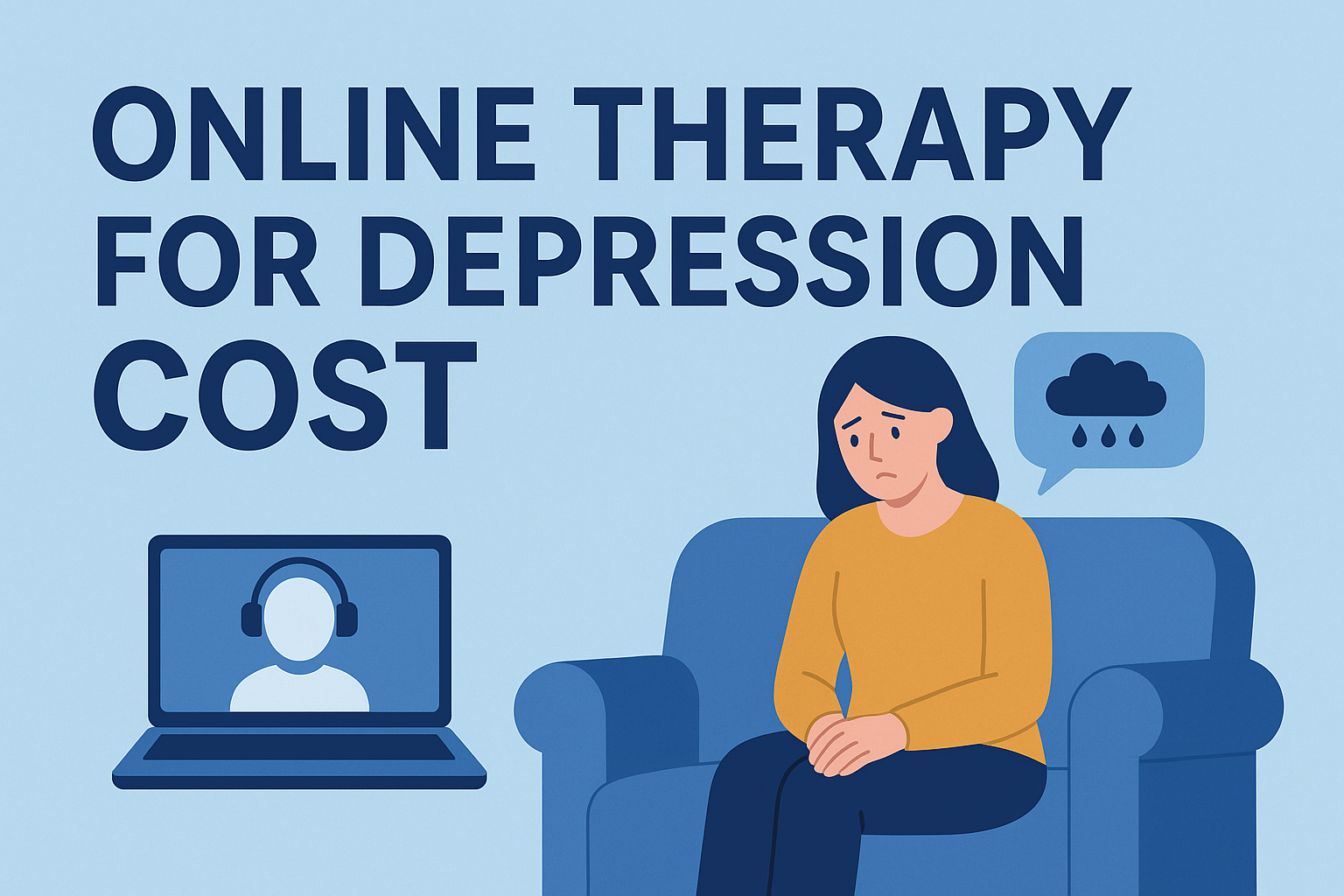
Online Therapy for Depression Cost: Complete Pricing Guide (2025-26)

Depression is one of the most common mental health conditions worldwide. With the rise of digital healthcare, online therapy for depression has become a convenient, affordable, and effective solution for many people. But the most common question people search for is:

👉 How much does online therapy for depression cost?

In this detailed guide, we’ll break down:

  • Average online therapy prices
  • Cost comparison by country
  • Factors that affect pricing
  • Affordable options
  • Insurance coverage
  • Whether online therapy is worth the cost

What Is Online Therapy for Depression?

Online therapy for depression is professional mental health treatment delivered through:

  • Video calls
  • Audio sessions
  • Live chat
  • Mobile apps

It is provided by licensed psychologists, therapists, counselors, and psychiatrists. It is especially useful for people who prefer privacy, flexible timing, or live in remote areas.


Average Cost of Online Therapy for Depression

The cost of online therapy for depression depends on the platform, therapist qualification, session length, and location.

Global Average Pricing

Therapy TypeCost Per Session
Text-based therapy$40–$70
Live chat session$50–$90
Video therapy$70–$150
Psychiatric consultation (medication)$100–$250

Online Therapy for Depression Cost in India

In India, online therapy is significantly more affordable compared to Western countries.

Service TypeAverage Cost (₹)
Chat-based therapy₹500–₹1,000
Video therapy (40–60 min)₹700–₹2,000
Psychiatric consultation₹1,000–₹3,000

✅ Many platforms also offer monthly therapy plans starting at ₹2,000–₹5,000.


Online Therapy for Depression Cost in the USA

The USA has higher therapy fees:

Service TypeAverage Cost ($)
Video therapy$90–$200
Chat therapy$60–$120
Psychiatrist visit$150–$300

However, many insurance plans now cover online mental health therapy.


Factors That Affect the Cost of Online Therapy

Several factors influence pricing:

🔹 1. Therapist Experience

Senior clinical psychologists charge more than trainee counselors.

🔹 2. Session Duration

30-minute sessions are cheaper than 60-minute sessions.

🔹 3. Therapy Type

CBT, trauma therapy, and psychiatric therapy cost more than general counseling.

🔹 4. Platform vs Independent Therapist

Apps usually offer lower packages than private clinic sessions.

🔹 5. Location

Costs vary by country and city.


Is Online Therapy for Depression Cheaper Than Offline Therapy?

Yes, online therapy is 30%–60% cheaper than in-person therapy.

TypeAverage Cost
Offline therapy (India)₹1,500–₹3,500
Online therapy (India)₹700–₹2,000
Offline therapy (USA)$150–$250
Online therapy (USA)$90–$150

Affordable Online Therapy Options

If you’re on a budget, here are low-cost options:

  • ✅ University counseling services
  • ✅ NGO mental health programs
  • ✅ Community mental health platforms
  • ✅ Subscription-based therapy apps
  • ✅ Free helplines + trial sessions

Does Insurance Cover Online Therapy for Depression?

✅ In the USA:

Most insurance companies now cover:

  • Video therapy
  • Online psychiatric consultations
  • Depression treatment plans

✅ In India:

Coverage is improving but still limited. Some private health insurers cover online therapy under mental health benefits after 2020 IRDAI guidelines.


Is Online Therapy Worth the Cost?

Yes, it is worth it if:

  • You’re dealing with anxiety or depression
  • You need flexible appointment timing
  • You want privacy and comfort at home
  • You live in areas with limited mental health services

Studies show online CBT therapy is as effective as face-to-face therapy for depression.


How to Reduce the Cost of Online Therapy

  • 🔹 Choose monthly therapy plans
  • 🔹 Use first-session discounts
  • 🔹 Opt for group therapy
  • 🔹 Use insurance benefits
  • 🔹 Watch for festival & wellness offers

Final Thoughts on Online Therapy for Depression Cost

The cost of online therapy for depression depends on location, therapist expertise, and session type. On average:

  • India: ₹700–₹2,000 per session
  • USA: $90–$150 per session

It is more affordable, flexible, and accessible than traditional therapy and can be life-changing for people dealing with mental health challenges.


Frequently Asked Questions (FAQs)

❓ Is online therapy for depression effective?

Yes, online therapy is backed by scientific research and works well for mild to moderate depression.

❓ Can I get free online therapy?

Some NGOs, government programs, and universities offer free or low-cost options.

❓ How many sessions are required for depression?

Typically 8–16 sessions depending on severity.

❓ Is medication included in online therapy cost?

No, psychiatric medication fees are usually charged separately.


What Was the Most Stressful Event Found on the Social Readjustment Rating Scale With a LCU Score of 100? Complete Explanation

Stress affects everyone differently, but psychologists have long tried to measure how stressful major life events can be. One of the most widely used tools is the Social Readjustment Rating Scale (SRRS), created by Thomas Holmes and Richard Rahe in 1967. This scale assigns a Life Change Unit (LCU) score to major life events to show how much stress they typically cause.

But which event has the highest stress score of LCU 100?

Let’s explore the answer in detail and understand why it matters.


The Most Stressful Event With an LCU Score of 100: Death of a Spouse

On the Social Readjustment Rating Scale, the event that carries the highest possible stress score (100 LCU) is:

➡️ Death of a Spouse

This means that, according to psychological research, losing a spouse is the single most stressful life event a person can experience.


❤️ Why Is the Death of a Spouse Considered the Most Stressful Event?

Losing a life partner impacts nearly every part of a person’s emotional, financial, psychological, and social life. Here’s why the stress level is so high:


1️⃣ Deep Emotional Pain and Grief

The emotional bond between spouses is often the strongest relationship in a person’s life.
Losing that bond creates:

  • Intense sadness
  • Loneliness
  • Shock and denial
  • Long-term grief
  • Emotional numbness

The grieving process can take months or years, which is why the LCU score is so high.


2️⃣ Major Lifestyle Adjustments

A spouse is often a partner in:

  • Finances
  • Parenting
  • Household work
  • Emotional support
  • Daily decision-making

After the loss, the surviving partner must adjust to an entirely new way of living.


3️⃣ Increased Risk of Health Problems

Research shows that people who lose a spouse have a higher risk of:

  • Depression
  • Anxiety
  • High blood pressure
  • Sleep disorders
  • Weakened immunity

This additional pressure contributes to the high LCU score.


4️⃣ Financial Stress

Depending on how finances were shared, a spouse’s death can lead to:

  • Income loss
  • Medical expenses
  • Funeral costs
  • Increased responsibilities

These changes add significant stress.


5️⃣ Social and Emotional Support Disruption

A spouse is often the closest emotional support person.
Losing that support leads to:

  • Feeling isolated
  • Difficulty adjusting socially
  • Loss of shared dreams and goals

These long-term emotional effects justify an LCU score of 100.


🧠 Understanding the SRRS (Social Readjustment Rating Scale)

To understand the importance of an LCU score of 100, it helps to know what the scale includes.

The SRRS lists 43 life events, each given a stress value:

Life EventLCU Score
Death of Spouse100
Divorce73
Marital separation65
Jail term63
Death of a close family member63
Personal injury or illness53
Marriage50
Fired from job47
Pregnancy40
Change in financial state38

Events scoring above 200–300 LCUs in a year indicate a high risk of developing stress-related health problems.


🔍 Why Is the SRRS Important Today?

Even though it was created in 1967, the SRRS is still widely used in:

  • Psychology
  • Mental health counseling
  • Stress research
  • Workplace health programs

It helps identify people who may need support due to high stress levels.


🌿 How to Cope With High-Stress Life Events

If someone faces a major stressor—especially one with a high LCU score—they should consider:

✔ Emotional support from friends and family

✔ Counseling or therapy

✔ Mindfulness and meditation

✔ Stress management activities

✔ Healthy lifestyle habits

✔ Joining grief support groups

These methods help reduce long-term mental and emotional strain.


📌 Final Answer

The most stressful event on the Social Readjustment Rating Scale, with an LCU score of 100, is the Death of a Spouse.

This event impacts every aspect of life—emotionally, socially, physically, and financially—which is why it has the highest possible stress rating.

Understanding this helps people identify the importance of mental health support during major life transitions.

Disclaimer:
This article is for educational and informational purposes only. The Social Readjustment Rating Scale (SRRS) and Life Change Unit (LCU) scores are psychological research tools and are not intended to diagnose, treat, or replace medical or mental-health evaluation. Every individual experiences stress differently, and the impact of life events can vary widely. If you are experiencing high levels of stress, grief, anxiety, or emotional distress, please contact a licensed mental-health professional, therapist, or healthcare provider in your region. If you are in the United States and facing a mental-health emergency, you can call or text 988 for immediate support.

Gluten-Free-Kids-Snacks-
Top 7 Gluten-Free Snacks Loved by American Kids (Healthy & Easy Options)

Finding healthy, gluten-free snacks that American kids actually love can feel challenging. With food allergies rising and more families choosing gluten-free diets, parents need options that are safe, nutritious, and easy to prepare.
This guide shares the top 7 gluten-free snacks that kids enjoy, all parent-approved, budget-friendly, and widely available in the USA.


1. Rice Cake Mini Sandwiches

Why kids love it: Light, crunchy, and easy to customize.
Spread with peanut butter, almond butter, Nutella, cream cheese, or mashed banana.
Parent tip: Choose plain or lightly salted rice cakes to avoid hidden gluten.


2. Fresh Fruit Kabobs

Why kids love it: Fun, colorful, and naturally sweet.
Use strawberries, grapes, blueberries, and melon cubes.
Parent tip: Serve with a gluten-free yogurt dip for extra protein.


3. Gluten-Free Granola Bars

Why kids love it: Sweet, chewy, and lunchbox-friendly.
Choose brands like Kind Kids, MadeGood, or Larabar (certified gluten-free).
Parent tip: Avoid bars with barley malt (contains gluten).


4. Veggie Sticks With Hummus

Why kids love it: Crunch + creamy dip = perfect combo.
Use carrots, cucumbers, celery, and bell peppers.
Parent tip: Always check your hummus label—most are gluten-free, but a few flavored ones may contain additives.


5. Popcorn (Air-Popped or Flavored Gluten-Free)

Why kids love it: Salty, snacky, and perfect for movie time.
Plain popcorn is naturally gluten-free.
Parent tip: Choose certified gluten-free flavored popcorns like Boom Chicka Pop or SkinnyPop.


6. Gluten-Free Cheese Crackers

Why kids love it: Cheesy, crunchy, addictive.
Try brands like Simple Mills, Annie’s Gluten-Free Cheddar Bunnies, or Good Thins Rice Crackers.
Parent tip: Keep a snack-size pack ready for school or sports days.


7. Smoothie Cups or Popsicles

Why kids love it: Cold, fruity, and refreshing.
Blend fruits with lactose-free or dairy milk alternatives (almond, oat, coconut).
Parent tip: Freeze leftovers in molds for healthy gluten-free popsicles.


Bonus: DIY Gluten-Free Trail Mix (Kid Favorite!)

Mix:

  • Almonds or peanuts
  • Gluten-free pretzel sticks
  • Dark chocolate chips
  • Raisins or cranberries
  • Corn or rice cereal (gluten-free only)

It’s budget-friendly and customizable!


How to Make Sure a Snack Is Gluten-Free (Quick Checklist)

Before buying, check for:
Certified Gluten-Free label
✔ No wheat, rye, barley, or malt
✔ No cross-contamination warnings
✔ Simple, clean ingredients


Why Gluten-Free Snacks Are Trending Among American Parents

  • Rise in celiac disease & gluten sensitivity
  • More schools adopting allergen-friendly policies
  • Health-conscious moms and dads prefer whole-food snacks
  • Brands launching better gluten-free options than ever

This trend is expected to grow in 2025 and beyond, making it a great niche for food + parenting content.


Final Thoughts

Choosing gluten-free snacks doesn’t have to be difficult. With these top 7 kid-approved options, parents can easily pack safer, healthier, and tastier treats for school, travel, or home.
They’re easy to make, affordable, and perfect for picky eaters too!

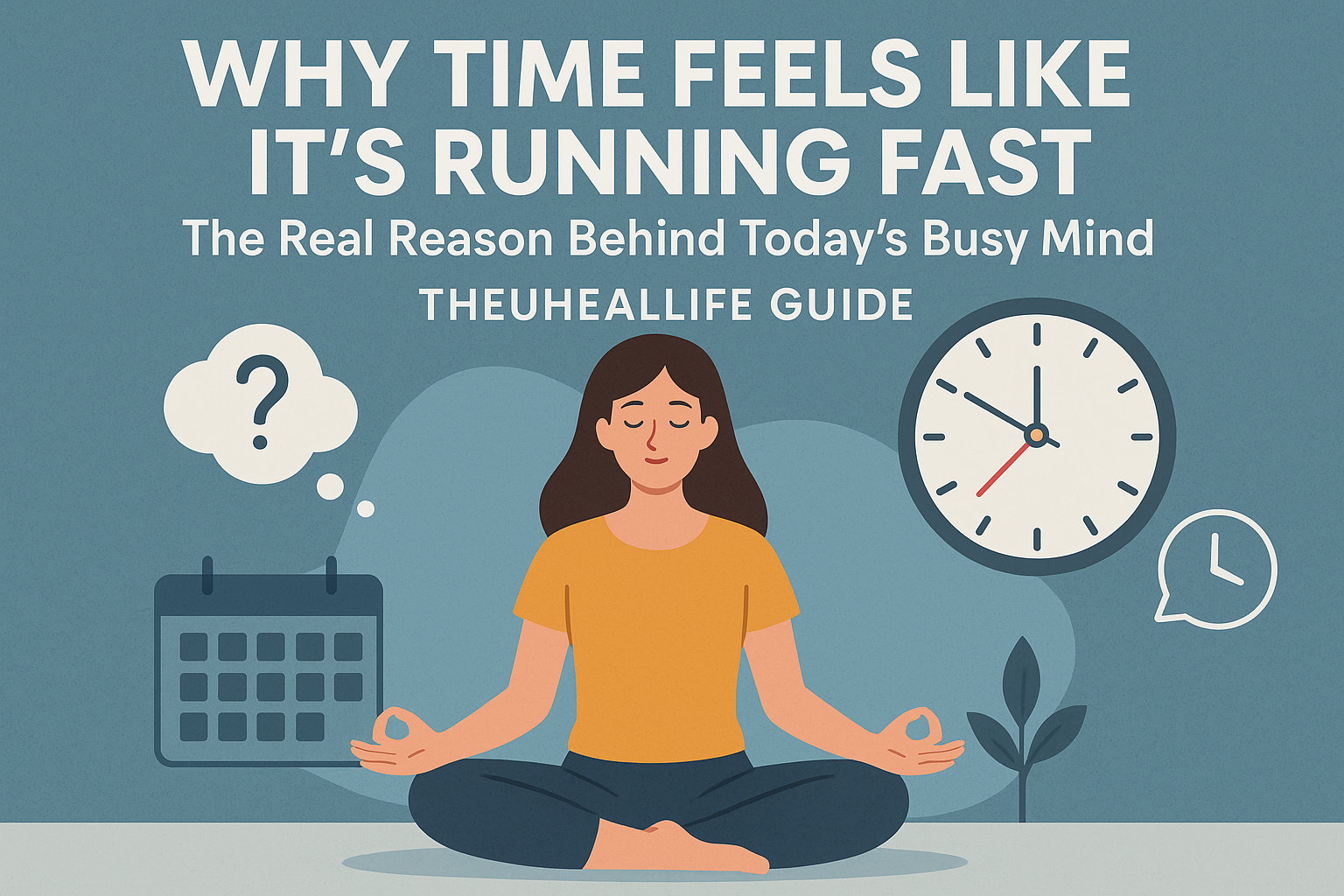
Why Time Feels Like It’s Running Fast: The Real Reason Behind Today’s Busy Mind – TheUHealLife Guide

Introduction: Why Does Time Feel Faster These Days?

Almost everyone today says the same thing:
“I don’t even notice when the day ends… months are passing so fast.”

But is time actually speeding up, or is our mind creating this feeling?

This TheUHealLife Guide explains the real psychology behind why time feels fast — and what you can do to slow it down.


Is Time Really Moving Fast? The Truth

Scientifically, time never changes its speed.
One minute is always 60 seconds — no matter how busy or free you are.

So the real question is:
Why does it feel like time is running?

The answer lies inside the brain.


1. The Busy Mind Effect: Mental Overload Blurs Time

Today’s lifestyle has overloaded our brain with information:

  • Social media
  • Messages
  • Work pressure
  • News
  • Constant notifications
  • Family responsibilities

Your brain is processing too much, too fast.

When the mind is overloaded, time feels compressed — as if hours pass in minutes.

This phenomenon is called cognitive overload.


2. Repetitive Routine Makes Time Feel Shorter

As children, time felt slow because everything was new — new schools, new friends, new experiences.

New experiences create strong memories, and this makes time feel long.

But as adults, our routine becomes repetitive:

  • Same work
  • Same daily habits
  • Same routes
  • Same environment

When life becomes predictable, days feel shorter and time feels fast.


3. Digital Distraction Speeds Up Your Perception of Time

Short-form content (reels, shorts, TikTok-style videos) trains your brain to expect fast stimulation.

You scroll for 10 minutes — but your brain feels like only 1–2 minutes passed.

This is called digital time compression.

Overuse of:

  • Reels
  • YouTube shorts
  • Social media
  • Endless scrolling

…makes your internal clock lose accuracy.


4. Stress & Anxiety Make Time Run Mentally Faster

When your mind is stressed:

  • Thoughts overlap
  • Focus breaks
  • You lose track of time
  • You don’t remember the day properly

A busy mind = time feels fast
An anxious mind = time feels blurred

Stress steals your sense of presence.


5. Poor Sleep Disrupts the Internal Clock

When you sleep less or sleep poorly:

  • Your brain processes the day faster
  • Memory becomes shallow
  • You feel that the day slipped away

Good sleep is essential to normalize your sense of time.


TheUHealLife Tips: How to Make Time Feel Slow Again

These simple practices will help you regain clarity and slow down your internal clock.


1. Add “New Moments” to Your Daily Life

New experiences make time feel longer.

Try:

  • A new walking route
  • A new hobby
  • A new activity
  • A new recipe
  • Visiting a new place (even nearby)

Novelty = slower time perception.


2. Reduce Screen Overload

Set “no-phone windows” for 20–30 minutes every few hours.

This stops digital time compression.


3. Practice 5 Minutes of Mindfulness

Being present slows the mind.

Try this simple breathing technique:

  • Inhale 4 seconds
  • Hold 4 seconds
  • Exhale 4 seconds

Mindfulness stretches your experience of the moment.


4. Break Your Day Into Segments

Instead of repeating the same routine all day, divide time into phases:

  • Morning
  • Afternoon
  • Evening

Each segment should have different types of tasks.
This adds variety → time feels slower.


5. Improve Your Sleep Cycle

Healthy sleep is one of the strongest ways to rebalance your internal sense of time.

Tips:

  • Avoid screens 1 hour before sleeping
  • Eat light at night
  • Target 7–8 hours of sleep

Conclusion: Time Isn’t Running Fast — Your Mind Is Overloaded

Fast lifestyle, continuous stress, digital distractions, and repetitive routines make the brain feel like time is speeding up.

But when you create space in your mind and introduce new moments,
you can slow down your experience of life.

This is the core message of TheUHealLife:
Heal the mind, slow the moment, and return to conscious living.

what percentage of us children aged 3-17 have a mental
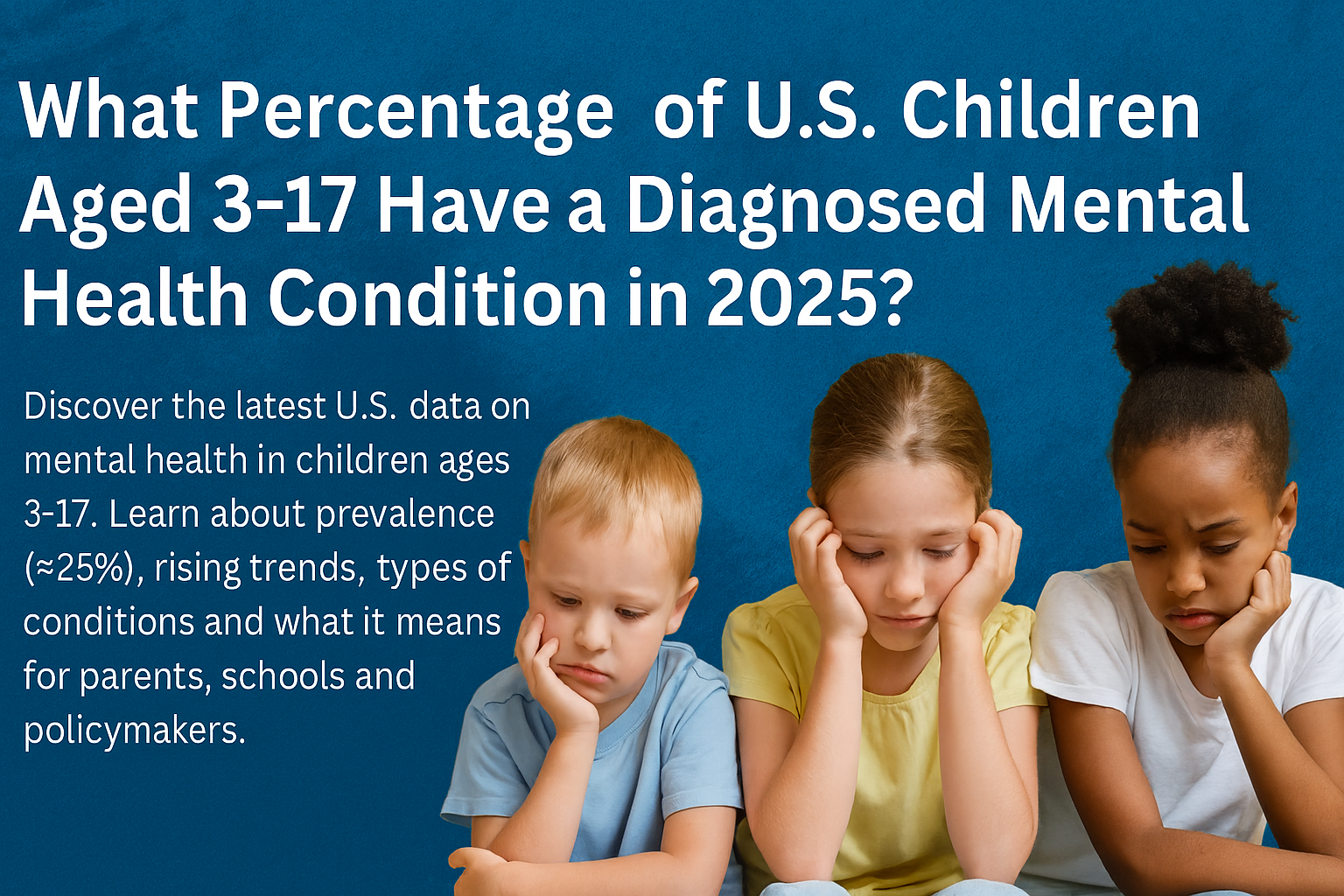
What Percentage of U.S. Children Aged 3–17 Have a Diagnosed Mental Health Condition in 2025?”

Mental health is increasingly recognised as a key component of overall health—especially among children. For parents, educators and policy-makers in the U.S., a critical question is: What percentage of children aged 3–17 are diagnosed with a mental, emotional, developmental or behavioural condition? Understanding this figure—and how it’s changing—is essential for planning services, reducing stigma and supporting early-intervention efforts.


What the Data Shows: Prevalence Among Ages 3-17

Overall prevalence

  • According to the Centers for Disease Control and Prevention (CDC), 11% of children ages 3–17 had a current, diagnosed anxiety disorder in 2022-23 (9% of males; 12% of females). CDC
  • The same data show 8% of children 3–17 had a current, diagnosed behaviour disorder and 4% had a current, diagnosed depression. CDC
  • More broadly, data show that “more than 1 in 4 children age 3-17 years had a current, diagnosed mental, emotional, developmental or behavioural (MEDB) condition” in 2022, according to the Health Resources and Services Administration (HRSA). mchb.hrsa.gov
  • Survey data indicate that about 25.8% of children aged 3–17 had one or more reported MEDB problems in a 2022 sample. nschdata.org+2CDC+2
  • Between 2016 and 2021, prevalence of “mental, behavioural and developmental disorders” (MBDD) for ages 3-17 increased from 25.3% to 27.7%. CDC

Interpretation for 2025

Although exact 2025-only data may not yet be fully released, the most current figures (2022-23) suggest about one in four children aged 3-17 in the U.S. has been diagnosed with some form of mental, emotional, developmental or behavioural condition.
Given the trend of rising prevalence (see above), it is reasonable to project that by 2025 the figure will be at or above ~25-30%.


Breakdown by Condition & Age Group

  • Anxiety is the most commonly diagnosed specific condition in children 3-17: ~11%. CDC
  • Behaviour disorders: ~8%. CDC
  • Depression: ~4% in this age range. CDC+1
  • In adolescents ages 12-17, a recent survey shows ~20.3% had a current, diagnosed mental or behavioural health condition (2023 data). mchb.hrsa.gov

Trends: What’s Changing

  • The prevalence of MBDD among ages 3-17 increased from 25.3% in 2016 to 27.7% in 2021. CDC
  • Among adolescents 12-17, diagnosed conditions increased ~35% between 2016 and 2023 (from ~15.0% to ~20.3%) with particularly large jumps in anxiety (+61%) and depression (+45%). mchb.hrsa.gov
  • The data suggest that children in certain demographics (poverty, caregiver mental health issues, etc.) may have higher risk. NCBI+1

Why This Matters

Early-life impact

Mind and behaviour issues in childhood can affect school performance, social relationships, and long-term health. Early diagnosis and support can improve outcomes.

Service & access gap

Even though a significant percentage of children have diagnosed conditions, many do not receive adequate counselling or mental health services. mchb.hrsa.gov+1

Public health policy & education

Reliable prevalence statistics are key for funding mental health programs, school-based services, and community outreach.

Parental/educator awareness

Understanding “1 in 4 children may have a mental/emotional/behavioural condition” helps reduce stigma and encourages families to seek help early.


Implications for Parents, Schools & Policymakers

  • For parents: Know the signs (anxiety, behaviour changes, mood shifts) and seek evaluation early if you suspect an issue.
  • For schools: Given that ~25% of students may be affected, school programmes for screening, counselling, and referral are essential.
  • For policymakers: Allocate resources for child mental health services, integrate behavioural health in pediatric care, and support underserved communities.
  • For service providers: Expand access (especially telehealth), emphasise early-intervention, and tailor services for younger age groups (3-7, 8-12, etc.).

Challenges & Areas for Improvement

  • Diagnosis vs. treatment gap: Many children who are diagnosed still do not receive timely or adequate services. CDC+1
  • Data lag & variation: Some metrics lag by 1-2 years, and different studies define “mental, emotional, developmental or behavioural condition” differently, making direct comparisons tricky.
  • Social determinants: Factors like poverty, caregiver stress, housing instability and access to care play a big role in outcomes. Johns Hopkins Public Health
  • Stigma & access: Even with increasing awareness of mental health issues, stigma and lack of providers (especially in rural areas) remain barriers.

Conclusion

In the U.S., among children aged 3-17, the prevalence of diagnosed mental, emotional, developmental or behavioural conditions is about 1 in 4 (≈ 25%) or more based on the most recent data (2022-23). With rising trends and evolving awareness, the figure by 2025 is likely to be at or slightly above that threshold.
This high prevalence underscores the importance of early detection, intervention, access to care and policy support. For anyone (parents, educators, policymakers) concerned with child wellbeing, these numbers are a call to action: mental health is not a niche concern—it’s central to child development, education and long-term outcomes.

Behavioral Health Trends 2025 – Sagent Behavioral Health
7 Key Trends in U.S. Behavioral Health in 2025 & How Sagent Behavioral Health Fits In

The U.S. behavioral health landscape is evolving faster than ever. Rising awareness of mental well-being, new digital tools, and integrated care models are reshaping how Americans access therapy and psychiatric care. In this changing environment, Sagent Behavioral Health is emerging as a key player—uniting multiple leading regional brands under one name and creating a nationwide network of accessible, compassionate behavioral health services.

In this blog, we’ll explore seven major trends shaping behavioral health in 2025 and how Sagent Behavioral Health aligns with these transformations.


1. Expansion of Telehealth and Virtual Therapy

The pandemic accelerated telehealth adoption, and in 2025 it remains a cornerstone of behavioral care. Virtual therapy sessions make it easier for patients in rural and urban areas alike to connect with licensed professionals from home.

Sagent Behavioral Health has integrated advanced telehealth platforms, ensuring seamless access to therapy, psychiatry, and medication management—bridging the gap for clients who prefer remote care.

Keywords: telehealth behavioral health, virtual therapy USA, Sagent Behavioral Health telehealth


2. Focus on Integrated Physical and Mental Health Care

A growing body of research shows the link between physical and mental health. Clinics are now offering integrated care models—combining behavioral health with primary care to treat the whole person.

Sagent Behavioral Health embraces this approach, collaborating with medical professionals to ensure patients receive comprehensive, coordinated care that addresses both mental and physical wellness.

Keywords: integrated care behavioral health, mind-body wellness, Sagent Behavioral Health integrated model


3. Rise in Youth and Adolescent Mental Health Services

An alarming increase in anxiety, depression, and social stress among youth has pushed the need for specialized adolescent behavioral care.

Sagent Behavioral Health is responding with dedicated child and adolescent programs, combining therapy, family counseling, and evidence-based interventions to support young people’s mental health in schools and communities.

Keywords: youth mental health trends 2025, adolescent therapy programs, Sagent Behavioral Health youth care


4. Increasing Use of Technology and Data-Driven Insights

AI, data analytics, and digital tracking tools are helping therapists personalize treatment plans. In 2025, the behavioral health sector continues to adopt technology for progress tracking, medication management, and real-time assessments.

Sagent Behavioral Health uses data-driven tools to enhance patient outcomes, streamline care coordination, and provide measurable progress updates to both patients and clinicians.

Keywords: behavioral health technology, AI in therapy, data-driven mental health, Sagent Behavioral Health innovation


5. Growing Emphasis on Accessibility and Affordability

Behavioral health has historically been difficult to access due to cost, insurance limits, and stigma. Now, leading networks like Sagent Behavioral Health are expanding services to more regions, offering in-person and online sessions that are affordable and insurance-friendly.

By uniting more than 1,600 clinicians under one brand, Sagent improves efficiency and access—helping thousands of Americans find care without barriers.

Keywords: affordable mental health care USA, behavioral health access, Sagent Behavioral Health locations


6. Focus on Clinician Support and Workforce Expansion

The shortage of licensed behavioral health professionals has become a national concern. Providers are now focusing on training, retention, and clinician well-being to sustain care quality.

Sagent Behavioral Health stands out by supporting its extensive clinician network through ongoing professional development, flexible scheduling, and strong community collaboration—ensuring both provider and patient satisfaction.


7. Emphasis on Holistic and Preventive Mental Health

Prevention-focused care—such as mindfulness, stress management, and early intervention—is replacing crisis-based models.

Sagent Behavioral Health incorporates holistic and preventive strategies, promoting wellness before conditions worsen. Its services go beyond therapy to include mindfulness-based programs, lifestyle coaching, and integrative approaches to emotional resilience.

Conclusion

The year 2025 marks a new era for behavioral health in the U.S.—where technology, accessibility, and integration redefine how we understand and manage mental wellness.

With its innovative approach, Sagent Behavioral Health is at the forefront of this transformation—empowering individuals and families through accessible, data-driven, and compassionate mental health care.

If you’re exploring modern, patient-centered behavioral care, Sagent Behavioral Health represents the future of mental wellness—uniting care, compassion, and technology to create lasting change.