By the U Heal Life editorial team. Last updated: October 2026. We have not personally tested the products or supplements discussed here, and we are not doctors. Read how we review supplements.
Affiliate disclosure: This article contains affiliate links. If you buy through our links, we may earn a commission at no extra cost to you. Our content is educational and based on public product information and published research, not personal testing.
What is actually inside BrainPill? This guide explains each ingredient in simple words: what it is, what research suggests, and what to watch out for.
Quick answer: BrainPill’s official ingredient page lists 13 ingredients, including citicoline (Cognizin), Bacopa monnieri (Synapsa), L-theanine, phosphatidylserine, tyrosine, ginkgo biloba, huperzine A, vinpocetine, DHA and several B vitamins. Some have research behind them, but research on one ingredient does not prove the whole formula works.
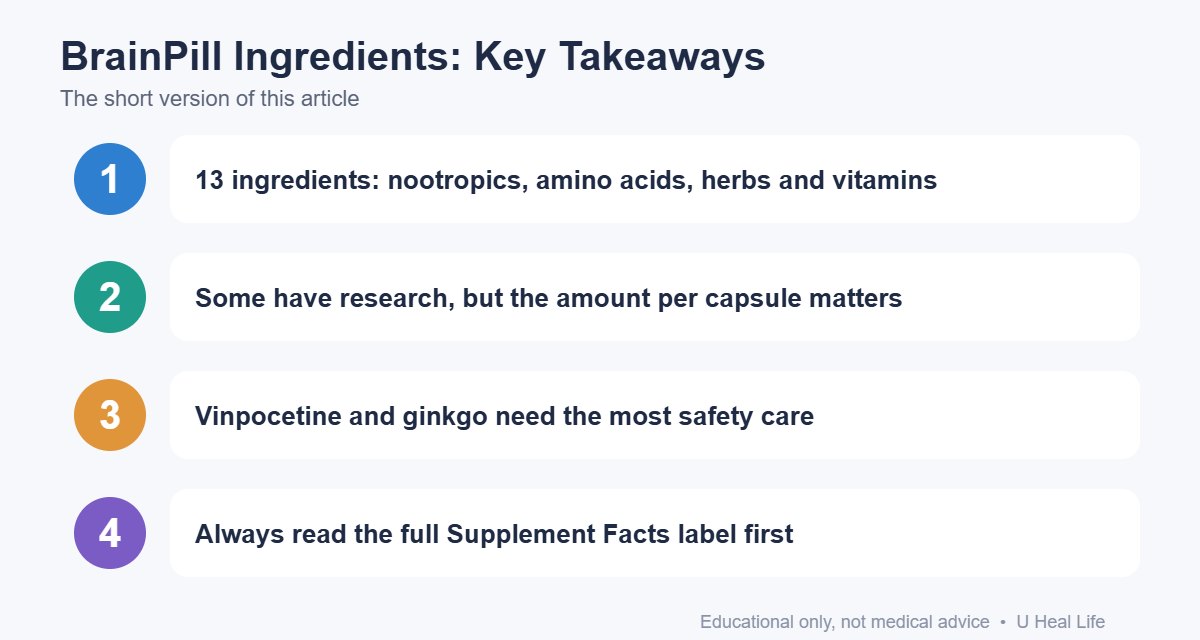
The key points at a glance.
How the Formula Is Organized
The manufacturer groups the ingredients into two ideas. The first is a “focus and cognitive energy” group built around citicoline, tyrosine, phosphatidylserine, L-theanine and B vitamins. The second is a “memory” group built around Bacopa monnieri, huperzine A, folic acid, vinpocetine, ginkgo biloba and DHA.
These groups are marketing categories, not scientific ones. It is better to look at each ingredient on its own.
The 13 Ingredients at a Glance
Ingredient
What it is
What research suggests
Safety note
Citicoline (Cognizin)
A nutrient involved in brain cell membranes
Small studies on attention and memory
Generally well tolerated; mild stomach upset or headache can occur
Tyrosine
An amino acid
Possible help with thinking under stress or lack of sleep
Ask a pharmacist if you take thyroid medicine or certain antidepressants
Phosphatidylserine
A fat found in cell membranes
Mixed results, mostly in older adults
Can cause stomach upset in some people
Vitamin B12
An essential vitamin
Matters most if you are low in it
Low risk at normal amounts
L-theanine
An amino acid found in tea
May support relaxation and attention
Usually well tolerated
Vitamin B6
An essential vitamin
Needed for normal brain function
Very high long-term doses can harm nerves
Vitamin B5
An essential vitamin
Helps the body make energy
Low risk at normal amounts
Bacopa monnieri (Synapsa)
A traditional herb
Some trials suggest memory benefits after weeks of use
Can cause nausea or stomach cramps
Huperzine A
A compound from a moss called Huperzia serrata
Studied for memory problems, not proven for healthy adults
Can affect acetylcholine; check medicine interactions
Folic acid (B9)
A form of folate
Needed for normal brain and blood health
High amounts can hide a B12 deficiency
Vinpocetine
A lab-made compound based on a plant chemical
Studied for blood flow in the brain
FDA warns it may harm a pregnancy
Ginkgo biloba
A herbal extract
Evidence for memory in healthy adults is uncertain
May raise bleeding risk with some medicines
DHA complex
An omega-3 fat
Important for brain structure
May affect blood clotting at high doses
Ingredients With the Most Research Interest
Citicoline and Bacopa monnieri get the most attention in focus and memory research. Studies are mostly small, and results depend on dose, time and who was tested. Bacopa trials usually last 12 weeks or more, so a short trial of a product does not tell you much.
L-theanine is often studied together with caffeine, which makes it hard to say what it does alone. Phosphatidylserine has mostly been studied in older adults.
Vitamins and Omega-3
B vitamins and DHA are real nutrients your brain needs. The NIH Office of Dietary Supplements has fact sheets on vitamin B12, vitamin B6 and omega-3 fatty acids. If your diet already gives you enough, extra amounts may not make you sharper.
Ingredients That Need Extra Caution
Three ingredients deserve a careful look:
Vinpocetine: The FDA has warned that it may cause miscarriage or harm fetal development.
Ginkgo biloba: The NCCIH says it has not been shown to prevent or slow dementia, and it may increase bleeding risk with some medicines.
Huperzine A: It affects a brain chemical, so ask a pharmacist about interactions if you take prescription medicine.
The manufacturer also states that the product should not be used during pregnancy, while planning pregnancy, or while breastfeeding.
What the Ingredient List Cannot Tell You
Knowing the names is not enough. Before you decide, check the Supplement Facts label for:
The exact amount of each ingredient per serving
Serving size and number of servings per bottle
Allergen information
Whether any ingredient is hidden inside a “blend” without amounts
Paid affiliate link. We may earn a commission from qualifying purchases.
Frequently Asked Questions: BrainPill Ingredients
How many ingredients are in BrainPill?
The manufacturer says it is a blend of 13 nootropic ingredients.
Are the ingredients natural?
Some are herbs or plant extracts, some are vitamins and amino acids, and vinpocetine is a lab-made compound inspired by a plant chemical.
Which ingredient is the most important?
None has been proven to be the key one. The evidence is stronger for some than for others, but none proves the formula works.
Can I get these nutrients from food?
Partly. Fish gives DHA, tea gives L-theanine, and a balanced diet gives B vitamins. A doctor can tell you if you need a supplement.
Final Thoughts
Understanding the ingredients is the best way to judge any supplement. BrainPill has a mix of well-known and debated ingredients, and a few that need real caution. To see how we weigh it all together, read our full BrainPill review.
Disclaimer: This article is for educational purposes only and is not medical advice. Dietary supplements are not intended to diagnose, treat, cure, or prevent any disease. Talk to a qualified healthcare professional before using supplements, especially if you take medicine, are pregnant or breastfeeding, or have a health condition.
By the U Heal Life editorial team. Last updated: October 2026. We have not personally tested the products or supplements discussed here, and we are not doctors. Read how we review supplements.
Affiliate disclosure: This article contains affiliate links. If you buy through our links, we may earn a commission at no extra cost to you. Our content is educational and based on public product information and published research, not personal testing.
If you are searching for “does BrainPill really work,” you probably want a straight answer. Many reviews online are written to sell, so this guide looks at the evidence in a calm, balanced way.
Quick answer: We cannot say that BrainPill works. Several of its ingredients have been studied, but we found no independent, placebo-controlled trial of the finished product showing better memory or focus. Results from ingredient studies cannot simply be applied to a multi-ingredient blend.
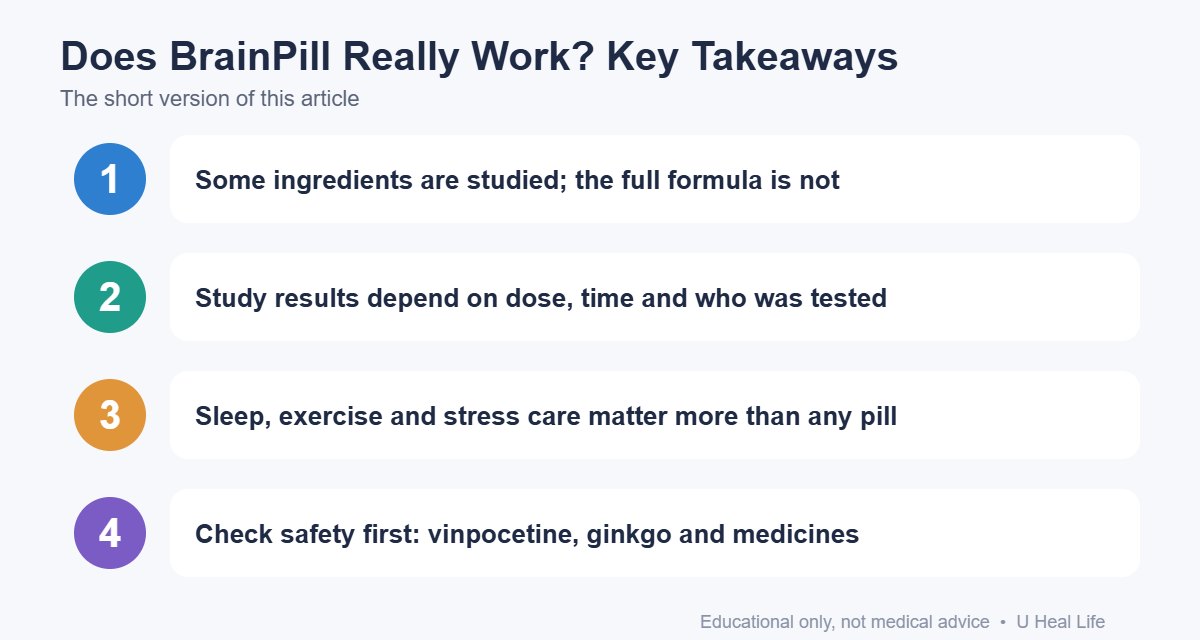
The key points at a glance.
Does BrainPill Really Work? What “Work” Actually Means
A supplement “works” if it does more than a sugar pill, in people like you, at the dose in the product, and without causing harm. In real life that means:
A noticeable improvement in focus or memory
A benefit that is larger than the placebo effect
Results that other researchers can repeat
Good safety for the people who use it
What the Manufacturer Says
BrainPill is made by Leading Edge Health. Its ingredient page describes a blend of 13 nootropics and uses strong words such as “clinically proven” for some ingredients. It says the formula can support focus, concentration, memory and mental stamina.
At the bottom of the same website there is the standard notice that these statements have not been evaluated by the FDA and that the product is not meant to diagnose, treat, cure, or prevent any disease. That notice is important. Marketing claims on a supplement page are not the same as approved medical claims.
What Independent Research Says
Here is a simple overview of what is known about the main ingredients. It is a summary, not a full scientific review.
The Gap Between Ingredient Studies and the Finished Product
Even when an ingredient looks promising, the finished product can behave differently. That is why the question “does BrainPill really work” cannot be answered by ingredient studies alone. Here is why:
Dose: A study may use a higher or lower amount than a capsule contains.
Combination: Mixing many ingredients can change how each one acts, and it becomes hard to know which one, if any, causes an effect.
People tested: Many studies are in older adults or people with a health condition, not busy, healthy adults.
Time: Some ingredients were tested for weeks or months, not days.
Outcome: A small change on a lab test does not always mean a real change in daily life.
Why Some People Feel Better
Many users say they feel sharper. Does BrainPill really work for them, or is something else going on? This can have normal explanations:
The placebo effect. Expecting to feel better can improve how you feel and perform.
Other changes made at the same time, such as better sleep or less stress.
Natural ups and downs in energy and focus.
A real benefit if the person was low in a nutrient, such as vitamin B12.
None of this means the product is useless. It means personal stories are not proof.
How to Test Any Supplement Fairly
Talk to a doctor or pharmacist first, especially if you take medicine.
Fix the basics first: sleep, food, water, movement and stress.
Change only one thing at a time so you know what caused a change.
Keep a short daily note on focus, mood and sleep for 8 to 12 weeks.
Stop and speak to a professional if you notice side effects.
Use any refund window carefully and read the terms.
The manufacturer’s site describes a 60-day guarantee. Returns must reach the warehouse within a set number of days after delivery, shipping costs are not refunded, and refunds are limited to one order per customer. Terms can change, so read the current policy before you order. A refund policy lowers your money risk, but it does not prove that a supplement works.
Frequently Asked Questions
Is there clinical proof that BrainPill works?
The manufacturer points to research on individual ingredients. We did not find an independent, placebo-controlled trial of the finished product in healthy adults.
How long does BrainPill take to work?
There is no reliable timeframe. Some ingredient studies lasted around 12 weeks, but that does not mean you should expect the same result.
Is BrainPill like a prescription focus medicine?
No. It is a dietary supplement. It has not been tested as a replacement for prescription treatment for ADHD or any other condition.
Is it safe with other medicines?
Ask a doctor or pharmacist. Ingredients such as ginkgo and huperzine A can interact with some medicines.
Final Thoughts
So, does BrainPill really work? BrainPill contains ingredients that scientists find interesting, but “interesting” is not the same as “proven.” If you decide to try it anyway, go in with realistic expectations, check the label, and keep your daily habits strong. For the full picture, read our complete BrainPill review.
Disclaimer: This article is for educational purposes only and is not medical advice. Dietary supplements are not intended to diagnose, treat, cure, or prevent any disease. Talk to a qualified healthcare professional before using supplements, especially if you take medicine, are pregnant or breastfeeding, or have a health condition.
By the U Heal Life editorial team. Last updated: October 2026. We have not personally tested the products or supplements discussed here, and we are not doctors. Read how we review supplements.
Updated: October 2026
Affiliate disclosure: This article contains affiliate links. If you purchase through our links, we may earn a commission at no additional cost to you. Our analysis is based on publicly available product information and scientific research, not personal testing of BrainPill.
Medical disclaimer: This article is for educational purposes only and is not medical advice. Consult a qualified healthcare professional before using dietary supplements, especially if you take medication or have an existing medical condition.
Maintaining concentration throughout a busy workday isn’t always easy. Between constant notifications, demanding schedules, poor sleep, and everyday stress, many adults struggle to stay mentally focused.
BrainPill is a dietary supplement marketed to people looking for support with memory, focus, concentration, and mental performance.
But does BrainPill actually work? Are its ingredients supported by scientific research? And what should you know about its safety before considering it?
In this independent BrainPill review, we’ll examine the formula, potential benefits, research limitations, possible side effects, pricing considerations, and important precautions.
What Is BrainPill?
BrainPill is a cognitive-support dietary supplement marketed by Leading Edge Health.
The manufacturer promotes it as a nootropic formula designed to support:
Focus and concentration
Memory and recall
Mental alertness
Cognitive endurance
Productivity during demanding tasks
Nootropics are substances marketed or studied for their possible effects on cognitive functions such as attention, learning, and memory.
Some nootropic ingredients have been evaluated in human studies, but the quality and strength of evidence vary considerably.
Important distinction: Evidence supporting an individual ingredient does not automatically prove that a finished supplement containing multiple ingredients delivers the same results.
BrainPill should not be considered a treatment for ADHD, anxiety disorders, depression, dementia, or other medical conditions.
BrainPill Ingredients: What’s Inside?
According to the manufacturer’s ingredient page, BrainPill combines vitamins, botanical extracts, and other compounds associated with cognitive function.
The advertised formula includes citicoline, Bacopa monnieri, L-theanine, phosphatidylserine, tyrosine, ginkgo biloba, huperzine A, vinpocetine, DHA, and several B vitamins.
The ingredients deserve individual consideration because their mechanisms, evidence, and safety profiles differ.
1. Citicoline (Cognizin)
Citicoline is involved in processes related to phospholipid production and cellular function.
Researchers have investigated citicoline for potential effects on attention, memory, and other cognitive outcomes.
Some studies have reported encouraging findings in particular populations, but results cannot automatically be generalized to every healthy adult.
The amount used, study population, duration, and measured outcomes all matter.
Our assessment: Citicoline is a relevant ingredient for cognitive-health research, but its inclusion alone does not establish BrainPill’s effectiveness.
2. Bacopa Monnieri (Synapsa)
Bacopa monnieri is a botanical ingredient traditionally used in Ayurvedic medicine.
It has attracted scientific interest because of possible effects on memory and information processing.
Some controlled trials have suggested benefits on selected memory measures after sustained supplementation.
However, studies differ in extract standardization, dosage, participant characteristics, and methodology.
Bacopa can also cause gastrointestinal discomfort in some individuals.
Our assessment: Bacopa has some promising research, but it is not an instant solution for memory difficulties or poor concentration.
3. L-Theanine
L-theanine is an amino acid naturally present in tea.
Researchers have investigated its possible effects on relaxation, attention, and responses to stress.
Some studies have examined L-theanine together with caffeine, making it important not to attribute every observed effect to L-theanine alone.
BrainPill is marketed as a caffeine-free supplement.
Our assessment: L-theanine is an interesting ingredient, but the evidence does not establish that BrainPill will reliably improve focus.
4. Phosphatidylserine
Phosphatidylserine is a phospholipid found in cell membranes, including those of brain cells.
It has been studied for potential effects on cognitive performance, particularly in certain older populations.
The evidence is mixed and depends on the formulation and population being studied.
Our assessment: Its biological role is established, but clinical benefits from supplementation should not be assumed.
5. Tyrosine
Tyrosine is an amino acid involved in producing several important signaling molecules.
Research has explored whether supplementation may influence cognitive performance under demanding conditions, such as acute stress or sleep deprivation.
Findings from specialized laboratory conditions do not necessarily translate into meaningful improvements during ordinary daily activities.
6. Ginkgo Biloba
Ginkgo biloba is widely marketed for memory and brain health.
However, evidence for improving cognitive performance in healthy adults remains uncertain.
The National Center for Complementary and Integrative Health reports that ginkgo has not been shown to prevent or slow dementia.
Ginkgo may also increase bleeding risk, particularly when combined with certain medications.
Our assessment: Ginkgo should not be treated as a proven memory enhancer.
7. Huperzine A
Huperzine A is a compound studied for its effects on acetylcholinesterase, an enzyme involved in the breakdown of acetylcholine.
Because it can affect neurotransmitter activity, it deserves particular attention when evaluating medication interactions and side effects.
Research into selected cognitive conditions does not establish that huperzine A improves everyday performance in healthy adults.
8. Vinpocetine
Vinpocetine is one of the most important ingredients to consider from a safety perspective.
The U.S. Food and Drug Administration has warned that vinpocetine may cause miscarriage or harm fetal development.
The FDA has also questioned its regulatory status as a dietary supplement ingredient.
People who are pregnant or could become pregnant should avoid products containing vinpocetine.
BrainPill’s manufacturer separately warns against use during pregnancy, when planning pregnancy, or while breastfeeding.
9. DHA and B Vitamins
DHA is an omega-3 fatty acid involved in normal brain function.
Vitamins B5, B6, B9, and B12 contribute to various metabolic and neurological processes.
Correcting a nutritional deficiency can be important for health and cognitive function.
However, taking additional vitamins when nutritional status is already adequate does not necessarily produce better memory or concentration.
Excessive intake of certain vitamins can also create health risks.
Does BrainPill Really Work?
This is the central question for anyone researching BrainPill.
The manufacturer makes several claims about focus, memory, and cognitive performance.
Some individual ingredients have been studied in humans, but ingredient-level findings are not equivalent to evidence from rigorous clinical trials of the complete commercial formula.
To establish that BrainPill itself produces meaningful improvements, ideally researchers would conduct well-designed, randomized, placebo-controlled trials using the marketed formulation and clearly defined cognitive outcomes.
Important questions include:
Was the complete formula tested?
How many participants were included?
Were participants healthy adults or people with specific conditions?
Was the study randomized and placebo-controlled?
Were outcomes clinically meaningful?
Were findings independently replicated?
Were adverse events systematically monitored?
The manufacturer’s published ingredient explanations and research references are useful starting points, but they should not be treated as independent proof of every advertised benefit.
Our verdict on effectiveness: BrainPill contains several ingredients of scientific interest, but the publicly reviewed evidence is insufficient to conclude that the finished product reliably improves memory, focus, or productivity in healthy adults.
Potential BrainPill Benefits: What Is Reasonable to Expect?
Focus and concentration
Some ingredients have been investigated for effects on attention.
However, BrainPill should not be expected to produce a predictable improvement for every user.
Memory support
Certain ingredients have been studied for memory-related outcomes.
The research varies in quality, and results cannot automatically be applied to the complete BrainPill formula.
Mental fatigue
The manufacturer markets BrainPill for mental endurance.
However, fatigue may result from poor sleep, stress, nutritional deficiencies, medication effects, or medical conditions.
A supplement should not replace identifying and addressing the underlying cause.
Productivity
Productivity depends on multiple factors, including sleep, work environment, workload, habits, and mental well-being.
There is not sufficient evidence to promise that BrainPill will make someone more productive.
BrainPill Side Effects and Safety Concerns
No dietary supplement should be assumed to be completely free of side effects.
BrainPill contains multiple active ingredients, making individual tolerance and possible interactions important considerations.
Depending on the ingredients, potential concerns may include:
Headaches or dizziness
Digestive discomfort
Allergic reactions
Medication interactions
Bleeding-related concerns associated with ginkgo
Reproductive safety concerns associated with vinpocetine
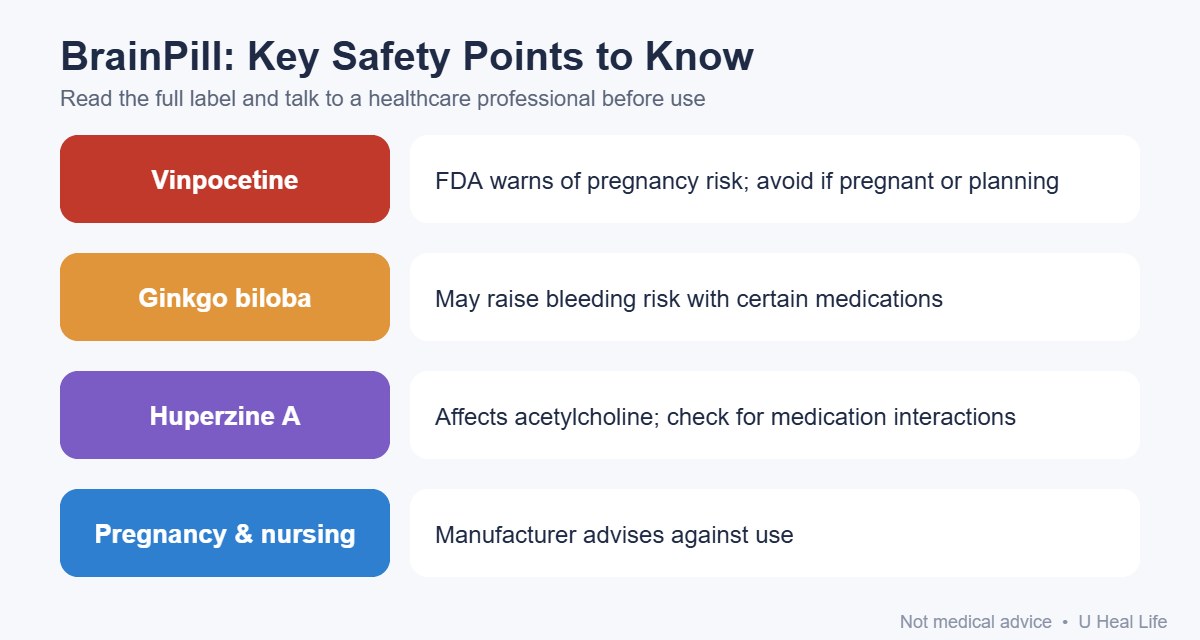
Key safety points to review before considering BrainPill.
This is not a complete list of possible adverse effects, and it does not establish the frequency of side effects from BrainPill itself.
The FDA’s warning about vinpocetine is particularly significant.
Do not use BrainPill if you are pregnant, planning to become pregnant, or breastfeeding, consistent with the manufacturer’s warning.
If you take prescription medications, have a chronic health condition, or are considering multiple supplements, discuss the complete ingredient label with a healthcare professional before use.
Who Should Avoid BrainPill?
BrainPill may be inappropriate for several groups, including:
Pregnant individuals or those who could become pregnant: Vinpocetine has specific FDA safety warnings.
People who are breastfeeding: The manufacturer advises against use.
People taking certain medications: Some botanical ingredients may interact with prescription drugs.
People with unexplained or worsening cognitive symptoms: Persistent brain fog, memory changes, or difficulty concentrating deserve appropriate medical assessment.
People seeking treatment for a diagnosed condition: BrainPill is not a substitute for evidence-based medical care.
BrainPill Price and Where to Buy
BrainPill is promoted through its official website.
Pricing, package discounts, shipping terms, and availability may change, so readers should check the current product page rather than rely on an outdated price quoted in a review.
Paid affiliate link. We may earn a commission from qualifying purchases.
BrainPill Refund Policy
The manufacturer advertises a 60-day satisfaction guarantee.
Its published terms describe return conditions and a deadline for receiving returned products, with shipping and handling generally excluded from refunds.
Readers should verify the current terms directly before ordering, including which opened and unopened containers qualify.
A refund policy can reduce some financial uncertainty, but it does not establish that a supplement is safe or effective.
BrainPill Pros and Cons
Potential advantages
Includes several ingredients that have been investigated in cognitive-health research
Manufacturer provides ingredient information
Marketed as caffeine-free
Offers a published refund policy
Provides an option for readers interested in researching multi-ingredient nootropic supplements
Limitations
The complete formula’s effectiveness has not been adequately established by the evidence reviewed here
Ingredient research does not prove product-level benefits
Contains vinpocetine, which carries significant reproductive safety concerns
Some ingredients may interact with medications
Results cannot be predicted for individual users
A multi-ingredient formula makes it harder to identify which ingredient, if any, is responsible for an effect
BrainPill vs. Other Cognitive Supplements
When comparing BrainPill with another nootropic product, don’t focus only on the number of ingredients or marketing claims.
Consider these factors:
Comparison factor
What to look for
Ingredient transparency
Complete ingredient names and quantities
Clinical evidence
Human studies on the actual finished formula
Safety
Known risks, contraindications, interactions
Quality
Manufacturing and independent testing information
Price
Cost per serving and total monthly expense
Refunds
Clear written conditions
Suitability
Your medical history and individual needs
A product with fewer ingredients and clearer evidence may be easier to evaluate than a complex blend.
Natural Alternatives for Better Focus and Mental Clarity
Before purchasing a cognitive supplement, consider foundational habits that influence concentration and mental performance.
1. Prioritize consistent sleep
Sleep plays an important role in attention, learning, and memory.
Maintain a regular sleep schedule and address ongoing sleep problems rather than relying on supplements to compensate for insufficient rest.
2. Exercise regularly
Regular physical activity supports overall health and can benefit aspects of cognitive and emotional well-being.
Choose activities appropriate for your fitness level and medical circumstances.
3. Reduce unnecessary distractions
Try working in focused blocks, silencing nonessential notifications, and creating a distraction-reduced environment.
4. Eat a balanced diet
Adequate nutrition supports normal brain function.
If you suspect a deficiency, discuss appropriate testing with a healthcare professional instead of assuming that a supplement will help.
5. Manage everyday stress
Mindfulness exercises, regular breaks, social support, and reasonable workloads can help make daily demands more manageable.
6. Investigate persistent brain fog
Ongoing concentration problems may have medical, psychological, sleep-related, or medication-related causes.
A clinician can help determine whether further evaluation is appropriate.
Is BrainPill Worth It in 2026?
BrainPill may attract people interested in cognitive-support supplements because it combines several well-known nootropic ingredients.
However, the decision should not be based on marketing promises alone.
The most important limitation is the gap between research on individual ingredients and reliable evidence that the complete BrainPill formula improves real-world cognitive performance.
The presence of vinpocetine also raises a meaningful safety consideration, especially for people who are pregnant or could become pregnant.
Our conclusion: BrainPill is a product worth researching carefully, not a proven shortcut to sharper memory or better productivity. We cannot recommend it as a reliable cognitive enhancer based on the evidence reviewed here.
Anyone considering it should first evaluate the complete label, potential interactions, personal health circumstances, and available alternatives.
Paid affiliate link. Purchases through this link may generate a commission for UHealLife.
Frequently Asked Questions
Is BrainPill FDA-approved?
BrainPill is marketed as a dietary supplement, not an FDA-approved medication for improving memory or treating cognitive disorders. Dietary supplements are generally not approved by the FDA for safety and effectiveness before marketing.
Does BrainPill help with brain fog?
The manufacturer promotes BrainPill for brain fog, but there is insufficient independent evidence reviewed here to conclude that the finished product reliably improves this symptom.
Persistent brain fog should be evaluated for possible underlying causes.
How long does BrainPill take to work?
The manufacturer suggests sustained use may be necessary. However, there is no well-established timeframe in which consumers can reliably expect cognitive improvements from the finished product.
Is BrainPill safe for everyone?
No. The product contains ingredients with potential risks and interactions. The manufacturer advises against use during pregnancy, when planning pregnancy, or while breastfeeding.
Can BrainPill treat ADHD or anxiety?
No reliable evidence establishes BrainPill as a treatment for ADHD, anxiety disorders, or other medical conditions. It should not replace professional assessment or prescribed treatment.
Is BrainPill caffeine-free?
The manufacturer describes BrainPill as caffeine-free. Check the current product label to confirm the formulation before purchasing.
Does BrainPill offer a money-back guarantee?
The manufacturer advertises a 60-day guarantee, subject to its current return conditions. Verify those conditions before ordering.
Final Thoughts
Better focus and mental clarity are worthwhile goals, but the best approach starts with understanding why concentration is difficult in the first place.
BrainPill contains ingredients that have attracted scientific interest, yet that does not establish that the combined product will work as advertised.
Consumers should balance possible benefits against uncertainty, safety concerns, cost, and more established approaches to cognitive well-being.
At UHealLife, our goal is to help readers make informed wellness decisions through balanced information rather than exaggerated promises.
Editorial note: This article is an independent desk-based research review. UHealLife has not conducted personal product testing or an independent clinical trial of BrainPill.
Red light therapy has gone from a niche clinical treatment to one of the most searched wellness topics online. Celebrities use it, gyms offer it, and home panels and face masks are everywhere. But does it actually work, or is it just another wellness trend?
In this guide, we break down what red light therapy is, what research supports, what is still unproven, who should be careful, and how to use it safely.
Quick answer: Red light therapy has reasonable evidence for some skin concerns, wound healing, and certain types of pain. Evidence for mood, sleep, and stress is promising but still early. It is not a replacement for medical or mental health treatment.
What Is Red Light Therapy?
Red light therapy (RLT) uses low-level wavelengths of red and near-infrared light to stimulate cells in the body. In research it is often called photobiomodulation (PBM) or low-level light therapy (LLLT).
Unlike a tanning bed or sunlamp, RLT does not use ultraviolet (UV) light. It does not tan or burn the skin, and it works through light energy rather than heat.
Two main wavelength ranges are commonly used:
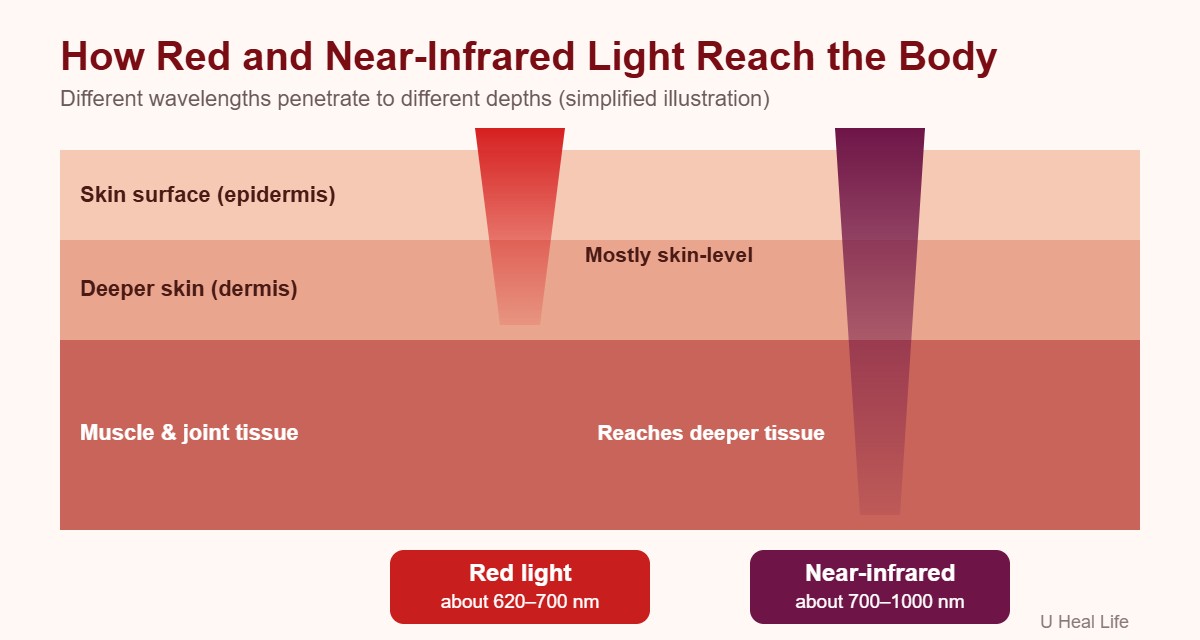
Red light (about 620-700 nm): Absorbed mostly near the skin surface. Common for skin-related goals.
Near-infrared light (about 700-1000 nm): Invisible to the eye and penetrates deeper, toward muscles and joints.
Red light works near the skin surface, while near-infrared light reaches deeper tissue.
How Does Red Light Therapy Work?
The leading theory is that light is absorbed by structures inside our cells, especially the mitochondria, often called the “powerhouse” of the cell. Researchers believe this may increase cellular energy production (ATP) and influence inflammation and tissue repair.
It is important to note that scientists are still studying the exact mechanisms. Results depend heavily on wavelength, dose, session length, and distance from the device, which is why results vary so much between products.
Potential Benefits of Red Light Therapy
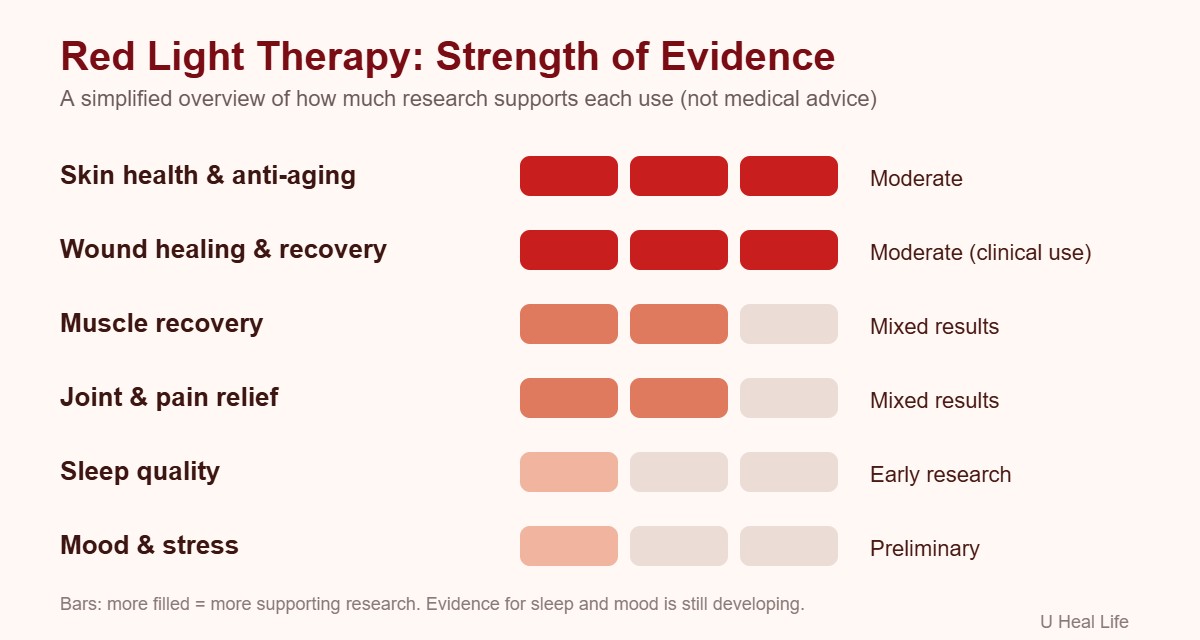
How much research supports each use of red light therapy (simplified overview).
1. Skin Health and Anti-Aging
This is the area with the most consumer interest. Some studies suggest red light may support collagen production and improve the look of fine lines, skin texture, and tone. Certain devices have also been studied for mild to moderate acne, often alongside other treatments.
Results are usually gradual and modest, not dramatic overnight changes.
2. Wound Healing and Recovery
Photobiomodulation has been studied in clinical settings for helping tissue repair. For example, it is used in some healthcare settings for painful mouth sores caused by certain cancer treatments. This is supervised medical use, not the same as using a home panel.
3. Muscle Recovery and Exercise Performance
Athletes and gym-goers use RLT hoping to reduce soreness and speed recovery. Some research suggests possible benefits for muscle fatigue and recovery, but results differ between studies and protocols.
4. Joint and Pain Relief
Near-infrared light has been studied for conditions like osteoarthritis-related joint pain, neck pain, and tendon problems. Some trials show pain reduction, while others show little difference from placebo, so the evidence is mixed.
5. Sleep Quality
Many people search for red light therapy for sleep. Early, small studies suggest that red light exposure may support sleep quality in some groups, and red-toned light in the evening is less disruptive than blue light. However, large, high-quality human trials are still limited.
6. Mood, Stress, and Mental Wellness
This is an exciting but early area of research. Some small studies have explored near-infrared light on the head for low mood and cognitive function, and others have looked at light exposure for seasonal mood changes. The research is preliminary.
Important: Red light therapy is not an approved or proven treatment for depression or anxiety. If you are struggling with your mental health, please speak with a licensed healthcare professional.
What Red Light Therapy Cannot Do
To keep expectations realistic, RLT is not proven to:
Melt body fat or replace diet and exercise
Cure depression, anxiety, or any mental health condition
Treat cancer or serious disease
Replace sunscreen, medication, or doctor-prescribed care
Be cautious of any brand that promises miracle results.
Is Red Light Therapy Safe? Side Effects to Know
For most people, RLT is considered low risk when used as directed. Reported side effects are usually mild and may include:
Temporary skin redness or warmth
Mild headache or eye strain
Skin irritation or dryness
Trouble sleeping if used too late or too intensely
Eye safety matters. Bright light can strain or harm eyes. Use the protective goggles that come with a device and avoid staring into the lights.
Who Should Talk to a Doctor First?
Check with a healthcare provider before using RLT if you:
Are pregnant
Have a history of skin cancer or suspicious moles
Take medications that make skin sensitive to light (photosensitizing drugs)
Have a light-sensitive condition, such as lupus or certain eye conditions
Have a seizure disorder or epilepsy
Plan to use it directly over a tumor, implant, or medical device
Red Light Therapy at Home vs. Professional Treatment
Feature
At-Home Devices
Clinic / Professional
Cost
One-time purchase (varies widely)
Pay per session or package
Power
Usually lower
Usually higher and calibrated
Convenience
Use anytime
Need to book appointments
Supervision
Self-guided
Trained staff
Best for
Maintenance, general wellness
Specific concerns, faster monitoring
How to Use Red Light Therapy Safely
Read the manufacturer’s instructions. Time and distance guidelines differ by device.
Start short. Begin with the lowest recommended session time and increase gradually.
Use clean, bare skin. Remove makeup, lotions, and sunscreen unless the manufacturer says otherwise.
Protect your eyes. Wear the included goggles.
Be consistent. Most studies use multiple sessions per week over several weeks.
Track your results. Take photos or journal changes in skin, sleep, or mood.
Stop if irritation occurs and consult a professional.
How to Choose a Red Light Therapy Device
Not all devices are equal. Look for:
Clearly stated wavelengths (for example, red around 630-670 nm and near-infrared around 810-850 nm)
Published power output (irradiance) rather than just “LED count”
Regulatory clearance where available, such as FDA-cleared for specific uses
Independent testing or third-party reviews
A fair return policy and warranty
Be careful with unrealistic claims, no technical specs, or “cure-all” marketing.
Can Red Light Therapy Help With Mental Wellness?
Many people explore RLT as part of a broader self-care routine. A realistic way to think about it:
It may support relaxation and better evening routines, especially when it replaces bright blue-light screen time.
It may be a helpful addition, but not a substitute, for therapy, medication, exercise, sunlight, social connection, and sleep hygiene.
Pair it with habits that have stronger evidence: regular movement, morning daylight, a consistent sleep schedule, and professional support when needed.
Frequently Asked Questions
Does red light therapy really work?
It appears to work for certain uses, such as some skin concerns, healing support, and some types of pain. Evidence for other claims is still developing, and results depend on the device and consistency.
How long does red light therapy take to work?
Many people use it for several weeks before noticing changes. Skin results are typically gradual, often over 8-12 weeks, though individual results vary.
How often should I use red light therapy?
Most protocols use sessions a few times per week. Follow your device’s guidelines and avoid overuse.
Is red light therapy better than sunlight?
They are different. Sunlight provides vitamin D and supports your body clock but also includes UV. RLT does not provide vitamin D.
Can I use red light therapy every day?
Some devices allow daily use at low doses, but more is not always better. Follow the manufacturer’s instructions and talk to your doctor if unsure.
Does red light therapy help with sleep?
It may help some people, particularly when used as part of an evening wind-down routine. Research is still limited, so it should not replace good sleep habits or medical care for sleep disorders.
Is red light therapy FDA approved?
Specific devices may be FDA-cleared for particular uses, such as certain skin or pain applications. Many wellness devices make general claims without clearance, so check the exact device and its approved use.
Can red light therapy cure depression?
No. It is not a proven treatment for depression. If you feel persistently low, anxious, or hopeless, please contact a licensed mental health professional or your doctor.
Final Thoughts
Red light therapy is not magic, but it is more than just a trend. It shows real promise for skin, recovery, and comfort, while its effects on sleep and mood are still being explored. If you try it, choose a reputable device, use it consistently and safely, and treat it as one tool within a healthy lifestyle, not a cure-all.
Disclaimer: This article is for informational purposes only and is not medical advice. Always consult a qualified healthcare professional before starting any new wellness therapy, especially if you have a medical condition or take medication.
Affiliate disclosure: This article contains an affiliate link. If you buy through it, we may earn a commission at no extra cost to you. We only write about products we have researched, and this review is not medical advice.
Testosterone naturally drifts down as men move past 30. Lower energy, slower recovery after workouts, a softer midsection and a flatter drive are common complaints, and they send a lot of men searching for a supplement. Testodren by PrimeGENIX is one of the products that comes up in those searches. In this review we look at what it contains, what the manufacturer claims, what independent research on its key ingredient actually shows, and who it may (and may not) suit.
What Is Testodren?
Testodren is a once-daily dietary supplement for men. Each capsule holds 500 mg of a patented, standardized extract of fenugreek (Trigonella foenum-graecum), and each bottle contains 30 capsules, which is a one-month supply. It is a single-ingredient formula, so there is no long proprietary blend to decode. The brand positions it for men roughly 30 to 60+ who want to support healthy testosterone levels as they age.
What Does the Manufacturer Claim?
According to the brand, the formula is designed to support:
Daily energy levels
Workout performance and muscle building
Body composition (reducing body fat)
Focus, motivation and drive
Sexual health and libido
The brand also reports that its clinical study showed a 72.87% increase in free testosterone over 12 weeks. Keep in mind this is a manufacturer-reported figure from a study on its own ingredient, so treat it as a promising claim rather than a guaranteed result for every man.
What Does the Research on Fenugreek Say?
Fenugreek is one of the more studied herbal ingredients in the testosterone space, but the evidence is mixed and honest reviews should say so.
A 2020 meta-analysis of four randomized trials in Phytotherapy Research found that fenugreek extract was associated with a significant rise in total testosterone in men.
A 2020 systematic review in Advances in Nutrition listed fenugreek seed extract (along with ashwagandha) as one of the herbal ingredients with positive effects on testosterone in men.
A newer 2026 meta-analysis of randomized placebo-controlled trials (Frontiers in Nutrition) found only a small favorable effect on total testosterone, while the result for free testosterone was imprecise and inconsistent between studies.
At least one recent randomized trial reported no boost in testosterone from fenugreek.
Bottom line: fenugreek may modestly support testosterone and sexual function in some men, but results vary with the extract used, the dose, the study length and the men tested. It is not a replacement for medical testosterone therapy, and it will not work miracles.
Who Might Consider Testodren?
Men aged 30+ who notice lower energy, drive or workout recovery and want a simple, single-ingredient option.
Men who already sleep well, eat well and strength-train, and want to add a supplement on top of a healthy routine.
People who prefer a plant-derived extract over multi-ingredient “testosterone booster” blends.
Who Should Be Careful?
Men on blood-thinning or diabetes medication. Fenugreek can affect blood sugar and may interact with these drugs.
Anyone with a known hormone-related condition, prostate concerns, or fertility plans.
Men with symptoms of very low testosterone. Fatigue and low libido can also come from poor sleep, stress, thyroid issues, depression or other conditions, so get a blood test and speak to a doctor first.
Anyone allergic to fenugreek, chickpeas or peanuts (they belong to the same plant family).
Possible side effects of fenugreek can include stomach upset, gas or loose stools in some people. Always follow the label and talk to a healthcare professional before starting any supplement.
Natural Ways to Support Testosterone Alongside Any Supplement
Lift weights 3 to 4 times a week. Compound lifts such as squats and deadlifts are particularly useful.
Sleep 7 to 9 hours. Poor sleep is strongly linked to lower testosterone.
Manage body fat and stress. Excess belly fat and chronic stress both work against healthy hormone levels.
Eat enough protein, healthy fats and micronutrients such as zinc and vitamin D, ideally from food first.
Where Is Testodren Available?
Demand for men’s health and testosterone-support supplements is strongest in markets such as the United States, the United Kingdom, Germany, Saudi Arabia and the UAE, and market research firms expect steady growth in all of them through the early 2030s. Testodren ships to most countries worldwide. The brand lists a small number of restricted destinations (including India, Mexico, Malaysia, Thailand, South Africa, Egypt, Norway, Peru and the Russian Federation, among others), so please check availability for your country on the official page before ordering.
Final Verdict
Testodren is a clean, single-ingredient fenugreek formula with a clear dose and a simple one-capsule-a-day routine. The science behind fenugreek is encouraging but modest, so go in with realistic expectations: think of it as a supporting tool alongside training, sleep and nutrition, not a shortcut. If you decide to try it, start with one bottle, track how you feel and your energy and training over 8 to 12 weeks, and consider re-testing your levels with your doctor.
Studies on fenugreek typically run 8 to 12 weeks, so give any such supplement at least two to three months before judging it.
How do you take Testodren?
The brand recommends one capsule daily as per the label directions. Follow the instructions on the bottle.
Is Testodren a steroid or hormone?
No. It is a plant-derived dietary supplement and does not contain testosterone itself.
Can women take it?
It is marketed for men, so women should speak to a doctor before using it.
These statements have not been evaluated by regulatory authorities. This product is not intended to diagnose, treat, cure or prevent any disease. Results vary from person to person.
Search for “supplements to boost metabolism” and you will find hundreds of products promising to burn fat and speed up your calorie burn. The honest answer is more modest. No pill can reliably “fire up” your metabolism, and most research on these supplements shows small effects or mixed results. This guide looks at seven popular supplements, what the evidence says, who should be careful, and what actually supports a healthy metabolism.
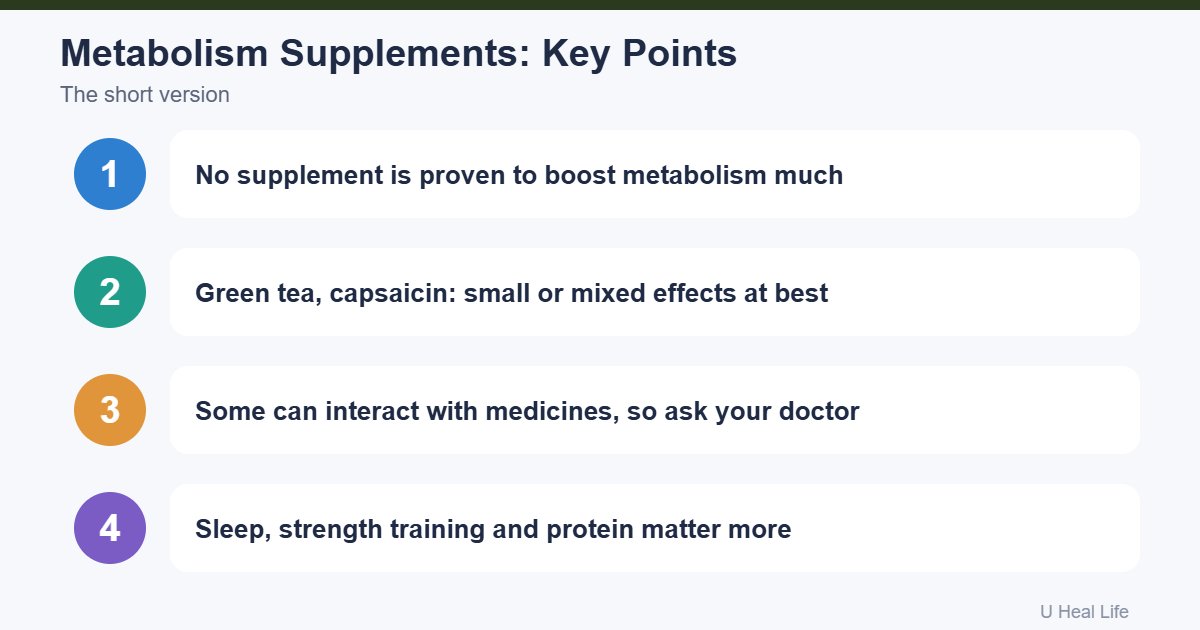
Quick answer: There is no proven supplement that significantly boosts metabolism. Green tea extract, capsaicin and a few others show small or mixed effects in studies, while B vitamins, magnesium, CoQ10 and omega-3s support normal body functions but are not shown to speed up metabolism if you are not low in them. Sleep, strength training, enough protein and an active day matter far more. Talk to your doctor before taking any supplement.
Key points at a glance.
Table of Contents
By the U Heal Life editorial team. Last updated: October 2026. We are not doctors, and this article is general information based on public health sources, not medical advice. This page contains one affiliate link, explained clearly near the end. If you buy through it, we may earn a commission at no extra cost to you.
How Metabolism Really Works
Your metabolic rate is the number of calories your body uses in a day. It is commonly described in three parts:
Basal metabolic rate (BMR): the energy you use just to stay alive. This is the biggest part, often described as about 60 to 70 percent of daily use.
Thermic effect of food: the energy used to digest and absorb food, often described as about 10 percent.
Physical activity: everything from walking to workouts, often described as about 20 to 30 percent.
Body size, muscle mass, age, sex and genetics play the main roles. Muscle uses more energy than fat, which is one reason strength training helps.
The 7 Supplements at a Glance
Supplement
What people hope it does
What the evidence suggests
Main cautions
Green tea extract
Small boost to calorie burn
Small or mixed effects on weight
Rare liver injury reported with concentrated extracts; caffeine
L-carnitine
Help the body use fat for energy
Limited evidence for weight loss
Stomach upset; may interact with some medicines
Capsaicin
Slightly raise calorie burn and reduce appetite
Small effects in some short studies
Stomach discomfort
B vitamins
Support energy metabolism
Helpful if you are low, not a booster otherwise
Very high doses of some B vitamins can cause problems
CoQ10
Support cell energy
Not shown to boost metabolism
May interact with blood thinners such as warfarin
Magnesium
Support many body reactions
Helpful if you are low, not shown to boost metabolism
High supplement doses can cause diarrhea
Omega-3 fatty acids
Support heart health and reduce inflammation
Good for heart-related goals, not a metabolism booster
May increase bleeding risk at high doses
What the Evidence Says, One by One
1. Green Tea Extract
Green tea contains caffeine and plant compounds called catechins, including EGCG. Reviews of studies have found at most a small effect on weight, and some reviews found no meaningful effect. Concentrated green tea extracts have been linked to rare cases of liver injury, especially at high doses and on an empty stomach. If you are sensitive to caffeine, pregnant, or have liver problems, ask your doctor first.
2. L-Carnitine
Your body makes L-carnitine, and it helps move fatty acids into cells to be used for energy. Taking more has not been shown to cause meaningful weight loss in healthy people. Side effects can include nausea and stomach upset.
3. Capsaicin
Capsaicin is the compound that makes chili peppers hot. Some short studies suggest a small rise in calorie burn and a small drop in appetite, but the effects are modest and may fade over time. It can irritate the stomach.
4. B Vitamins
B vitamins help your body turn food into energy. If you are low in a B vitamin, such as B12, you may feel tired, and fixing the shortage can help. If your levels are normal, extra B vitamins are not expected to speed up metabolism.
5. CoQ10
CoQ10 is involved in making energy inside cells. It is popular for general health, but there is no strong evidence that it boosts metabolism or causes weight loss. It may reduce the effect of blood thinners such as warfarin.
6. Magnesium
Magnesium takes part in many body processes, and many people do not get enough from food. Correcting a low level is useful. It is not shown to raise metabolism in people who are not low. High supplement doses can cause diarrhea, so follow label limits and ask your doctor.
7. Omega-3 Fatty Acids
Omega-3s from fish oil are well studied for heart health and for lowering triglycerides. They are not a proven metabolism booster. High doses may increase bleeding risk, so talk to your doctor if you take blood thinners.
Ingredients and Products to Be Careful With
“Fat burners” with many stimulants: these can raise heart rate and blood pressure.
Bitter orange (synephrine): safety concerns have been raised, especially for the heart.
Raspberry ketones: there is little good evidence in humans.
Chromium picolinate: results are mixed, and any benefit appears small.
Ephedra: the FDA banned ephedra supplements in the US because of safety risks.
Anything promising fast, easy fat loss: the FDA has warned about weight-loss products that secretly contain drugs.
Dietary supplements in the US are not approved by the FDA before they are sold, so quality and claims can vary.
What Actually Supports a Healthy Metabolism
Build and keep muscle. Strength training two or more days a week helps.
Eat enough protein and enough food overall. Crash diets can slow your progress.
Sleep well. Poor sleep affects appetite and energy.
Move through the day. Walking and everyday activity add up.
Get tested if something feels off. Fatigue, sudden weight change or a racing heart can have medical causes, including thyroid conditions. See our guide on overactive thyroid symptoms in men.
How to Choose a Supplement More Safely
Talk to your doctor or pharmacist first, especially if you take medicines, are pregnant or have a health condition
Look for independent testing marks such as USP or NSF on the label
Check the dose and stay within label limits
Start with one product at a time, and stop if you feel unwell
Be careful with miracle claims and “before and after” photos
A Note About the Product Link on This Page
Some readers ask about specific products. The link below is an affiliate link: if you buy through it, we may earn a commission at no extra cost to you. We have not tested this product, we make no claims about results, and we are not recommending it over the careful steps above. Please check the ingredients, doses and safety information yourself and ask your doctor first.
Disclaimer: This article is for general information only and is not medical advice. Dietary supplements are not intended to diagnose, treat, cure or prevent any disease. Talk to a qualified healthcare professional before taking any supplement.
This post contains affiliate links. We may earn a commission if you purchase through links on this page, at no extra cost to you.
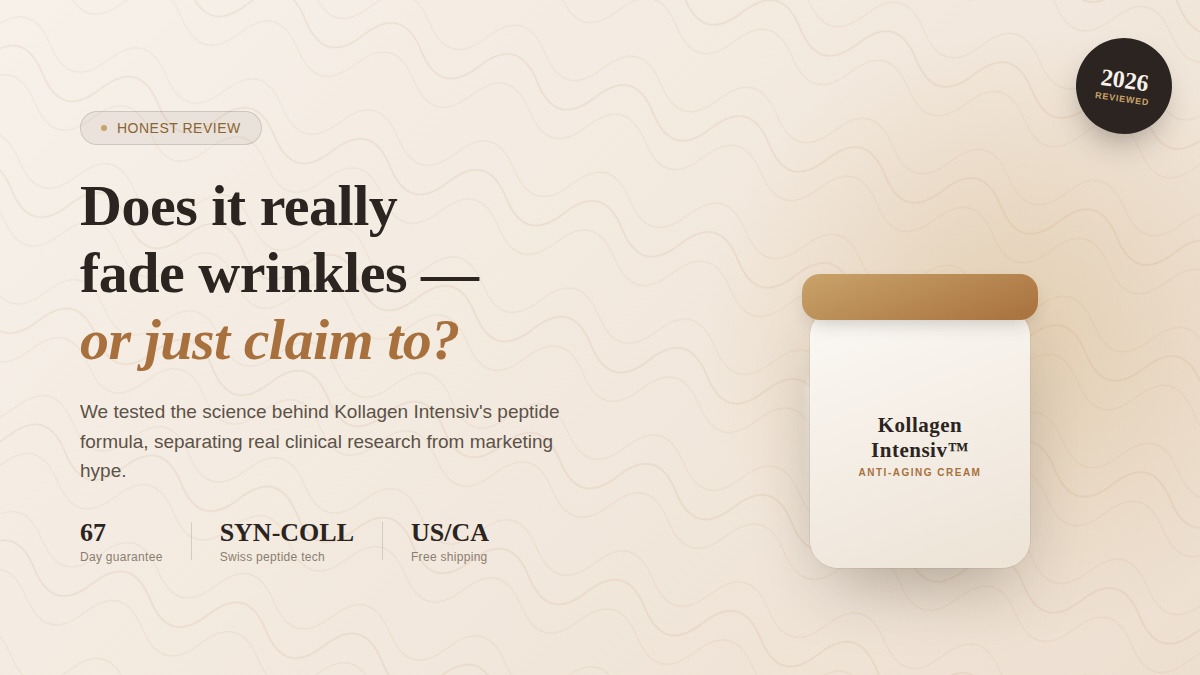
If you’ve spent any time researching anti-aging skincare, you’ve probably noticed the same problem we did: most “collagen creams” make big promises and back them up with nothing. So when we looked into Kollagen Intensiv™, a topical anti-aging cream built around a patented Swiss peptide technology, we wanted to know one thing — is there anything real behind the claims, or is this just another jar of hope?
Here’s what we found, including where the marketing oversells it and where the science actually checks out.
What Is Kollagen Intensiv™?
Kollagen Intensiv™ is a topical anti-aging cream made by Skinception, designed for daily morning and evening use. Unlike collagen supplements you drink or swallow, this is applied directly to the skin — the idea being that you support collagen production at the surface level where wrinkles actually form, rather than relying on collagen absorbed through digestion.
The product centers on a single active ingredient: SYN-COLL® (palmitoyl tripeptide-5), a patented synthetic peptide developed in Switzerland.
The Science Behind SYN-COLL: What’s Real and What’s Marketing
This is where we need to slow down, because the marketing claim attached to this product is bold: a “354% wrinkle reduction.” We dug into the actual peptide research behind SYN-COLL to see if that number holds up — and it’s worth being upfront about what we found.
What the research actually shows: Independent studies on palmitoyl tripeptide-5 (the active compound in SYN-COLL) suggest it can increase Type I collagen production through stimulation of TGF-β, a growth factor involved in skin repair. In controlled testing using surface topography measurement, the peptide showed meaningfully better wrinkle-reduction results than a placebo — researchers described it as several times more effective than control formulations. A separate 84-day study with twice-daily use reported measurable improvements in skin roughness and wrinkle depth compared to a placebo group.
What we couldn’t verify: A specific “354%” figure as an independent, peer-reviewed result. The number traces back to the ingredient manufacturer’s own formulation documentation rather than a third-party clinical trial we could independently confirm. That doesn’t mean the ingredient doesn’t work — the underlying mechanism (boosting Type I collagen via TGF-β stimulation while inhibiting the enzymes that break collagen down) is real and documented in peptide research. But we’d treat the specific percentage as a marketing figure rather than a guaranteed outcome, and we think you should too.
Bottom line: SYN-COLL has genuine science behind how it might work. The exact how much is less certain than the bottle suggests. That’s a meaningfully different (and more honest) claim than “doesn’t work at all” — which is more than we can say for a lot of products in this category.
What’s Actually in the Formula
Based on the product’s own documentation, Kollagen Intensiv™ combines:
SYN-COLL® (Palmitoyl Tripeptide-5) — the core active peptide, intended to stimulate collagen synthesis and slow collagen breakdown
A single daily cream format — used both morning and evening, rather than separate day/night formulas
The simplicity here is worth noting both ways: it’s easier to use consistently (a real factor in whether any skincare product actually works, since consistency matters more than almost anything else), but it also means you’re relying on one active ingredient rather than a multi-peptide complex some competitors use.
Pricing, Guarantee, and Shipping
A few practical details that matter when you’re deciding whether to try it:
Price: $59.95 USD for a one-month supply, with multi-month package options available
Shipping: Free shipping across North America (US and Canada)
Guarantee: A 67-day satisfaction guarantee — if you don’t see a difference in skin smoothness and texture, you can return the jar for a full refund (shipping costs excluded)
The 67-day window is longer than the industry-standard 30-day return policy, which gives you enough time to actually judge results — most peptide-based skincare needs at least 4-8 weeks of consistent use before changes become visible, so a shorter guarantee window wouldn’t be enough time to fairly evaluate it anyway.
Topical Cream vs. Collagen Supplements: Do You Need Both?
This is a question worth answering honestly, because it affects how you should actually use a product like this.
Topical peptide creams and oral collagen supplements work through different mechanisms, and most dermatology-focused sources treat them as complementary rather than interchangeable:
Topical peptides (like SYN-COLL) work at the skin’s surface and upper dermis, signaling skin cells to produce more collagen locally.
Oral collagen supplements (collagen peptides you drink or take as capsules) are digested and broken down into amino acids, which your body then redistributes — including to skin, but also to joints, bones, and other tissues. The effect is more systemic and generally takes longer to show in the skin specifically.
If your goal is specifically targeting visible facial wrinkles, a topical peptide cream is the more direct tool. If you’re also interested in broader skin elasticity, joint support, or hair and nail benefits, pairing a topical cream with a daily collagen supplement is a reasonable, commonly recommended combination — neither replaces the other, and there’s no real conflict in using both.
Who This Product Makes Sense For
Based on what the product actually is and what the research on its core ingredient supports, Kollagen Intensiv™ is a reasonable option if:
You want a single, simple daily cream rather than a multi-step routine
You’re looking for a peptide-based option with documented (if not “354%”) research behind the active ingredient
You want a long return window to actually test whether it works for your skin specifically
You’re in the US or Canada, where shipping is free and straightforward
It’s probably not the right fit if you’re looking for a multi-ingredient formula with retinoids, multiple peptide complexes, or other actives layered together — this is intentionally a simpler, single-active product.
Frequently Asked Questions
Does Kollagen Intensiv™ really reduce wrinkles by 354%? That specific figure comes from the ingredient manufacturer’s own formulation materials rather than an independent clinical trial we could verify. Independent peptide research on the active ingredient (SYN-COLL) shows real, documented wrinkle-reduction effects compared to a placebo, but at more modest levels than the marketing figure suggests. Treat the 354% number as a marketing claim, not a guaranteed result.
How long does it take to see results? Most peptide-based skincare, including SYN-COLL specifically, shows initial improvements within a few weeks of consistent twice-daily use, with more noticeable results typically reported around the 8-12 week mark. The product’s 67-day guarantee window roughly matches this realistic timeline.
Can I use a collagen cream and a collagen supplement together? Yes. They work through different mechanisms (topical vs. ingested) and are generally considered complementary rather than redundant. Using both isn’t necessary, but it isn’t counterproductive either.
Is Kollagen Intensiv™ available in the US and Canada? Yes — the product ships free across North America.
What if it doesn’t work for my skin? The product includes a 67-day satisfaction guarantee, allowing a full refund (excluding shipping) if you don’t see improvement in smoothness and texture within that window.
Disclaimer: This article is for informational purposes only and is not a substitute for professional dermatological advice. Individual results vary. If you have sensitive skin or known allergies, patch-test any new skincare product and consult a dermatologist with questions specific to your skin.
Men are paying more attention to their testosterone levels than ever before—and for good reason. From maintaining muscle mass and skyrocketing energy to keeping a sharp mental edge, testosterone is the core engine of male vitality.
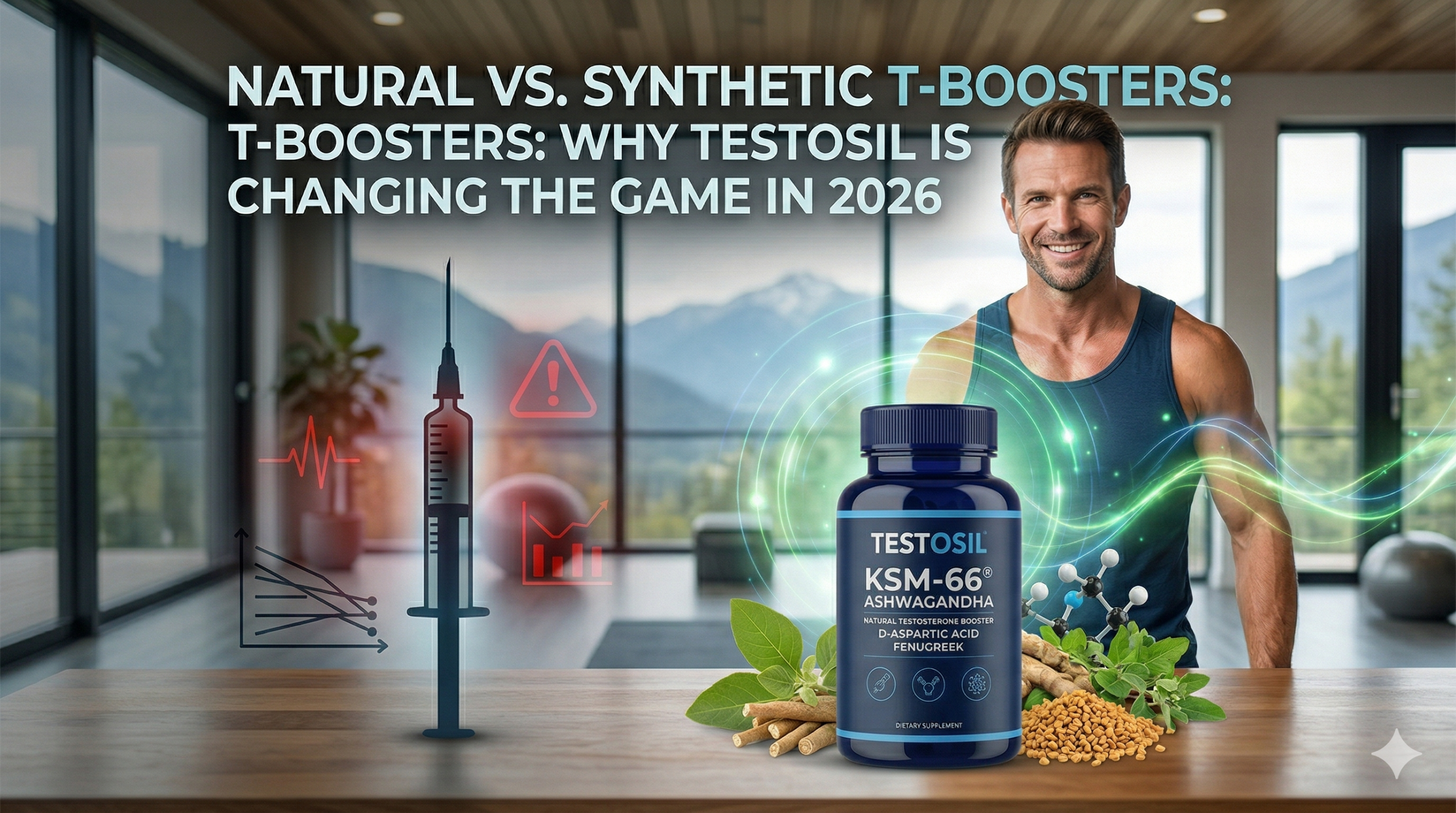
But when the engine starts to stall, men face a critical crossroad: Do you go the synthetic route, or do you fix the problem naturally? In recent years, synthetic testosterone replacement therapy (TRT) and anabolic steroids became popular quick fixes. However, as we move through 2026, the tide is turning. Men are becoming hyper-aware of the long-term health risks associated with artificial hormones. Enter the new era of high-performance natural supplementation, led by a breakout formula: Testosil.
Here is exactly why the industry is shifting away from synthetics and why Testosil is being hailed as the natural game-changer of 2026.
The Dark Side of Synthetic Testosterone
Synthetic testosterone comes in many forms—injections, gels, patches, and illegal anabolic steroids. While they undeniably inject exogenous (outside) hormones into your bloodstream for rapid results, they come with a hefty, often dangerous, price tag.
When you introduce synthetic testosterone into your body, your endocrine system goes into shock. Your brain senses the artificial surplus and signals your testes to shut down natural production completely.The Risks of the Synthetic Route:
Testicular Atrophy: Because your body stops making its own testosterone, the testes shrink.
Lifelong Dependency: Once you start TRT, getting off it is notoriously difficult. If you stop, your natural levels will crash lower than where they started.
Cardiovascular Risks: Synthetic testosterone can thicken the blood (polycythemia), elevating blood pressure and increasing the risk of strokes or heart attacks.
Severe Mood Swings: Artificial hormone spikes can lead to aggressive behavior, followed by deep depressive crashes when the dosage wears off.
The Natural Alternative: Working With Your Body
Natural testosterone boosters do not contain actual testosterone. Instead, they are formulated with vitamins, minerals, amino acids, and herbal extracts that stimulate your body’s endogenous (internal) production.
Rather than replacing your hormonal system, natural boosters repair it. They give your body the exact raw materials it needs to signal the brain (specifically the hypothalamus and pituitary gland) to ramp up the production of luteinizing hormone (LH), which tells the testes to create more testosterone naturally.
There are no shrinking testes, no blood-thickening nightmares, and no lifelong dependencies. You simply optimize the machine you were born with.
Why Testosil is the Game-Changer of 2026
For years, the natural T-booster market was plagued by under-dosed proprietary blends and “snake oil” marketing. Testosil shattered that mold by taking a clinical, transparent approach to formulation.
Here is why Testosil is dominating the 2026 market as the ultimate natural alternative to synthetics:
1. The KSM-66® Ashwagandha Advantage
As the cornerstone of the Testosil formula, KSM-66 is arguably the most extensively researched natural adaptogen on the planet. Instead of just trying to force testosterone production, KSM-66 aggressively lowers cortisol (the stress hormone). Because cortisol physically blocks testosterone production, lowering it opens the floodgates for natural T-levels to rise.
2. Full-Spectrum Hormonal Support
Testosil doesn’t just stop at Ashwagandha. It attacks low T from multiple physiological angles using clinically studied doses of:
D-Aspartic Acid (DAA): An amino acid proven to trigger the release of luteinizing hormone (LH), directly instructing the testes to produce more testosterone.
Fenugreek Extract: A powerful herb that prevents your body’s existing testosterone from converting into estrogen.
ZMA Synergy (Zinc, Magnesium, Vitamin B6): The ultimate trifecta for deep sleep, energy production, and testosterone synthesis.
Panax Ginseng & L-Arginine HCL: Included to boost nitric oxide, supporting explosive muscle pumps in the gym and enhancing stamina and circulation.
3. Zero Proprietary Blends
In 2026, consumers are smarter. Testosil thrives because of its 100% transparent label. You know exactly what you are putting into your body, manufactured in FDA-registered U.S. facilities.
Synthetic vs. Natural (Testosil): The Quick Comparison
Feature
Synthetic Testosterone (TRT/Steroids)
Natural T-Booster (Testosil)
Source of Hormone
Artificial/Exogenous
100% Natural/Endogenous
Natural Production
Shuts it down completely
Enhances and optimizes it
Side Effects
High risk (Atrophy, heart issues, mood swings)
Extremely low risk (Natural ingredients)
Dependency
High (Requires lifelong use)
None (Can be cycled safely)
Prescription Required?
Yes (often requires doctor visits/bloodwork)
No (Available online)
Export to Sheets
The Verdict: Upgrading Your Vitality Safely
The days of risking your long-term health for a synthetic hormonal spike are over. The science of natural supplementation has simply gotten too good to ignore.
If you are experiencing the classic symptoms of low testosterone—stubborn belly fat, loss of muscle, chronic fatigue, and a plummeting drive—you don’t need a synthetic band-aid. You need to fix the root of the problem.
By utilizing clinically proven ingredients like KSM-66 Ashwagandha, D-Aspartic Acid, and Fenugreek, Testosil proves that the smartest way to reclaim your male vitality in 2026 is by working with your body, not against it.
> Author’s Note: Ready to make the switch? Always ensure you are buying natural supplements from their official website to avoid counterfeit products and take advantage of money-back guarantees.
The liver is one of the most powerful and hardworking organs in the human body. It acts as the body’s natural filtration system, removing toxins, processing nutrients, and supporting digestion. In fact, medical research shows that the liver performs over 500 essential functions to keep the body healthy.
However, modern lifestyles in the United States often place heavy stress on the liver. Processed foods, alcohol consumption, environmental toxins, medications, and sedentary habits can all affect how well the liver performs its job.
When the liver becomes overloaded with toxins, the body may start sending warning signals. Recognizing these early signs can help you take action to improve your liver health before more serious issues develop.
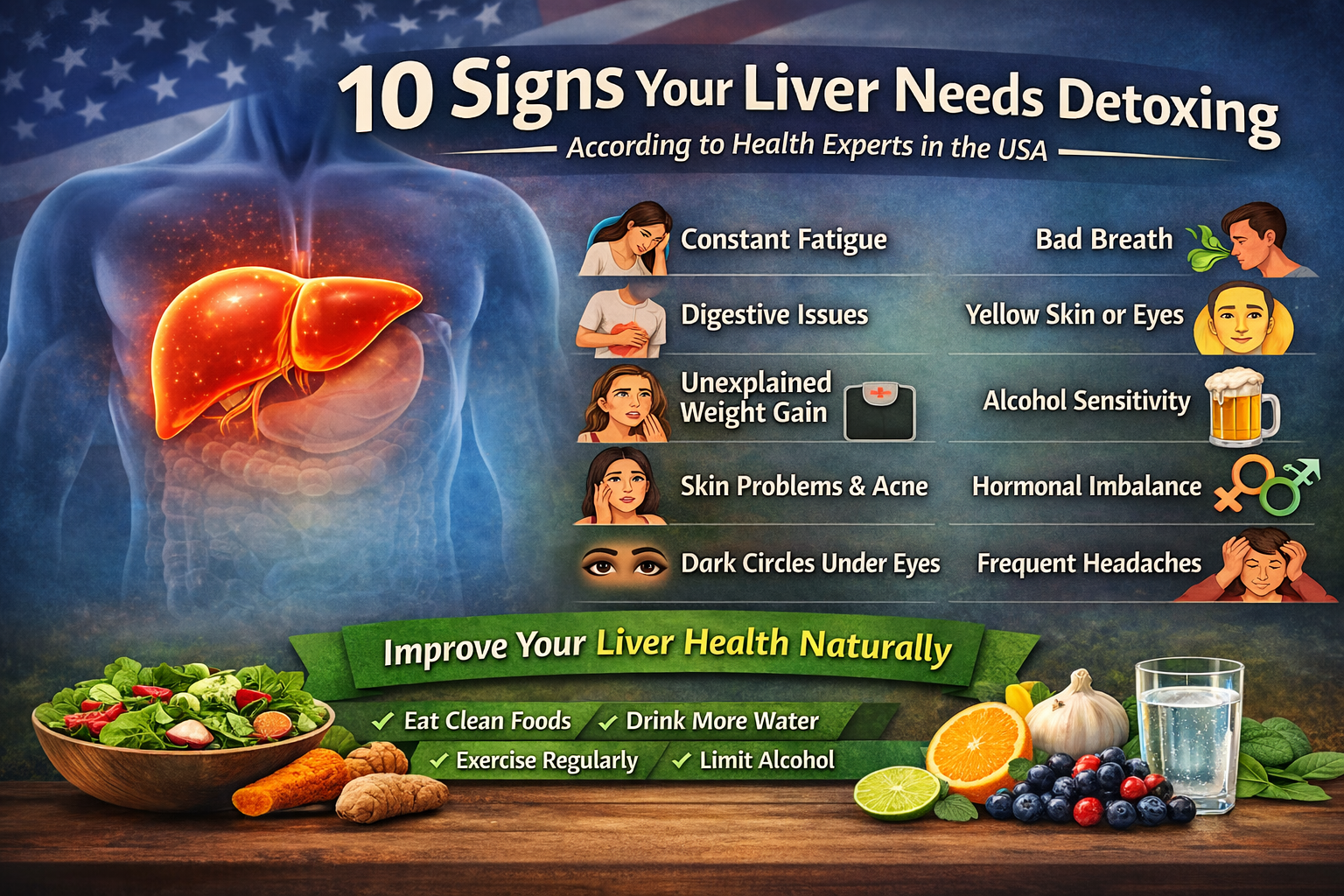
Below are 10 signs your liver may need detoxing, according to health professionals and wellness experts in the United States.
1. Constant Fatigue and Low Energy
One of the most common signs of liver stress is persistent fatigue. When the liver is overloaded with toxins, it has to work much harder to filter the blood and maintain normal body functions.
This extra workload can leave you feeling constantly tired, sluggish, and unmotivated. Even after getting enough sleep, people with poor liver function may still feel exhausted throughout the day.
Fatigue caused by liver stress often appears alongside brain fog, difficulty concentrating, and low productivity.
2. Frequent Digestive Problems
The liver plays a key role in digestion by producing bile, which helps break down fats in the food we eat.
When the liver is not functioning properly, bile production may decrease. This can lead to digestive issues such as:
Bloating
Gas
Constipation
Indigestion
Feeling overly full after meals
Many people in the United States who follow high-fat or highly processed diets may experience these symptoms without realizing that the liver could be involved.
3. Unexplained Weight Gain
Another possible sign of an overworked liver is unexplained weight gain.
When toxins accumulate in the body, the liver may struggle to metabolize fats properly. As a result, fat may start to accumulate in the body, particularly around the abdomen.
Some health professionals believe the body may also store fat as a protective mechanism to isolate toxins from vital organs.
If you are gaining weight despite healthy eating and regular exercise, liver health could be a factor worth considering.
4. Skin Problems and Acne
Your skin often reflects what is happening inside your body. When the liver cannot effectively remove toxins from the bloodstream, those toxins may appear through the skin.
This can lead to issues such as:
Acne
Skin rashes
Itchy skin
Eczema
Dull or unhealthy-looking skin
In many cases, improving liver health can also improve skin clarity and overall complexion.
5. Dark Circles Under the Eyes
Dark circles and puffiness under the eyes are commonly associated with lack of sleep, but they may also indicate liver stress.
When toxins accumulate in the body, they may affect circulation and cause changes in skin pigmentation around the eyes.
While this symptom alone does not confirm liver problems, it may be a signal that the body’s detoxification system is under pressure.
6. Persistent Bad Breath
Bad breath that does not improve with brushing, flossing, or mouthwash may sometimes be related to liver health.
When the liver struggles to eliminate toxins, certain chemicals can build up in the body and produce an unpleasant odor in the breath.
Some health experts refer to this as “liver breath,” which may have a strong or slightly sweet smell.
7. Yellowish Skin or Eyes
A yellow tint in the skin or eyes is a symptom known as jaundice. This occurs when the liver cannot properly process bilirubin, a waste product produced during the breakdown of red blood cells.
When bilirubin accumulates in the bloodstream, it can cause:
Yellow skin
Yellow eyes
Dark urine
Pale stool
This is considered a serious symptom and should be evaluated by a healthcare professional immediately.
8. Increased Sensitivity to Alcohol
If you notice that even small amounts of alcohol make you feel sick, dizzy, or unusually intoxicated, your liver may not be processing alcohol efficiently.
The liver is responsible for breaking down alcohol and removing its toxic byproducts from the bloodstream.
When liver function is compromised, alcohol may remain in the body longer and produce stronger effects.
9. Hormonal Imbalances
The liver helps regulate hormones by filtering excess hormones from the blood.
If the liver becomes sluggish, hormonal balance may be affected. This can contribute to symptoms such as:
Mood swings
Irritability
Irregular menstrual cycles
Low libido
Increased stress sensitivity
Hormonal issues may sometimes improve when liver function is supported through lifestyle changes.
10. Frequent Headaches
Recurring headaches or migraines may sometimes be associated with toxin buildup in the body.
When the liver cannot effectively eliminate harmful substances, they may circulate in the bloodstream and affect the nervous system.
This can potentially trigger headaches, mental fog, and difficulty concentrating.
How to Naturally Support Liver Detox
The good news is that the liver has an incredible ability to repair and regenerate itself. By adopting healthier habits, you can support the liver’s natural detoxification process.
Health experts in the United States often recommend the following strategies:
Drink More Water
Staying hydrated helps the body flush out toxins and supports proper liver function.
Eat Liver-Friendly Foods
Certain foods may support the liver’s natural detox processes, including:
Leafy green vegetables
Garlic
Turmeric
Berries
Citrus fruits
Beets
Green tea
Reduce Alcohol Consumption
Limiting alcohol intake can significantly reduce stress on the liver and help prevent long-term damage.
Exercise Regularly
Physical activity improves metabolism, reduces fat accumulation in the liver, and helps the body eliminate toxins through sweat.
Get Enough Sleep
Sleep allows the body to repair tissues and regulate important detoxification processes.
Final Thoughts
Your liver works tirelessly to protect your body from toxins and maintain overall health. When it becomes overloaded, the body may send warning signals such as fatigue, digestive problems, skin issues, or unexplained weight gain.
Recognizing these early signs can help you take proactive steps to improve your health and support your liver naturally.
By maintaining a balanced diet, staying active, reducing toxin exposure, and practicing healthy lifestyle habits, you can keep your liver functioning efficiently for years to come.
Every man notices it eventually. In your 30s, 40s, or 50s, the energy you once took for granted begins to ebb. Workouts feel harder, recovery takes longer, and that sharp, driven mental edge begins to dull. While often dismissed as simply “getting older,” this decline is frequently tied to a singular physiological shift: dropping testosterone levels.
The market is flooded with synthetic “solutions,” many carrying risks and requiring prescriptions. However, the paradigm is shifting toward natural, scientifically validated supplementation. At the forefront of this movement is Testosil, a natural testosterone booster that doesn’t just make promises—it backs them up with clinical data.
This article dissects the core Testosil science, with a specific focus on its flagship ingredient: KSM-66® Ashwagandha, and its revolutionary impact on male vitality.
What is Testosil? A Synergy of Natural Ingredients
Testosil is engineered to support the body’s own testosterone production mechanisms, rather than introducing synthetic hormones. Its formulation targets hormonal balance, stress reduction, and physical performance simultaneously.
While Testosil boasts a potent blend of ingredients (including Vitamin D3, D-Aspartic Acid, and Zinc), its most critical component is the clinically standardized extract of Ashwagandha.
KSM-66®: The Powerhouse Ingredient Explored
Not all Ashwagandha extracts are created equal. KSM-66® is the highest concentration, full-spectrum root extract available on the world market today. It is produced using a unique, proprietary extraction process based on “Green Chemistry” principles, which preserves the natural constituents of the plant in their original balance.
For men seeking to reclaim their vitality, KSM-66 is a game-changer because it is an adaptogen. An adaptogen is a substance that helps the body counter physical and mental stress.
How does this relate to testosterone? The answer lies in the Cortisol-Testosterone Seeslaw.
1. The Cortisol-Testosterone Seeslaw
Cortisol is the body’s primary stress hormone. In modern life, chronic stress (from work, lack of sleep, or inflammation) keeps cortisol levels elevated. Physiologically, high cortisol is an enemy of testosterone.
When cortisol levels rise, the body enters a “fight or flight” catabolic state, focusing resources on survival rather than repair and reproduction. This directly inhibits the production of testosterone in the Leydig cells of the testes.
KSM-66 is highly effective at reducing serum cortisol levels. By lowering the cortisol ceiling, Testosil effectively unlocks the body’s potential to produce testosterone naturally.
2. The Clinical Evidence: Numbers Don’t Lie
The effectiveness of KSM-66 isn’t anecdotal; it is validated by numerous gold-standard (randomized, double-blind, placebo-controlled) human clinical trials.
Testosterone Boost: In a 2013 clinical trial, healthy male participants taking KSM-66 experienced a 17% increase in serum testosterone levels over 90 days compared to a placebo.
Stress Reduction: Studies consistently show that KSM-66 can reduce cortisol levels by up to 28%, significantly easing the body’s stress load.
Sperm Metrics: The same 2013 study observed a remarkable 167% increase in sperm concentration, a 53% increase in semen volume, and a 57% increase in sperm motility, making it a robust supporter of male fertility.
The Five Pillars of Male Vitality: Real-World Results
When KSM-66 reduces stress and supports natural testosterone production, the benefits manifest across the five core pillars of male vitality:
Enhanced Muscle Mass & Strength: Higher testosterone drives protein synthesis, facilitating faster muscle growth from resistance training and notable strength gains.
Increased Energy & Endurance: By managing stress and maximizing hormonal efficiency, men report sustained energy levels throughout the day and improved athletic stamina.
Sharper Mental Clarity & Focus: The adaptogenic properties of KSM-66 reduce anxiety and “brain fog,” helping men maintain their competitive edge.
Boosted Libido & Sexual Health: Balanced testosterone is essential for strong sexual desire and performance.
Improved Mood & Motivation: Normalized cortisol and testosterone levels can mitigate feelings of fatigue, irritability, and low motivation often associated with low T.
How Other Key Ingredients Complement KSM-66 in Testosil
While KSM-66 is the headline act, Testosil ingredients work synergistically to create a comprehensive formula:
Zinc: An essential mineral involved in over 300 enzymatic functions, including the direct synthesis of testosterone. Deficiency is strongly linked to low T.
Vitamin D3: Acts as a hormonal regulator. Men with Vitamin D deficiency often have significantly lower testosterone levels.
Fenugreek Extract: Helps reduce the conversion of testosterone to estrogen, ensuring more free (active) testosterone remains available in the bloodstream.
D-Aspartic Acid (DAA): An amino acid that stimulates the release of luteinizing hormone (LH), which signals the testes to produce more testosterone.
Conclusion: A Science-Backed Path to Vitality
The decline of male vitality is a complex problem, but the solution doesn’t have to be synthetic or risky. The science behind Testosil provides a clear, natural pathway to reclaiming your edge.
By leveraging the clinically proven, cortisol-lowering power of KSM-66 Ashwagandha, Testosil helps create the optimal physiological environment for your body to restore its natural testosterone production.
If you are ready to stop accepting the slow decline and want a solution backed by rigid human clinical trials, Testosil represents the frontier of natural male performance enhancement.
Disclaimer: These statements have not been evaluated by the Food and Drug Administration. This product is not intended to diagnose, treat, cure, or prevent any disease. Always consult your healthcare professional before beginning any new supplement regimen, especially if you have pre-existing medical conditions.