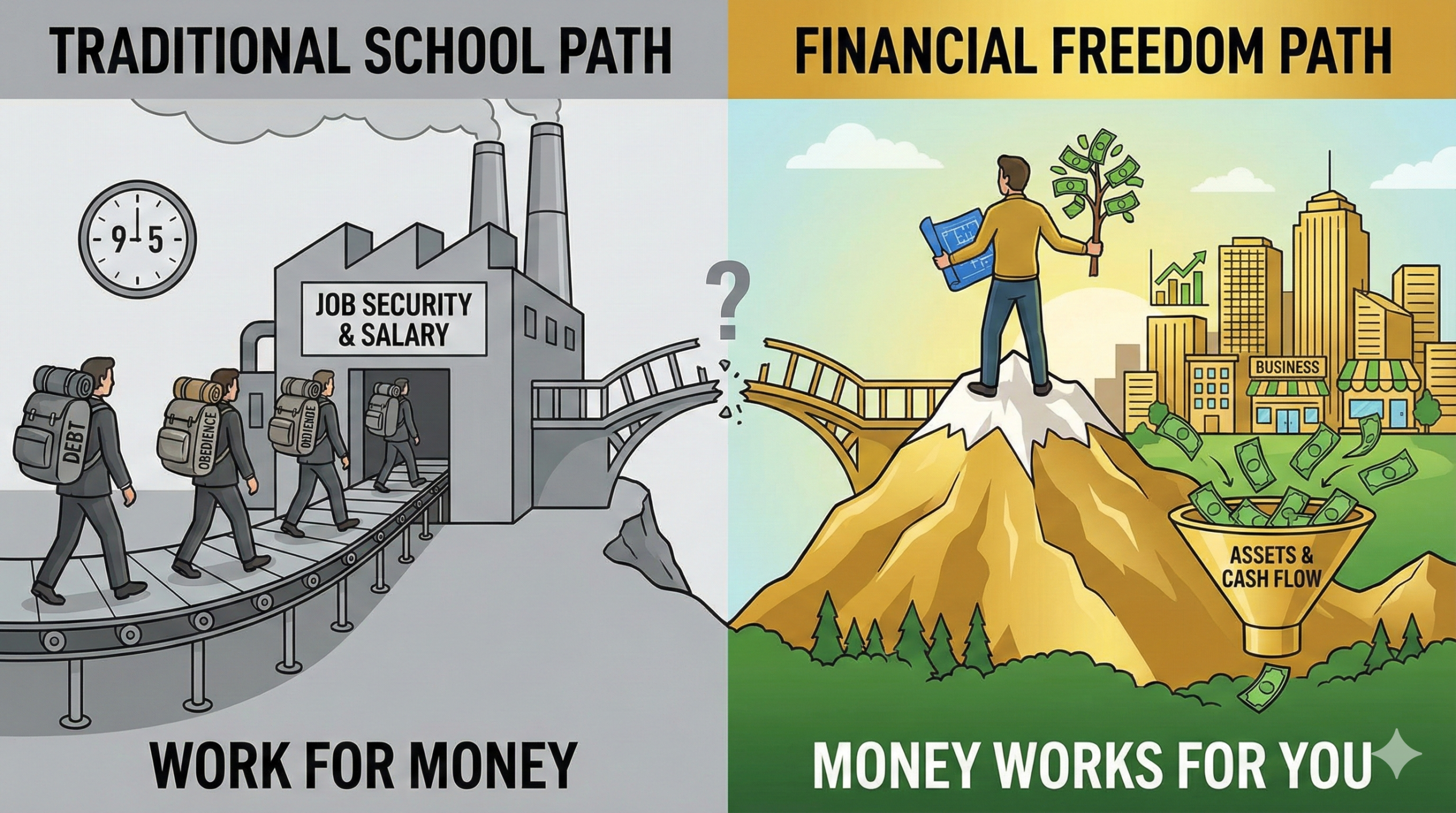
Why don’t schools teach us how to make money? You’ll be surprised when you find out the real reason behind it.

क्या आपने कभी सोचा है कि हम स्कूल में इतिहास, भूगोल और विज्ञान तो पढ़ते हैं, लेकिन “पैसा कैसे काम करता है” यह कभी नहीं पढ़ाया जाता?

यह कोई गलती नहीं है। इसके पीछे एक बहुत बड़ा और आसान सा कारण है: “अगर लोग सच में पैसे को समझ जाएँ, तो उन्हें इस सिस्टम की ज़रूरत ही न पड़े।”

यह बात सुनने में थोड़ी कड़वी लग सकती है, लेकिन यही सच्चाई है। आज हम उस सच से पर्दा उठाएंगे जो आपको आर्थिक रूप से आजाद (Financially Free) होने से रोक रहा है।

1. स्कूल का असली मकसद: कर्मचारी बनाना, मालिक नहीं

आधुनिक शिक्षा व्यवस्था का डिज़ाइन आपको अमीर बनाने के लिए नहीं किया गया था। कार्ल मार्क्स और पुरानी औद्योगिक सोच का प्रभाव आज भी हमारे स्कूलों पर दिखता है।

इस सिस्टम का मकसद सिर्फ ऐसे लोग तैयार करना है जो:

  • समय पर ऑफिस आएँ।
  • चुपचाप निर्देशों का पालन करें।
  • प्रमोशन और सैलरी बढ़ने का इंतज़ार करें।
  • और पूरी जिंदगी पेंशन या सरकार के भरोसे रहें।

स्कूल आपको “आज्ञाकारी” होने का इनाम देते हैं, न कि कुछ नया सोचने का। वे आपको “रटना” सिखाते हैं, “सोचना” नहीं। इसीलिए स्कूल से ‘कर्मचारी’ निकलते हैं, ‘उद्यमी’ (Entrepreneurs) नहीं।

2. मेरे दो पिता: एक ने दी सुरक्षा, दूसरे ने दी आज़ादी

मेरी ज़िंदगी में दो तरह की सोच का प्रभाव रहा।

  • मेरे गरीब पिता: वे बहुत पढ़े-लिखे थे, पीएचडी होल्डर थे और सरकारी नौकरी करते थे। वे कहते थे— “कड़ी मेहनत करो, पैसे बचाओ और एक सुरक्षित नौकरी लो।” वे मानते थे कि सरकार उनका ख्याल रखेगी।
  • मेरे अमीर पिता: वे कम पढ़े-लिखे हो सकते थे, लेकिन वे आर्थिक आज़ादी (Financial Freedom) में विश्वास रखते थे। उन्होंने मुझे सिखाया— “पैसे के लिए काम मत करो, बल्कि पैसे को अपने लिए काम पर लगाओ।”

यही एक लाइन सब कुछ बदल देती है। एक सोच आपको ज़िंदगी भर नौकरी में फंसाए रखती है, और दूसरी सोच आपको मालिक बनाती है।

3. अगर स्कूल ‘पैसे’ के बारे में सिखाते तो क्या होता?

ज़रा सोचिए, अगर हमारे सिलेबस में वित्तीय साक्षरता (Financial Literacy) होती, तो समाज कैसा होता?

  • लोग रिटायरमेंट फंड या नौकरी को ही “सुरक्षा” नहीं मानते।
  • लोग यह पूछते कि “मेरे पैसों को असल में कंट्रोल कौन कर रहा है?”
  • कर्ज़ (Loan) डरावना नहीं लगता, क्योंकि लोग जानते कि “अच्छा कर्ज़” (Good Debt) और “बुरा कर्ज़” (Bad Debt) क्या होता है।
  • लोग सिर्फ मार्केट बढ़ने की उम्मीद नहीं करते, बल्कि अपना खुद का कैश फ्लो (Cash Flow) बनाते।

4. सिस्टम आपको ‘आज़ाद’ क्यों नहीं होने देना चाहता?

सच यह है कि आज़ाद लोगों को कंट्रोल करना मुश्किल होता है।

जिस दिन आप पैसे की ताकत को समझ जाते हैं:

  • आप बाज़ार गिरने पर घबराते नहीं हैं।
  • आप सरकार से मदद की भीख नहीं मांगते।
  • आप नौकरी जाने के डर से सहमे नहीं रहते।

सिस्टम को ऐसे लोग चाहिए जो डरे हुए हों और सैलरी पर निर्भर हों। इसीलिए वित्तीय शिक्षा को जानबूझकर ‘वैकल्पिक’ (Optional) रखा गया है। इसकी कोई परीक्षा नहीं होती।

5. अब आपको क्या करना चाहिए?

यह सब समझने के बाद आपके पास दो रास्ते हैं। या तो आप पुराने रास्ते पर चलें और सैलरी बढ़ने का इंतज़ार करें, या फिर अमीर लोगों वाले सवाल पूछना शुरू करें:

  1. “पैसा असल में काम कैसे करता है?”
  2. “मैं अपनी ज़िंदगी का मालिक कैसे बनूँ, किराएदार नहीं?”
  3. “मैं सैलरी के पीछे भागने की बजाय एसेट्स (Assets) कैसे बनाऊँ?”

याद रखें, स्कूल आपको नौकरी दे सकता है, लेकिन आर्थिक आज़ादी आपको खुद सीखनी होगी। आज ही से सीखना शुरू करें, क्योंकि यही वह शिक्षा है जो सच में मायने रखती है।


अगर यह पोस्ट आपकी सोच को बदलने में सफल रही, तो इसे अपने दोस्तों के साथ शेयर जरूर करें। उन्हें भी इस “सिस्टम” की सच्चाई जानने का हक़ है!

The Brilliant Healers: New Life in the Shadows – Story Overview & Why It’s Trending

A beginner-friendly guide to the series everyone is talking about

“The Brilliant Healers: New Life in the Shadows” has quickly become one of the most searched fantasy titles online, capturing the attention of fans who love mystery, magic, and emotionally rich storytelling. Whether you’re discovering it for the first time or trying to understand why it’s suddenly trending, this guide breaks down everything you need to know — without spoilers.


What Is “The Brilliant Healers: New Life in the Shadows” About?

At its core, The Brilliant Healers is a fantasy story that blends supernatural healing abilities with deep human emotion. The plot follows a group of gifted healers who possess extraordinary powers, yet they choose to live hidden from society. Their abilities can cure deadly illnesses, mend injuries instantly, and even restore lost memories — but they carry a heavy cost.

After a major incident forces them out of the public eye, the healers begin a new life in the shadows, where survival depends on secrecy, trust, and confronting their past mistakes. As danger resurfaces, these hidden healers must decide whether to stay concealed or return to the world that once feared them.

The story combines drama, action, and moral dilemmas, making it intriguing for a wide audience.


A Quick Story Overview (Spoiler-Free)

Without revealing key plot points, the series explores several major themes:

1. Hidden Powers & Secret Identities

The healers’ abilities make them valuable — and dangerous. Their decision to hide sets the foundation for suspense and emotional conflict.

2. A Dark Past They Can’t Escape

Something happened before the story begins, forcing the healers into the shadows. The mystery around this event keeps readers hooked.

3. Emotional Bonds & Team Dynamics

The main characters rely on each other for survival. Their relationships add heart and depth to the storyline.

4. Villains Behind the Scenes

Powerful enemies are searching for the healers, creating tension and building the series’ central conflict.

5. A Journey of Redemption

One of the strongest elements of the story is how each character attempts to heal not just others, but themselves.


Why Is “The Brilliant Healers” Trending Right Now?

The sudden spike in searches and online discussions comes from several factors:

1. A Unique Concept in the Fantasy Genre

Healing powers are usually a side ability in fantasy stories — rarely the main focus. This fresh twist draws in fans who want something different.

2. Strong Emotional Storytelling

The series deals with trauma, trust, sacrifice, and inner conflict, making it relatable and gripping.

3. Rising Popularity on Social Media

TikTok, Reddit, and anime/manga forums have played a major role in boosting interest. Fans are sharing fan art, theories, and discussions, increasing its visibility.

4. Rumors of an Anime Adaptation

Although not yet confirmed, speculation about an upcoming anime version has sparked major excitement.

5. Perfect Timing With Global Fantasy Trends

Fantasy and supernatural series are dominating entertainment platforms. “The Brilliant Healers” fits perfectly into what audiences currently love.


Who Should Read or Watch This Series?

You will enjoy “The Brilliant Healers: New Life in the Shadows” if you like:

  • Emotional fantasy stories
  • Mystery and hidden identities
  • Team-based character development
  • Healing powers, supernatural worlds
  • Dramatic storytelling with dark twists

It’s beginner-friendly and easy to get into, even if you’re new to the fantasy genre.


Final Thoughts

“The Brilliant Healers: New Life in the Shadows” has earned its growing popularity because it offers something unique — a fantasy world centered on healers living in hiding, combined with emotional depth and gripping mystery. As more fans discover it, the buzz around the series continues to grow, and it’s likely to become one of the standout fantasy titles of the year.

Whether you’re exploring it for entertainment, curiosity, or to join the global fan community, this is the perfect time to dive into the world of the brilliant healers.

Mind Your Business: What the New TV Show Reveals About Modern Entrepreneurship in America

In recent years, American audiences have developed a growing interest in entrepreneurship, side hustles, innovation, and financial independence. The new television show “Mind Your Business” arrives at the perfect moment, capturing the energy, urgency, and challenges of modern business life in the United States. More than just entertainment, the show offers a realistic look at how American entrepreneurs think, work, and survive in a highly competitive market.

This deep dive explores what “Mind Your Business” reveals about today’s U.S. business culture— from the rise of self-made founders to the influence of technology and the shifting expectations of customers.


1. The Rise of the Self-Made Entrepreneur

One of the biggest themes showcased in Mind Your Business is the rise of self-made success. Unlike traditional business shows of the past, this series highlights:

  • First-time business owners
  • Solo founders
  • Underrepresented entrepreneurs
  • Creators building careers from social media
  • Young founders entering the startup world without formal business education

This reflects a major trend in America: anyone with an idea, passion, and determination can start their own business. The show inspires viewers to take the first step, even if they don’t have big investments or connections.


2. Technology Is the Heart of Modern Business

From online stores to digital marketing, Mind Your Business emphasizes the role of technology in shaping success. The show mirrors real U.S. business culture by highlighting:

  • The importance of strong social media presence
  • Using AI tools for automation
  • Online branding and storytelling
  • E-commerce growth
  • Remote work and digital collaboration

In America today, businesses that don’t adapt to digital tools struggle to compete. The show effectively demonstrates how tech-savvy entrepreneurs gain a massive edge.


3. The Reality of Financial Pressure

Unlike overly glamorous business shows, Mind Your Business does not hide the financial challenges that real entrepreneurs face. It highlights:

  • Cash flow issues
  • Rising cost of living
  • Inflation pressures
  • The difficulty of getting funding
  • Managing debt and investments

This reflects the true business environment in the USA, where entrepreneurs must be smart, flexible, and resilient to survive financially.


4. Customer Expectations Are Higher Than Ever

Modern consumers demand more transparency, quality, and authenticity. The show depicts business owners working hard to:

  • Deliver top-tier customer service
  • Respond to online reviews
  • Build trust through transparency
  • Offer personalized products and experiences

This mirrors the U.S. market, where customers often choose brands based on values, online reputation, and emotional connection rather than price alone.


5. Mental Health and Work-Life Balance Matter

One of the most refreshing aspects of Mind Your Business is its honest portrayal of burnout, stress, and pressure. Today’s U.S. entrepreneurs face:

  • Long work hours
  • High competition
  • Social media comparison
  • Difficulty balancing personal life and business

The show encourages founders to take care of their emotional well-being and highlights the importance of support systems, mentorship, and healthy routines.


6. Diversity and Inclusion Are Shaping the Future

America’s business landscape is becoming more diverse, and Mind Your Business reflects this shift. It showcases:

  • Women entrepreneurs
  • Minority-owned businesses
  • Immigrant founders
  • LGBTQ+ innovators
  • People from different socioeconomic backgrounds

This diversity adds richness and authenticity to the show, making it relatable to a wide U.S. audience and inspiring individuals who have traditionally faced barriers in business.


7. Entrepreneurial Storytelling Drives Brand Success

One standout feature of the show is the storytelling power behind every business. In the U.S. market, customers want to understand the why behind a brand. The series highlights how entrepreneurs use:

  • Personal stories
  • Emotional connections
  • Mission-driven branding
  • Social impact initiatives

In today’s America, storytelling is no longer optional—it’s a key factor that separates successful startups from the rest.


Conclusion: A Fresh Reflection of America’s Business Evolution

Mind Your Business is more than a television show; it is a realistic mirror of modern entrepreneurship in America. It captures the struggles, innovation, diversity, and spirit that define today’s business culture.

For U.S. entrepreneurs—whether established or just starting—this show provides valuable insight into what it really takes to succeed in the current economy. From embracing technology and building strong customer relationships to prioritizing mental health and inclusivity, Mind Your Business highlights the shifting priorities shaping the future of American business.

How an Ordinary Girl Healed a Billionaire CEO’s Breakdown: A Love Story That’s Winning Hearts

In a world driven by power, success, and non-stop hustle, even the strongest can fall apart. This is the emotional story of a billionaire CEO who hit rock bottom — and the calm, ordinary girl who helped him rise again. A tale of vulnerability, healing, and unexpected romance, this love story is not just winning hearts but also redefining what true strength and connection really mean.

The Billionaire Breakdown: When Wealth Isn’t Enough

He had everything — money, fame, and a powerful empire. But behind the headlines and the towering glass buildings, this billionaire was slowly crumbling. Years of stress, loneliness, and the burden of leadership led to a silent breakdown. The world saw a confident leader; he saw a man losing himself.

The billionaire breakdown wasn’t just about burnout. It was about a man who forgot how to feel, how to breathe, and how to live beyond deadlines and profits.

Enter the Calm Girl: Ordinary Yet Extraordinary

She wasn’t a therapist, a celebrity, or a socialite. She was just a regular girl with a kind heart and an unshakable calmness. Their worlds couldn’t have been more different — hers simple and grounded, his chaotic and luxurious.

But when they crossed paths by chance, her grounded presence became the safe space he never knew he needed. Her calm voice, quiet empathy, and genuine smile cut through the noise of his high-pressure life.

Healing Love: More Than Just a Romance

This wasn’t a fairy tale—it was a healing love story built on trust, patience, and raw honesty. As they spent time together, she slowly helped him confront his fears, embrace his emotions, and rediscover life beyond wealth.

He taught her how to dream bigger. She taught him how to slow down, how to be present, and how to love without fear.

Their connection blossomed into a deep emotional bond. What began as a random meeting turned into a story of emotional rescue — a calm girl story that proved love doesn’t need luxury to be powerful.

Romantic Drama That Feels Real

This romantic drama touches everyone who hears it. It’s not about grand gestures or lavish gifts. It’s about two people finding balance in each other — one offering stability, the other offering hope.

Fans of slow-burn romance and emotional storytelling are calling this tale “the most touching billionaire love story” of the year. It’s relatable, heartfelt, and a reminder that sometimes, the heart sees what the eyes miss.

Why This Story Is Winning Hearts

  • Authenticity: The emotional depth makes it feel real, not just fiction.
  • Contrast of Worlds: Viewers love how an ordinary girl transforms the life of a powerful man.
  • Hope & Healing: In a fast, harsh world, stories of emotional healing offer comfort and inspiration.
  • Keyword Themes That Resonate: From billionaire breakdown to healing love, it’s a narrative that hits all the emotional chords.

Final Thoughts

In the noise of modern life, this story is a reminder that healing doesn’t come from money or status. It comes from connection, vulnerability, and love. The calm girl story is a testament to the power of emotional strength and how sometimes, the most ordinary people make the extraordinary difference.

If you’re looking for a romantic drama with depth, emotion, and soul, this love story will stay with you long after the last page.

International Entrepreneur Rule in 2025
International Entrepreneur Rule News: 2025 Updates & What It Means for Global Founders

The International Entrepreneur Rule (IER) is once again in the spotlight in 2025, offering a lifeline for global startup founders aiming to establish or scale their ventures in the United States. If you’re an aspiring or current international entrepreneur, staying updated on this evolving rule can open new doors for U.S. market entry, investment, and innovation.


What is the International Entrepreneur Rule (IER)?

The International Entrepreneur Rule allows foreign entrepreneurs to temporarily stay in the U.S. if they can demonstrate their startup will provide a significant public benefit, such as job creation or rapid growth.

It is not a visa, but rather a parole program, which gives entrepreneurs the ability to work in the U.S. under specific conditions.


Latest News & Updates in 2025

As of 2025, the U.S. Citizenship and Immigration Services (USCIS) has reaffirmed its support for the IER, with new efforts to streamline application processing and encourage global innovation. Key updates include:

  • Faster processing timelines – 90-day target for application reviews
  • 💼 Broader eligibility criteria for founders outside tech industries
  • 📈 Data shows increased approval rate of 68% in Q1 2025
  • 🤝 Partnerships with U.S. accelerators and venture firms to assist applicants

Eligibility Criteria (2025)

To qualify under the IER in 2025, you must meet the following:

  • Own at least 10% of a U.S. startup
  • Have a central and active role in the company’s operations
  • Your startup must:
    • Be less than 5 years old
    • Show potential for rapid growth and job creation
    • Have received at least $250,000 from qualified U.S. investors, or
    • Have secured at least $100,000 in U.S. government grants/contracts

Why International Entrepreneurs Should Pay Attention

In 2025, the U.S. startup ecosystem remains a global leader, and the IER offers a practical pathway for:

  • 🚀 Startup founders from countries without investor-friendly markets
  • 🌐 Immigrants who want to scale their global ideas in the U.S.
  • 💡 Tech innovators, researchers, and changemakers

This rule bridges the gap between immigration and innovation – ideal for those lacking access to an H-1B or EB-5 visa.


How to Apply for the International Entrepreneur Rule

Follow this step-by-step guide in 2025:

  1. Form I-941 Submission (Application for Entrepreneur Parole)
  2. Documentation of investment, startup ownership, and role
  3. Background checks and biometrics
  4. USCIS Decision (typically within 90 days)
  5. Parole granted for up to 30 months, with a possible 30-month extension

IER vs. Startup Visas in Other Countries

CountryProgram NameDurationInvestment Needed
USAInternational Entrepreneur Rule30 months (renewable)$250,000+ funding or $100,000 govt grant
CanadaStartup VisaPermanent Residency$200,000 from a VC or $75,000 from an angel
UKInnovator Founder Visa3 years£50,000 funding
AustraliaBusiness Innovation Visa4 yearsAUD 200,000–500,000

Expert Opinions

“The IER is a game-changer for the U.S. startup economy. It attracts high-potential founders and empowers them to innovate locally.”
– Sarah Chen, Global Startup Ecosystem Analyst

“We’ve seen a 45% increase in foreign founder interest due to the streamlined IER updates.”
– Joseph Lin, Managing Partner, Silicon LaunchPad


Conclusion

The International Entrepreneur Rule in 2025 offers a unique opportunity for visionary founders around the world. With faster approvals, expanded eligibility, and strong backing from the startup community, this pathway may be your ticket to the U.S. startup ecosystem. If you’re ready to build your dream business on American soil, now is the time to act.

How to Reprogram Your Subconscious Mind to Manifest

Ever wondered why some people effortlessly attract success, love, or wealth while others struggle? The secret often lies in the subconscious mind. If you’re ready to unlock your true potential, this guide will teach you how to reprogram your subconscious mind to manifest what you desire.


What Is the Subconscious Mind?

Your subconscious mind is the part of your brain that stores beliefs, emotions, and memories. Unlike your conscious mind, which you actively use, your subconscious quietly controls about 95% of your behavior. It’s like a powerful autopilot guiding your thoughts, feelings, and actions.

To manifest something new—be it better health, money, or love—you need to align your subconscious beliefs with your goals.


Why Reprogram Your Subconscious Mind?

Your current reality is a reflection of your past subconscious programming. If you constantly struggle with negative thoughts or limiting beliefs, it’s time to shift that inner narrative.

By reprogramming your subconscious, you can:

  • Attract positive opportunities
  • Build confidence and self-worth
  • Manifest goals faster
  • Reduce anxiety and self-doubt

7 Simple Steps to Reprogram Your Subconscious Mind

1. Set a Clear Intention

Know exactly what you want to manifest—be specific. Instead of saying “I want more money,” try “I want to earn $10,000 per month doing what I love.”

2. Practice Daily Affirmations

Positive affirmations help overwrite limiting beliefs. Say affirmations like:
“I am worthy of success.”
“Abundance flows to me effortlessly.”
Repeat them every morning and before bed.

3. Visualize Your Desired Life

Your brain can’t tell the difference between real and imagined experiences. Spend 5–10 minutes daily visualizing your ideal reality as if it’s already happening. Feel the emotions!

4. Meditate Regularly

Meditation helps quiet the conscious mind so you can plant new thoughts into the subconscious. Try mindfulness or guided meditations focused on abundance, love, or healing.

5. Use Subliminal Audio

Subliminal audios play affirmations below the threshold of conscious hearing. Listening while you sleep or relax can accelerate subconscious reprogramming.

6. Surround Yourself with Positivity

The people, media, and content you consume influence your subconscious. Choose uplifting environments, empowering podcasts, and positive communities.

7. Take Inspired Action

Manifestation isn’t just mental—it also requires real-world action. Trust your intuition and act when you feel nudged toward something.


How Long Does It Take to Reprogram Your Mind?

With consistent effort, many people notice changes within 21 to 90 days. The key is repetition and belief. Don’t force it—relax and trust the process.


Final Thoughts

Reprogramming your subconscious mind is not magic—it’s mental training. By aligning your inner thoughts with your outer goals, manifestation becomes not just possible—but natural.

Start small. Pick one or two techniques and build a routine. Your subconscious is always listening. Make sure it hears what you truly want.


Want more tips on mindset, mental health, and manifestation?
Subscribe to our blog or follow us on Instagram for daily inspiration.

Why Entrepreneurs Need a Growth Mindset to Thrive in Business

In today’s fast-paced, ever-evolving business world, success isn’t just about talent or resources—it’s about mindset. Specifically, a growth mindset. Entrepreneurs who embrace a growth mindset are more likely to innovate, adapt, and succeed, even in the face of uncertainty.

In this blog, we’ll explore why having a growth mindset is essential for entrepreneurs, how it differs from a fixed mindset, and practical tips to develop this success-driving trait.


What Is a Growth Mindset?

Coined by renowned psychologist Carol Dweck, a growth mindset is the belief that skills, intelligence, and abilities can be developed over time through effort, learning, and persistence.

Growth Mindset vs. Fixed Mindset:

Growth MindsetFixed Mindset
“I can improve with effort.”“I’m either good at it or not.”
Views challenges as opportunitiesAvoids challenges
Embraces feedbackIgnores feedback
Learns from failureFears failure

Why Entrepreneurs Need a Growth Mindset

1. Navigating Uncertainty and Risk

Entrepreneurship is full of risks. A growth mindset helps business owners embrace uncertainty, learn from trial and error, and stay resilient during setbacks.


2. Continuous Learning and Innovation

In the digital era, markets change fast. Entrepreneurs with a growth mindset are lifelong learners who stay updated with trends, new technologies, and evolving customer needs.


3. Turning Failure into Feedback

Startups often fail—but that’s not the end. A growth-oriented entrepreneur sees failure as a learning experience, not a dead-end. They analyze what went wrong, adjust strategies, and try again.


4. Building Strong Teams

Entrepreneurs with a growth mindset value collaboration, diverse ideas, and constructive criticism. They empower their teams to grow, make decisions, and take ownership.


5. Better Adaptability in a Competitive Market

From changing algorithms to economic shifts, a growth mindset allows business owners to adapt quickly and stay ahead of the curve.


How to Cultivate a Growth Mindset in Business

  1. Replace “I can’t” with “I can’t yet”
  2. Set learning-based goals (e.g., “I’ll learn a new marketing tactic this month”)
  3. Embrace failure as feedback
  4. Celebrate small wins and progress
  5. Surround yourself with growth-minded mentors and peers

Real-Life Example: Elon Musk’s Growth Mindset in Action

Elon Musk’s approach to business—constantly learning, embracing failure, and pushing boundaries—exemplifies the growth mindset. From Tesla to SpaceX, he turned bold ideas into reality, despite multiple setbacks.


Final Thoughts

A growth mindset is more than just positive thinking—it’s a powerful tool that helps entrepreneurs thrive in the face of adversity. By believing in your capacity to learn and evolve, you create the foundation for long-term success in business.

Whether you’re a startup founder or a small business owner, embracing a growth mindset could be the game-changer that propels your venture forward.

How Can Identifying Your Sweet Spot Now Help You as You Think About a Career Path
How Can Identifying Your Sweet Spot Now Help You as You Think About a Career Path?

Discovering your purpose today can shape your success tomorrow.


Choosing a career path is one of the most important decisions you’ll ever make. But what if the key to making that decision isn’t found in job listings or degrees — but within yourself?
That’s where your “sweet spot” comes in.

Let’s explore what a career sweet spot is and how finding yours early can unlock clarity, confidence, and long-term career satisfaction.


What Is a “Sweet Spot” in Career Planning?

Your career sweet spot is the intersection of:

  1. What you love doing (your passions)
  2. What you’re good at (your skills and strengths)
  3. What the world needs and will pay for (market demand)

When these three align, you’re not just working—you’re thriving.


Why Finding Your Sweet Spot Early Matters

1. Clarity = Confidence

When you know your strengths and passions, you’re less likely to follow the crowd or feel lost in comparison.

2. Better Career Decisions

You avoid jobs that don’t fit your purpose or drain your energy.

3. Faster Growth

Working in your sweet spot helps you learn faster, perform better, and grow quicker in your field.

4. Avoid Burnout

You’re more energized and motivated when your work aligns with your natural interests and strengths.

5. Long-Term Fulfillment

Instead of constantly switching careers, you build a meaningful journey in a field that fits you.


How to Identify Your Career Sweet Spot (Step-by-Step)

1. List Your Strengths

Think about what comes naturally to you. Ask:

  • What do people often compliment me on?
  • What tasks feel easy to me but hard to others?

2. Explore Your Passions

Reflect on what excites you. Ask:

  • What could I talk about for hours?
  • What topics or activities light me up?

3. Understand Market Needs

Do research:

  • What industries are growing?
  • What problems can you help solve?

4. Find the Overlap

Draw a Venn diagram or journal on:

  • Where your passion, skill, and market opportunity meet.

Real-Life Example: Meet Ria

Ria loved writing, had a knack for storytelling, and was always interested in mental health.
Instead of randomly picking a career, she combined her interests into a blog about mental wellness — which later turned into a coaching and content business.

Had she ignored her sweet spot, she might have ended up stuck in a job that didn’t inspire her.


Finding your sweet spot is not just about choosing a job — it’s about creating a life that feels meaningful and aligned. Whether you’re a student, a career changer, or someone at a crossroads, investing time now to discover your sweet spot can save years of confusion later.

Start small. Reflect. Experiment. Ask questions.
Because when you work from your sweet spot, you don’t just build a career — you build a legacy.

about growth mindset
Unlocking Your Potential: Understanding the Growth Mindset and How It Can Transform Your Life

In today’s fast-paced world, the key to personal and professional success often lies in how we approach challenges and setbacks. One concept that has gained significant attention for its transformative power is the growth mindset. But what exactly is a growth mindset, and how can it help you unlock your full potential? In this article, we’ll explore the definition of a growth mindset, how it differs from a fixed mindset, inspiring quotes to motivate you, practical strategies to develop it, and real-life examples of its impact.


What is a Growth Mindset?

A growth mindset, a term coined by psychologist Carol Dweck, refers to the belief that abilities, intelligence, and talents can be developed through dedication, hard work, and learning. Unlike a fixed mindset, which assumes that these traits are static and unchangeable, a growth mindset thrives on challenges and sees failure as an opportunity to grow.

People with a growth mindset embrace learning, persist through obstacles, and view effort as a path to mastery. This mindset is not just about positive thinking—it’s about taking actionable steps to improve and evolve.


Growth Mindset vs. Fixed Mindset: Key Differences

Understanding the difference between a growth mindset and a fixed mindset is crucial for personal development. Here’s a quick comparison:

Growth MindsetFixed Mindset
Believes abilities can be developedBelieves abilities are innate
Embraces challengesAvoids challenges
Learns from criticismTakes criticism personally
Persists through setbacksGives up easily
Inspired by others’ successFeels threatened by others’ success

A growth mindset fosters resilience, creativity, and a love for learning, making it a cornerstone of success in any field.


Inspiring Growth Mindset Quotes

Sometimes, a few words of wisdom can spark a shift in perspective. Here are some powerful growth mindset quotes to motivate you:

  1. “The only limit to our realization of tomorrow is our doubts of today.” – Franklin D. Roosevelt
  2. “It’s not that I’m so smart, it’s just that I stay with problems longer.” – Albert Einstein
  3. “Success is no accident. It is hard work, perseverance, learning, studying, sacrifice, and most of all, love of what you are doing.” – Pelé
  4. “Becoming is better than being.” – Carol Dweck
  5. “Failure is the opportunity to begin again more intelligently.” – Henry Ford

These quotes remind us that growth is a journey, not a destination.


How to Develop a Growth Mindset

Cultivating a growth mindset takes time and effort, but the rewards are worth it. Here are some practical strategies to get started:

  1. Embrace Challenges – Step out of your comfort zone and tackle new tasks. Each challenge is an opportunity to learn.
  2. Learn from Criticism – Instead of taking feedback personally, use it as a tool for improvement.
  3. Celebrate Effort, Not Just Results – Recognize the value of hard work and persistence, even if the outcome isn’t perfect.
  4. Adopt a “Yet” Mentality – If you can’t do something, remind yourself that you can’t do it yet.
  5. Surround Yourself with Growth-Minded People – Positive influences can inspire and motivate you to keep growing.

Real-Life Examples of the Growth Mindset in Action

Many successful individuals attribute their achievements to a growth mindset. Here are a few examples:

  1. Michael Jordan – Cut from his high school basketball team, Jordan used the setback as motivation to work harder, eventually becoming one of the greatest athletes of all time.
  2. J.K. Rowling – Rejected by multiple publishers, Rowling persisted with her vision for Harry Potter, which later became a global phenomenon.
  3. Thomas Edison – Known for his countless failed experiments, Edison famously said, “I have not failed. I’ve just found 10,000 ways that won’t work.”

These stories show that a growth mindset can turn obstacles into stepping stones for success.


Conclusion: Transform Your Life with a Growth Mindset

A growth mindset is more than just a buzzword—it’s a powerful tool for unlocking your potential and achieving your goals. By embracing challenges, learning from failures, and believing in your ability to grow, you can transform your life in ways you never thought possible.

Start today by adopting one small growth mindset habit, and watch how it creates a ripple effect in every area of your life. Remember, growth is a journey, and every step forward counts.

How Advertisements Influence Consumer Behavior: Key Insights for Marketers

Advertisements are everywhere—from billboards and social media to TV screens and online streaming platforms. While many consumers may think they are immune to advertising’s effects, research shows that ads play a significant role in shaping decisions and purchasing habits. This article explores how advertisements influence consumers, delving into the psychological triggers, emotional appeals, and various advertising strategies that marketers use to impact behavior and drive purchases.

Table of Contents:

  1. The Role of Advertising in Modern Consumerism
  2. Psychological Effects of Ads on Consumers
    • The Power of Perception
    • Cognitive Biases in Advertising
  3. Emotional Appeal in Advertising
    • Why Emotions Drive Decision-Making
    • Common Emotional Triggers in Ads
  4. How Ads Shape Consumer Decision-Making
    • Building Brand Loyalty
    • Influencing Purchase Intent
  5. Advertising Strategies That Work
    • Storytelling and Narrative Advertising
    • The Role of Social Proof
    • Targeted Advertising and Personalization
  6. Conclusion: Mastering the Art of Consumer Influence Through Advertising

1. The Role of Advertising in Modern Consumerism

Advertising serves as a bridge between businesses and consumers. For companies, it’s a tool to showcase their products and services, establish a brand identity, and ultimately drive sales. For consumers, advertisements are a means of discovering new products, learning about trends, and making informed purchasing decisions.

In today’s saturated market, the goal of advertising is no longer just about increasing awareness—it’s about influencing consumer behavior at a deeper level. Advertisers aim to understand what motivates people to buy, what catches their attention, and what emotional and psychological triggers they can tap into to shape decision-making.

Modern consumers are bombarded with thousands of ads every day, whether online, on social media, or offline. This overwhelming exposure has led advertisers to refine their strategies, focusing on creating impactful ads that resonate on a psychological and emotional level. But what are the key techniques that make advertising so influential?


2. Psychological Effects of Ads on Consumers

The Power of Perception

Perception is everything in advertising. How consumers perceive a brand or product is often shaped by the ads they see. Advertisers manipulate visual elements like color, imagery, and design, alongside copywriting techniques, to create certain perceptions in the consumer’s mind. For instance, luxury brands use elegant fonts, minimalist design, and high-quality visuals to project an image of exclusivity and prestige. In contrast, budget-friendly brands may focus on affordability, using bold colors and clear price points to communicate value.

The way ads frame products can also impact perception. Ads that highlight the benefits of a product rather than the features tend to be more successful because they align the product with consumer desires and needs. This is where emotional appeals come into play, as we’ll discuss shortly.

Cognitive Biases in Advertising

Cognitive biases are subconscious mental shortcuts that help individuals make quick decisions. Advertisers exploit these biases to influence consumer behavior. Some common cognitive biases that marketers tap into include:

  • Anchoring Effect: This bias refers to consumers relying heavily on the first piece of information they receive. For example, if an ad shows an initial price for a product before offering a discount, the consumer is more likely to perceive the product as a bargain.
  • Scarcity Principle: Ads that create a sense of urgency, such as “limited time offer” or “only a few left in stock,” exploit the scarcity bias. Consumers are more likely to purchase something when they believe availability is limited.
  • Social Proof: When consumers see that others have purchased or endorsed a product, they are more likely to follow suit. Advertisements often feature testimonials, reviews, or influencers to leverage this bias.
  • Reciprocity: This is the idea that when someone does something for you, you feel compelled to return the favor. Offering free samples or exclusive deals in ads taps into this principle, encouraging consumers to make a purchase in return.

3. Emotional Appeal in Advertising

Why Emotions Drive Decision-Making

Emotions play a crucial role in consumer decision-making. Research shows that emotions often outweigh logic when it comes to making a purchase. Advertisers capitalize on this by creating ads that evoke strong emotional responses, from happiness and nostalgia to fear and excitement.

A study by the Journal of Advertising Research found that emotional responses to an ad are a much stronger predictor of intent to buy than the ad’s content alone. This is why companies like Coca-Cola, Apple, and Nike invest heavily in creating ads that focus on feelings of happiness, success, and inspiration rather than solely on the features of their products.

Common Emotional Triggers in Ads

Advertisers use a variety of emotional triggers to capture attention and influence decisions. Here are a few of the most common:

  • Happiness: Ads that make people smile or feel good tend to have a higher engagement rate. Think of Coca-Cola’s “Open Happiness” campaign or Apple’s ads celebrating creativity and innovation.
  • Fear and Anxiety: Fear-based ads, often used in industries like insurance or health, motivate consumers to take action by highlighting what could go wrong if they don’t. For instance, a life insurance ad might stress the importance of protecting your family’s future.
  • Nostalgia: Many brands tap into the consumer’s desire for the “good old days,” triggering positive memories and associations from the past. This strategy is particularly effective with older demographics or during the holiday season.
  • Empathy: Ads that tug at heartstrings by showing relatable stories or addressing social issues resonate with consumers on a deeper level. Campaigns that focus on community building or overcoming challenges often drive engagement.

4. How Ads Shape Consumer Decision-Making

Building Brand Loyalty

Effective advertising doesn’t just drive one-time sales; it builds brand loyalty over time. By creating ads that resonate emotionally and offer value, companies can forge long-term relationships with consumers. Ads that emphasize consistent brand messaging and reinforce positive experiences help solidify a brand in the consumer’s mind.

For example, Coca-Cola’s consistent messaging of happiness and togetherness has helped the brand maintain a loyal customer base for decades. Consumers are not just buying a soda; they are buying into a lifestyle and set of values that align with their own.

Influencing Purchase Intent

Ultimately, the goal of advertising is to influence purchase intent. Advertisers craft messages that align with the consumer’s needs, desires, or problems, positioning their product or service as the solution. Whether through discount offers, limited-time promotions, or exclusive product features, advertisements aim to create a sense of urgency or necessity that pushes the consumer toward a purchase decision.

One way this is achieved is by using call-to-action (CTA) statements. CTAs like “Shop Now,” “Limited Time Offer,” or “Get Yours Today” are direct prompts that encourage immediate action.


5. Advertising Strategies That Work

Storytelling and Narrative Advertising

Humans are hardwired to respond to stories. Storytelling in advertising allows brands to create a narrative that consumers can connect with on a personal level. Story-driven ads don’t just focus on the product—they highlight a journey, an experience, or a transformation.

For example, Nike’s “Just Do It” campaign is built around stories of perseverance and overcoming challenges, tapping into the consumer’s desire for self-improvement. By creating an emotional connection, Nike ads inspire consumers to associate the brand with personal achievement.

The Role of Social Proof

Social proof is a powerful tool in advertising. Consumers are more likely to purchase something if they see that others have done so and had positive experiences. Advertisements often feature customer testimonials, celebrity endorsements, or user-generated content to build trust and credibility.

Online reviews, case studies, and social media mentions are all forms of social proof that can be leveraged in advertising campaigns. For example, ads for skincare products often include real customer before-and-after photos to demonstrate effectiveness.

Targeted Advertising and Personalization

Personalization is one of the most effective advertising strategies today. Targeted ads use data such as browsing behavior, past purchases, and demographic information to serve consumers with content that is relevant to their interests.

Platforms like Facebook and Google Ads allow marketers to create highly customized campaigns that deliver personalized messages to specific audience segments. Personalized ads increase relevance, engagement, and the likelihood of conversion by speaking directly to the consumer’s unique needs or preferences.


Conclusion: Mastering the Art of Consumer Influence Through Advertising

Advertisements are a powerful tool for shaping consumer behavior. By understanding the psychological effects of ads, leveraging emotional appeal, and using effective advertising strategies, brands can influence decisions and build lasting relationships with consumers. Whether through storytelling, social proof, or personalization, successful advertising taps into what motivates people and aligns those motivations with a product or service.

For marketers, the key to mastering advertising influence lies in understanding the complexities of human psychology and emotion, and crafting campaigns that resonate with their audience on both a rational and emotional level.