Red Light Therapy: Benefits, Risks, and What the Science Really Says (2026 Guide)
Red light therapy has gone from a niche clinical treatment to one of the most searched wellness topics online. Celebrities use it, gyms offer it, and home panels and face masks are everywhere. But does it actually work, or is it just another wellness trend?
In this guide, we break down what red light therapy is, what research supports, what is still unproven, who should be careful, and how to use it safely.
Quick answer: Red light therapy has reasonable evidence for some skin concerns, wound healing, and certain types of pain. Evidence for mood, sleep, and stress is promising but still early. It is not a replacement for medical or mental health treatment.
What Is Red Light Therapy?
Red light therapy (RLT) uses low-level wavelengths of red and near-infrared light to stimulate cells in the body. In research it is often called photobiomodulation (PBM) or low-level light therapy (LLLT).
Unlike a tanning bed or sunlamp, RLT does not use ultraviolet (UV) light. It does not tan or burn the skin, and it works through light energy rather than heat.
Two main wavelength ranges are commonly used:
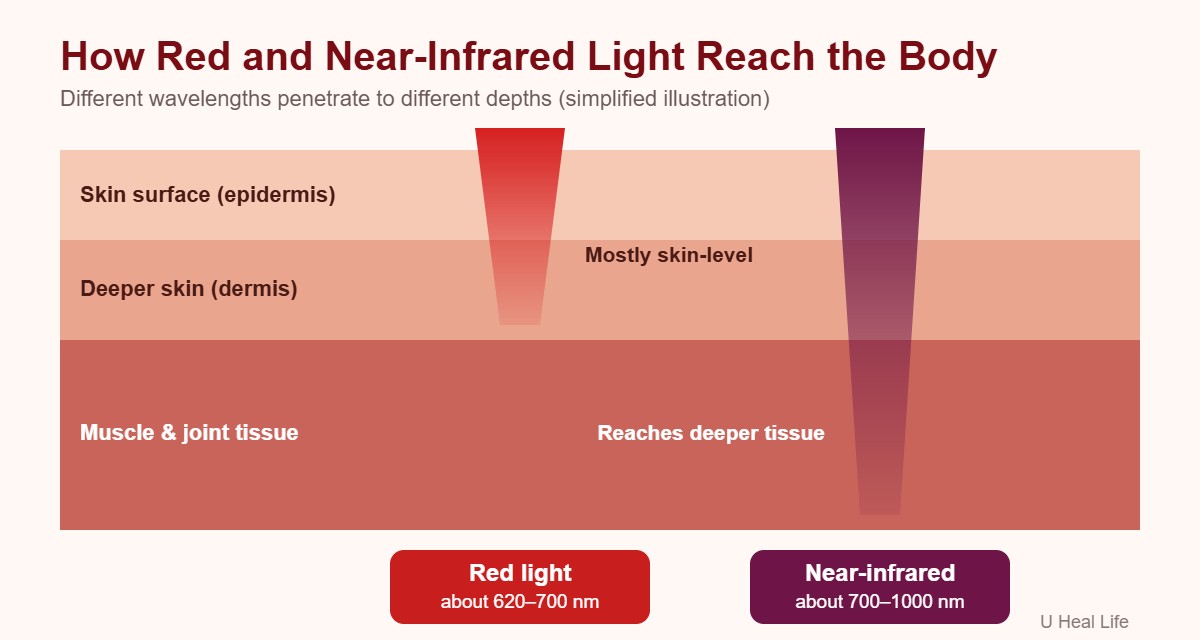
- Red light (about 620-700 nm): Absorbed mostly near the skin surface. Common for skin-related goals.
- Near-infrared light (about 700-1000 nm): Invisible to the eye and penetrates deeper, toward muscles and joints.
How Does Red Light Therapy Work?
The leading theory is that light is absorbed by structures inside our cells, especially the mitochondria, often called the “powerhouse” of the cell. Researchers believe this may increase cellular energy production (ATP) and influence inflammation and tissue repair.
It is important to note that scientists are still studying the exact mechanisms. Results depend heavily on wavelength, dose, session length, and distance from the device, which is why results vary so much between products.
Potential Benefits of Red Light Therapy
1. Skin Health and Anti-Aging
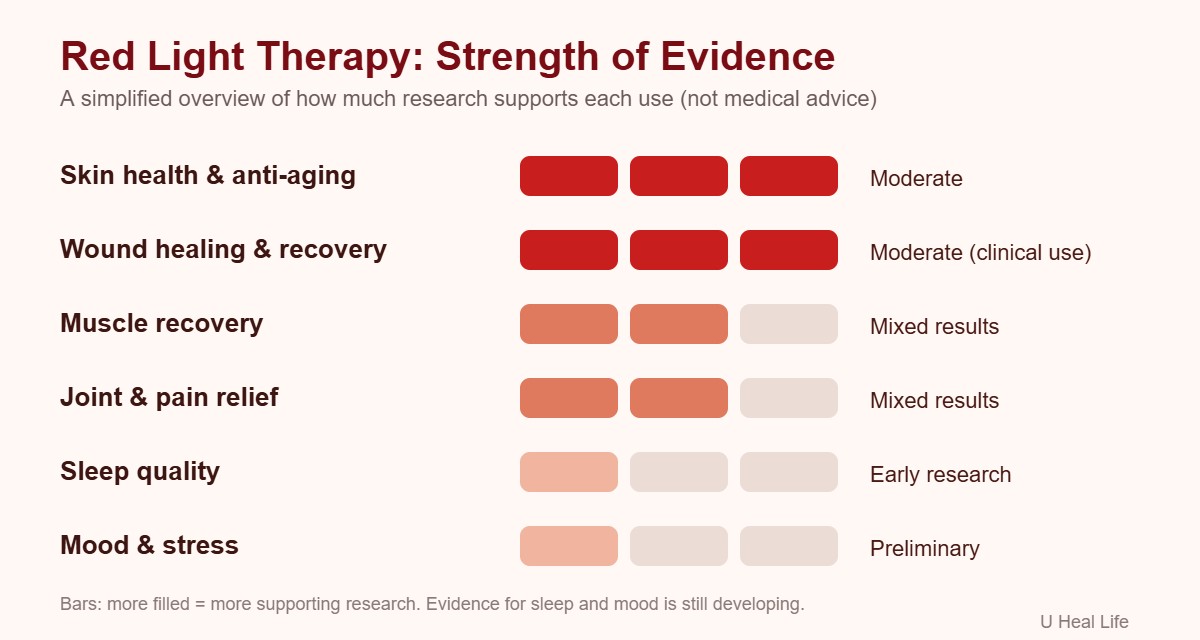
This is the area with the most consumer interest. Some studies suggest red light may support collagen production and improve the look of fine lines, skin texture, and tone. Certain devices have also been studied for mild to moderate acne, often alongside other treatments.
Results are usually gradual and modest, not dramatic overnight changes.
2. Wound Healing and Recovery
Photobiomodulation has been studied in clinical settings for helping tissue repair. For example, it is used in some healthcare settings for painful mouth sores caused by certain cancer treatments. This is supervised medical use, not the same as using a home panel.
3. Muscle Recovery and Exercise Performance
Athletes and gym-goers use RLT hoping to reduce soreness and speed recovery. Some research suggests possible benefits for muscle fatigue and recovery, but results differ between studies and protocols.
4. Joint and Pain Relief
Near-infrared light has been studied for conditions like osteoarthritis-related joint pain, neck pain, and tendon problems. Some trials show pain reduction, while others show little difference from placebo, so the evidence is mixed.
5. Sleep Quality
Many people search for red light therapy for sleep. Early, small studies suggest that red light exposure may support sleep quality in some groups, and red-toned light in the evening is less disruptive than blue light. However, large, high-quality human trials are still limited.
6. Mood, Stress, and Mental Wellness
This is an exciting but early area of research. Some small studies have explored near-infrared light on the head for low mood and cognitive function, and others have looked at light exposure for seasonal mood changes. The research is preliminary.
Important: Red light therapy is not an approved or proven treatment for depression or anxiety. If you are struggling with your mental health, please speak with a licensed healthcare professional.
What Red Light Therapy Cannot Do
To keep expectations realistic, RLT is not proven to:
- Melt body fat or replace diet and exercise
- Cure depression, anxiety, or any mental health condition
- Treat cancer or serious disease
- Replace sunscreen, medication, or doctor-prescribed care
Be cautious of any brand that promises miracle results.
Is Red Light Therapy Safe? Side Effects to Know
For most people, RLT is considered low risk when used as directed. Reported side effects are usually mild and may include:
- Temporary skin redness or warmth
- Mild headache or eye strain
- Skin irritation or dryness
- Trouble sleeping if used too late or too intensely
Eye safety matters. Bright light can strain or harm eyes. Use the protective goggles that come with a device and avoid staring into the lights.
Who Should Talk to a Doctor First?
Check with a healthcare provider before using RLT if you:
- Are pregnant
- Have a history of skin cancer or suspicious moles
- Take medications that make skin sensitive to light (photosensitizing drugs)
- Have a light-sensitive condition, such as lupus or certain eye conditions
- Have a seizure disorder or epilepsy
- Plan to use it directly over a tumor, implant, or medical device
Red Light Therapy at Home vs. Professional Treatment
| Feature | At-Home Devices | Clinic / Professional |
|---|---|---|
| Cost | One-time purchase (varies widely) | Pay per session or package |
| Power | Usually lower | Usually higher and calibrated |
| Convenience | Use anytime | Need to book appointments |
| Supervision | Self-guided | Trained staff |
| Best for | Maintenance, general wellness | Specific concerns, faster monitoring |
How to Use Red Light Therapy Safely
- Read the manufacturer’s instructions. Time and distance guidelines differ by device.
- Start short. Begin with the lowest recommended session time and increase gradually.
- Use clean, bare skin. Remove makeup, lotions, and sunscreen unless the manufacturer says otherwise.
- Protect your eyes. Wear the included goggles.
- Be consistent. Most studies use multiple sessions per week over several weeks.
- Track your results. Take photos or journal changes in skin, sleep, or mood.
- Stop if irritation occurs and consult a professional.
How to Choose a Red Light Therapy Device
Not all devices are equal. Look for:
- Clearly stated wavelengths (for example, red around 630-670 nm and near-infrared around 810-850 nm)
- Published power output (irradiance) rather than just “LED count”
- Regulatory clearance where available, such as FDA-cleared for specific uses
- Independent testing or third-party reviews
- A fair return policy and warranty
Be careful with unrealistic claims, no technical specs, or “cure-all” marketing.
Can Red Light Therapy Help With Mental Wellness?
Many people explore RLT as part of a broader self-care routine. A realistic way to think about it:
- It may support relaxation and better evening routines, especially when it replaces bright blue-light screen time.
- It may be a helpful addition, but not a substitute, for therapy, medication, exercise, sunlight, social connection, and sleep hygiene.
Pair it with habits that have stronger evidence: regular movement, morning daylight, a consistent sleep schedule, and professional support when needed.
Frequently Asked Questions
Does red light therapy really work?
It appears to work for certain uses, such as some skin concerns, healing support, and some types of pain. Evidence for other claims is still developing, and results depend on the device and consistency.
How long does red light therapy take to work?
Many people use it for several weeks before noticing changes. Skin results are typically gradual, often over 8-12 weeks, though individual results vary.
How often should I use red light therapy?
Most protocols use sessions a few times per week. Follow your device’s guidelines and avoid overuse.
Is red light therapy better than sunlight?
They are different. Sunlight provides vitamin D and supports your body clock but also includes UV. RLT does not provide vitamin D.
Can I use red light therapy every day?
Some devices allow daily use at low doses, but more is not always better. Follow the manufacturer’s instructions and talk to your doctor if unsure.
Does red light therapy help with sleep?
It may help some people, particularly when used as part of an evening wind-down routine. Research is still limited, so it should not replace good sleep habits or medical care for sleep disorders.
Is red light therapy FDA approved?
Specific devices may be FDA-cleared for particular uses, such as certain skin or pain applications. Many wellness devices make general claims without clearance, so check the exact device and its approved use.
Can red light therapy cure depression?
No. It is not a proven treatment for depression. If you feel persistently low, anxious, or hopeless, please contact a licensed mental health professional or your doctor.
Final Thoughts
Red light therapy is not magic, but it is more than just a trend. It shows real promise for skin, recovery, and comfort, while its effects on sleep and mood are still being explored. If you try it, choose a reputable device, use it consistently and safely, and treat it as one tool within a healthy lifestyle, not a cure-all.
Disclaimer: This article is for informational purposes only and is not medical advice. Always consult a qualified healthcare professional before starting any new wellness therapy, especially if you have a medical condition or take medication.