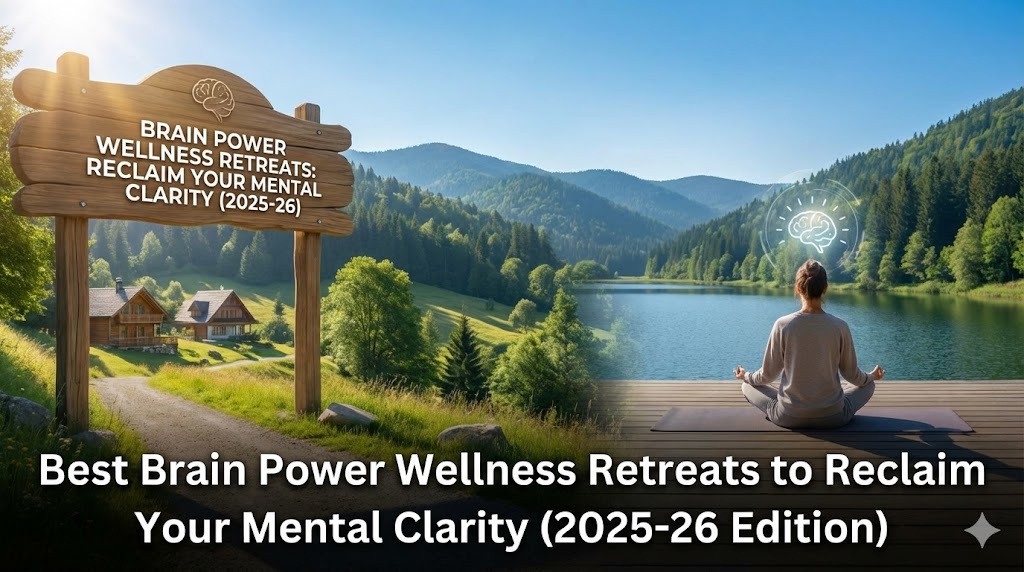
7 Best Brain Power Wellness Retreats to Reclaim Your Mental Clarity (2025-26 Edition)

In a world of relentless notifications, 60-hour workweeks, and information overload, our brains are tired. We aren’t just physically exhausted; we are cognitively drained. This modern epidemic has a name: Brain Fog.

For high-performing professionals, executives, and creatives, a standard beach vacation is no longer enough. Sipping a margarita by the pool might relax your body, but it doesn’t necessarily turn off the racing thoughts or restore your sharp focus.

To truly reset, you need something different. You need a brain power wellness retreat.

These aren’t your typical spas. They are scientifically designed sanctuaries that combine neuroscience, mindfulness, nutrition, and digital detoxing to heal your nervous system and optimize cognitive function.

If you are ready to trade burnout for brilliance, here is our curated list of the 7 best brain power wellness retreats in the USA and beyond for 2025-26.


What is a Brain Power Wellness Retreat?

Before we dive into the list, it is essential to understand what separates these mental clarity getaways from a regular holiday.

A brain power wellness retreat focuses specifically on cognitive health. While a regular resort focuses on leisure, these retreats focus on neuroplasticity—the brain’s ability to reorganize itself by forming new neural connections.

Key features often include:

  • Neuro-nutrition: Meals designed to lower inflammation and fuel brain cells.
  • Mindfulness & Meditation: Techniques to thicken the prefrontal cortex (the area responsible for focus).
  • Digital Detox: Strict “no-phone” policies to break the dopamine addiction loop.
  • Biohacking: Use of cryotherapy, infrared saunas, or neurofeedback to optimize brain function.

1. Canyon Ranch (Tucson, Arizona)

The Gold Standard for Integrative Wellness

For decades, Canyon Ranch has been the heavyweight champion of wellness in the USA. However, their “Life Enhancement” pathways take cognitive health retreats to a new level. Located in the stunning Sonoran Desert, this destination offers a comprehensive medical and holistic approach to brain health.

Why it’s great for Brain Power: Canyon Ranch employs board-certified physicians, nutritionists, and therapists. They don’t just guess what your brain needs; they test. Their “Executive Health” packages often include cognitive assessments, sleep studies, and stress management workshops tailored to rewire a stressed mind.

  • Best For: Executives and data-driven individuals seeking medical validation.
  • The Experience: Expect a mix of desert hiking (to boost BDNF – a protein that promotes brain cell growth) and lectures on sleep hygiene and stress resilience.

2. Eupepsia Wellness Resort (Virginia)

The Ayurvedic Approach to Cognitive Health

Nestled in the heart of the Blue Ridge Mountains, Eupepsia is a hidden gem that has repeatedly won “Best Wellness Resort” titles. Unlike the clinical feel of some resorts, Eupepsia focuses on Ayurveda—the ancient science of life—to restore mental balance.

Why it’s great for Brain Power: According to Ayurveda, mental fog is often a result of poor digestion and an imbalance in the body’s energies (doshas). Their program focuses on “Gut-Brain Axis” health. By fixing your digestion with farm-to-table vegetarian meals and herbal tonics, they aim to clear the mind.

  • Best For: Those looking for a holistic, spiritual, and nature-immersive reset.
  • The Experience: Hydrotherapy, halo-therapy (salt therapy), and forest bathing to calm the sympathetic nervous system.

3. The Ranch Malibu (California)

The Hard Reset for High Achievers

If your idea of relaxing is pushing your limits to break through mental barriers, The Ranch Malibu is for you. This is a rigorous, results-oriented program often favored by Hollywood celebrities and CEOs.

Why it’s great for Brain Power: The philosophy here is simple: Clarity through discipline. There is no Wi-Fi. There is no caffeine. There is no alcohol. There is no meat. By removing all toxins and distractions and engaging in 4-hour daily hikes, your brain is forced into a state of deep detoxification.

  • Best For: Type-A personalities who need a strict “boot camp” structure to disconnect.
  • The Experience: You will hike the Santa Monica mountains every morning. The intense physical activity releases a flood of endorphins and dopamine, effectively “washing” the brain of stress hormones.

4. Civana Wellness Resort & Spa (Carefree, Arizona)

The Customizable Mental Clarity Getaway

Not everyone wants a boot camp or a medical exam. Sometimes, brain power returns simply by having the freedom to choose. Civana offers a more flexible approach to cognitive health retreats in the USA.

Why it’s great for Brain Power: Civana specializes in “inner work.” Their schedule is packed with over 70 weekly classes, many focusing on mental conditioning. From sound bath meditations to “aerial yoga” (which improves blood flow to the brain), you can curate a schedule that feels restorative to you.

  • Best For: Solo travelers and beginners to the wellness retreat world.
  • The Experience: Don’t miss their “Aqua Therapy” sessions. Floating weightlessly in warm water is proven to lower cortisol levels and induce a theta-brainwave state (similar to deep meditation).

5. The Art of Living Retreat Center (Boone, North Carolina)

Mastering the Breath for Mental Focus

Located high in the Heavenly Mountain range, this center is rooted in yogic wisdom. It is one of the few places in the US that focuses intensely on Breathwork and Silence.

Why it’s great for Brain Power: They offer a “Silent Retreat” (Stepping into Silence). Research shows that silence can stimulate the growth of new cells in the hippocampus, the brain region linked to memory. By stopping the constant output of speech and social interaction, your brain gets the rare chance to process and file away information properly.

  • Best For: Spiritual seekers and those suffering from deep emotional exhaustion.
  • The Experience: You will learn the Sudarshan Kriya, a breathing technique scientifically proven to reduce stress and anxiety significantly.

6. Four Seasons Westlake Village (California)

Luxury Meets Neuroscience

If you want luxury accommodation combined with cutting-edge science, the Center for Health & Wellbeing at the Four Seasons Westlake Village is the pinnacle. This isn’t just a hotel; it’s a wellness institute.

Why it’s great for Brain Power: They offer specific “Mind & Body” retreats. You can access life coaches, hypnotherapists, and guided meditation experts. Their approach is highly personalized—you might start your day with a luxury breakfast and end it with a biofeedback session to learn how to control your heart rate variability (HRV).

  • Best For: Luxury travelers who want 5-star comfort while working on their mental health.
  • The Experience: Their “Somadome” meditation pod is a futuristic experience that uses color and sound therapy to guide your brain into a state of deep relaxation.

7. Hillock Nature Retreat (The Exotic “Digital Detox” Option)

The Hidden Gem for Total Disconnection

While the USA has incredible options, sometimes the best way to reclaim your brain power is to leave the country entirely. For the adventurous soul, Hillock Nature Retreat (an emerging eco-luxury destination) offers something American resorts can’t: Raw, Untouched Nature.

Why it’s great for Brain Power: Located away from the hum of cities, this retreat offers a “Green Detox.” The Japanese concept of Shinrin-yoku (Forest Bathing) is the core here. Being surrounded by diverse flora and natural sounds reduces cognitive fatigue faster than any machine can.

  • Best For: Travelers wanting a complete culture shift and a true escape from the Western rat race.
  • The Experience: Farm-to-table organic eating, sunrise yoga on natural terrain, and a complete break from the digital world.

Why You Need a Cognitive Health Retreat Now

You might be thinking, “Can’t I just take a nap?”

Sleep is crucial, but it is not the same as a cognitive reset. Chronic stress shrinks the brain’s neural networks. A weekend of binge-watching TV doesn’t fix that; it just pauses the stress.

A dedicated brain power wellness retreat provides:

  1. Environment Design: You cannot heal in the same environment where you got sick. Changing your physical location is the first step to changing your mindset.
  2. Community: Being around other people who are prioritizing their mental health removes the stigma of “taking a break.”
  3. Tools for Life: The best retreats don’t just relax you for a week; they teach you breathing techniques, nutritional habits, and mental frameworks to protect your brain power when you return to the office.

Final Thoughts: Invest in Your Mind

Your brain is your most valuable asset. Whether you are a CEO negotiating million-dollar deals or a parent managing a chaotic household, your ability to think clearly, focus deeply, and remain calm is your superpower.

In 2025, don’t just book a vacation. Book a transformation.

Whether you choose the discipline of The Ranch Malibu, the medical expertise of Canyon Ranch, or the serene silence of the Art of Living Center, prioritizing a mental clarity getaway is the smartest investment you will make this year.

Ready to reclaim your focus? Start planning your itinerary today.

Escape to Hillock Nature Retreat: The Ultimate Exotic Wellness Getaway

Let’s face it: The hustle of daily life in the US can be exhausting. Between the 9-to-5 grind, the constant ping of emails, and the noise of the city, true relaxation feels like a distant dream.

Sometimes, a weekend trip to the nearest national park just isn’t enough. You need a complete reset. You need to go where the Wi-Fi is weak, but the connection to nature is strong.

Enter Hillock Nature Retreat.

Tucked away in the lush, untouched landscapes of India, this hidden gem is quickly becoming a bucket-list destination for international travelers seeking peace, luxury, and a genuine connection with the earth.

If you are planning your next big international trip, here is why Hillock Nature Retreat needs to be at the top of your list.


1. A Sanctuary for the Soul (Far from the Tourist Traps)

Unlike commercialized hotels where you are just a room number, Hillock Nature Retreat is designed as a sanctuary.

For US travelers, the first thing that strikes you is the silence. Located amidst rolling hills and dense greenery, the resort offers a level of privacy that is hard to find. It is not just a hotel; it is an immersive experience. Whether you are a solo traveler looking for clarity or a couple seeking a romantic escape, the isolation here is a luxury in itself.

  • The Vibe: Think “Bali meets Traditional Indian Hospitality.”
  • The Crowd: Exclusive, quiet, and nature-focused.

2. Luxury Meets Sustainability

One of the biggest concerns for Americans traveling abroad is the standard of accommodation. Will it be comfortable? Is it clean?

Hillock Nature Retreat bridges the gap between rustic charm and modern luxury. You get the experience of living in nature—waking up to the sound of birds and the smell of wet earth—without sacrificing comfort.

  • Private Villas/Cottages: exquisitely designed with local materials but equipped with premium bedding and modern amenities.
  • Eco-Conscious: The retreat practices sustainable tourism, using solar power, rainwater harvesting, and plastic-free zones, appealing to the eco-conscious US traveler.

3. Farm-to-Table Dining (A Foodie’s Dream)

Forget processed food. At Hillock, the culinary experience is a highlight. Embracing the “Farm-to-Table” philosophy, most ingredients are sourced locally or grown right on the property.

For a US palate used to frozen meals or fast food, the freshness here is shocking. You will enjoy authentic local cuisine cooked with traditional spices that are flavorful, not just “spicy.”

  • Must-Try: Ask for their signature local thali for a taste of everything.
  • Dietary Needs: Vegan and Gluten-Free options are readily available (a huge plus for international guests).

4. Wellness: Yoga, Detox, and Rejuvenation

You can’t talk about a retreat in India without talking about wellness. Hillock Nature Retreat isn’t just a place to sleep; it’s a place to heal.

  • Morning Yoga: Imagine starting your day with a guided yoga session on an open-air deck, overlooking the misty hills.
  • Nature Walks: Guided treks through the surrounding flora are perfect for bird watchers and photographers.
  • Digital Detox: While connectivity is available, the environment encourages you to put the phone down and pick up a book—or a conversation.

Practical Tips for US Travelers

If you are flying from New York, LA, or Chicago, here is what you need to know to make your trip to Hillock Nature Retreat seamless:

  • Best Time to Visit: October to March offers the most pleasant weather (cool and dry), perfect for escaping the freezing US winter.
  • Currency: The resort is affordable by US standards, offering incredible value for luxury.
  • What to Pack: Bring comfortable walking shoes, bug spray (it is a nature retreat, after all!), and light cotton clothing.

Final Verdict: Is It Worth the Flight?

If you are looking for a standard hotel with a casino and a mall next door, this isn’t for you.

But, if you are craving an authentic, soul-stirring experience that will leave you feeling lighter, healthier, and more grounded, then Hillock Nature Retreat is absolutely worth the journey.

It is more than a vacation; it is the reset button you have been waiting to press.

Ready to unplug? Check out their official page to view the stunning villas and book your exotic escape today.

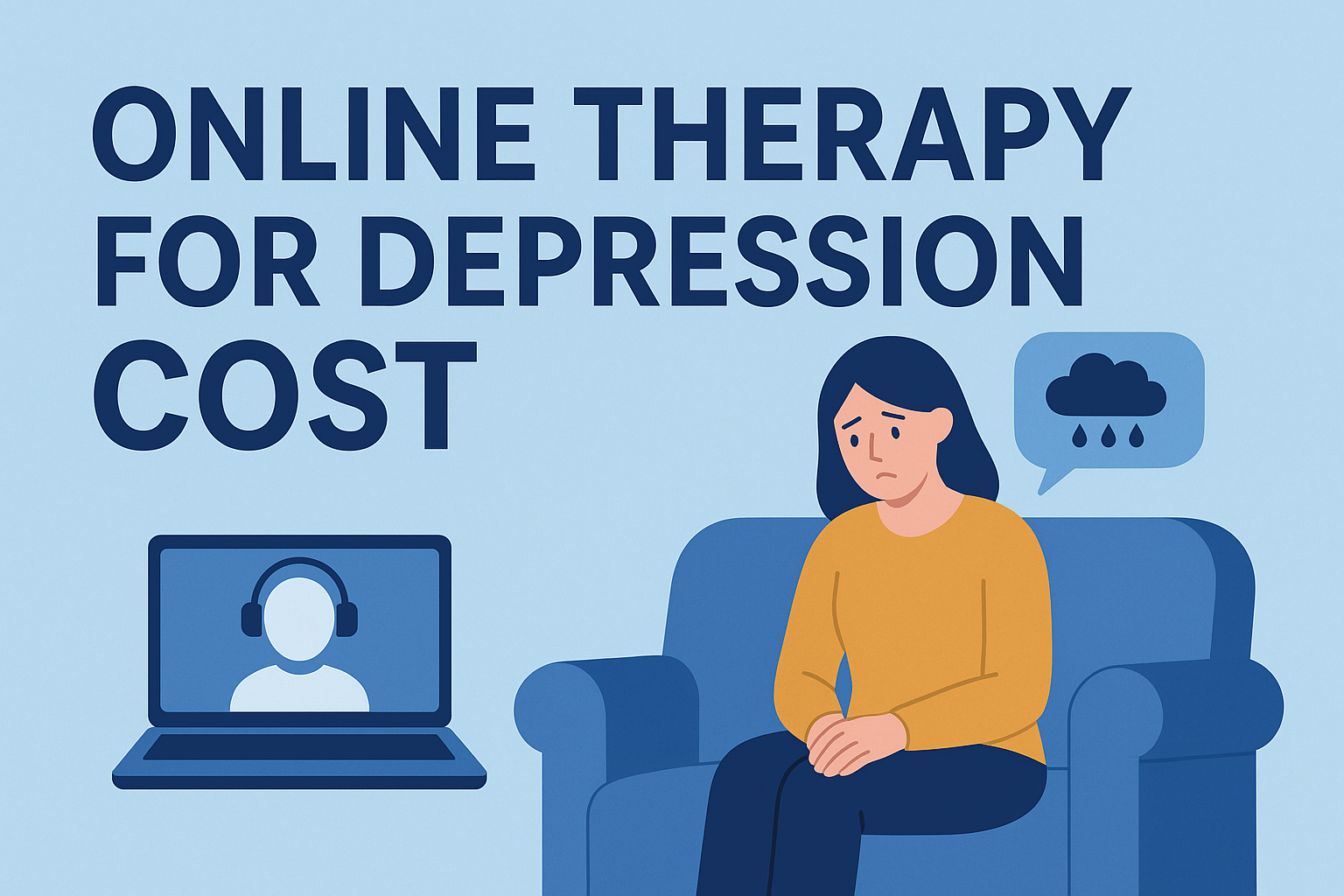
Online Therapy for Depression Cost: Complete Pricing Guide (2025-26)

Depression is one of the most common mental health conditions worldwide. With the rise of digital healthcare, online therapy for depression has become a convenient, affordable, and effective solution for many people. But the most common question people search for is:

👉 How much does online therapy for depression cost?

In this detailed guide, we’ll break down:

  • Average online therapy prices
  • Cost comparison by country
  • Factors that affect pricing
  • Affordable options
  • Insurance coverage
  • Whether online therapy is worth the cost

What Is Online Therapy for Depression?

Online therapy for depression is professional mental health treatment delivered through:

  • Video calls
  • Audio sessions
  • Live chat
  • Mobile apps

It is provided by licensed psychologists, therapists, counselors, and psychiatrists. It is especially useful for people who prefer privacy, flexible timing, or live in remote areas.


Average Cost of Online Therapy for Depression

The cost of online therapy for depression depends on the platform, therapist qualification, session length, and location.

Global Average Pricing

Therapy TypeCost Per Session
Text-based therapy$40–$70
Live chat session$50–$90
Video therapy$70–$150
Psychiatric consultation (medication)$100–$250

Online Therapy for Depression Cost in India

In India, online therapy is significantly more affordable compared to Western countries.

Service TypeAverage Cost (₹)
Chat-based therapy₹500–₹1,000
Video therapy (40–60 min)₹700–₹2,000
Psychiatric consultation₹1,000–₹3,000

✅ Many platforms also offer monthly therapy plans starting at ₹2,000–₹5,000.


Online Therapy for Depression Cost in the USA

The USA has higher therapy fees:

Service TypeAverage Cost ($)
Video therapy$90–$200
Chat therapy$60–$120
Psychiatrist visit$150–$300

However, many insurance plans now cover online mental health therapy.


Factors That Affect the Cost of Online Therapy

Several factors influence pricing:

🔹 1. Therapist Experience

Senior clinical psychologists charge more than trainee counselors.

🔹 2. Session Duration

30-minute sessions are cheaper than 60-minute sessions.

🔹 3. Therapy Type

CBT, trauma therapy, and psychiatric therapy cost more than general counseling.

🔹 4. Platform vs Independent Therapist

Apps usually offer lower packages than private clinic sessions.

🔹 5. Location

Costs vary by country and city.


Is Online Therapy for Depression Cheaper Than Offline Therapy?

Yes, online therapy is 30%–60% cheaper than in-person therapy.

TypeAverage Cost
Offline therapy (India)₹1,500–₹3,500
Online therapy (India)₹700–₹2,000
Offline therapy (USA)$150–$250
Online therapy (USA)$90–$150

Affordable Online Therapy Options

If you’re on a budget, here are low-cost options:

  • ✅ University counseling services
  • ✅ NGO mental health programs
  • ✅ Community mental health platforms
  • ✅ Subscription-based therapy apps
  • ✅ Free helplines + trial sessions

Does Insurance Cover Online Therapy for Depression?

✅ In the USA:

Most insurance companies now cover:

  • Video therapy
  • Online psychiatric consultations
  • Depression treatment plans

✅ In India:

Coverage is improving but still limited. Some private health insurers cover online therapy under mental health benefits after 2020 IRDAI guidelines.


Is Online Therapy Worth the Cost?

Yes, it is worth it if:

  • You’re dealing with anxiety or depression
  • You need flexible appointment timing
  • You want privacy and comfort at home
  • You live in areas with limited mental health services

Studies show online CBT therapy is as effective as face-to-face therapy for depression.


How to Reduce the Cost of Online Therapy

  • 🔹 Choose monthly therapy plans
  • 🔹 Use first-session discounts
  • 🔹 Opt for group therapy
  • 🔹 Use insurance benefits
  • 🔹 Watch for festival & wellness offers

Final Thoughts on Online Therapy for Depression Cost

The cost of online therapy for depression depends on location, therapist expertise, and session type. On average:

  • India: ₹700–₹2,000 per session
  • USA: $90–$150 per session

It is more affordable, flexible, and accessible than traditional therapy and can be life-changing for people dealing with mental health challenges.


Frequently Asked Questions (FAQs)

❓ Is online therapy for depression effective?

Yes, online therapy is backed by scientific research and works well for mild to moderate depression.

❓ Can I get free online therapy?

Some NGOs, government programs, and universities offer free or low-cost options.

❓ How many sessions are required for depression?

Typically 8–16 sessions depending on severity.

❓ Is medication included in online therapy cost?

No, psychiatric medication fees are usually charged separately.


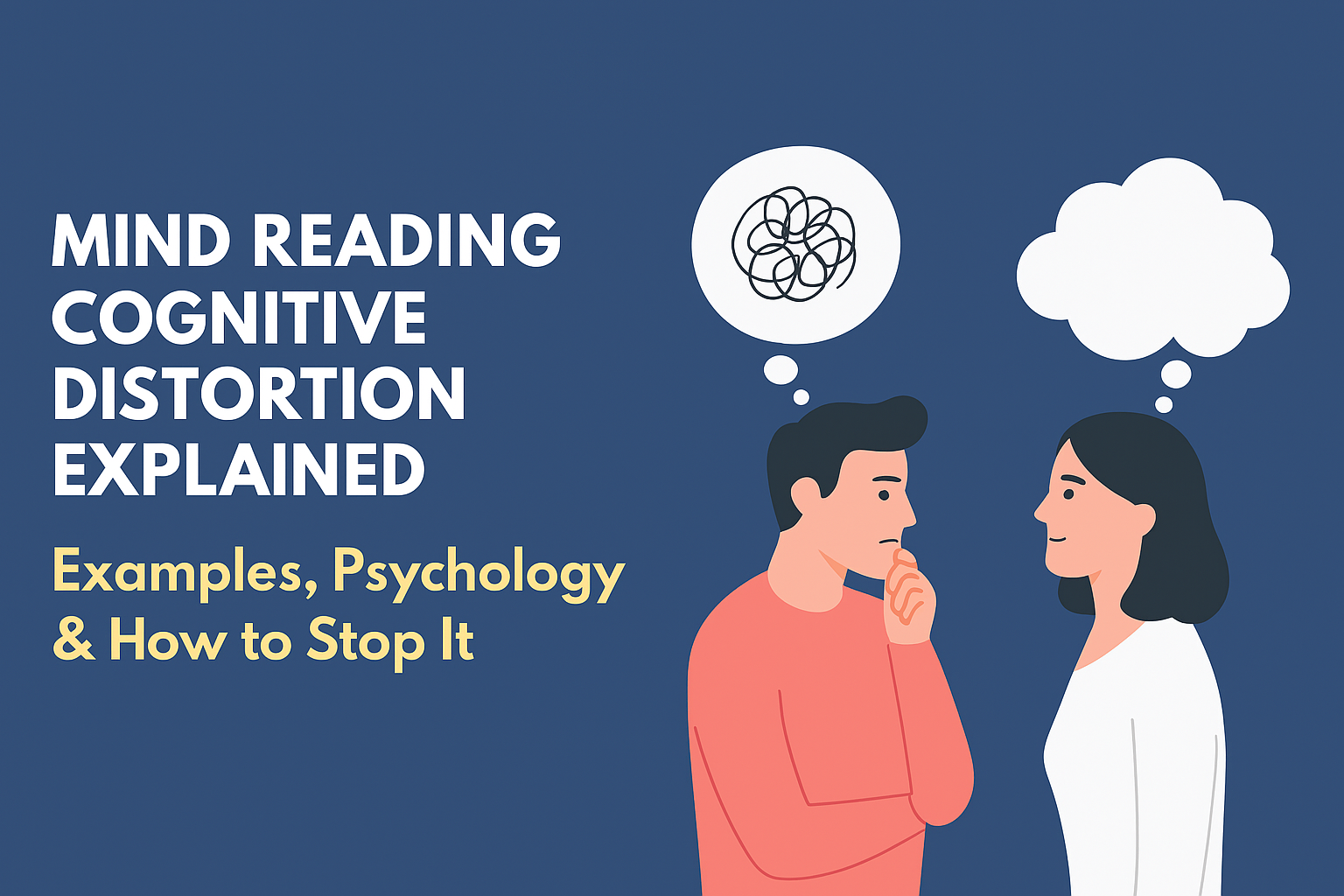
Mind Reading Cognitive Distortion Explained — Examples, Psychology & How to Stop It

What Is the Mind Reading Cognitive Distortion?

Have you ever caught yourself thinking, “They must be judging me,” or “She probably thinks I’m stupid” — without any real proof?
That’s called mind reading, a cognitive distortion where you assume you know what others are thinking, usually in a negative way.

In psychology, mind reading is part of a group of distorted thinking patterns that cause unnecessary stress, anxiety, and conflict. When you assume others’ thoughts without evidence, you’re essentially projecting your own fears or insecurities onto them.


The Psychology Behind Mind Reading

Mind reading often develops as a defense mechanism. Our brains evolved to predict others’ intentions for survival, but in modern life, this can backfire.
Cognitive behavioral psychologists explain that this distortion stems from automatic negative thoughts (ANTs) — mental shortcuts that jump to conclusions without data.

For example:

  • You see a friend texting while you’re talking and think, “They’re bored of me.”
  • A coworker doesn’t reply to your message, and you assume, “They must be upset with me.”

In reality, your friend might just be responding to an urgent message, and your coworker might be busy. But your brain interprets uncertainty as rejection.


Common Examples of Mind Reading Cognitive Distortion

  1. Social Anxiety Situations
    “Everyone at the party thinks I’m awkward.”
    → You avoid conversations and reinforce isolation.
  2. Workplace Scenarios
    “My boss didn’t smile today — she must think my work is bad.”
    → You lose confidence and overthink your performance.
  3. Relationships
    “He didn’t text me back; he must have lost interest.”
    → You start acting distant or defensive, creating tension that didn’t exist before.

How Mind Reading Affects You

Constantly assuming what others think leads to:

  • Increased anxiety and self-doubt
  • Miscommunication and strained relationships
  • Negative self-talk that reinforces low self-esteem
  • Emotional exhaustion from overanalyzing every interaction

Over time, this thinking pattern can make you overly self-conscious and disconnected from reality.


How to Stop Mind Reading Cognitive Distortion

1. Ask Instead of Assuming

When in doubt, communicate directly.
Example: Instead of thinking, “They’re mad at me,” ask, “Hey, is everything okay between us?”

2. Challenge Your Thoughts

Write down your assumptions and question them:

  • What’s my evidence for this thought?
  • Is there another explanation?
  • Would I think the same way if I was in a calm state?

3. Practice Mindfulness

Stay grounded in the present moment.
Mindfulness helps you observe thoughts without automatically believing them.

4. Use Cognitive Behavioral Therapy (CBT) Techniques

CBT helps identify and reframe distorted thinking.
You can learn to replace “They think I’m boring” with “I don’t actually know what they think — and that’s okay.”

5. Build Self-Confidence

When your self-esteem improves, you rely less on others’ imagined opinions.
Engage in positive self-affirmations and celebrate small wins daily.


Final Thoughts

The mind reading cognitive distortion tricks you into believing assumptions are facts.
By challenging these thoughts, communicating openly, and practicing mindfulness, you can break free from this mental trap and enjoy more honest, peaceful relationships.


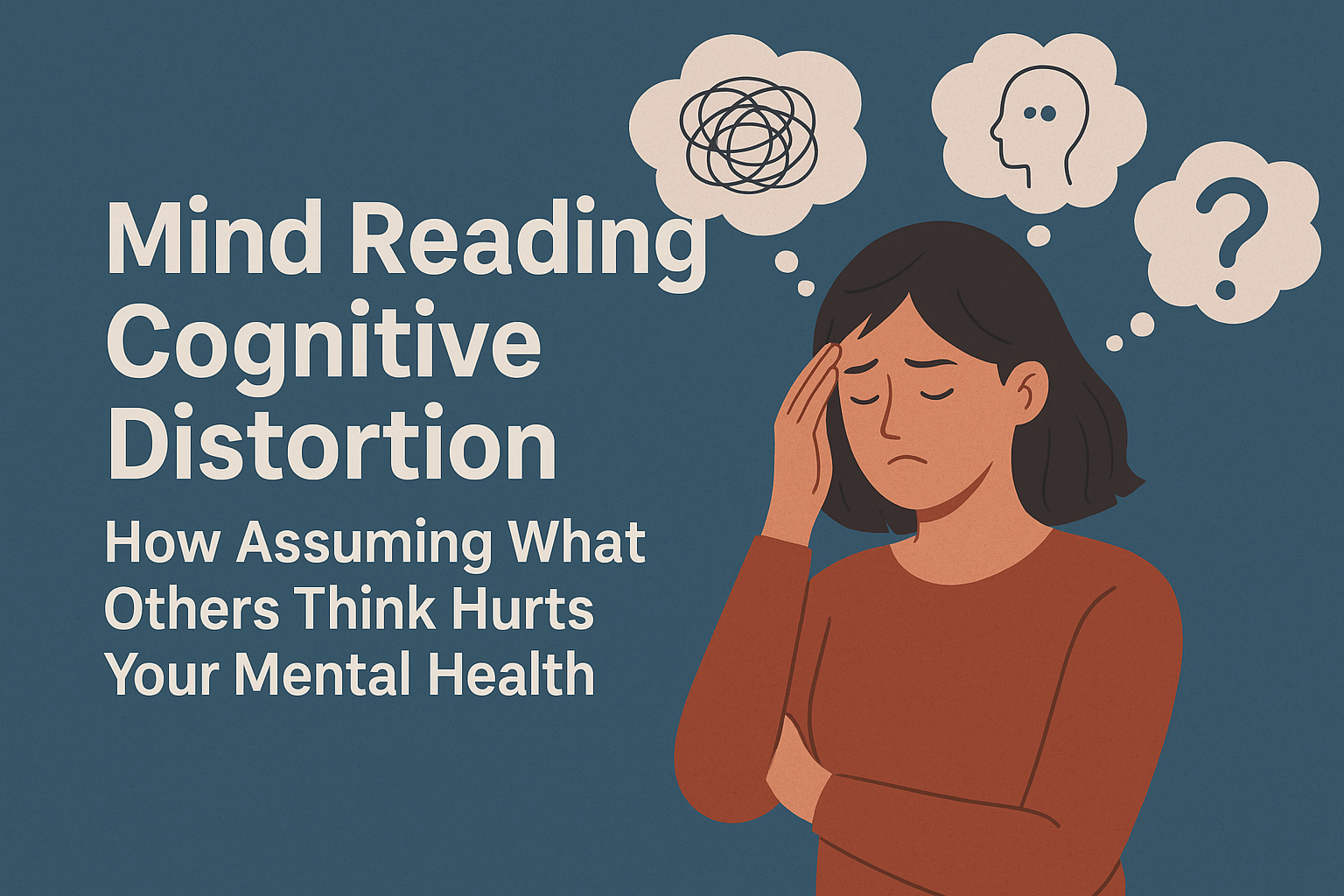
Mind Reading Cognitive Distortion
Mind Reading Cognitive Distortion: How Assuming What Others Think Hurts Your Mental Health

Have you ever caught yourself thinking, “They must be judging me” or “She probably thinks I’m not good enough”?
If so, you’ve experienced what psychologists call Mind Reading — a common cognitive distortion that can seriously affect your confidence and mental health.

This article explains what the mind reading distortion is, how it harms your mental well-being, and how to stop assuming what others think about you.


What Is Mind Reading Cognitive Distortion?

The Mind Reading Cognitive Distortion occurs when you assume you know what others are thinking — usually something negative about you — without any real evidence.

Examples include:

  • “My boss didn’t smile today; she must be unhappy with my work.”
  • “My friend didn’t reply; he must be ignoring me.”
  • “People probably think I’m awkward in social situations.”

This distortion is part of Cognitive Behavioral Therapy (CBT) principles, which identify unhelpful thought patterns that distort reality and contribute to anxiety and depression.


Why We Fall Into the Mind Reading Trap

Humans are naturally social and wired to interpret others’ emotions. However, when our self-esteem is low or we’re under stress, our brains start filling in the blanks with negative assumptions.

This often happens because of:

  • Fear of rejection or criticism
  • Past negative experiences
  • Perfectionism or social anxiety
  • Low self-worth

Essentially, mind reading acts as a self-defense mechanism — but instead of protecting you, it often makes you feel worse.


How Mind Reading Hurts Your Mental Health

Constantly trying to guess what others think creates emotional exhaustion. Here’s how it damages your mental well-being:

  1. Increases Anxiety
    You become hyper-focused on others’ reactions, reading hidden meanings in every word or gesture.
  2. Destroys Self-Confidence
    Believing others think poorly of you lowers your self-esteem and prevents you from expressing your authentic self.
  3. Causes Miscommunication
    You might act defensively or withdraw, leading to misunderstandings and strained relationships.
  4. Triggers Overthinking
    Instead of living in the present, your mind replays interactions, searching for “proof” that someone disapproves of you.

Signs You’re Engaging in Mind Reading

Ask yourself:

  • Do I often assume what others feel without asking them?
  • Do I think people are judging me even when they haven’t said anything?
  • Do I interpret neutral behavior as rejection?
    If you said yes to most of these, you might be stuck in the mind reading loop.

How to Stop Mind Reading

Breaking free from this cognitive distortion takes awareness and practice. Here’s how:

1. Challenge Your Thoughts

Ask yourself:

  • Do I have solid evidence for this belief?
  • Could there be another explanation for their behavior?

2. Communicate Directly

Instead of guessing, ask. Open communication helps replace assumption with clarity.

3. Practice Mindfulness

Mindfulness helps you observe thoughts without judgment, allowing you to notice distorted thinking before it takes over.

4. Build Self-Esteem

The more confident you are, the less you’ll care about others’ opinions. Focus on your achievements and values.

5. Use CBT Techniques

Journaling your thoughts and reframing negative assumptions are key tools from Cognitive Behavioral Therapy that can help you see reality more clearly.


Example of Reframing a Mind Reading Thought

Before: “She didn’t reply to my text — she must be angry.”
After: “There could be many reasons she hasn’t replied. Maybe she’s busy or didn’t see it yet.”

By reframing, you stop assigning negative meanings to neutral events.


The Psychology Behind Mind Reading

Psychologists link mind reading to cognitive bias — specifically, the negativity bias, where people focus more on negative interpretations than positive or neutral ones.

Over time, this pattern can contribute to:

  • Social anxiety disorder (SAD)
  • Depressive thinking
  • Low emotional resilience

Recognizing and correcting this bias is essential for mental well-being.


Final Thoughts

Mind reading may seem harmless, but over time, it fuels anxiety, isolation, and self-doubt. Remember — you can’t truly know what someone else is thinking.

The key to better mental health is challenging your assumptions, communicating clearly, and focusing on facts, not fears.

When you stop trying to read minds, you start freeing your own.

Married to Mind Reader Chinese Drama Explained — Full Plot Summary & Ending
Married to Mind Reader Chinese Drama Explained — Plot Summary & Ending

If you’re a fan of romantic Chinese dramas with a touch of mystery and telepathy, Married to Mind Reader is a must-watch. This drama has recently captured the attention of C-drama lovers for its unique storyline and emotional depth. In this post, we’ll explain the full plot, introduce the main characters, and break down the ending for you — spoiler alert ahead!


Plot Summary

Married to Mind Reader follows the story of Su Nian, a cheerful and kind-hearted writer, and Gu Jun, a cold yet intelligent CEO who has an unusual ability — he can read minds.

Su Nian accidentally marries Gu Jun through a twist of fate when a misunderstanding during a business event turns into a viral scandal. To save their reputations, both agree to a contract marriage. But soon, Gu Jun’s hidden power starts complicating their relationship. He can hear Su Nian’s true thoughts — from her insecurities to her genuine love and fear.

As they start living together, Gu Jun begins to realize that hearing someone’s mind isn’t as easy as it seems. He discovers Su Nian’s painful past and her struggle to trust again. Over time, his cold heart starts to melt, and genuine love blossoms between them.


Main Characters

  • Gu Jun (Male Lead) – A brilliant businessman with the ability to read minds. Though distant at first, he eventually learns the true meaning of love.
  • Su Nian (Female Lead) – A warm-hearted writer who teaches Gu Jun that emotions are not meant to be controlled but felt.
  • Lin Yue (Second Lead) – Su Nian’s best friend who provides comic relief and emotional support.
  • Qin Hao (Antagonist) – A rival businessman who discovers Gu Jun’s secret and uses it against him.

Themes and Message

The drama explores several key themes:

  • Trust and vulnerability in relationships
  • The burden of knowing too much about others’ thoughts
  • Healing through love and emotional honesty

It beautifully balances fantasy and realism, showing how love can overcome even supernatural challenges.


Ending Explained

In the final episodes, Gu Jun’s mind-reading ability starts to fade — a symbolic moment showing his emotional healing. He learns to trust Su Nian without relying on his power.

The couple faces one last conflict when Qin Hao exposes Gu Jun’s ability to the media. Su Nian, instead of running away, stands by Gu Jun and confesses her love publicly.

In the end, Gu Jun proposes again — this time out of pure love, not obligation. The drama closes with a heartfelt wedding scene where both promise to build a life based on honesty and understanding.

The ending delivers a powerful message:

“Love doesn’t need mind reading; it needs trust.”


Why Fans Love This Drama

  • A refreshing romantic fantasy concept
  • Strong chemistry between the leads
  • Emotional storytelling with a satisfying ending
  • Beautiful cinematography and soundtrack

Viewers describe Married to Mind Reader as a blend of romance, comedy, and emotional healing that stays in your heart long after the final episode.


Where to Watch

You can stream Married to Mind Reader on:

  • iQIYI
  • YouTube (official channels)
  • Viki (depending on your region)

Always check for English subtitles for the best experience!


Final Thoughts

Married to Mind Reader is more than just a romantic fantasy — it’s a heartfelt story about trust, love, and understanding. Whether you’re new to Chinese dramas or a longtime fan, this series is worth adding to your watchlist.

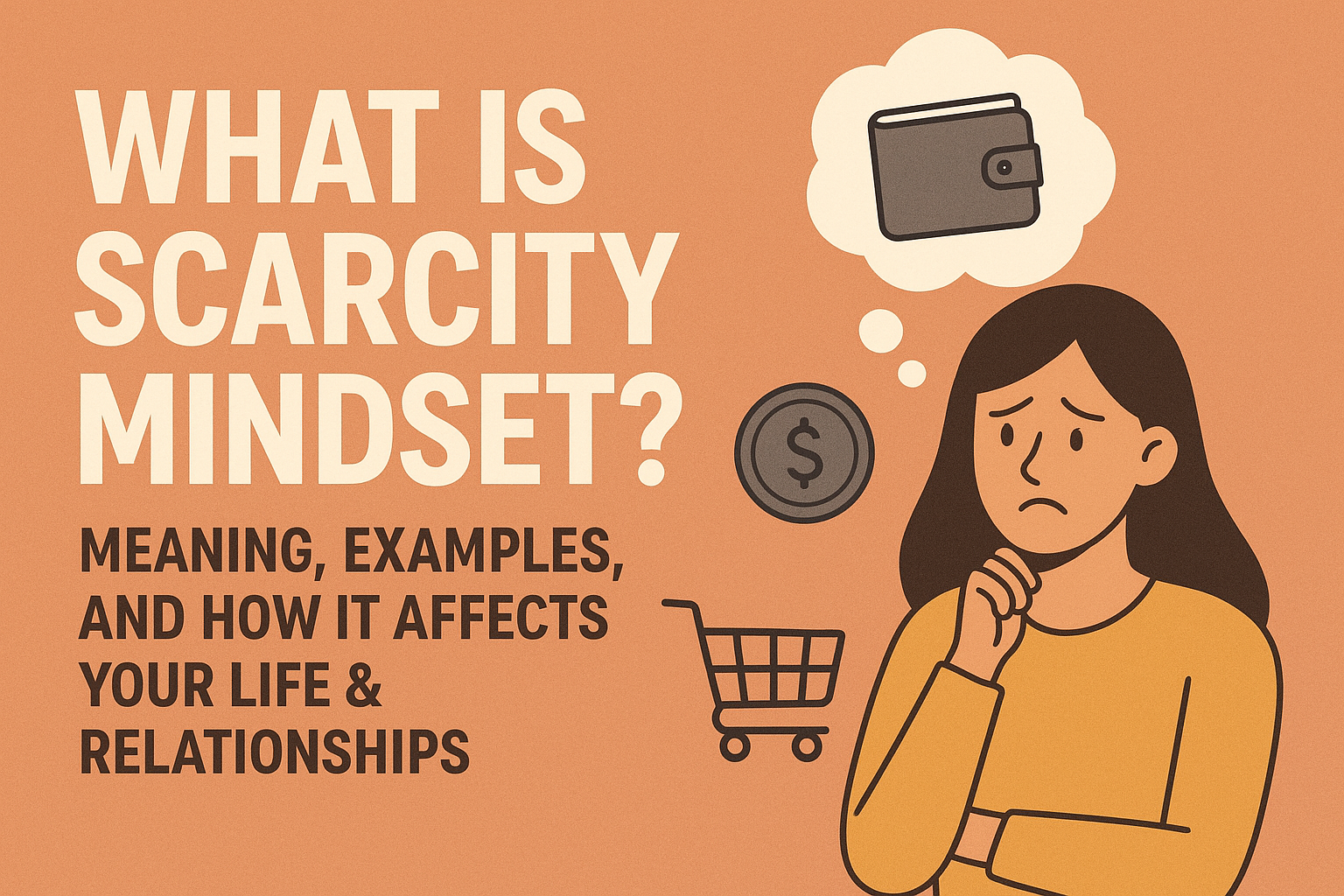
Illustration of scarcity mindset showing a worried woman thinking about money, wallet, and shopping, used for blog post on meaning, examples, and effects on life and relationships.
What is Scarcity Mindset? Meaning, Examples, and How It Affects Your Life & Relationships

In today’s fast-paced world, we often hear terms like growth mindset, abundance mindset, and scarcity mindset. Among these, the scarcity mindset plays a huge role in shaping how we think, act, and build relationships. But what exactly is it? Why do so many people struggle with it, and how can it affect areas like dating, love, and even your career?

This guide will break down the meaning of scarcity mindset, give you real-life examples, explain why you might have it, and explore how it impacts relationships and dating.


What is Scarcity Mindset?

A scarcity mindset is the belief that there will “never be enough.” It’s the fear of losing resources, opportunities, or people. When you operate with this mindset, you focus on what you don’t have instead of what you do have.

For example:

  • Constantly worrying about money even when you’re financially stable.
  • Believing there aren’t enough good partners out there.
  • Thinking you don’t have enough time, talent, or opportunities compared to others.

In short, scarcity mindset makes you operate from a place of fear and lack, while its opposite – the abundance mindset – helps you act with trust and confidence.


Examples of Scarcity Mindset in Daily Life

Here are some common situations where a scarcity mindset shows up:

  1. Money & Career
    • “If I spend now, I won’t have anything left.”
    • “There aren’t enough good jobs for people like me.”
  2. Friendships & Relationships
    • “If I lose this person, I’ll never find someone else.”
    • “I need to hold on tightly, or they’ll leave me.”
  3. Personal Growth
    • “I’m not smart enough to achieve that.”
    • “Others are already ahead of me, so what’s the point?”

Why Do I Have a Scarcity Mindset?

Scarcity mindset usually comes from past experiences, upbringing, or environment. Some possible reasons include:

  • Childhood environment: Growing up where money, attention, or love felt limited.
  • Comparison culture: Social media constantly showing people who appear to have “more.”
  • Fear of rejection or failure: Believing opportunities are so rare that losing one means the end.
  • Negative self-beliefs: Thinking you’re not worthy of abundance.

Scarcity Mindset in Relationships

Relationships are one of the areas most affected by scarcity thinking. Some signs include:

  • Clinginess: Feeling the need to hold on tightly to your partner out of fear they’ll leave.
  • Jealousy: Believing someone else can easily “take” your partner because love is limited.
  • Low standards: Settling for less because you think “this is the best I can get.”
  • Fear of speaking up: Avoiding difficult conversations because you’re scared it might end the relationship.

This mindset often leads to unhealthy dynamics because you’re operating from fear of loss instead of confidence in love.


Scarcity Mindset in Dating

Dating can feel overwhelming when you’re stuck in scarcity thinking. Common patterns include:

  • Rushing into relationships out of fear you won’t find anyone else.
  • Overanalyzing messages and interactions, worrying about being ghosted.
  • Accepting red flags because you believe good partners are rare.
  • Competing instead of connecting, thinking others are “winning” if they find love before you.

When you see dating as a race with limited options, it leads to stress, anxiety, and poor decisions.


How to Overcome Scarcity Mindset

Shifting from scarcity to abundance takes time, but it’s possible. Some strategies include:

  1. Gratitude practice – Focus daily on what you already have.
  2. Reframe thoughts – Replace “there aren’t enough” with “opportunities are everywhere.”
  3. Build self-worth – Remind yourself that you are deserving of love, success, and happiness.
  4. Limit comparison – Reduce social media scrolling and external validation.
  5. Invest in growth – Read, learn, and surround yourself with people who think abundantly.

Final Thoughts

The scarcity mindset is more than just worrying—it’s a belief system that limits your opportunities in life, relationships, and dating. Recognizing it is the first step toward change. By shifting to an abundance mindset, you open yourself to healthier relationships, better career growth, and a more fulfilling life.

Remember: There’s always enough love, success, and opportunity when you choose to see the world through abundance.


paradox of time explantion
The Paradox of Our Time: What Bob Moorehead’s Words Teach Us About Living a Balanced, Healing Life

In a world where we move faster, own more, and achieve more than ever before, many of us are quietly struggling with something deeper: disconnection. Despite the outward signs of success, life can often feel rushed, stressful, and emotionally empty.

Bob Moorehead’s thought-provoking essay, “The Paradox of Our Time,” beautifully captures this contradiction. While technology and convenience have skyrocketed, our sense of peace, purpose, and presence seems to be shrinking. In this article, we’ll explore the core message of Moorehead’s words—and how they serve as a powerful guide for anyone seeking balance, healing, and wholeness.


What Is “The Paradox of Our Time”?

The essay opens with a now-famous line:

“We have taller buildings but shorter tempers, wider freeways but narrower viewpoints.”

Written in the late 1990s and often circulated online, “The Paradox of Our Time” critiques modern life’s contradictions. It reminds us that while we’ve made great strides in science, industry, and comfort, we’ve often lost touch with the deeper elements of life—relationships, presence, simplicity, and spiritual wellness.

Though the authorship of the essay has sometimes been disputed, it’s most frequently attributed to Bob Moorehead, a former pastor and author. Regardless of its origin, the message resonates deeply in today’s wellness-conscious world—and offers timeless wisdom for those on a path of self-healing and conscious living.


The Problem: Modern Life Is Making Us Sick

In many ways, we’re living in the most advanced time in human history. We have smartphones, smart homes, and more knowledge at our fingertips than our ancestors could ever dream of. And yet:

  • Anxiety and depression are on the rise globally.
  • Chronic stress is linked to numerous physical and mental health issues.
  • Digital addiction is eroding our ability to be present.
  • Loneliness is now considered a public health crisis.

Moorehead’s essay points out that we’ve learned how to “make a living, but not a life.” We’re overbooked, overworked, and overwhelmed. We pursue productivity but sacrifice peace. We collect things, but lose time. We scroll endlessly but rarely feel seen.

This is the paradox—and it’s costing us our health, happiness, and wholeness.


The Solution: Healing Through Simplicity and Connection

At UHeallife, we believe in whole-person wellness. That means caring for the body, mind, and spirit—not just managing symptoms, but addressing the root causes of imbalance. Bob Moorehead’s message aligns perfectly with this mission.

Let’s explore some practical ways to bring more balance and healing into your life.


1. Prioritize People Over Possessions

One of the essay’s central themes is the importance of human connection. In today’s consumer-driven culture, we often substitute things for meaning. But true healing begins with authentic relationships.

Try this:

  • Schedule weekly “tech-free” time with loved ones.
  • Call a friend instead of texting.
  • Practice active listening in your daily conversations.

When you prioritize connection, you create emotional safety—a critical foundation for healing.


2. Slow Down and Be Present

We live in a culture that glorifies speed. But Moorehead reminds us that “we’ve learned to rush, but not to wait.”

Mindful living is the antidote to this rush. It means choosing presence over pressure. It means breathing deeply, observing the moment, and stepping out of autopilot.

Try this:

  • Start your day with 5 minutes of mindful breathing.
  • Eat one meal per day without distractions.
  • Take slow walks in nature to ground your energy.

The more present you are, the more peace you create.


3. Practice Digital Minimalism

Modern life revolves around screens, notifications, and noise. But constant digital input fragments our attention and increases stress.

To reconnect with yourself and others, you need intentional digital boundaries.

Try this:

  • Create tech-free zones in your home (like the bedroom or dining table).
  • Use apps to monitor and reduce screen time.
  • Take one “digital Sabbath” each week—no devices, just real life.

Digital minimalism leads to mental clarity, deeper sleep, and more meaningful time.


4. Reevaluate Your Definition of Success

Moorehead points out that we’ve “added years to life, not life to years.” In other words, living longer doesn’t mean living better.

True success is not found in status, possessions, or busyness—but in joy, purpose, and well-being.

Ask yourself:

  • What brings me genuine fulfillment?
  • Am I chasing goals that don’t align with my values?
  • How can I make space for what really matters?

At UHeallife, we believe healing starts with alignment—between your actions and your deepest truth.


Why This Matters for Your Health

The connection between lifestyle and health is undeniable. Chronic stress, loneliness, poor sleep, and emotional repression all contribute to inflammation, immune dysfunction, and disease.

But when you embrace simplicity, mindfulness, and authentic living, you activate your body’s natural ability to heal.

  • Less stress = stronger immunity
  • More presence = better sleep
  • Deeper connections = improved mental health
  • Authenticity = long-term fulfillment

By living more in tune with your values, you don’t just feel better—you become better.


UHeallife’s Commitment to Conscious Living

At UHeallife, we’re more than just a wellness platform. We are a movement for conscious healing. We offer resources, programs, and guidance to help you reclaim your health—physically, mentally, emotionally, and spiritually.

We invite you to take small steps today:

  • Join our mindful living challenge.
  • Explore our holistic wellness guides.
  • Subscribe for weekly healing tips and inspiration.

Your path to wholeness starts with awareness—and every step matters.


Final Thoughts: Choosing Healing in a Hurried World

Bob Moorehead’s “The Paradox of Our Time” is more than a poetic essay—it’s a call to wake up. To slow down. To remember what it means to be fully alive.

The world will always be busy. But you don’t have to be.

You can choose peace. You can choose presence. You can choose healing.

And we’re here to help.

The Modern Man’s Guide to Self-Care
The Modern Man’s Guide to Self-Care: Practical Habits for a Healthier Mind & Body

In today’s fast-paced world, self-care is no longer a luxury — it’s a necessity. While the term “self-care” is often associated with spa days and skincare, it’s actually about maintaining your mental, emotional, and physical health. And yes, men need self-care too.

This guide is designed specifically for the modern man — someone juggling work, relationships, and daily pressures, yet still striving to feel balanced, strong, and mentally sharp.

1. Start with Mental Wellness

Your mental health lays the foundation for every other part of your life. Prioritize it.

  • Practice mindfulness or meditation: Just 5–10 minutes a day can reduce stress and improve focus. Try apps like Headspace or Calm.
  • Journaling: Writing down your thoughts helps process emotions and gain clarity.
  • Talk it out: Whether it’s with a friend or a therapist, talking about stress isn’t weak — it’s smart.

💡 Mental self-care for men is as important as physical training — never skip it.


2. Prioritize Sleep Like Your Gains Depend on It (Because They Do)

Sleep is the ultimate recovery tool.

  • Aim for 7–9 hours per night.
  • Use a sleep routine: no screens an hour before bed, reduce caffeine after 3 PM, and keep a consistent bedtime.
  • Invest in a good mattress and blackout curtains — your body will thank you.

3. Fuel Your Body Right

What you eat directly affects how you think and feel.

  • Eat real food: Lean protein, healthy fats, whole grains, and veggies.
  • Hydrate like a pro: At least 2–3 liters of water per day.
  • Cut the junk: Excess sugar, alcohol, and ultra-processed foods take a toll on your energy and focus.

4. Move Daily — Even If It’s Just 20 Minutes

Physical activity isn’t just about building muscle or burning fat — it’s about mental clarity, confidence, and longevity.

  • Strength training 2–3 times a week improves testosterone levels and mood.
  • Walk or bike daily for cardiovascular and mental health.
  • Try yoga or stretching for better posture, flexibility, and stress reduction.

5. Grooming Is Self-Respect, Not Vanity

A solid grooming routine boosts self-confidence.

  • Keep your hair, beard, and nails clean and well-groomed.
  • Invest in quality skincare (yes, sunscreen too).
  • Wear clothes that fit well and express your personality — it affects how you’re perceived and how you feel.

6. Social Connections Matter

Isolation can quietly erode your mental health.

  • Maintain strong friendships: Make time for genuine connections.
  • Join a club, group, or team aligned with your interests.
  • Don’t be afraid to open up — real strength comes from vulnerability and connection.

7. Set Boundaries and Say No

Protecting your time and energy is crucial.

  • Don’t overcommit — learn to say no when needed.
  • Take regular digital detoxes to reclaim mental space.
  • Be okay with rest — you don’t need to be “on” all the time.

Final Thoughts

Self-care for men isn’t about bubble baths and scented candles (unless that’s your thing). It’s about building habits that make you feel stronger, calmer, and more in control of your life.

Whether you’re an entrepreneur, a father, a student, or just trying to figure things out — you deserve to feel your best. Start small. Be consistent. And remember: taking care of yourself is a power move.

What Is Grow Therapy? A Beginner’s Guide to Mental Health Growth in 2025

Mental health is no longer a taboo in the United States. More Americans today are seeking help, self-awareness, and healing than ever before. In this evolving landscape, one term that’s gaining attention is Grow Therapy. But what is Grow Therapy? How is it different from traditional counseling or psychotherapy? Let’s explore what this emerging approach means and how it’s helping people transform their mental well-being in 2025.


What Is Grow Therapy?

Grow Therapy is a modern approach to mental health that focuses on personal growth, emotional resilience, and life fulfillment—rather than just symptom management. Unlike conventional therapy that primarily treats mental illness, Grow Therapy is goal-oriented, strength-based, and future-focused.

This method integrates elements of:

  • Cognitive Behavioral Therapy (CBT)
  • Mindfulness & Meditation
  • Life Coaching
  • Holistic Wellness
  • Positive Psychology

It encourages individuals to not only heal from emotional wounds but also grow into their best selves—mentally, emotionally, and spiritually.


Why Is Grow Therapy Trending in the U.S. in 2025?

With the rise in anxiety, stress, and burnout—especially post-pandemic—many Americans are no longer satisfied with just feeling “okay.” They want to thrive. Here are a few reasons Grow Therapy is gaining momentum in the United States:

  • 📈 Focus on Personal Development: People are looking for tools that help them grow professionally and personally.
  • 🌱 Mental Fitness Culture: Just like physical health, mental fitness is now a lifestyle.
  • 🧠 More Accessible Teletherapy: Apps and virtual platforms make Grow Therapy more accessible than ever.
  • 🧘 Integration with Wellness: It blends well with yoga, journaling, spiritual practice, and healthy habits.

Key Components of Grow Therapy

Here’s what typically sets Grow Therapy apart:

1. Self-Discovery Work

Exploring your values, beliefs, and life goals to align your thoughts and actions.

2. Strength-Based Focus

Instead of focusing on weaknesses or disorders, therapists highlight what’s working and how to build on that.

3. Actionable Growth Plans

Clients often create vision boards, life roadmaps, or weekly progress plans.

4. Mindfulness and Inner Balance

Regular practice of mindfulness, breathwork, and emotional regulation.

5. Therapist as a Growth Partner

Therapists take on more of a coaching or mentoring role, walking alongside your growth journey.


Who Is Grow Therapy For?

  • Young adults navigating life transitions
  • Professionals facing burnout
  • Anyone wanting emotional clarity and personal success
  • Couples or individuals who want to deepen relationships
  • People who are mentally stable but want to evolve

How to Start with Grow Therapy in 2025?

If you’re in the U.S. and curious about getting started, here’s how:

Search for Certified Grow Therapists

Many therapists now list this specialty. Search “Grow Therapy near me” or check online directories.

Use Digital Mental Health Platforms

Apps like BetterHelp, Talkspace, and GrowTherapy.com offer licensed therapists with a growth mindset.

Consider Workshops or Online Courses

Many professionals now offer growth therapy webinars, group coaching, and retreats.


Benefits of Grow Therapy

  • ✨ Improved self-awareness
  • 💪 Boost in self-confidence and resilience
  • 🧭 Clarity in life goals and direction
  • 💬 Better communication and relationships
  • 🌿 Holistic healing from stress and past trauma

Final Thoughts

In 2025, Grow Therapy is more than just a trend—it’s a movement toward empowered mental wellness. Whether you’re overcoming emotional struggles or aiming to become your best self, this modern therapeutic approach offers tools, support, and guidance tailored to a fast-evolving world.

Ready to grow into the best version of yourself? Grow Therapy might just be your next big step.