Nuclear Stress Test Side Effects: What’s Normal and What’s Not
If your doctor has ordered a nuclear stress test, it’s completely normal to feel a little uneasy about the word “radioactive” showing up in your medical paperwork. The good news: this is one of the most well-established, routinely performed cardiac tests, and serious complications are rare. But like any medical procedure, it does come with a real list of possible side effects worth knowing beforehand — not to scare you, but so nothing catches you off guard.
What a Nuclear Stress Test Actually Does
A nuclear stress test (also called myocardial perfusion imaging) checks how well blood flows to your heart muscle, both at rest and under stress. A small amount of radioactive tracer is injected into a vein, and a special camera picks up images showing areas of your heart that may not be getting enough blood flow — usually a sign of narrowed or blocked coronary arteries.
The “stress” part of the test happens one of two ways:
- Exercise stress: you walk on a treadmill until your heart rate reaches a target level.
- Chemical (pharmacologic) stress: if you can’t exercise adequately, a medication — commonly regadenoson (Lexiscan) or adenosine — is used to simulate the effect of exercise on your heart.
Which method you get changes what side effects you’re likely to notice.
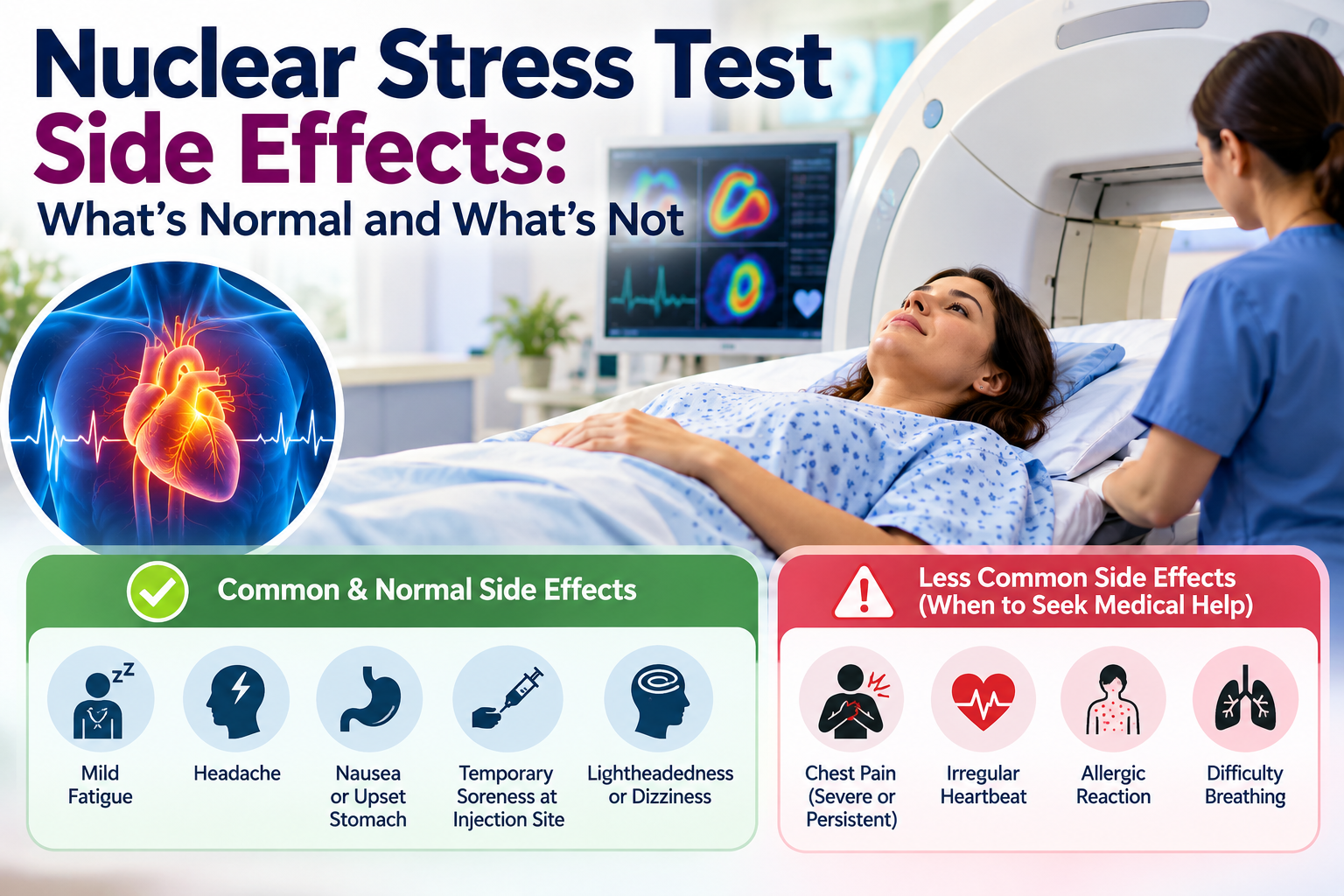
Common, Mild Side Effects (Most People)
These are the side effects that show up most often and typically resolve on their own within a few hours to a day:
- Mild nausea
- Headache
- Dizziness or lightheadedness
- Fatigue
- A metallic taste in the mouth right after the tracer injection
- Flushing or a warm, “flushed” feeling
- Mild bruising, tenderness, or a pinprick sensation at the IV injection site
If you had the exercise version of the test, some fatigue and shortness of breath from the treadmill portion is expected and isn’t a “side effect” so much as the normal physical exertion of the test itself.
Side Effects Specific to Chemical Stress Agents
If you were given a vasodilator medication (like regadenoson or adenosine) instead of exercising, the side-effect profile looks a bit different, and these tend to be more noticeable — though usually still short-lived, often resolving within minutes once the medication wears off:
- Shortness of breath
- Chest tightness or discomfort
- Flushing or a sensation of heat
- Dizziness
- Tingling or numbness in the arms or legs
- A feeling of heaviness or abdominal discomfort
- Headache
These reactions are a known, expected effect of how the medication works on your blood vessels — not necessarily a sign that something is wrong with your heart.
Less Common but More Serious Effects
These are uncommon, but worth knowing about:
- Allergic reaction to the tracer — rare, but can range from mild skin reactions to a more significant reaction requiring treatment.
- Chest pain (angina) or abnormal heart rhythm during the stress portion — this is actually part of what the test is designed to detect, and you’ll be continuously monitored by ECG throughout so the team can respond immediately if it happens.
- Significant drop in blood pressure, particularly with chemical stress agents.
Because of monitoring standards, the team performing your test is trained to catch and manage these reactions quickly, which is part of why nuclear stress tests are considered very safe overall despite this list.
What About the Radiation?
This is usually the biggest source of anxiety, so it’s worth addressing directly. The radioactive tracer used delivers a low, controlled dose of radiation — generally in a similar range to other common diagnostic imaging tests. The tracer doesn’t stay in your body long: it clears out naturally through urine and stool, typically within a day or two, through the normal process of radioactive decay.
Drinking plenty of water after the test helps your body flush the tracer out faster, which is a simple, genuinely useful thing you can do afterward.
That said, radiation exposure isn’t “zero risk,” which is exactly why doctors weigh the benefit of the diagnostic information against the exposure before ordering the test — and why it’s not typically repeated more often than medically necessary.
Who Should Be Extra Cautious
Certain people face higher risk or may need a modified approach, including those with:
- Severe, uncontrolled asthma or COPD (vasodilator stress agents can sometimes worsen breathing issues)
- Significant kidney disease
- Certain uncontrolled heart rhythm problems
- Pregnancy (radiation exposure is generally avoided unless clearly necessary)
If any of these apply to you, this is exactly the kind of thing to flag with your doctor before the test, not after — they may adjust the protocol or choose a different diagnostic approach entirely.
After the Test: What’s Normal, What’s Not
Normal and expected:
- Feeling a bit tired for the rest of the day
- Mild lingering dizziness or headache that fades within 24 hours
- Slight bruising at the injection site
Contact your doctor if you experience:
- Chest pain, pressure, or shortness of breath that doesn’t go away after the test
- Signs of an allergic reaction — hives, swelling, difficulty breathing
- Fainting or a fall in blood pressure that doesn’t resolve with rest
- Redness, swelling, or pain at the injection site that worsens instead of improving
The Bottom Line
Nuclear stress tests are one of the more well-tolerated cardiac diagnostic tools available, and the vast majority of people experience nothing beyond mild, short-lived side effects. Knowing what’s expected — and what’s a genuine reason to call your doctor — is the best way to go into the test feeling informed rather than anxious.
This article is for general educational purposes and isn’t a substitute for personalized medical advice. Always discuss your specific health history and any concerns with your doctor or cardiologist before undergoing a nuclear stress test.
Project content
Created by you


Add PDFs, documents, or other text to reference in this project.