10 Signs Your Liver Needs Detoxing (According to Health Experts in the USA)
The liver is one of the most powerful and hardworking organs in the human body. It acts as the body’s natural filtration system, removing toxins, processing nutrients, and supporting digestion. In fact, medical research shows that the liver performs over 500 essential functions to keep the body healthy.
However, modern lifestyles in the United States often place heavy stress on the liver. Processed foods, alcohol consumption, environmental toxins, medications, and sedentary habits can all affect how well the liver performs its job.
When the liver becomes overloaded with toxins, the body may start sending warning signals. Recognizing these early signs can help you take action to improve your liver health before more serious issues develop.
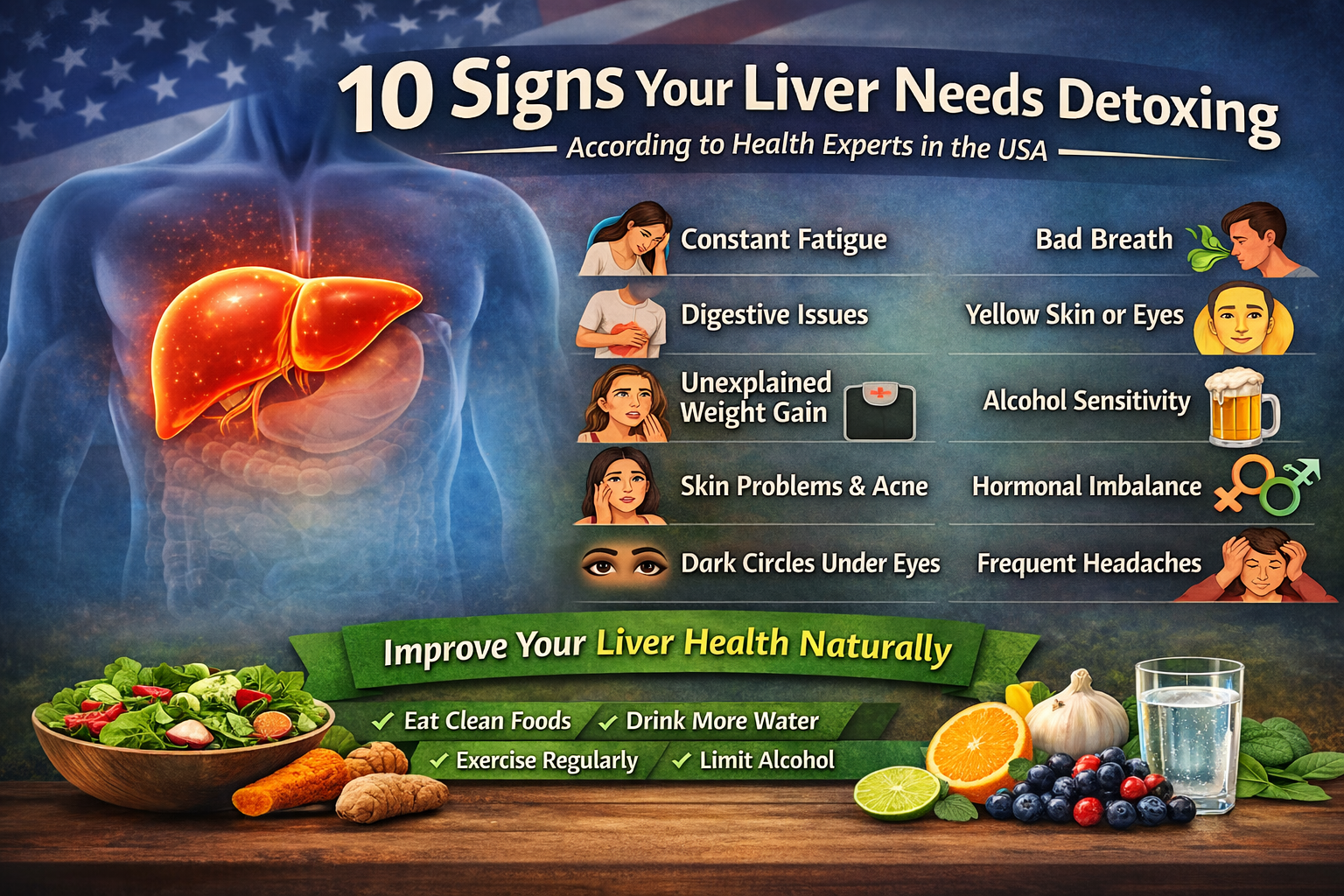
Below are 10 signs your liver may need detoxing, according to health professionals and wellness experts in the United States.
1. Constant Fatigue and Low Energy
One of the most common signs of liver stress is persistent fatigue. When the liver is overloaded with toxins, it has to work much harder to filter the blood and maintain normal body functions.
This extra workload can leave you feeling constantly tired, sluggish, and unmotivated. Even after getting enough sleep, people with poor liver function may still feel exhausted throughout the day.
Fatigue caused by liver stress often appears alongside brain fog, difficulty concentrating, and low productivity.
2. Frequent Digestive Problems
The liver plays a key role in digestion by producing bile, which helps break down fats in the food we eat.
When the liver is not functioning properly, bile production may decrease. This can lead to digestive issues such as:
- Bloating
- Gas
- Constipation
- Indigestion
- Feeling overly full after meals
Many people in the United States who follow high-fat or highly processed diets may experience these symptoms without realizing that the liver could be involved.
3. Unexplained Weight Gain
Another possible sign of an overworked liver is unexplained weight gain.
When toxins accumulate in the body, the liver may struggle to metabolize fats properly. As a result, fat may start to accumulate in the body, particularly around the abdomen.
Some health professionals believe the body may also store fat as a protective mechanism to isolate toxins from vital organs.
If you are gaining weight despite healthy eating and regular exercise, liver health could be a factor worth considering.
4. Skin Problems and Acne
Your skin often reflects what is happening inside your body. When the liver cannot effectively remove toxins from the bloodstream, those toxins may appear through the skin.
This can lead to issues such as:
- Acne
- Skin rashes
- Itchy skin
- Eczema
- Dull or unhealthy-looking skin
In many cases, improving liver health can also improve skin clarity and overall complexion.
5. Dark Circles Under the Eyes
Dark circles and puffiness under the eyes are commonly associated with lack of sleep, but they may also indicate liver stress.
When toxins accumulate in the body, they may affect circulation and cause changes in skin pigmentation around the eyes.
While this symptom alone does not confirm liver problems, it may be a signal that the body’s detoxification system is under pressure.
6. Persistent Bad Breath
Bad breath that does not improve with brushing, flossing, or mouthwash may sometimes be related to liver health.
When the liver struggles to eliminate toxins, certain chemicals can build up in the body and produce an unpleasant odor in the breath.
Some health experts refer to this as “liver breath,” which may have a strong or slightly sweet smell.
7. Yellowish Skin or Eyes
A yellow tint in the skin or eyes is a symptom known as jaundice. This occurs when the liver cannot properly process bilirubin, a waste product produced during the breakdown of red blood cells.
When bilirubin accumulates in the bloodstream, it can cause:
- Yellow skin
- Yellow eyes
- Dark urine
- Pale stool
This is considered a serious symptom and should be evaluated by a healthcare professional immediately.
8. Increased Sensitivity to Alcohol
If you notice that even small amounts of alcohol make you feel sick, dizzy, or unusually intoxicated, your liver may not be processing alcohol efficiently.
The liver is responsible for breaking down alcohol and removing its toxic byproducts from the bloodstream.
When liver function is compromised, alcohol may remain in the body longer and produce stronger effects.
9. Hormonal Imbalances
The liver helps regulate hormones by filtering excess hormones from the blood.
If the liver becomes sluggish, hormonal balance may be affected. This can contribute to symptoms such as:
- Mood swings
- Irritability
- Irregular menstrual cycles
- Low libido
- Increased stress sensitivity
Hormonal issues may sometimes improve when liver function is supported through lifestyle changes.
10. Frequent Headaches
Recurring headaches or migraines may sometimes be associated with toxin buildup in the body.
When the liver cannot effectively eliminate harmful substances, they may circulate in the bloodstream and affect the nervous system.
This can potentially trigger headaches, mental fog, and difficulty concentrating.
How to Naturally Support Liver Detox
The good news is that the liver has an incredible ability to repair and regenerate itself. By adopting healthier habits, you can support the liver’s natural detoxification process.
Health experts in the United States often recommend the following strategies:
Drink More Water
Staying hydrated helps the body flush out toxins and supports proper liver function.
Eat Liver-Friendly Foods
Certain foods may support the liver’s natural detox processes, including:
- Leafy green vegetables
- Garlic
- Turmeric
- Berries
- Citrus fruits
- Beets
- Green tea
Reduce Alcohol Consumption
Limiting alcohol intake can significantly reduce stress on the liver and help prevent long-term damage.
Exercise Regularly
Physical activity improves metabolism, reduces fat accumulation in the liver, and helps the body eliminate toxins through sweat.
Get Enough Sleep
Sleep allows the body to repair tissues and regulate important detoxification processes.
Final Thoughts
Your liver works tirelessly to protect your body from toxins and maintain overall health. When it becomes overloaded, the body may send warning signals such as fatigue, digestive problems, skin issues, or unexplained weight gain.
Recognizing these early signs can help you take proactive steps to improve your health and support your liver naturally.
By maintaining a balanced diet, staying active, reducing toxin exposure, and practicing healthy lifestyle habits, you can keep your liver functioning efficiently for years to come.